

















Building wayfinding signage is a coordinated signage system that helps people identify locations, follow directions, and navigate commercial or public buildings. Cosun Sign provides modular signage systems for hospitals, schools, offices, shopping malls, transportation facilities, and community spaces, with custom design, production, and installation support. Its ISO 9001-certified facility covers 409,029 sq ft and supports projects in 60+ countries.
What Is Building Wayfinding Signage?
Building wayfinding signage is defined as a group of directional, identification, and information signs designed to guide people through a building or complex.
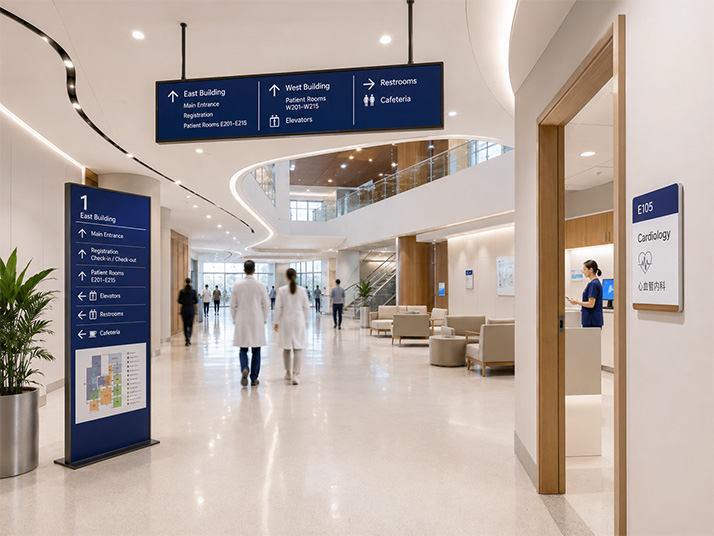
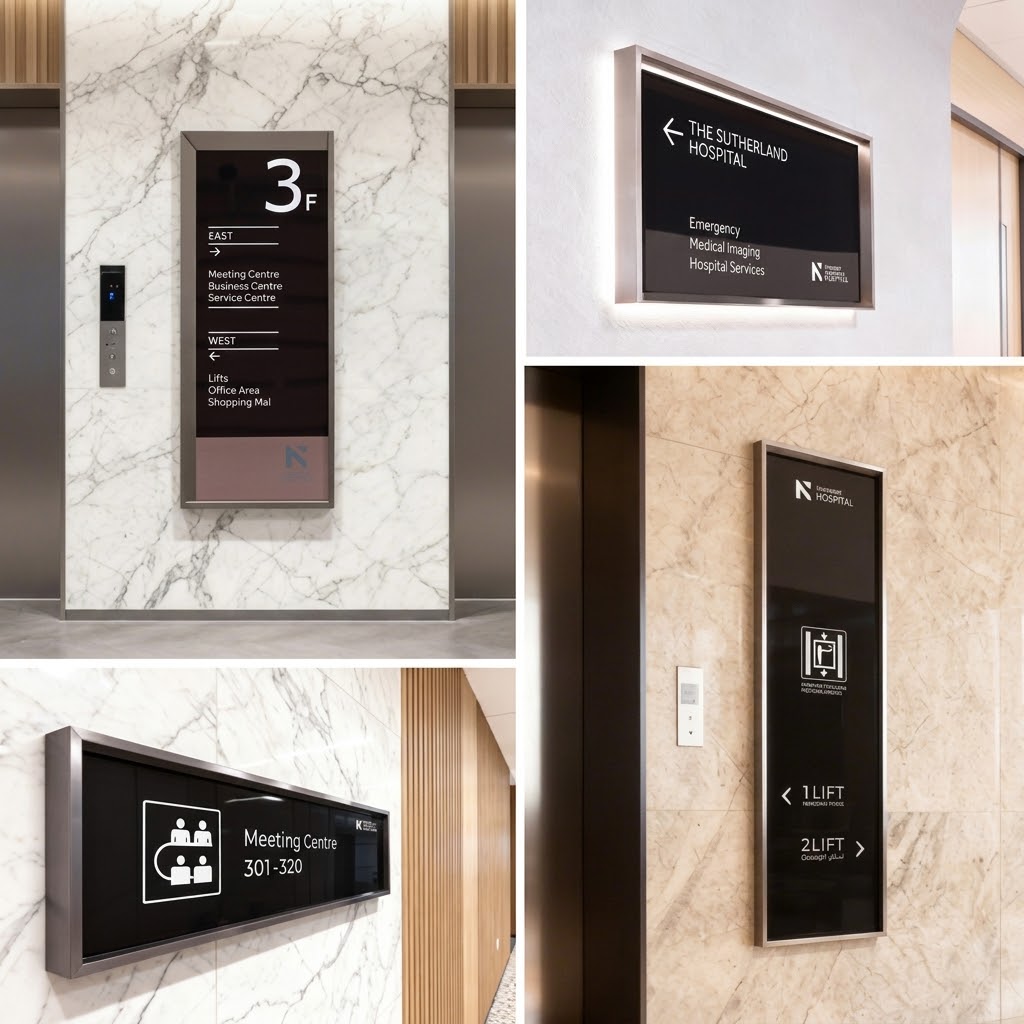
Typical systems include wall signs, projecting signs, directories, suspended signs, post signs, pylon signs, and room identification signs. The system may also incorporate ADA signage, engraving, screen printing, vinyl graphics, photopolymer elements, or digital printing.
Unlike individual signs, a complete wayfinding system uses consistent typography, colors, symbols, dimensions, and placement. This consistency helps visitors understand directions quickly while supporting the visual identity of a facility.
How Does a Modular Wayfinding Signage System Work?
A modular signage system uses standardized profiles, components, and replaceable panels to create a flexible signage structure.
The main advantages include:
- Easy updates: Individual panels can be replaced when room names, departments, or tenants change.
- System consistency: Standardized components maintain consistent size, color, and appearance.
- Scalability: Additional signs can be added when a building expands.
- Reuse: Components can be repurposed instead of replacing complete signs.
- Custom production: Materials, graphics, dimensions, and finishes can be adapted to project requirements.
Compared with traditional fixed signage solutions, modular systems can reduce the need to replace complete sign units during future updates.
Where Is Building Wayfinding Signage Used?
Building wayfinding signage is commonly used where visitors need clear navigation across multiple areas or floors.
Typical applications include:
- Hospitals: Hospital wayfinding systems identify departments, treatment areas, entrances, and emergency routes.
- Schools and campuses: School wayfinding signage guides students, staff, and visitors between buildings and facilities.
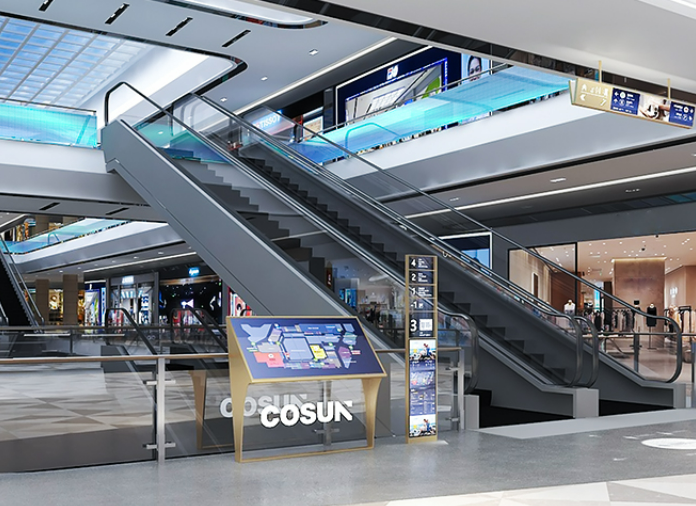
- Shopping malls: Shopping mall wayfinding signage directs visitors to stores, amenities, parking areas, and exits.
- Office buildings: Office wayfinding signage helps users locate tenants, meeting rooms, elevators, and service areas.
- Transportation facilities: Airport and metro wayfinding systems organize passenger movement across large spaces.
- Community and public facilities: Directional and identification signs improve navigation in shared environments.
How Do You Choose Building Wayfinding Signage?
The right system depends on the building layout, traffic flow, environment, accessibility requirements, and expected future changes.
Consider these factors:
- Navigation requirements: Identify entrances, destinations, decision points, and emergency routes.
- Sign types: Select directories, directional signs, room signs, projecting signs, or suspended signs according to location.
- Materials: Aluminum, plastics, laminates, veneers, and other materials can be selected based on durability and appearance.
- Accessibility: Include ADA-compliant tactile or Braille elements where required.
- Modularity: Choose replaceable components when tenant, room, or department information may change.
- Installation: Confirm mounting methods and site conditions before production.
| Requirement | Traditional Fixed Signage | Modular Signage System |
|---|---|---|
| Information updates | Often requires replacement | Replaceable components |
| System expansion | More difficult | Easy to extend |
| Design consistency | Project dependent | Standardized components |
| Reuse | Limited | Components can be reused |
| Customization | Available | Available with modular options |
What Makes Cosun Sign Suitable for Wayfinding Projects?
Cosun Sign is a signage manufacturer specializing in modular signage systems, custom wayfinding signage, and project-based signage production.
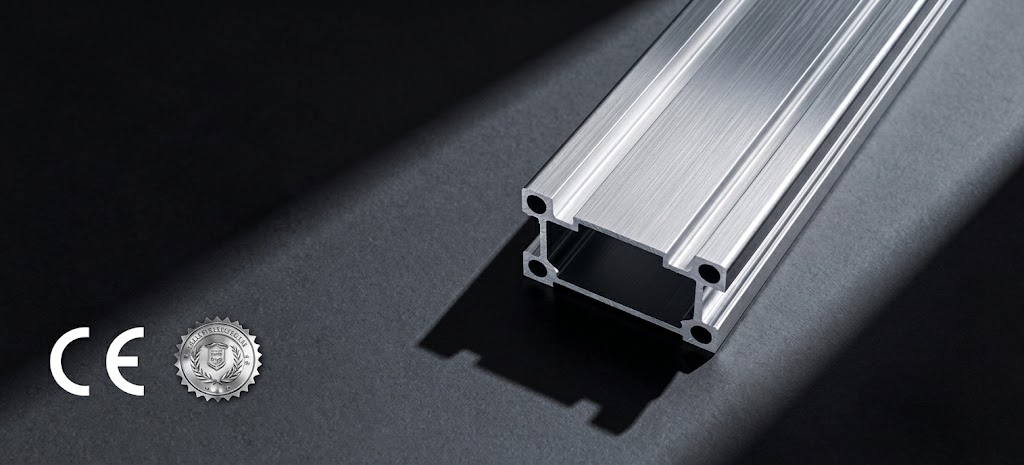
Its manufacturing capabilities include modular sign profiles, wall signs, directories, suspended signs, projecting signs, pylon signs, and other architectural signage solutions. The company supports healthcare, education, transportation, retail, commercial, and public-space projects.
Key manufacturing data includes:
- ISO 9001-certified manufacturing facility
- Approximately 409,029 sq ft of factory space
- 500 staff
- More than 150 patented profile technologies
- Projects exported to 60+ countries
- TUV and SGS certifications
- UL, CE, and RoHS-related product compliance
- Typical turnaround of 2–3 weeks
- MOQ from 1 piece for applicable projects
These capabilities allow buyers to work with one supplier for design development, signage fabrication, and project production.
What Factors Affect Building Wayfinding Signage Cost?
The cost of building wayfinding signage depends on sign quantity, dimensions, materials, finishes, graphic methods, mounting structures, accessibility requirements, lighting, and installation conditions.
A modular system may also provide long-term cost advantages when information needs to be updated frequently. Instead of replacing an entire sign, selected panels or components can be changed.
FAQ
What Is Building Wayfinding Signage?
Building wayfinding signage is a coordinated system of directional, identification, and information signs that helps people navigate buildings and public spaces.
How to Choose Building Wayfinding Signage?
Choose the system according to building layout, visitor flow, sign locations, materials, accessibility requirements, installation conditions, and future information changes.
Why Use Modular Wayfinding Signage?
Modular wayfinding signage makes information easier to update, supports system expansion, maintains visual consistency, and can reduce replacement requirements when building information changes.
Source & Expertise
This overview is based on Cosun Sign modular signage product information, manufacturing capabilities, certification data, and application scenarios. Product specifications and project requirements should be confirmed with the manufacturer before procurement.
Last Updated: September 14, 2026

 粤公网安备44030702001648号