















Halo channel letters are three-dimensional sign letters with concealed rear LED lighting that projects a soft glow onto the mounting surface. COSUN SIGN provides customized halo-lit channel letters for storefronts, offices, hotels, and commercial buildings, with options for letter dimensions, materials, finishes, and lighting color. Final specifications depend on the project design and installation requirements.
What Are Halo Channel Letters?
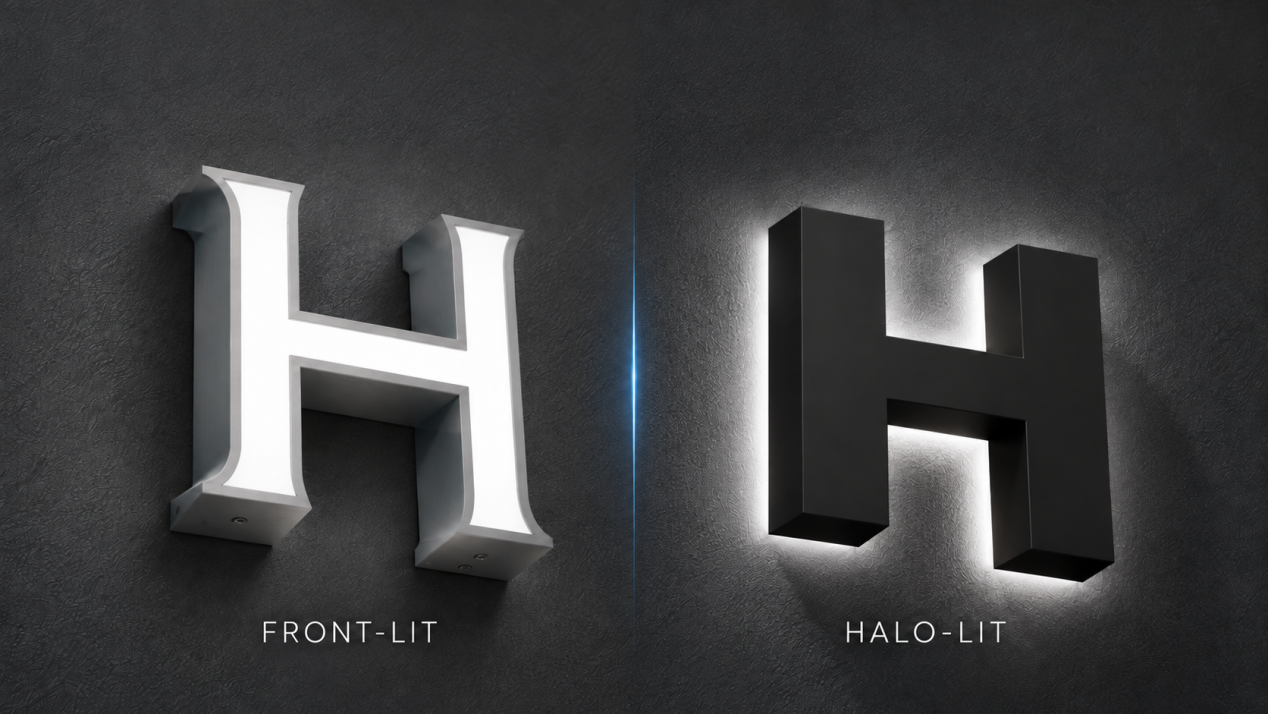
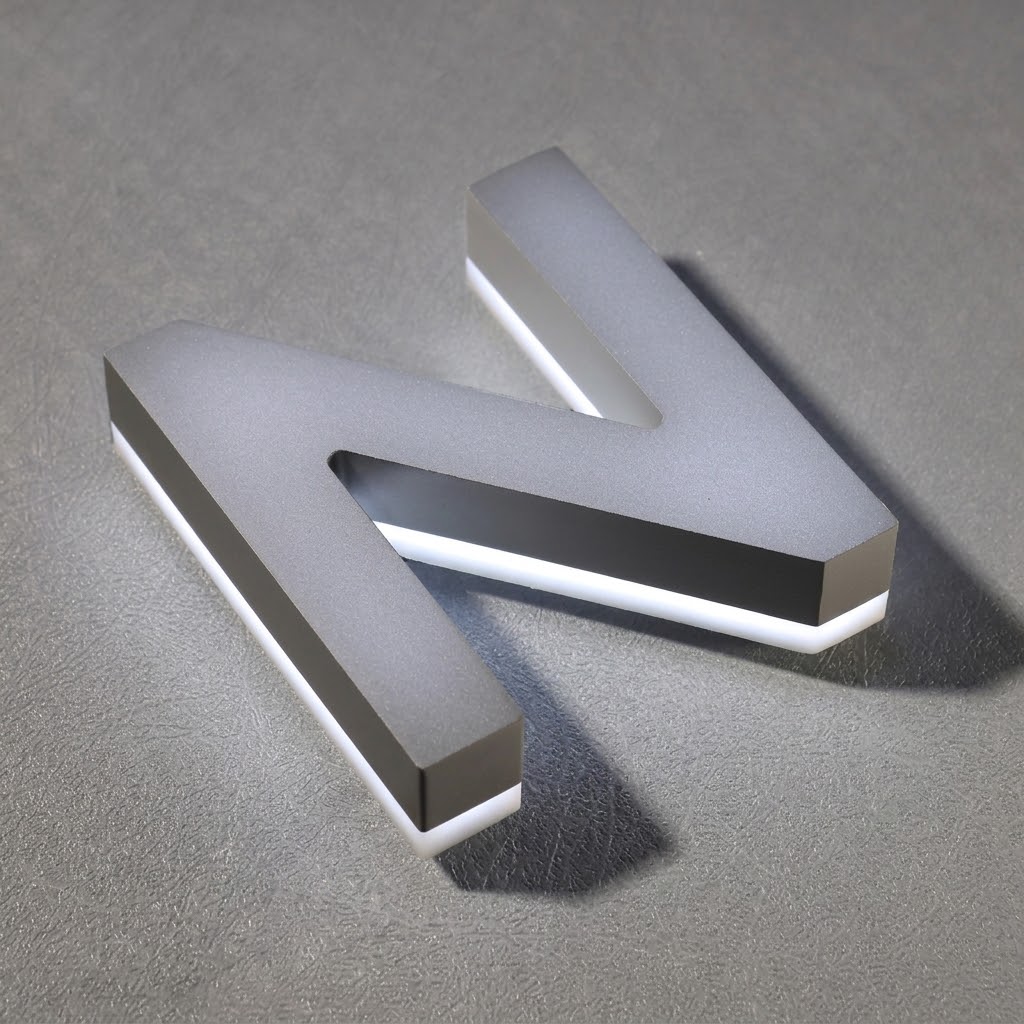
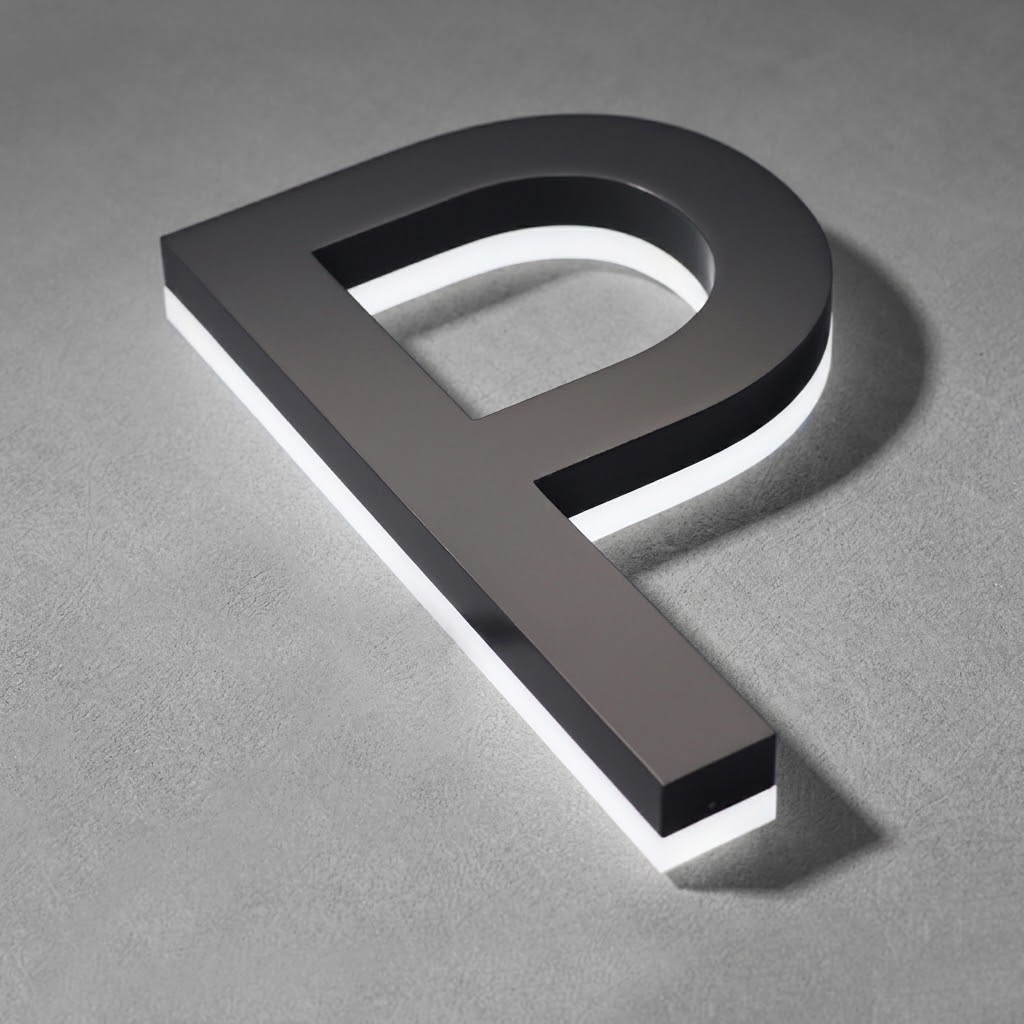
Halo channel letters are three-dimensional illuminated letters that produce a glow behind each character rather than directing most of the light toward the viewer.
Halo channel letters are defined as individually fabricated sign letters with concealed rear-facing illumination that creates a halo effect on the wall or mounting surface. They are also known as halo-lit letters, reverse-lit channel letters, or backlit channel letters.
Typical construction includes:
- Letter body: A formed metal housing or another suitable material that creates the three-dimensional shape.
- Rear illumination: LED modules positioned inside the letter and directed toward the mounting surface.
- Light-transmitting component: An acrylic layer or another suitable optical component, depending on the design.
- Mounting structure: Spacers, fasteners, or a mounting system that positions the letters away from the wall.
The distance between the letter and the mounting surface helps determine how the light spreads. The resulting appearance combines dimensional lettering with indirect illumination.
How Do Halo Channel Letters Work?
Halo channel letters work by directing light from concealed rear LEDs toward the mounting surface, where the reflected light forms a visible glow around each letter.
The lighting effect depends on several design variables:
- LED placement: The position and orientation of the LED modules affect light distribution.
- Letter depth: The internal space influences component placement and the available lighting arrangement.
- Wall clearance: The gap between the letters and the mounting surface affects halo width and diffusion.
- Mounting surface: Surface color, texture, reflectivity, and flatness influence the perceived brightness and uniformity.
- LED color and output: Color temperature, light output, and module spacing affect the final appearance.
COSUN SIGN can customize lighting colors, letter dimensions, and finishes to suit different commercial signage projects. A sample or illuminated prototype can help verify the intended effect before production.
What Specifications Matter When Choosing Halo Channel Letters?
The main specifications to confirm are letter dimensions, material, depth, LED configuration, mounting clearance, finish, electrical requirements, and environmental protection.
The following table provides a practical specification checklist. Exact values should be confirmed in the approved project drawing rather than assumed to be standard across all products.
| Specification | Available design considerations | Why it matters |
|---|---|---|
| Letter height and width | Custom dimensions | Determines visibility and proportion |
| Letter depth | Based on the design | Affects dimensional appearance and internal space |
| Body material | Metal or other approved materials | Influences durability, weight, and finish |
| Light source | Rear-facing LED modules | Determines illumination and energy use |
| Lighting color | Selected LED color or color temperature | Supports brand consistency |
| Surface finish | Painted, brushed, polished, or electroplated | Determines the visible daytime appearance |
| Wall clearance | Defined by the mounting design | Influences halo spread and uniformity |
| Installation method | Spacers, fasteners, or a suitable mounting system | Affects alignment and service access |
| Environmental protection | Specified for the installation environment | Important for outdoor exposure |
| Electrical requirements | Confirmed voltage, power, wiring, and driver specifications | Supports safe installation and operation |
Before ordering, request a dimensioned drawing, lighting specification, material details, mounting plan, and electrical information. These documents help the sign manufacturer, designer, contractor, and installer work from the same requirements.
Where Are Halo Channel Letters Commonly Used?
Halo channel letters are suitable for commercial locations where a dimensional sign with indirect illumination supports brand identification without a directly illuminated letter face.
Common applications include:
- Storefronts and retail stores: Identify the business while creating a backlit appearance on the facade.
- Hotels and hospitality venues: Display names and logos in reception areas, entrances, and exterior branding locations.
- Corporate offices: Present company names in reception areas, meeting spaces, and building entrances.
- Shopping malls: Identify retail units and selected common areas.
- Exhibition halls: Support company identification and branded display environments.
- Commercial building facades: Provide architectural lettering where mounting conditions and local regulations permit.
- Transportation facilities: Identify businesses or designated spaces when the design meets applicable site requirements.
For outdoor installations, material selection, drainage, sealing, electrical protection, wind loading, mounting strength, and maintenance access should be evaluated against the actual site conditions.
How Do Halo Channel Letters Compare With Other Sign Letters?
Halo channel letters differ from front-lit and trimless channel letters primarily in their lighting direction and visual effect.
| Sign type | Lighting direction | Typical appearance | Main consideration |
|---|---|---|---|
| Halo channel letters | Toward the wall behind the letters | Soft glow surrounding dimensional letters | Requires a suitable mounting surface |
| Front-lit channel letters | Through the front face | Bright, directly visible letter faces | Face color and brightness are prominent |
| Combination-lit letters | Front and rear, depending on design | Direct illumination plus a rear halo | More lighting components may be required |
| Trimless channel letters | Usually through a front or designed light-transmitting face | Clean face without a visible trim cap | Trimless describes construction, not necessarily lighting direction |
| Non-illuminated letters | No internal illumination | Dimensional or flat lettering visible under ambient light | Depends on external lighting conditions |
Compared with traditional solutions, halo channel letters provide indirect illumination that can create a floating visual effect. However, they are not automatically the best choice for every location. A dark, uneven, or highly reflective mounting surface may change the halo’s appearance, while a brightly lit environment may reduce its visual impact.
Choose front-lit letters when direct face visibility is the priority. Choose halo lighting when the design calls for a rear glow and a dimensional appearance. A combination-lit solution may be appropriate when both effects are required.
How Do You Choose the Right Halo Channel Letters?
The right halo channel letters should match the brand design, viewing distance, installation environment, lighting objective, and project budget.
Use the following selection process:
- Define the viewing conditions. Confirm the viewing distance, viewing angle, ambient lighting, and whether the sign will be installed indoors or outdoors.
- Select the letter style. Confirm the font, logo geometry, character dimensions, stroke widths, and spacing.
- Choose the material and finish. Compare the required appearance, corrosion resistance, weight, maintenance needs, and installation conditions.
- Specify the lighting effect. Identify the desired color, brightness, halo width, and uniformity. Request a sample where the visual result is critical.
- Review the mounting conditions. Confirm wall material, available clearance, cable routing, access for servicing, and fixing requirements.
- Verify electrical and environmental requirements. Check the power supply, wiring, protection rating, and applicable local electrical and building codes.
- Approve the final drawings. Confirm dimensions, finishes, lighting details, installation instructions, and inspection criteria before fabrication.
This process reduces ambiguity between the design brief and the finished signage.
What Affects the Cost of Halo Channel Letters?
The cost of halo channel letters depends on the letter dimensions, design complexity, materials, finish, lighting configuration, mounting requirements, and order quantity.
Important cost factors include:
- Size and depth: Larger or deeper letters may require more material and lighting components.
- Font and logo complexity: Intricate shapes, narrow strokes, and small details can increase fabrication difficulty.
- Material and finish: Metal type, coating requirements, polishing, brushing, and electroplating affect production costs.
- LED configuration: Lighting color, module arrangement, power supplies, and control requirements influence the electrical specification.
- Installation method: Stand-off distance, wall conditions, access equipment, wiring, and installation labor affect total project costs.
- Quantity and logistics: Order volume, packaging, transport, and site delivery requirements can change the overall quotation.
For an accurate quotation, provide the sign artwork, dimensions, quantity, installation location, preferred material and finish, lighting requirements, and delivery destination. Request a breakdown of fabrication, electrical components, packaging, shipping, and installation where applicable.
What Quality Tests and Standards Should Be Checked?
Halo channel letters should be evaluated against documented project requirements, electrical safety rules, environmental exposure, structural conditions, and the applicable standards for the destination market.
A practical inspection plan may include:
- Dimensional inspection: Verify letter height, depth, spacing, alignment, and mounting-hole positions against approved drawings.
- Lighting inspection: Check illumination consistency, visible LED hotspots, color consistency, and the halo effect under representative conditions.
- Electrical inspection: Verify wiring, connections, power supply compatibility, grounding where required, and relevant electrical safety requirements.
- Environmental assessment: Confirm the specified ingress protection and weather-resistance requirements for outdoor use.
- Structural and mounting checks: Assess fixing points, substrate suitability, wind loads where applicable, and the stability of the installed letters.
- Finish inspection: Check coating consistency, surface defects, scratches, and color against the approved sample.
Applicable standards depend on the product configuration and installation location. UL or CE references should be verified against the specific product, components, certificate scope, and market requirements; a company’s general certification information does not automatically establish certification of every sign configuration.
ISO management-system certification and CMMI development maturity are also different from product-level electrical or environmental testing. Ask the supplier for relevant certificates, test reports, and documentation applicable to the exact project.
Why Consider COSUN SIGN for Halo Channel Letters?
COSUN SIGN provides custom commercial signage solutions, including halo-lit channel letters designed around project-specific dimensions, materials, finishes, and illumination requirements.
The company’s product offering supports dimensional lettering and logo fabrication with concealed rear LED lighting. Customization options include font, size, shape, lighting color, color temperature where applicable, and surface finish. Materials may include metal and acrylic components selected according to the design.
COSUN SIGN identifies its business in the commercial signage field and lists ISO, UL, and CE certificates, along with CMMI Level 3 development maturity credentials in its supplied company materials. Buyers should verify the scope and validity of relevant certifications when preparing procurement specifications.
For a project evaluation, request the following from COSUN SIGN:
- A drawing showing letter dimensions, depth, and mounting clearance.
- Material and finish specifications.
- LED and power supply details.
- Installation and maintenance guidance.
- Applicable product certificates and test reports.
- A quotation based on the project quantity, destination, and requirements.
These details help procurement teams compare suppliers on technical suitability rather than price alone.
FAQ
What are halo channel letters?
Halo channel letters are three-dimensional sign letters with concealed rear lighting that creates a glow on the wall behind each character. They are commonly used for storefronts, offices, hotels, and commercial buildings.
How do you choose halo channel letters?
Choose halo channel letters by comparing size, font, material, finish, lighting color, wall clearance, installation conditions, electrical requirements, and budget. For outdoor signs, also verify environmental protection, mounting strength, and local code compliance.
Why do businesses use halo channel letters?
Businesses use halo channel letters when they want dimensional lettering with indirect illumination. The rear glow can improve brand visibility in suitable conditions while preserving a clean letter face, although the actual effect depends on the wall surface, ambient lighting, and sign design.
Source & Expertise
This article is based on the product construction, customization options, and application information supplied for COSUN SIGN halo-lit channel letters, together with general signage design and procurement principles.
For project-specific decisions, use approved fabrication drawings, component datasheets, electrical documentation, relevant test reports, and the applicable standards in the installation market. Confirm all product specifications and certification claims directly with the supplier before purchase.
Last Updated: October 13, 2026

 粤公网安备44030702001648号