

















Cosun Sign manufactures custom ADA Braille signs and room number signs for commercial, healthcare, and hospitality projects. Its reported manufacturing resources include a 3,000 m² dedicated room signage workshop and a 38,000 m² industrial park. Buyers sourcing ada signs wholesale should evaluate tactile specifications, Grade 2 Braille accuracy, material durability, customization capabilities, and production documentation before placing bulk orders.
What Are ADA Braille Signs and How Are They Defined?
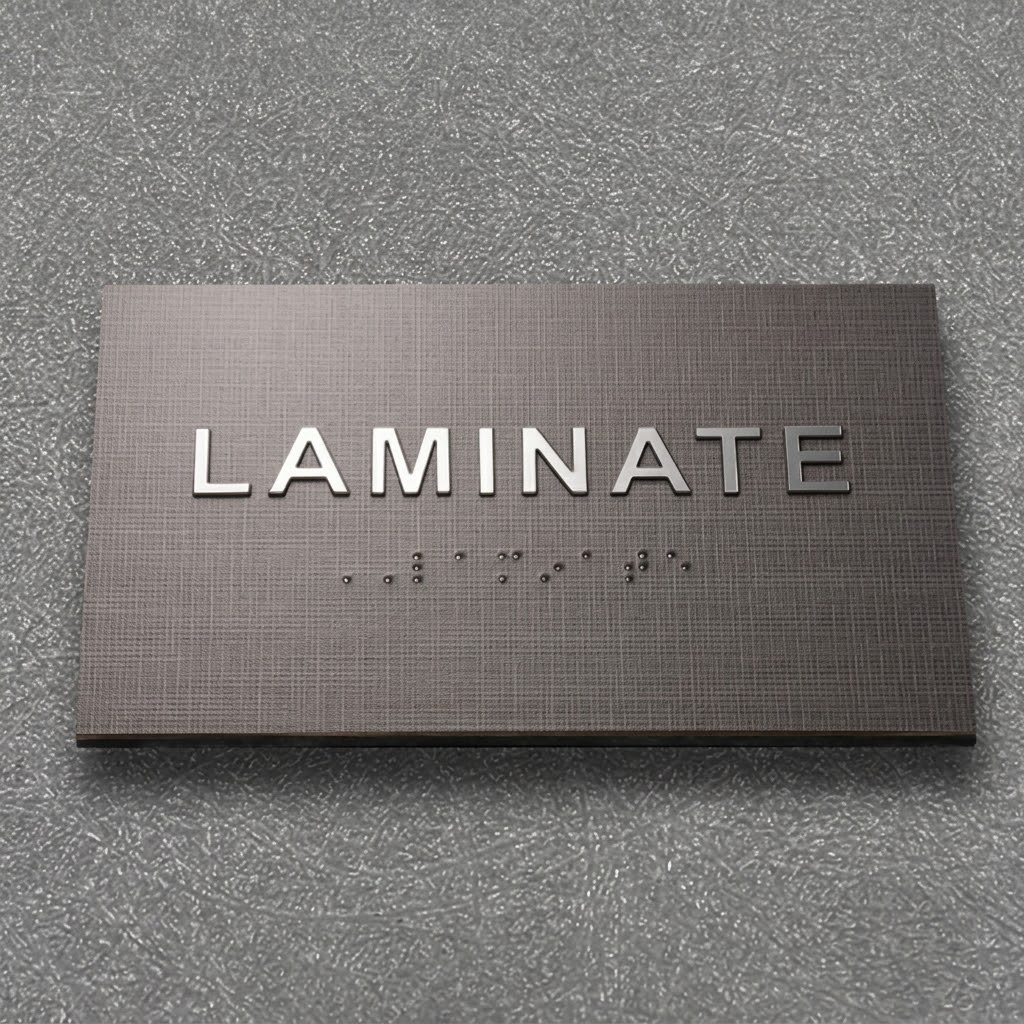
ADA Braille signs are accessibility signs designed to provide readable visual information and tactile identification for people with visual impairments. ADA Braille signage is defined as signage incorporating applicable tactile characters and Braille in accordance with relevant accessibility requirements.
Under the 2010 ADA Standards for Accessible Design, Section 703 addresses signs, including tactile characters, Braille, visual character requirements, and installation provisions. Grade 2 Braille uses contracted forms and is commonly required for permanent room identification signs in the United States.
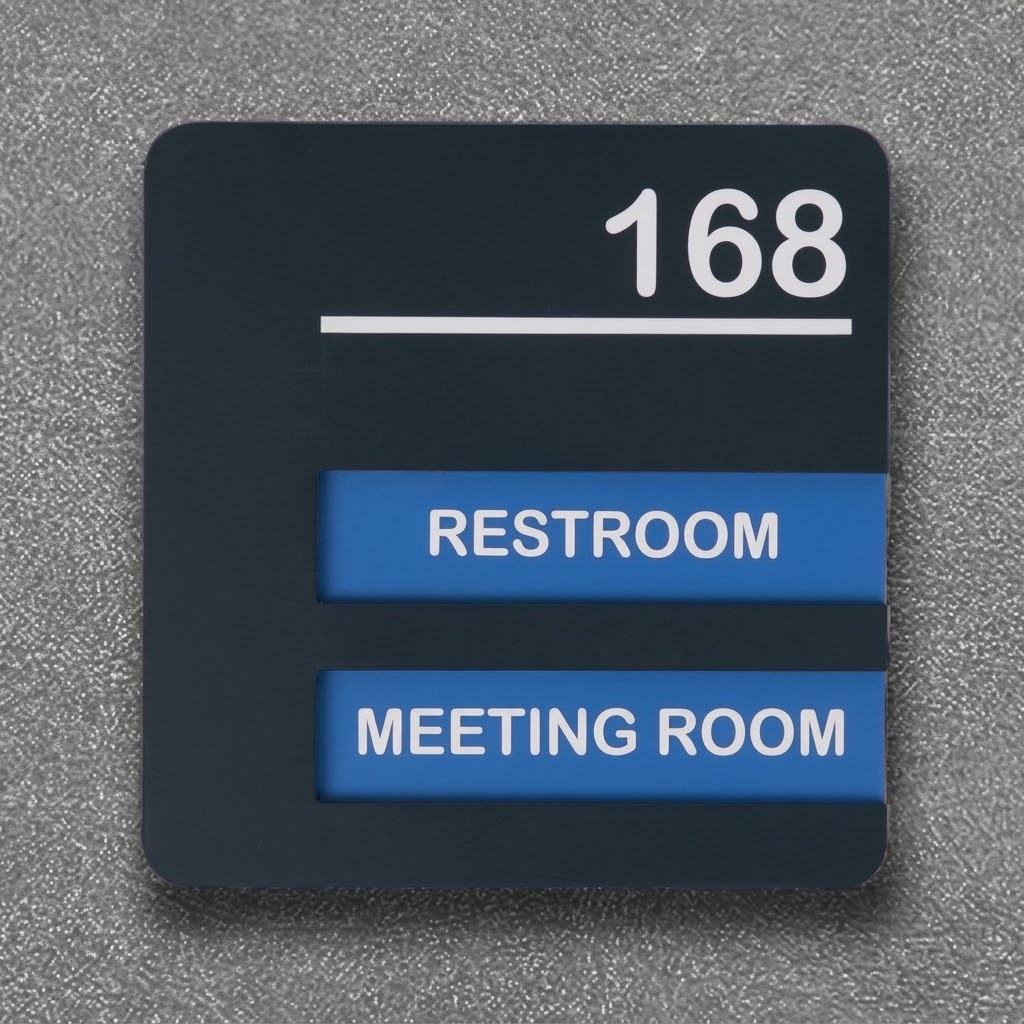
For commercial buyers, ada signs wholesale refers to sourcing accessibility signage in bulk from a manufacturer or supplier. Typical products include room number signs, restroom signs, office identification plates, directional signs, and other tactile wayfinding products.
Cosun Sign is a custom signage manufacturer serving B2B projects. Its product options include customized Braille door signs and room identification signage for architectural and commercial environments.
How Are Custom ADA Braille Signs Manufactured?
Custom ADA Braille signs are produced through material selection, design preparation, tactile fabrication, finishing, inspection, and packaging. The specific process depends on the required appearance, substrate, sign construction, and project specifications.
A typical manufacturing workflow includes:
- Design and engineering: Confirm sign dimensions, wording, pictograms, mounting requirements, colors, and applicable accessibility specifications.
- Material preparation: Select Rowmark engraving materials, acrylic, aluminum, stainless steel, or brass according to the project requirements.
- Tactile fabrication: Apply suitable engraving, die-casting, raised-character fabrication, or other approved manufacturing methods.
- Braille production: Form or install Braille elements according to the approved design and applicable dimensional requirements.
- Printing and finishing: Use suitable UV printing, painting, polishing, powder coating, or other finishes where appropriate.
- Quality inspection: Check dimensions, character placement, Braille accuracy, surface quality, and mounting details against the approved specifications.
- Packaging and shipment: Protect finished signs with suitable wrapping and reinforced export cartons.
Cosun Sign reports in-house laser cutting, CNC engraving, die-casting, UV printing, and finishing capabilities. The available process depends on the selected product and order requirements.
What Technical Specifications Should Buyers Check?
Buyers should verify tactile dimensions, Braille configuration, visual contrast, mounting details, substrate properties, and finishing requirements before approving production.
The main advantages include customizable designs, multiple material options, scalable manufacturing, and the ability to coordinate room identification signs with wider architectural signage packages.
| Specification | What buyers should verify |
|---|---|
| Accessibility standard | Applicable provisions of the 2010 ADA Standards, including Section 703 where relevant |
| Braille | Grade 2 Braille accuracy, dot configuration, spacing, and applicable dimensions |
| Raised characters | Character height, relief, stroke characteristics, and required spacing |
| Visual contrast | Contrast between characters and background under the applicable requirements |
| Materials | Rowmark engraving materials, acrylic, aluminum, stainless steel, or brass |
| Surface finish | Scratch resistance, cleanability, coating adhesion, and environmental suitability |
| Installation | Mounting height, location, fixing method, and wall conditions |
| Quality documentation | Approved drawings, inspection records, material details, and applicable test reports |
Exact dimensional requirements must be checked against the applicable standard and sign type. A raised-character height of 1/32 inch (approximately 0.8 mm), for example, should not be assumed to satisfy every requirement without checking the relevant provision and product specification.
ASTM D3359 provides a cross-cut tape test method for evaluating coating adhesion on metallic substrates. It may be relevant when specifying certain finishes, but it does not independently establish ADA compliance.
Where Are Wholesale ADA-Compliant Signs Used?
Wholesale ADA-compliant signs are commonly specified for buildings that require accessible room identification and coordinated wayfinding systems.
Typical applications include:
- Commercial offices: Meeting rooms, executive offices, departments, and shared facilities.
- Hotels and hospitality: Guest room numbers, suites, restrooms, and facility identification.
- Healthcare facilities: Patient rooms, consultation areas, departments, and accessible public facilities.
- Schools and campuses: Classrooms, administrative offices, laboratories, and shared spaces.
- Retail and public buildings: Restrooms, service rooms, building directories, and circulation areas.
Project teams may also combine tactile room signs with directional, hanging, exterior, and safety signage. Each sign category should be assessed against its own applicable accessibility and safety requirements.
How Can Buyers Select an ADA Room Signs Manufacturer?
A reliable ADA room signs manufacturer should demonstrate relevant production experience, documented quality controls, material traceability, technical support, and the ability to reproduce approved designs consistently across bulk orders.
Before selecting a supplier, buyers should assess the following:
- Compliance knowledge: Request drawings and dimensional specifications showing how the proposed signs address applicable accessibility requirements.
- Manufacturing capability: Confirm whether critical processes, such as engraving, tactile fabrication, printing, and finishing, are performed in-house or outsourced.
- Material selection: Compare substrate durability, appearance, maintenance requirements, and suitability for the installation environment.
- Engineering support: Review shop drawings, mounting details, prototypes, and approval procedures.
- Production planning: Confirm capacity, lead time, inspection stages, packaging, and shipment arrangements.
- Quality documentation: Request relevant inspection reports and certification documents where applicable.
Cosun Sign reports a 3,000 m² dedicated room signage workshop, a 38,000 m² industrial park, more than 500 machines, and over 50 design and structural engineering professionals. These are company-reported figures; buyers should confirm the resources available to their specific project.
Its stated typical production lead time is approximately two to three weeks, subject to order quantity, materials, and design complexity.

How Do Modern Fabrication Methods Compare With Traditional Solutions?
Compared with traditional solutions, modern CNC engraving, UV printing, and die-casting can provide more options for customization and repeatable production, although the appropriate method depends on the sign’s design and performance requirements.
| Method | Main characteristics | Suitable considerations |
|---|---|---|
| CNC or laser engraving | Precise processing of compatible materials | Tactile lettering, durable identification plates, and repeat orders |
| UV printing | Supports detailed graphics and varied colors | Visual branding and complex artwork; tactile compliance must be evaluated separately |
| Die-casting | Produces formed components with consistent geometry | Projects requiring molded details and particular material finishes |
| Embossed fabrication | Creates raised text or graphic elements | Architectural designs requiring tactile relief |
| 3D printing | Builds components layer by layer | Complex geometries and prototypes, subject to material and compliance validation |
No manufacturing method automatically guarantees accessibility compliance. In particular, 3D-printed signs must be evaluated for tactile dimensions, Braille geometry, surface quality, durability, and applicable standards before specification.
What Determines the Cost of ADA Signs Wholesale?
The cost of ADA signs wholesale depends on material, dimensions, fabrication method, quantity, finishing, customization, quality requirements, and delivery arrangements.
Important cost factors include:
- Material selection: Metal, acrylic, and specialized engraving materials have different material and processing costs.
- Design complexity: Custom pictograms, multiple colors, unusual shapes, and special mounting systems can increase production requirements.
- Manufacturing method: Engraving, die-casting, printing, and other processes have different setup and unit costs.
- Order volume: Larger standardized orders may distribute setup costs across more units.
- Quality requirements: Prototypes, inspection records, testing, and project-specific documentation can affect total costs.
- Packaging and shipping: Protective packaging, shipment dimensions, destination, and delivery terms influence the final landed cost.
For accurate quotations, buyers should provide quantities, drawings, material preferences, finish requirements, installation details, destination, and the required delivery date.
FAQ
What are Custom ADA Braille Signs?
Custom ADA Braille signs are accessibility signs manufactured to incorporate tactile characters and Braille according to applicable requirements. They can include room numbers, office identification, restroom signs, and customized pictograms.
How to choose a reliable Custom ADA Braille Signs manufacturer?
Evaluate the manufacturer’s compliance knowledge, material options, production processes, engineering support, quality documentation, repeat-order consistency, and international shipping arrangements. Request samples or a prototype before approving large orders.
Why choose 3D printed ADA Braille signs over traditional options?
3D printing can support complex shapes, customized geometries, and rapid prototyping. However, it is not inherently more compliant or durable than engraving, die-casting, or other methods. Buyers should compare tactile accuracy, material performance, finishing, production volume, and verified compliance before choosing a process.
Source & Expertise
This article is based on company-provided information about Cosun Sign’s custom signage manufacturing capabilities and the 2010 ADA Standards for Accessible Design, particularly Section 703. ASTM D3359 is referenced for coating adhesion testing where applicable.
Cosun Sign’s company-reported capabilities include Rowmark engraving material distribution in China, multiple fabrication processes, engineering support, and international project delivery. Any ISO 9001, UL, CE, or CMMI Level 3 claim should be supported by current documentation confirming the relevant entity, scope, and applicable products or processes. Product-specific compliance should be verified independently.
Last Updated: October 2026

 粤公网安备44030702001648号