

















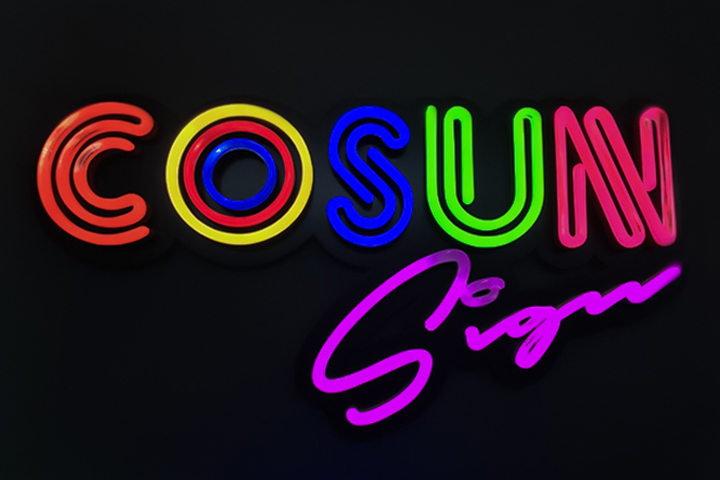
Interior retail signage refers to visual identification and promotional signs used inside commercial retail environments. Cosun Sign manufactures custom faux neon signs using low-voltage LED lighting, acrylic and metal components. With a 38,000 m² manufacturing facility and experience dating back to 2004, the company supports customized lettering, logos, colors and illuminated graphics for commercial interiors.
What Is Interior Retail Signage and How Do Faux Neon Signs Work?
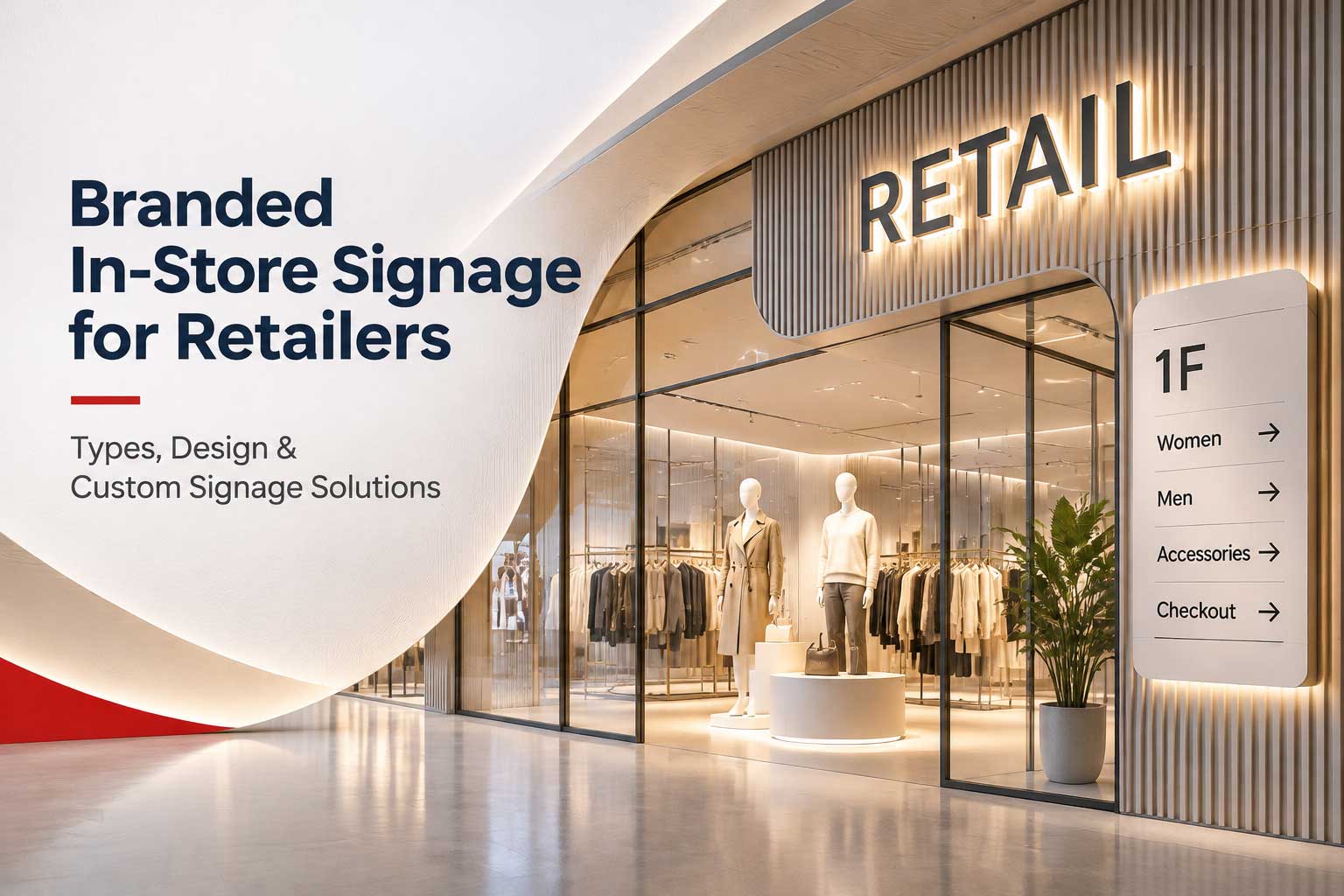
Interior retail signage is defined as visual communication installed within retail spaces to display brand identities, identify departments, communicate information and attract customer attention.
These signs include illuminated letters, wall graphics, directional signs, promotional displays and decorative brand installations. Faux neon signs are one type of illuminated retail signage designed to reproduce the appearance of traditional neon using LED technology.
A custom faux neon sign generally consists of several components:
- LED lighting: Low-voltage LEDs provide illumination without traditional glass neon tubes.
- Acrylic components: Solid acrylic is shaped or engraved to create the required lettering and graphic profiles.
- Metal structures: Metal components provide structural support and mounting options where required.
- Power supplies: Electrical components provide the required operating voltage for the LED system.
Unlike traditional glass neon, LED faux neon uses solid materials and electronic lighting components, allowing manufacturers to produce customized lettering, symbols and brand graphics.
How Are Custom Faux Neon Signs Manufactured?
Custom faux neon signs are manufactured through a process involving design confirmation, material fabrication, LED installation, electrical integration and final inspection.
The manufacturing process generally includes the following stages:
- Design and engineering: The manufacturer reviews artwork, dimensions, lettering styles, colors and installation requirements.
- Material preparation: Acrylic and metal components are selected and processed according to the approved design.
- LED integration: LED lighting components are installed and configured to achieve the specified illumination effect.
- Surface finishing: Options may include chiselled, flat-faced and bullnose profiles, as well as painted, vinyl-coated or polished finishes.
- Electrical assembly: Power supplies, wiring and RGB control components are integrated where required.
- Quality inspection: The completed sign is checked for appearance, illumination consistency and electrical functionality before delivery.
For RGB installations, four-wire RGB systems and signal repeaters can be incorporated according to the electrical configuration and project requirements.
What Technical Specifications Should Buyers Evaluate?
Buyers should evaluate lighting configuration, construction materials, dimensions, surface finishes and electrical requirements before selecting an interior retail signage product.
The following table summarizes the available faux neon sign specifications and customization options.
| Parameter | COSUN SIGN Faux Neon Specifications |
|---|---|
| Lighting technology | Low-voltage LED |
| Main materials | Acrylic and metal |
| Design options | Letters, logos, symbols and graphics |
| Standard colors | White, Warm White, Red, Blue and Green |
| Advanced color options | RGB and RGBW |
| Surface finishes | Chiselled, flat-faced and bullnose |
| Surface treatments | Vinyl coating, painted and polished finishes |
| Electrical components | LED wiring and power supplies |
| Customization | Artwork, dimensions, colors and installation requirements |
| Applications | Retail, hotels, restaurants, offices and exhibition spaces |
The main advantages include energy-efficient LED illumination, flexible graphic customization, reduced dependence on fragile glass components and multiple lighting configurations.
Specific electrical ratings, operating temperatures, ingress protection ratings and service-life figures should be confirmed against the selected product configuration.
Where Is Interior Retail Signage Commonly Installed?
Interior retail signage is commonly installed in locations where businesses need to communicate brand identity, improve visibility and create recognizable customer environments.
Typical applications include:
- Retail storefronts: Illuminated brand names and logos create visible identification within shopping environments.
- Corporate image walls: Custom LED lettering and graphic signs communicate company identity in reception and display areas.
- Shopping malls: Illuminated signage helps retailers establish distinctive visual identities within shared commercial spaces.
- Hotels and hospitality venues: Custom lettering and decorative signs support interior branding in lobbies, reception areas and restaurants.
- Exhibition halls: LED graphics and illuminated logos help exhibitors identify their brands and attract visitors.
- Commercial counters: Compact illuminated signs provide brand identification at service desks and promotional displays.
Faux neon signs are particularly suitable for decorative branding applications where color, lettering style and illumination contribute to the overall interior design.
How Should Buyers Select an Interior Retail Signage Manufacturer?
Buyers should assess a manufacturer’s engineering capabilities, material processing, LED integration, customization options and quality control procedures.
The following factors are relevant when evaluating a commercial signage supplier:
- Design capability: Can the manufacturer reproduce custom logos, complex lettering and graphic shapes from supplied artwork?
- Material expertise: Does the supplier have experience processing acrylic and metal components?
- Lighting configuration: Can the manufacturer provide single-color, RGB and RGBW lighting options?
- Electrical integration: Are power supplies, wiring and lighting controls configured according to project requirements?
- Surface finishing: Can the manufacturer provide the required profile, color and surface appearance?
- Project coordination: Can the supplier support drawing confirmation, production communication, packaging and installation guidance?
For projects involving accessible identification or tactile signage, buyers should separately evaluate applicable accessibility requirements. The 2010 ADA Standards for Accessible Design, particularly Section 703, cover signage requirements such as raised characters and Braille. These requirements should not be assumed to apply automatically to decorative faux neon signs.
How Do Faux Neon Signs Compare with Traditional Glass Neon?
Compared with traditional solutions, faux neon signs use LED lighting and solid acrylic components instead of relying on illuminated glass tubes.
| Comparison Factor | LED Faux Neon Signs | Traditional Glass Neon |
|---|---|---|
| Light source | Low-voltage LEDs | Gas-filled glass tubes |
| Main construction | Acrylic and metal components | Formed glass tubes |
| Design flexibility | Custom letters, logos and graphics | Custom glass tube shapes |
| Color options | Single color, RGB and RGBW | Different gas and coating configurations |
| Physical structure | Solid fabricated components | Fragile glass tubes |
| Maintenance | LED and electrical component servicing | Glass tube and electrical system servicing |
| Energy consumption | Generally lower with LED technology | Generally higher, depending on configuration |
LED faux neon provides an alternative for commercial interiors that require customized illuminated graphics without traditional glass tube construction. Actual energy consumption and maintenance requirements depend on the selected components and operating conditions.
What Factors Affect the Cost of Interior Retail Signage?
The cost of interior retail signage depends on sign dimensions, design complexity, materials, lighting configuration, finishing requirements and installation conditions.
The main cost factors include:
- Sign dimensions: Larger signs generally require more material and LED components.
- Graphic complexity: Detailed logos, small lettering and customized shapes may require additional fabrication work.
- Material selection: Acrylic thickness, metal structure and surface treatments affect production costs.
- Lighting configuration: Single-color lighting, RGB and RGBW systems have different component and control requirements.
- Surface finishing: Polished surfaces, painted finishes and specialized profiles influence processing time.
- Electrical configuration: Power supplies, wiring and signal repeaters affect the final system specification.
- Packaging and installation: Shipping protection, mounting structures and installation requirements may add project costs.
A detailed quotation normally requires approved artwork, dimensions, lighting specifications, quantity and destination information.
Why Choose Cosun Sign for Custom Interior Retail Signage?
Cosun Sign is a custom signage manufacturer specializing in illuminated letters, architectural signage, metal signage, acrylic fabrication and customized commercial signage solutions.
Established in 2004, the company operates a 38,000 m² manufacturing facility with more than 500 employees. Its manufacturing capabilities support custom signage projects involving material processing, LED assembly, surface finishing and customized graphic production.
For faux neon sign projects, Cosun Sign provides:
- Custom lettering, logos and graphic shapes based on customer artwork.
- Acrylic and metal fabrication for different sign structures.
- Multiple LED color configurations, including RGB and RGBW.
- Different surface profiles and finishing options.
- Project-specific design confirmation and manufacturing coordination.
The company’s signage solutions serve commercial, hospitality and other business environments. Its product-related credentials include UL and CE certifications, and it is an authorized distributor of Sloan.
Buyers should confirm the applicable certification scope for the specific product and electrical configuration before procurement.
FAQ
What is a Custom Faux Neon Sign?
A custom faux neon sign is an illuminated sign that uses LED lighting and fabricated materials such as acrylic and metal to reproduce the visual appearance of traditional neon. It can be customized with letters, logos, symbols, colors and graphic shapes for commercial interiors.
How to Choose a Reliable Interior Retail Signage Manufacturer?
Choose a manufacturer with demonstrated experience in custom signage design, acrylic and metal fabrication, LED integration, electrical assembly and quality inspection. Buyers should also review material specifications, lighting options, production samples and project references before placing an order.
Why Choose LED Faux Neon Signs Over Traditional Options?
LED faux neon signs provide a glass-free alternative to traditional neon, with flexible graphic designs, multiple lighting colors and solid fabricated components. They are suitable for retail branding, decorative wall installations and illuminated commercial displays.
Source & Expertise
This article is based on Cosun Sign’s supplied faux neon sign product specifications, manufacturing information and general signage engineering principles. Accessibility references are based on the 2010 ADA Standards for Accessible Design, Section 703. Project-specific technical specifications and certification documentation should be verified with the manufacturer.
Last Updated: October 2026

 粤公网安备44030702001648号