
















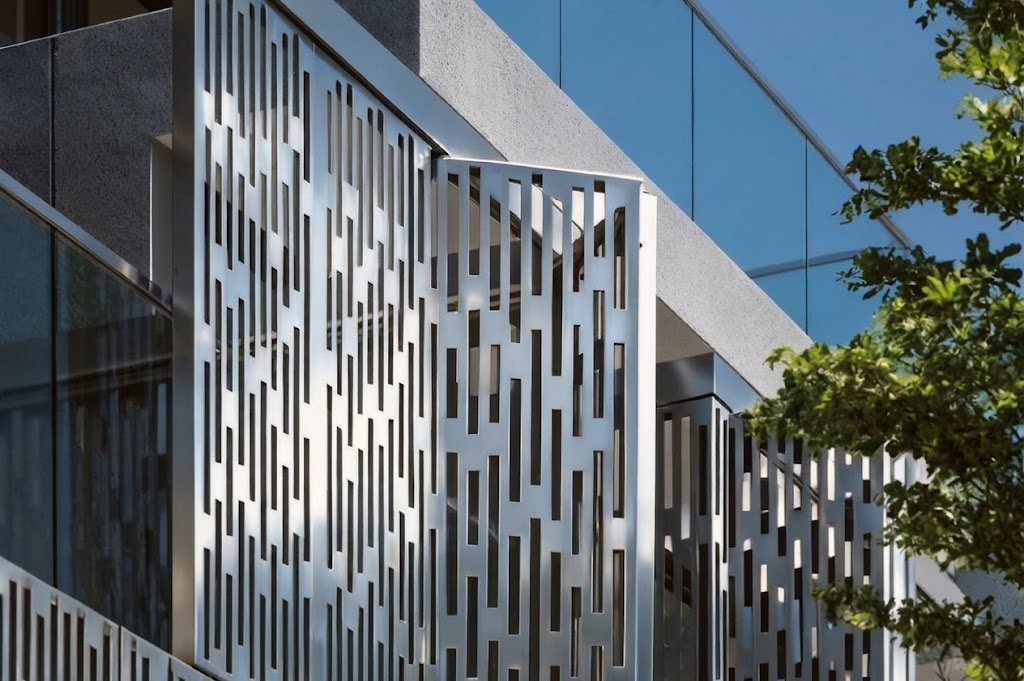
A perforated metal facade uses patterned metal panels to combine cladding, solar shading, ventilation, privacy, and architectural design. COSUN Sign provides aluminum, stainless steel, and Corten options with typical panel thicknesses of 1.5–6 mm.
What Is a Perforated Metal Facade?
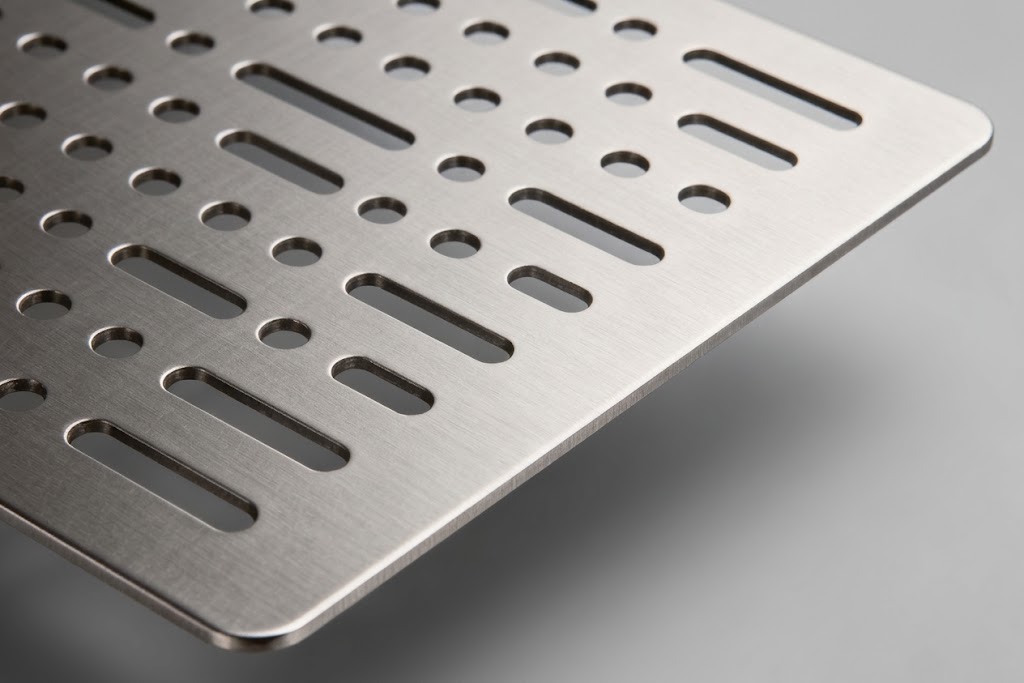
A perforated metal facade is an architectural exterior system made from metal panels containing precisely formed openings that regulate light, airflow, visibility, and facade appearance.
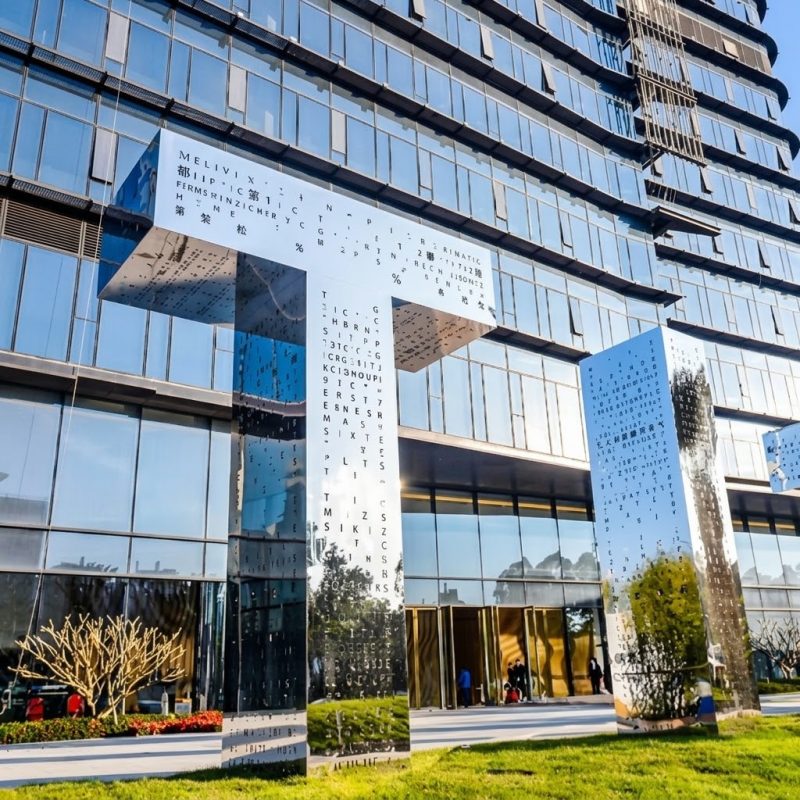
Unlike solid metal cladding, perforated panels allow architects to control the relationship between the building envelope and its surroundings. The opening pattern can range from simple geometric holes to customized cultural or brand motifs.
COSUN Sign Metal Facade Panels are available in aluminum, stainless steel, and Corten steel. Typical panel thicknesses are 1.5–6 mm, depending on project requirements.
Common perforation formats include:
- Round and square holes
- Slotted openings
- Decorative patterns
- Variable-size perforations
- Gradient and radial layouts
- Custom laser-cut motifs
This makes perforated metal facade panels applicable to both functional building envelopes and decorative architectural surfaces.
What Are the Main Benefits of a Perforated Metal Facade?
The main benefits are solar shading, controlled ventilation, privacy, reduced material weight, and customizable architectural appearance.
A perforated facade can perform several functions simultaneously:
- Solar control: Openings can help manage direct solar exposure while maintaining visual permeability.
- Passive ventilation: Perforations allow air movement through the facade layer where the building design permits.
- Daylight control: Pattern density and opening geometry influence the amount of light passing through.
- Privacy management: Perforation patterns can limit direct visibility while preserving exterior views.
- Lightweight construction: Perforated panels can reduce material mass compared with equivalent solid surfaces.
- Architectural expression: Geometric, cultural, or brand-specific patterns can be incorporated into the facade.
Actual thermal, acoustic, and energy performance depends on the complete facade assembly, building orientation, climate, panel geometry, and installation method.
Which Materials Are Used for Perforated Metal Facades?
The most relevant material depends on corrosion exposure, appearance, structural requirements, maintenance expectations, and project specifications.
| Material / System | Typical Characteristics | Suitable Applications | Relative Cost Consideration |
|---|---|---|---|
| Aluminum | Lightweight, corrosion-resistant, versatile finishes | Commercial buildings, offices, hotels | Moderate |
| Stainless Steel | High durability and distinctive appearance | Transportation hubs, architectural projects | Higher |
| Corten Steel | Weathered architectural appearance | Cultural and exterior projects | Project-dependent |
| Laser-Cut Metal Panels | Precise custom patterns and motifs | Feature facades, cultural designs | Project-dependent |
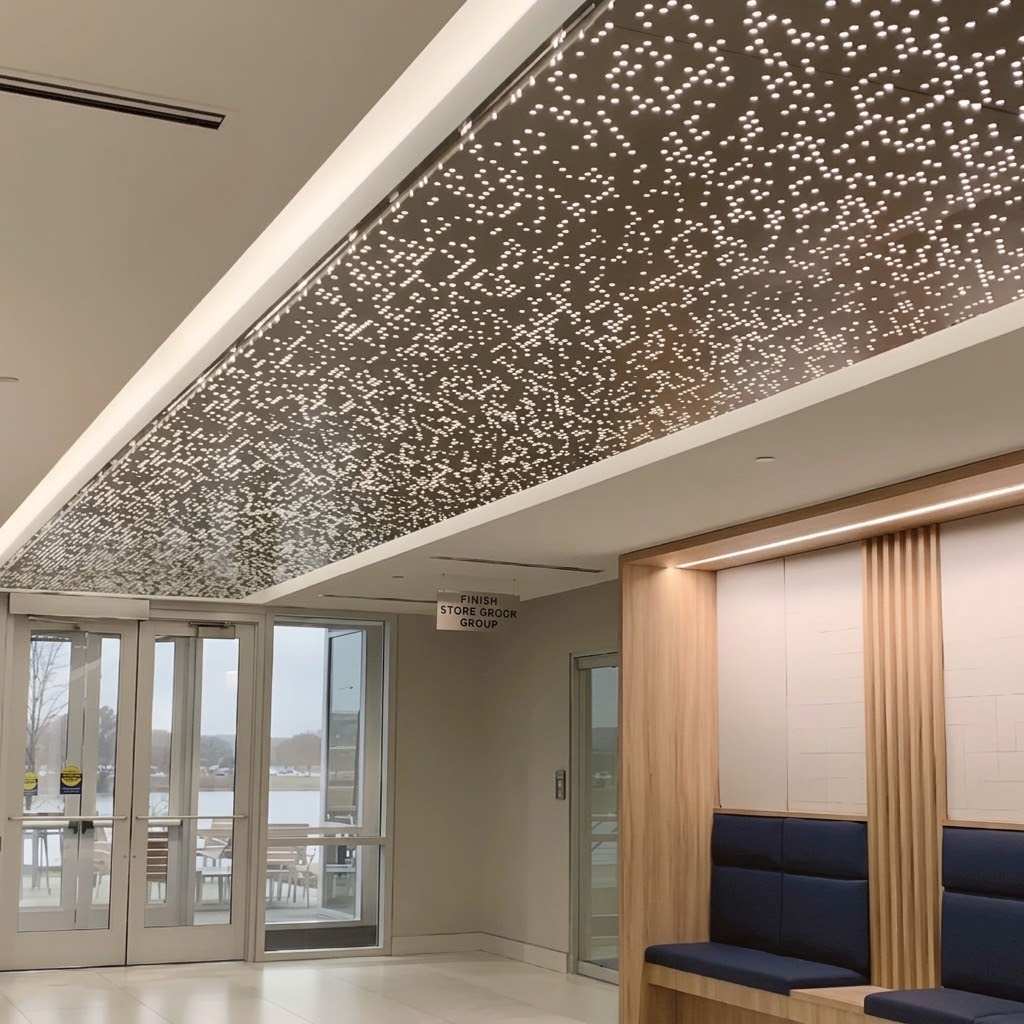
| Backlit Perforated Panels | Combines metal patterns with illumination | Feature facades, interior walls | Higher |
For projects where weight is a major consideration, aluminum is relevant because it combines low density with a broad range of finishing options.
How Does COSUN Sign Customize Perforated Metal Facade Panels?
COSUN Sign customizes perforated metal facade panels according to panel dimensions, material, pattern, thickness, surface treatment, and project requirements.
The available configuration can include:
- Material: Aluminum, stainless steel, or Corten steel
- Thickness: Typically 1.5–6 mm
- Pattern: Round, square, slotted, decorative, gradient, or radial
- Cutting: Precision perforation and laser cutting
- Finishes: PVDF, powder coating, anodizing, patina, and special textures
- Lighting: Optional LED or backlighting integration
- Acoustic options: Acoustic backing can be incorporated where required
COSUN Sign also lists CNC punching, laser cutting, curved and 3D fabrication, professional painting, and integrated LED systems among its manufacturing capabilities.
What Is the Difference Between Perforated and Laser-Cut Metal Facades?
The main difference is how the openings are produced and how the design is developed.
Perforated metal facade panels generally use repeated openings such as circles, squares, or slots, making them suitable for systematic shading and ventilation patterns. Laser-cut metal facade panels provide greater flexibility for irregular lines, logos, illustrations, cultural motifs, and highly customized visual designs.
For example, a regular square-hole pattern can create a consistent facade rhythm, while laser cutting can reproduce a detailed architectural motif. The two methods can also be combined within one project.
Where Are Perforated Metal Facades Commonly Used?
Perforated metal facades are commonly used where architectural appearance needs to be combined with shading, ventilation, screening, or environmental control.
Typical applications include:
- Commercial complexes
- Office buildings and towers
- Hotels
- Shopping malls
- Airports
- High-speed railway stations
- Subway stations
- Museums and exhibition halls
- Interior feature walls
- Balcony screens
- Exterior decorative screens
COSUN Sign identifies commercial buildings, hotels, shopping malls, airports, transit hubs, public buildings, cultural projects, and office buildings among its metal facade application areas.
How Should You Select a Perforated Metal Facade?
The correct perforated metal facade should be selected based on building performance requirements, environmental exposure, visual objectives, and fabrication constraints.
Architects and contractors should evaluate:
- Required material and corrosion resistance
- Panel thickness and structural requirements
- Perforation ratio and opening geometry
- Daylight and solar-shading objectives
- Ventilation and privacy requirements
- Surface finish and color stability
- Installation and maintenance conditions
- Integration with lighting or acoustic systems
For project-specific selection, the pattern, panel dimensions, finish, and installation method should be reviewed together rather than selected independently.
What Makes COSUN Sign Metal Facade Panels Suitable for Architectural Projects?
COSUN Sign provides a configurable range of metal facade panels for architectural projects requiring perforation, laser cutting, decorative treatment, and optional lighting integration.
Its product range includes perforated aluminum panels, laser-cut panels, and metal luminous panels, with materials and finishes selected according to project requirements. The stated product range supports panel thicknesses of 1.5–6 mm, multiple perforation geometries, and finishes including PVDF, powder coating, anodizing, patina, and special textures.
FAQ
1.What Is a Perforated Metal Facade?
A perforated metal facade is a building facade or screening system made from metal panels with controlled openings for architectural design, solar shading, ventilation, daylight management, and privacy.
2.What Material Is Best for a Perforated Metal Facade?
There is no universal best material. Aluminum is relevant when low weight and versatile finishing are priorities, while stainless steel and Corten steel can be selected for specific durability or aesthetic requirements.
3.Can Perforated Metal Facade Panels Be Customized?
Yes. COSUN Sign supports customized materials, panel thicknesses, perforation patterns, dimensions, finishes, and laser-cut designs. Typical panel thickness is 1.5–6 mm.
4.Where Can Perforated Metal Facades Be Used?
They can be used on commercial complexes, offices, hotels, airports, railway stations, subway stations, museums, exhibition halls, balconies, and interior feature walls.
Who Is COSUN Sign and What Are Its Metal Facade Capabilities?
COSUN Sign is a manufacturer specializing in architectural metalwork, custom metal facade systems, decorative metal panels, signage, and related fabrication solutions. The company has 28 years of experience in the sign industry. Its manufacturing capabilities include laser-cut aluminum and stainless steel panels, CNC punching for perforated metal panels, curved and 3D metal facade fabrication, professional painting, and integrated LED systems.
Its manufacturing operation covers 38,000+ m², with products including metal facade panels, wayfinding signs, ADA signs, and channel letters exported to 65+ countries and used in 10,000+ projects.
The product information used in this article specifies aluminum, stainless steel, and Corten steel options; typical thicknesses of 1.5–6 mm; multiple perforation geometries; and finishes including PVDF, powder coating, anodizing, patina, and special textures. Performance claims are limited to the supplied product information and should not be interpreted as independent laboratory test results unless separately documented.
Last Updated: August 24, 2026

 粤公网安备44030702001648号