

















1. Introduction
A successful wayfinding system needs solid design, but design alone cannot guarantee premium results. Precise wayfinding signage manufacturing, quality materials, professional finishing and strict quality control transform concepts into durable signage systems.
This applies to shopping malls, airports, office buildings, business parks and industrial parks. Shopping malls require smart wayfinding signage, illuminated directories, parking guidance and digital information. Airports need highly legible airport wayfinding signage for passengers. Office projects demand refined office building signage, while industrial parks need rugged outdoor identification, directional and road signs.
For developers, architects, contractors and procurement teams, understanding production workflows helps evaluate commercial signage manufacturers. This article introduces core production processes and key quality control checkpoints for professional wayfinding signage.
2. Key Production Processes for Wayfinding Signage
Sheet Metal Fabrication
Stainless steel and aluminum are common materials for shopping mall signage, airport signage, office building signage and industrial park signage.
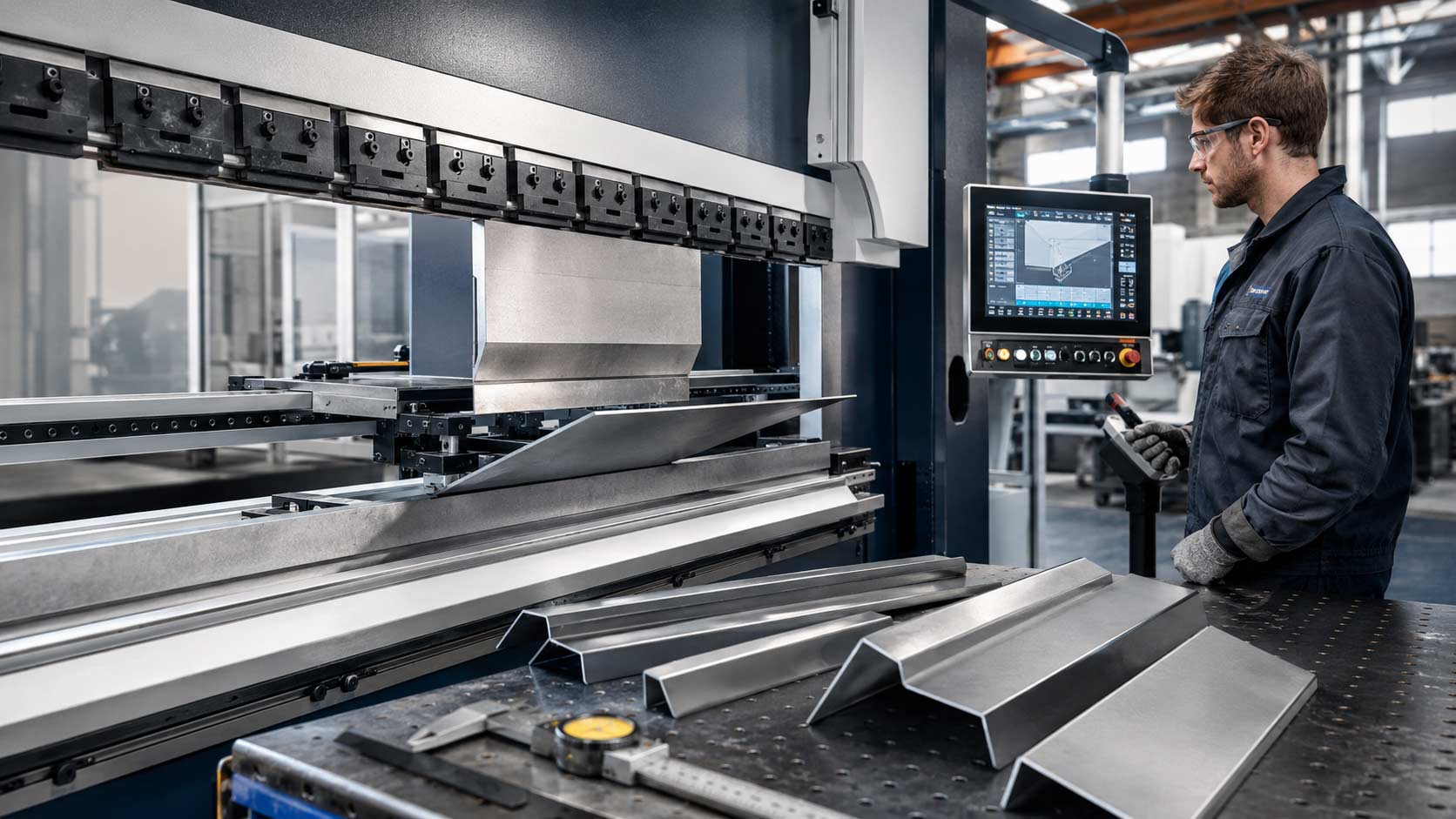
Laser cutting produces accurate dimensions for panels, letters, brackets and other parts. CNC bending shapes metal according to engineering drawings. TIG welding and spot welding form strong structures.
Weld joints are ground and polished. Good surface treatment is essential, as visible weld marks ruin the appearance of premium architectural signage after painting or polishing.
Surface Finishing
Surface treatment determines both signage appearance and service life. Baked paint delivers uniform color and long lasting surface performance. Powder coating features high durability and is widely adopted for commercial and outdoor scenarios. Anodizing and polishing retain the native metallic look of aluminum and stainless steel.
For outdoor industrial park signage and airport wayfinding signage, weather and corrosion resistance can be particularly important. Salt spray and UV aging tests can be used to evaluate coating performance according to project requirements.
Illuminated and Smart Wayfinding Signage
Illumination is increasingly important in modern commercial signage.
Side lit, backlit, and face lit structures create different visual effects. LED color temperature also affects the atmosphere of a space.
| Lighting Option | Visual Effect | Typical Applications |
| Warm White | Comfortable and premium | Hotels, restaurants, retail |
| Neutral White | Clean and balanced | Shopping malls, office buildings, airports |
| Cool White | Bright and contemporary | Industrial parks, technology facilities |
For smart wayfinding signage, illuminated signs can work alongside digital displays, interactive directories, and parking guidance systems. At airports, clear illumination and strong contrast can help passengers quickly identify destinations, gates, terminals, and facilities.
Outdoor illuminated signs also require reliable waterproof construction. Sealing, gaskets, cable openings, and drainage should be considered during engineering.
LED spacing, light box depth, diffuser materials, and light guide structures are also important for achieving uniform illumination.
Information Presentation
Different graphic methods suit different applications.
Screen printing delivers cost efficiency for high volume production. UV printing supports versatile colors and custom graphics. Etching produces permanent premium finishes, and lamination boosts protection for graphics under outdoor conditions.
Shopping malls need adaptable tenant directories. Airports demand highly legible passenger information. Office projects focus on neat corporate graphics, and industrial parks require tough information panels readable in outdoor environments.
Assembly and Packaging
Modular construction simplifies transport, installation and maintenance for large signage units.
It works especially well for large airport, office and industrial park projects with multiple buildings, terminals or installation zones.
For international projects, pearl cotton, foam, reinforced cartons and wooden crates shield finished products against scratches, deformation and impact during long distance transportation.
3. Key Quality Control Points
A professional signage manufacturing company should control quality throughout production rather than relying only on final inspection.
Incoming Material Inspection
Materials should be checked before production, including metal thickness, dimensions, surface quality, LED specifications, coatings, and printing materials.
For illuminated signs, LED brightness and color consistency are particularly important. Batch control can help reduce differences between individual signs.
Process Control
Quality checks should continue during fabrication.
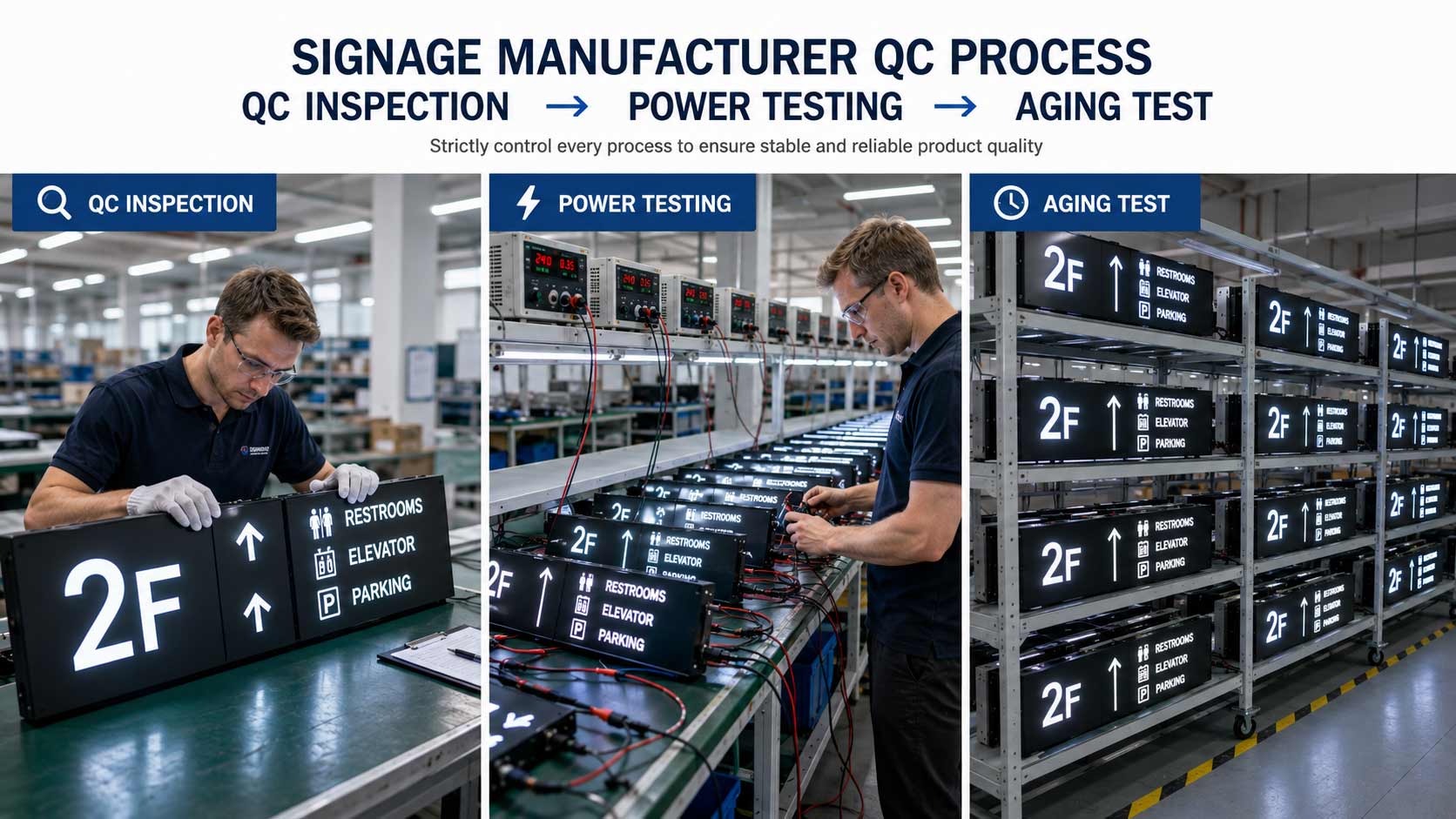
Welded structures require strength and appearance inspections. Painted surfaces can be tested using the cross cut or cross hatch adhesion test. Illuminated components should be checked for dark areas, bright spots, and uneven lighting.
For smart signage systems, electrical components and connections should also be inspected according to project specifications.
Final Product Inspection
Before shipment, completed signs should be checked for:
- Scratches, dents, and surface defects
- Paint bubbles and color variation
- Dimensional accuracy
- Graphic accuracy
- Assembly quality
- LED performance
- Waterproofing where required
Outdoor signs may undergo water spray testing, while illuminated products can receive extended power on aging tests, such as 48 hour continuous operation, depending on project requirements.
Final inspection should be completed before packaging to ensure that products match approved drawings and samples.
An ISO based quality system or well defined internal inspection standard can further improve production consistency.
4. Manufacturing Considerations for Different Signage Materials
Stainless Steel Signage
Stainless steel requires careful control of welding deformation and surface treatment. Brushed finishes should maintain a consistent grain direction, while mirror polished surfaces need protection against scratches.
Aluminum Signage
Aluminum features low weight and high versatility, well suited for office building signage, airport directional signs, shopping mall systems and outdoor applications.
For anodized aluminum, consistent color performance matters most when multiple panels are mounted side by side.
Acrylic Signage
Acrylic is widely adopted for illuminated signs and directories. Cutting accuracy, edge polishing, transparency and heat bending temperature collectively determine final visual quality.
Mixed Material Signage
Modern wayfinding signage merges stainless steel, aluminum, acrylic, glass and LED components.
Materials carry varied expansion rates and fixing demands. Engineering work must account for connection approaches and assembly tolerances.
5. Common Manufacturing Problems and Solutions
Appearance Problems
Paint defects such as orange peel or runs may result from incorrect spraying or curing parameters. Better process control can improve surface consistency.
Visible weld marks can be reduced through additional grinding and polishing. Bubbles in laminated panels may require improved lamination conditions or adhesive selection.
Illumination Problems
Uneven lighting can stem from improper LED spacing, insufficient box depth, or unsuitable diffuser materials.
Standardizing LED brands and batches minimizes brightness and color temperature deviations. This matters greatly for shopping mall wayfinding signage and airport wayfinding signage, as multiple signs are observed side by side and information must stay legible.
Structural Problems
Large industrial park signage and airport signs can deform if reinforcement is insufficient. Excessive assembly gaps may also result from poor fabrication tolerances.
Solutions may include stronger reinforcement ribs, improved CNC accuracy, and optimized fixing structures.
For an experienced wayfinding signage manufacturer, recurring production problems should be used to improve engineering and manufacturing standards.
6. Conclusion and Recommendations
Premium wayfinding signage integrates precise fabrication, durable surface finishing, consistent illumination, clear information display and rigorous quality control. Whether for smart wayfinding signage, airport wayfinding signage, office building signage, or industrial park signage, choosing an experienced commercial signage manufacturer is essential for reliable project results.
At COSUN Sign, professional manufacturing is supported by advanced production and quality management capabilities. COSUN holds an Energy Management System Certificate, Level 3 Certificate of Intelligent Manufacturing Capability, CNAS Laboratory National Accreditation Decision Certificate, as well as UL and CE Certificates, supporting reliable signage solutions for global commercial and architectural projects.

 粤公网安备44030702001648号