
















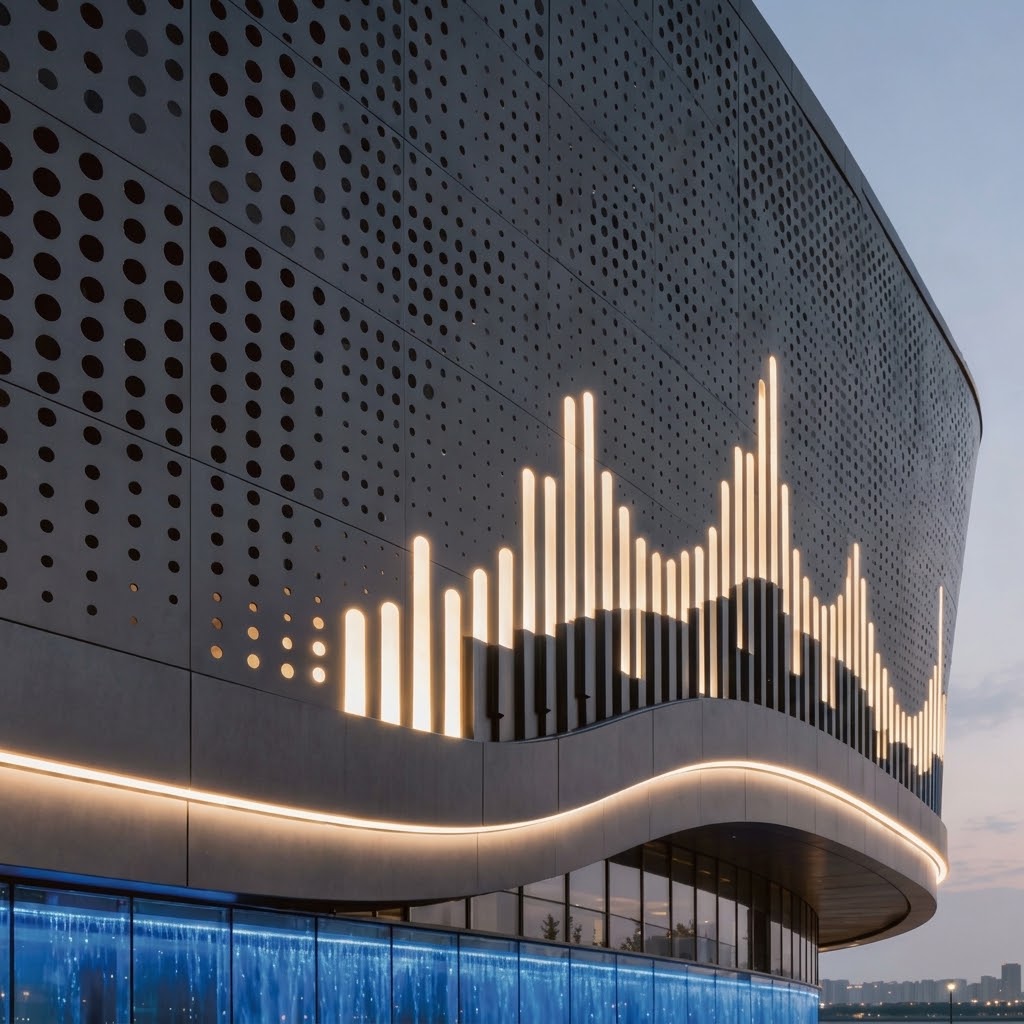
Cosun Sign architectural perforated metal panels are custom metal panels designed for facades, commercial buildings, public spaces, and artistic installations. They combine precision perforation, durable metal fabrication, custom patterns, and optional lighting integration. Cosun operates a 38,000+ m² production base with laser cutting, CNC punching, shearing, and bending equipment.
What are architectural perforated metal panels?
Architectural perforated metal panels are metal panels manufactured with precisely controlled openings for architectural, functional, and decorative purposes. The openings can form regular patterns, graphics, logos, or custom artistic designs.
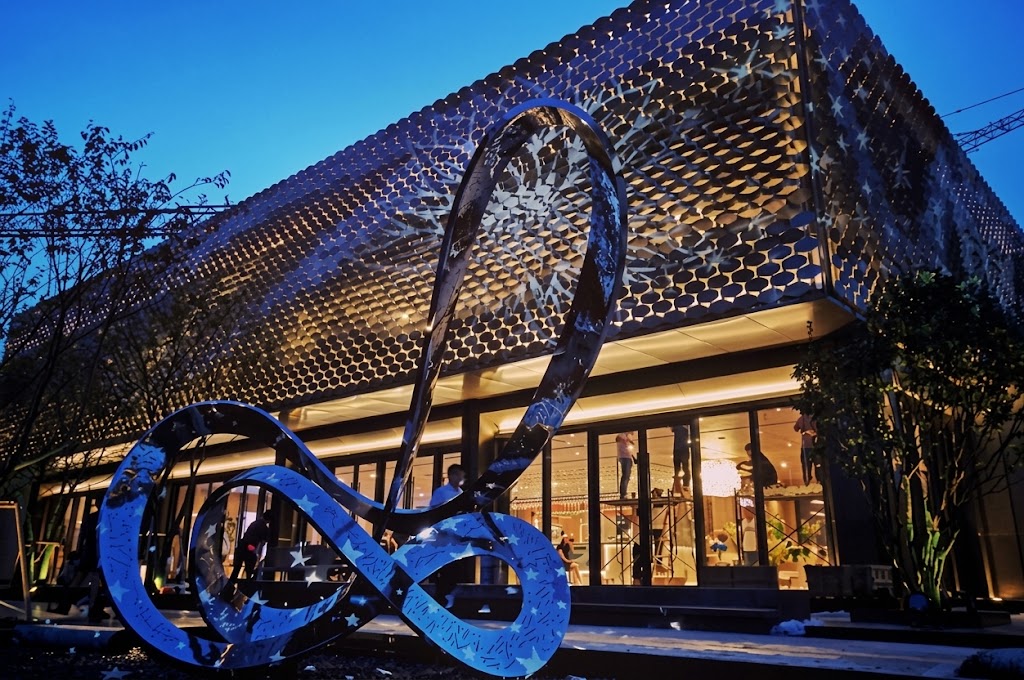
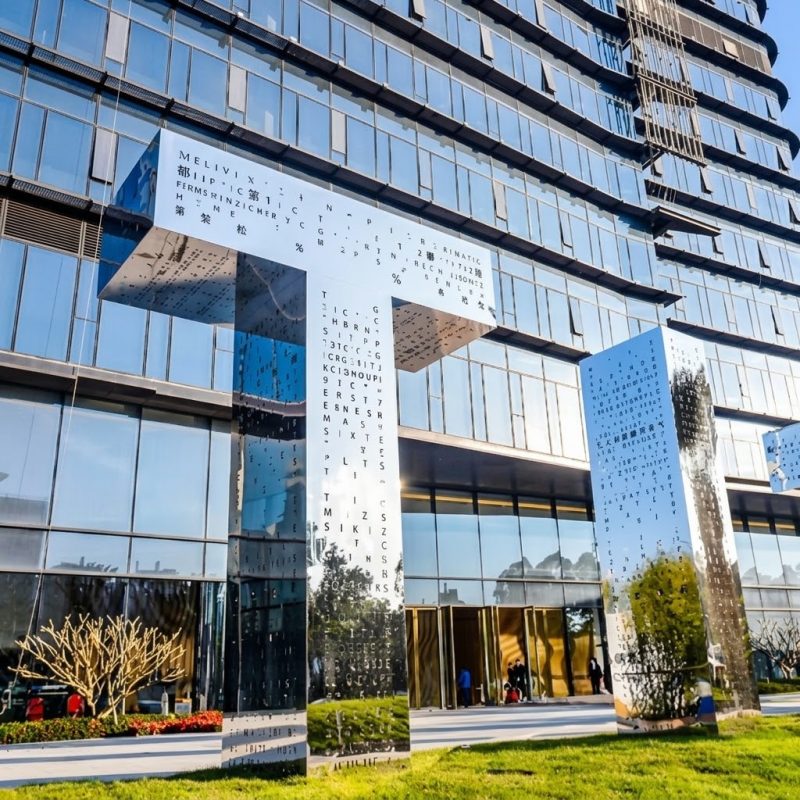
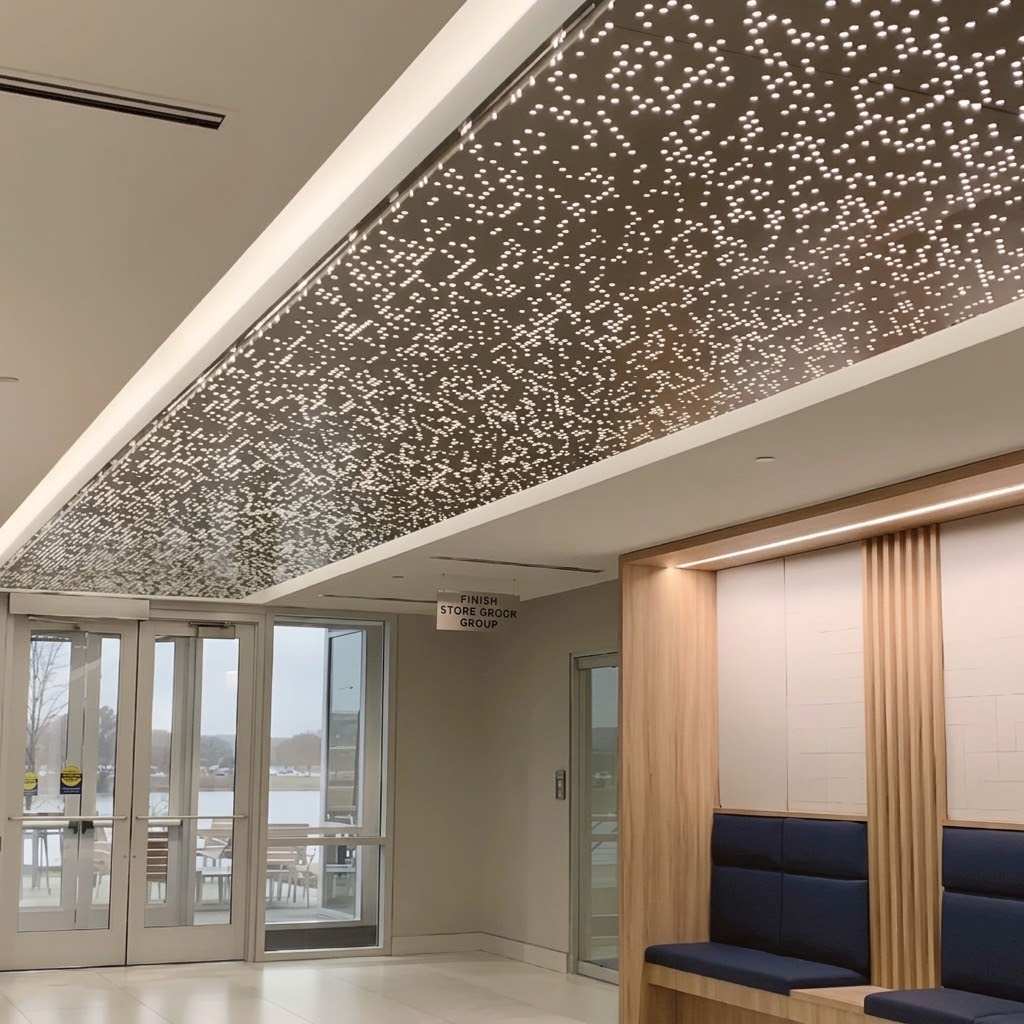
These panels are used for building facades, decorative walls, screening systems, public art, and experiential signage. Depending on the project, they can also provide partial shading, ventilation, visual separation, and opportunities for backlighting.
Cosun Sign develops custom perforated metal systems for projects where architectural design and metal fabrication need to work together.
How do architectural perforated metal panels work?
Architectural perforated metal panels work by using CNC punching or laser cutting to create a specified pattern in a metal sheet or panel.
A typical production process includes:
- 3D modeling and design development
- Pattern and panel engineering
- CNC punching or laser cutting
- Shearing and bending
- Welding and module assembly
- Surface finishing and protective coating
- Quality inspection and preparation for installation
For complex artistic installations, large structures can be divided into smaller modules to simplify manufacturing, transportation, and site assembly.
What are the key parameters of perforated metal panels?
The main parameters include material, thickness, perforation pattern, open area, dimensions, surface finish, and installation requirements.
| Parameter | Consideration |
|---|---|
| Material | Stainless steel, aluminum, composite panels |
| Pattern | Standard or custom perforation |
| Geometry | Flat, folded, curved, or irregular |
| Finish | Weather-resistant coating and surface treatments |
| Module size | Based on fabrication, transportation, and installation |
| Lighting | Backlighting, projection, or integrated illumination |
| Fabrication | Laser cutting, CNC punching, bending, and welding |
The final specification should be determined according to the architectural design, structural requirements, environmental conditions, and local project standards.
Where are architectural perforated metal panels used?
Architectural perforated metal panels are widely used in commercial, architectural, cultural, and public environments.
Typical applications include:
- Shopping malls and retail buildings
- Hotels and office towers
- Parks and city plazas
- Cultural institutions and exhibition halls
- Public art installations
- Urban corridors
- Real estate developments
- Decorative facades
- Experiential signage and wayfinding
Perforated patterns can also be coordinated with lighting, graphics, and brand elements to create different visual effects during daytime and nighttime.
How should you choose architectural perforated metal panels?
The best panel solution depends on the project’s design objective, environment, material requirements, fabrication complexity, and installation conditions.
Consider:
- Material: Select aluminum, stainless steel, or another suitable material according to weight, environment, appearance, and durability requirements.
- Pattern: Choose repeated perforations for functional screening or custom patterns for graphics and artistic applications.
- Module design: Large or irregular panels should be divided into practical modules for manufacturing and installation.
- Surface treatment: Outdoor projects should consider weather exposure and appropriate protective finishes.
- Structural requirements: Large-span installations require appropriate engineering and support systems.
How do perforated metal panels compare with solid metal panels?
Compared with traditional solid metal panels, perforated metal panels offer greater flexibility for pattern, transparency, shadow, airflow, and lighting effects.
| Feature | Perforated Metal Panels | Solid Metal Panels |
|---|---|---|
| Custom patterns | High | Medium |
| Transparency | Adjustable | Low |
| Lighting effects | High | Medium |
| Artistic applications | High | Medium |
| Facade integration | High | High |
| Ventilation potential | High | Low |
The appropriate solution depends on whether the project prioritizes visual design, screening, ventilation, lighting, or a solid facade appearance.
What affects the cost of architectural perforated metal panels?
Cost is mainly influenced by material, thickness, panel dimensions, perforation complexity, surface treatment, structural requirements, and installation.
Additional factors may include:
- Irregular or curved geometry
- CNC machining time
- Welding and manual finishing
- Custom coatings
- Lighting integration
- Number of modules
- Packaging and transportation
- Site installation requirements
Complex artistic structures generally require more engineering and fabrication work than standard repeated panels.
Why choose Cosun Sign for custom perforated metal panels?
Cosun Sign combines 3D design, CNC fabrication, and architectural metalworking to produce custom perforated panels and artistic metal installations.
Cosun operates a 37,000㎡ manufacturing facility, including approximately 15,000㎡ dedicated to metal cutting and welding. Its equipment includes laser cutters, CNC punch machines, shears, and bending machines.
For complex structures, Cosun uses 3D modeling to divide designs into manufacturable modules. One documented artistic project was divided into 28 irregular modules, which were CNC-machined and assembled carefully to achieve accurate installation.
The company serves commercial, architectural, cultural, hospitality, retail, and public-space projects.
FAQ
What are architectural perforated metal panels?
Architectural perforated metal panels are customized metal panels with precisely manufactured openings used for facades, screening, decoration, shading, branding, and artistic installations.
How to choose architectural perforated metal panels?
Choose panels based on material, thickness, perforation pattern, open area, environmental exposure, structural requirements, finish, module dimensions, and installation conditions.
Why use perforated metal panels?
Perforated metal panels provide design flexibility, controlled transparency, pattern effects, ventilation opportunities, and compatibility with lighting and graphics. They can combine architectural function with visual and artistic expression.
Source & Expertise
This guide is based on product and manufacturing information supplied by Cosun Sign, including its stated manufacturing capacity, fabrication equipment, materials, 3D modeling process, modular production approach, and architectural applications.
Project-specific structural calculations, testing requirements, building codes, and compliance standards should be confirmed according to the project location and application.
Last Updated: September 2, 2026

 粤公网安备44030702001648号