

















The sign manufacturing industry has traditionally relied on materials such as stainless steel, aluminum, acrylic, LED strips, LED modules, vinyl, paint, and powder coating. Despite the emergence of new technologies and materials, these remain the main choices for custom signage manufacturing today.
However, Signage is no longer limited to conventional materials. As brands place greater emphasis on unique design, visual identity, sustainability, and user experience, new sign materials are increasingly being introduced into custom signs.
Why Using New Materials for Signage?
Signage covers a wide range of categories, mainly including illuminated letters, solid letters, room sign/ door sign/ Ada sign, pylon sign, totem signs, hanging wayfinding signs, side signs, light boxes, LED digital signage, LCD digital signage, landscape installations, customized metal trash cans, customized mailboxes, lawn signs, cultural and creative sculptures, and customized metal facades.
What’s more, signage is one of the most widely used products in commercial and public spaces. Include: hotels, retail stores, office buildings, shopping malls, airports, metro stations, bus stations, roads, ports, parks, theme parks, and etc.
The wide range of applications and products make signage highly customized.
Except for such as safety signs which must comply with national or city regulations, many commercial and architectural signage projects begin with a creative design. Designers have to consider the brand identity, environmental, architectural style, installation location, lighting conditions, and user experience before developing a customized signage system.
This design-driven approach has encouraged manufacturers to explore materials beyond traditional stainless steel, aluminum, acrylic, and LED components.
Based on years of experience in custom sign manufacturing, COSUN SIGN identifies six categories of new materials that are increasingly used in modern signage.
1. Sustainable and Eco-Friendly Sign Materials
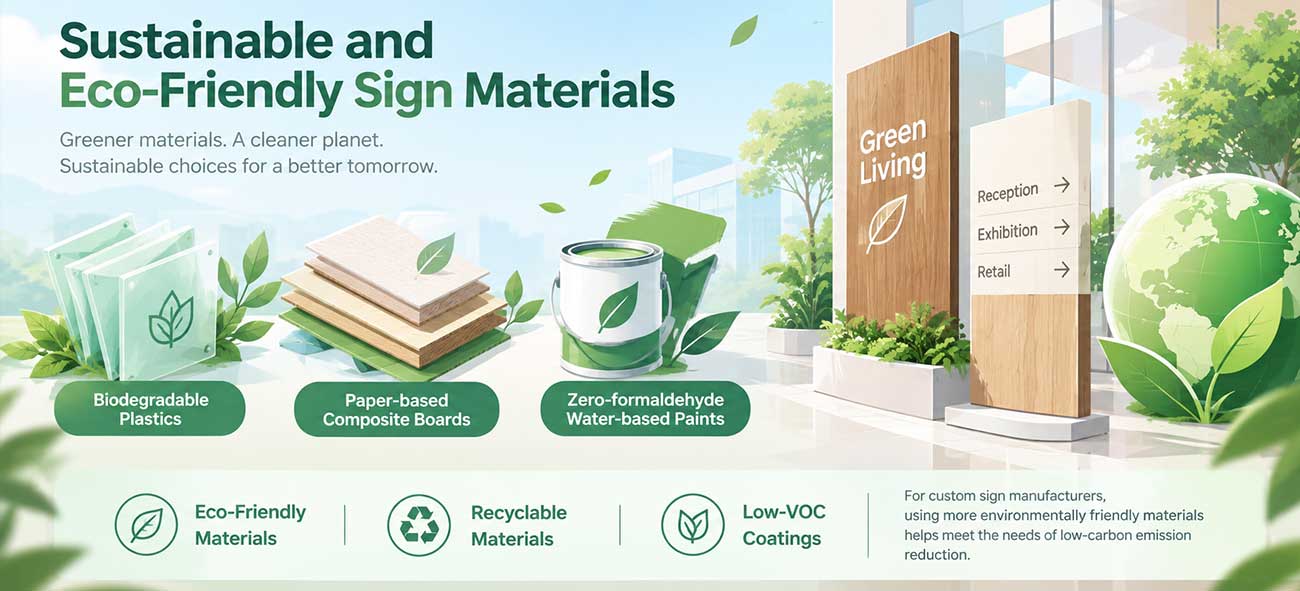
Sustainability is becoming an important consideration in signage design, especially in America, Europe, Australia and China.This has created demand for eco-friendly sign materials that can reduce environmental impact while maintaining practical performance.
Representative materials include:
- Biodegradable plastics
- Paper-based composite boards:Commonly suitable for indoor signage, retailssigns, exhibitions, and environmentally conscious interior projects.
- Zero-formaldehyde water-based paints
They provide designers with additional options when sustainability, lightweight construction, and distinctive textures are important.
For custom sign manufacturers, who must adopt more environmentally friendly materials to meet the needs of low-carbon emission reduction.such as eco-friendly materials, recyclable materials and low-VOC coatings.
2. Premium International Signage Materials
Another important category is internationally recognized specialty materials — Rowmark® material.
Rowmark engraving plastics have been used in signage applications for decades and offer a broad range of colors, finishes, and surface effects. Available options include solid-color sheets, metallic finishes, two-color materials, and three-layer materials.
The advantages of Romark board include: excellent scratch resistance and superior weather resistance, exquisite surface finish,high-quality engraving, consistent colors.
They can be used for door signs, room signs, wayfinding signs, identification signs, architectural signage, and other customized sign products.
3. 3D Printing Materials for Custom Signage
3D printing signs has become one of the most discussed emerging technologies in the industry.
Among commonly used materials, PETG, FBS and PLA materials are attracting attention because it can be directly processed through 3D printers to create customized components and sign structures.
One of the major advantages of 3D printing is that complex shapes can be produced directly from digital models, reducing the need for certain secondary manufacturing and finishing processes. In some applications, 3D printing signage can also be produced without traditional painting, helping simplify production.
However, 3D printed signage also has limitations. The maximum production size is generally restricted by the printer’s build volume. Compared with metal signage, some 3D printing materials also have lower rigidity, impact resistance, and structural strength.
Therefore, 3D printing is currently more suitable for specific indoor applications, decorative signage, 3D printed light box, Door signs/ Room number signs, Artistic signs, rather than replacing metal signage across the entire industry.
4. Self-Cleaning Sign Materials
Modern public spaces increasingly require signage materials that combine visual quality with long-term functional performance.
Enamel panels are widely used in transportation hubs and architectural environments for walls, columns, and exterior decorative applications.
Their key characteristics include:
- Easy cleaning
- Excellent weather resistance
- Color stability
- Strong surface durability
These characteristics make enamel an interesting material for wayfinding systems, information Signage, room plates sign in public space, and large-format decorative applications.
Through specialized printing and manufacturing techniques, enamel panels can also incorporate customized graphics, patterns, and visual elements.
This allows designers to combine the practical advantages of enamel with distinctive artistic effects, creating signage that is both functional and visually expressive.
5. Artistic and Specialty Sign Materials
Not every signage project needs to look industrial or highly standardized.
For premium hospitality, residential, retail, premium clubs and high-end design projects, designers may intentionally choose unconventional materials to create a stronger sense of texture and personality.
Examples include:
- Human madepearls
- Jeans
- Canvas
- Artistic acrylic
- Tyvek and other specialty paper materials
- Artistic Metaland etc.
These materials are generally used in high class environments such as luxury hotels room signs, high-end residences, private clubs, restaurants, lifestyle retail spaces, and premium interior projects.
Compared with conventional metal signage, artistic materials can provide softer textures, richer tactile experiences, and stronger decorative characteristics.
At COSUN SIGN, specialty materials can be combined with conventional manufacturing processes to create customized signage that matches the visual language of a specific architectural or interior environment.
6. Artistic Paint
Paint is not a new material in signage manufacturing, but the development of artistic paint finishes has significantly expanded the visual possibilities of conventional metal and acrylic signage.
By combining specialized substrates, pigments, coatings, manufacturers can create effects inspired by:
- Natural stone
- Metallic surfaces
- Electroplated finishes
- Aged metal
- Vintage texturesand etc.
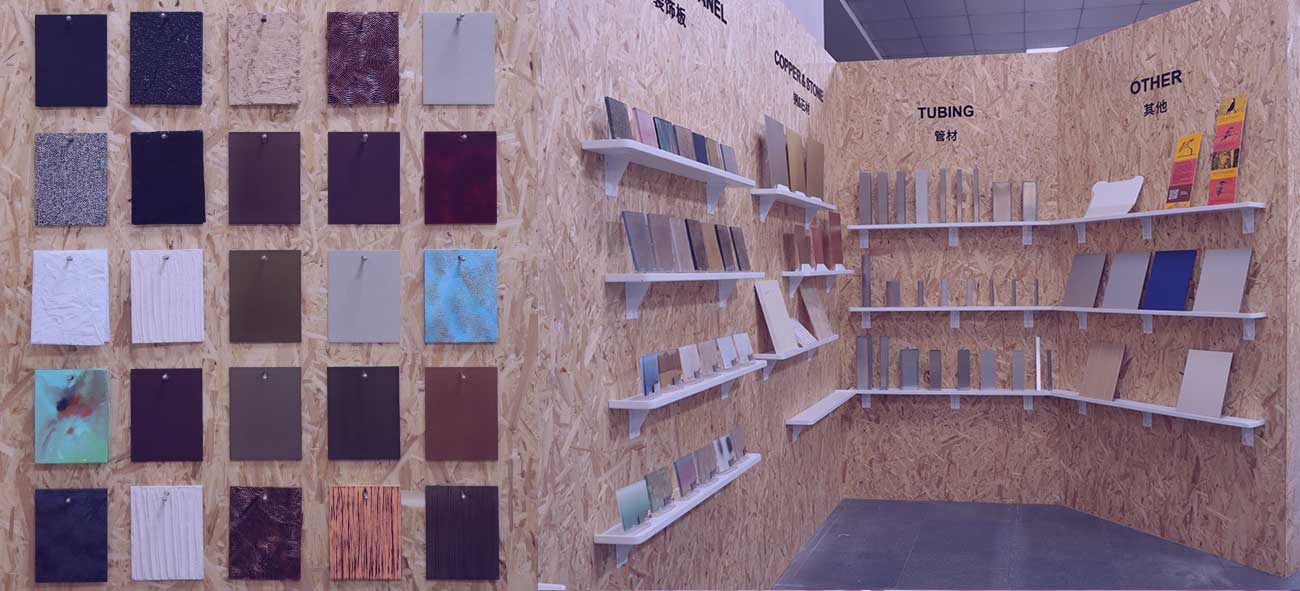
One of the major advantages of artistic paint is its ability to create high-end visual effects without necessarily requiring expensive natural materials or complex surface production process.
COSUN SIGN has developed a range of artistic paint samples and finishing options to support customized signage projects. By adjusting materials and coating processes according to the design requirements, different visual effects can be reproduced across various sign products.
How to Choosing the Right Material for Custom Signage
There is no single “best” material for every signage project.
The appropriate material depends on a combination of factors, including:
Application environment — indoor, outdoor, underground, coastal, high-traffic, or high-humidity environments require different material performance.
Design requirements — minimalist, industrial, luxury, artistic, natural, or technology-oriented designs may require completely different surface effects.
Durability requirements — outdoor signage may require higher resistance to UV exposure, moisture, temperature fluctuations, impact, and corrosion.
Production scale — the volume of signage manufacturing can benefit from different production technologies.
Budget — material selection should balance appearance, performance, processing requirements, installation, and total project cost.
Brand identity— the material should support the visual language of the brand and integrate naturally with the surrounding architecture.

 粤公网安备44030702001648号