
















A perforated aluminum panel is an aluminum sheet with precisely formed openings for architectural, decorative, ventilation, screening, or lighting applications. COSUN Sign produces custom Metal Luminous Panels using CNC punching, laser cutting and integrated LED backlighting. Its manufacturing base covers 38,000 m², including a 15,000 m² metal processing and painting workshop.
What Is a Perforated Aluminum Panel?
A perforated aluminum panel is an architectural metal sheet manufactured with controlled openings in customized patterns, sizes, and spacing.
The main advantages include lightweight construction, customizable appearance, corrosion-resistant finishes, ventilation, light transmission, and compatibility with architectural lighting.
Typical applications include:
- Building facades
- Decorative wall panels
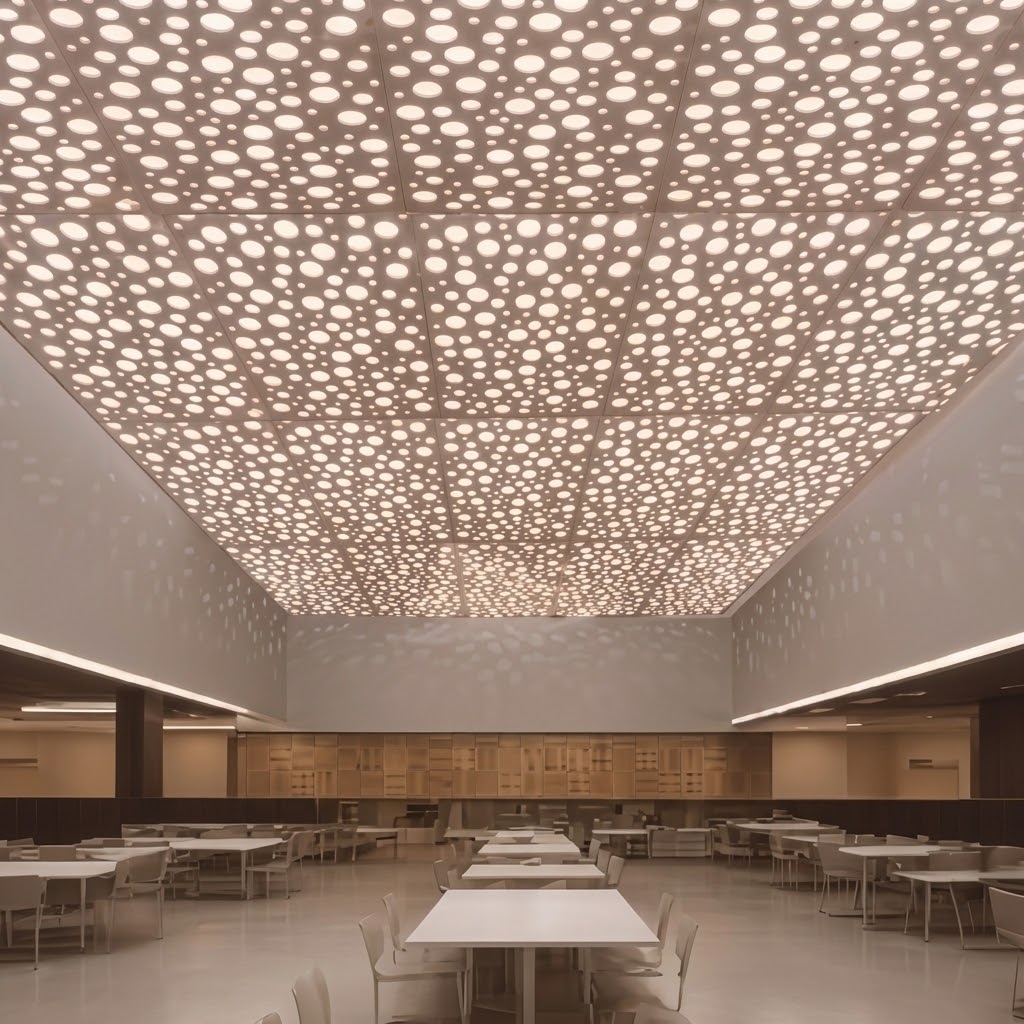
- Luminous ceilings
- Feature walls
- Retail interiors
- Hotels and offices
- Airports and transit stations
- Exhibition halls and museums
COSUN Sign extends this concept through Metal Luminous Panels, which combine a perforated or laser-cut aluminum surface with LED lighting behind the panel.
How Does a Perforated Aluminum Panel Work?
A perforated aluminum panel works by using CNC punching or laser cutting to create a controlled opening pattern in an aluminum sheet.
The typical production process includes:
- Selecting the appropriate aluminum material.
- Developing the perforation or decorative pattern.
- CNC punching or laser cutting the panel.
- Bending and forming the panel when required.
- Applying the specified surface finish.
- Adding LED backlighting for luminous applications.
- Preparing mounting frames or installation structures.
For luminous panels, LEDs are positioned behind the metal surface. Optical diffusion helps distribute light across the panel for a more uniform visual effect.
What Are the Key Specifications?
The main specifications are material, panel dimensions, perforation pattern, fabrication method, finish, mounting structure, and lighting configuration.
| Specification | COSUN Sign Options |
|---|---|
| Material | Architectural aluminum; stainless steel options |
| Pattern | Custom perforation or laser-cut designs |
| Fabrication | CNC punching, laser cutting, bending |
| Finish | Powder coating, PVDF, anodizing, custom paint |
| Lighting | Integrated LED backlighting |
| Light control | Optical diffusion |
| Mounting | Custom or prefabricated frames |
| Application | Indoor and outdoor architectural projects |
Panel dimensions, thickness, opening pattern, and structural requirements should be determined according to the specific project.
Where Are Perforated Aluminum Panels Used?
Perforated aluminum panels are commonly used where architects need a combination of decorative appearance, controlled openings, and lightweight metal construction.
Common applications include:
- Shopping malls: retail fronts, feature walls and illuminated displays
- Hotels: lobbies, ceilings and decorative architectural elements
- Office buildings: reception areas, feature walls and facades
- Airports: architectural interiors and illuminated installations
- Transit stations: decorative and functional panels
- Exhibition halls: branded architectural surfaces
- Museums: feature walls and artistic installations
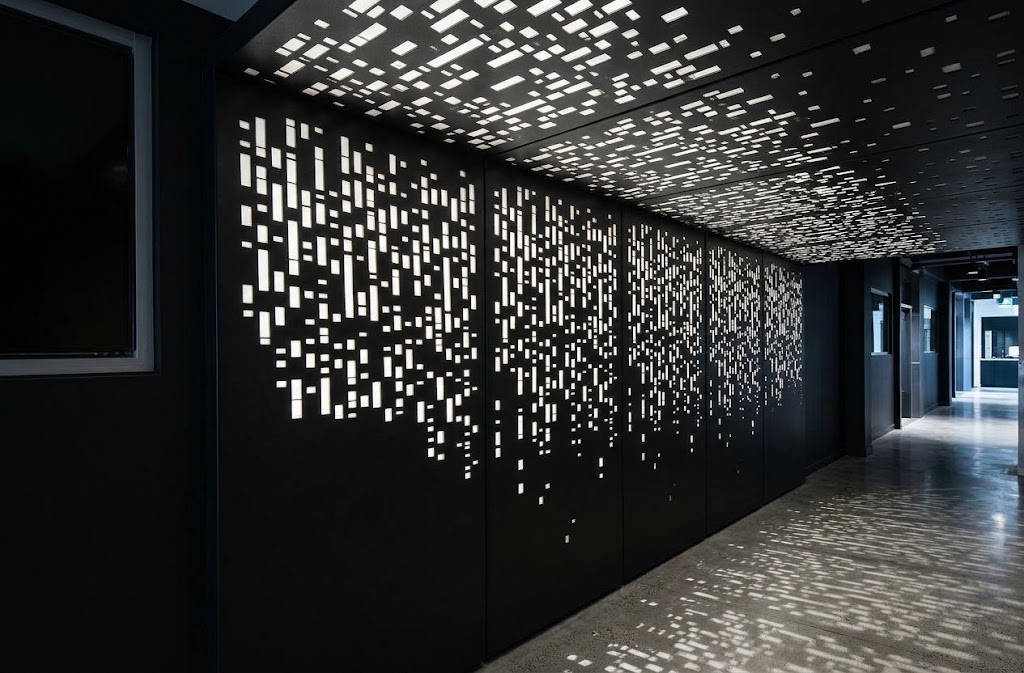
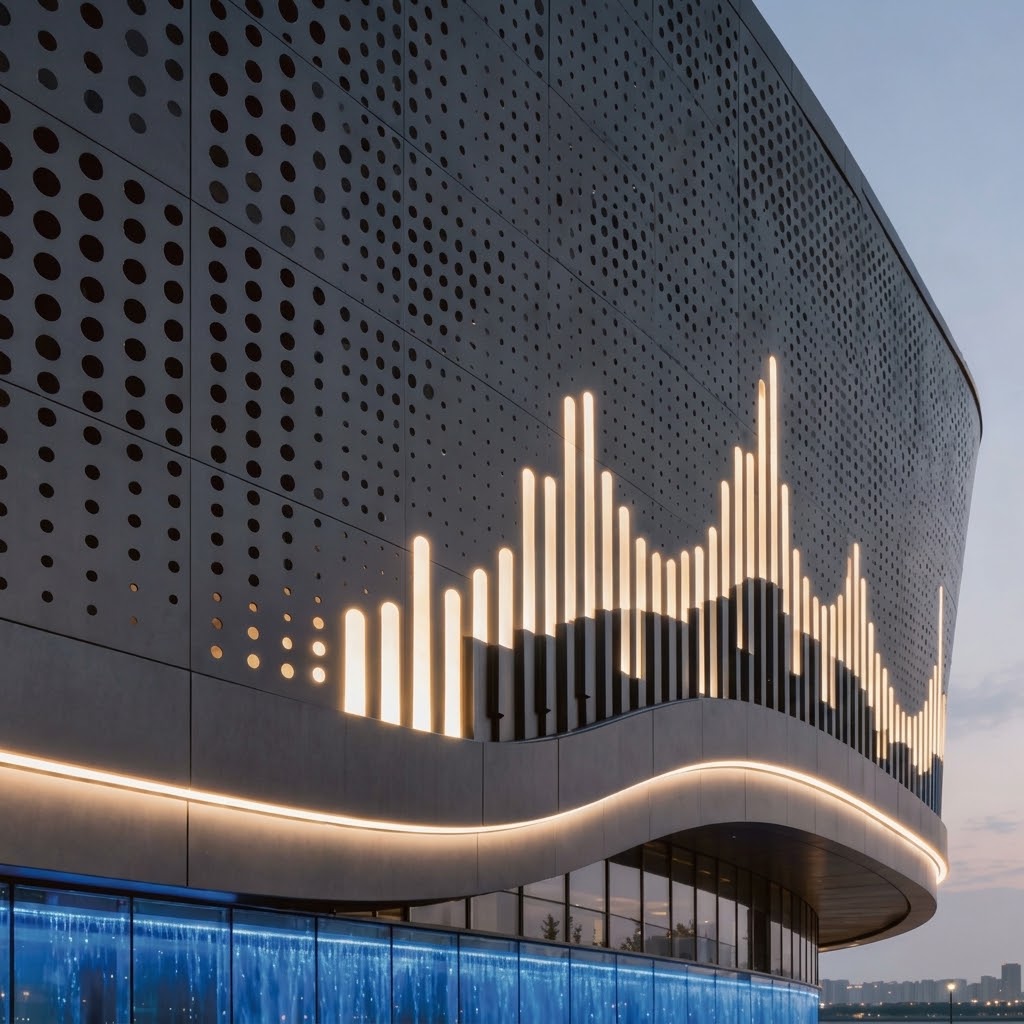
When combined with LEDs, perforated panels can create illuminated facades, ceilings, signage elements, and architectural feature walls.
How Do You Choose the Right Perforated Aluminum Panel?
The right panel should be selected according to the application, environment, design requirements, material, finish, installation method, and lighting objectives.
Consider these factors:
- Material: Choose aluminum when low weight and architectural finishing options are important.
- Pattern: Define opening size, spacing, shape, and visual density.
- Finish: Select powder coating, PVDF, anodizing, or another finish according to appearance and exposure.
- Lighting: For luminous panels, consider LED layout, diffusion, maintenance access, and panel depth.
- Installation: Confirm mounting frames, edge returns, dimensions, and site conditions.
Outdoor projects should also consider environmental exposure, structural loads, coating requirements, and applicable building regulations.
How Does It Compare With Other Metal Panels?
A perforated aluminum panel differs from solid and mesh panels because its opening pattern can be precisely controlled for both visual and functional purposes.
| Panel Type | Main Characteristic | Lighting Potential |
|---|---|---|
| Perforated aluminum panel | Controlled openings | High |
| Solid aluminum panel | Continuous surface | Medium |
| Expanded metal | Open expanded structure | Medium |
| Metal mesh | Woven/open structure | Medium |
| Luminous metal panel | Metal surface with LED system | High |
| Laser-cut metal panel | Custom decorative patterns | High |
Compared with traditional solid metal panels, perforated panels can provide additional visual depth, airflow, screening, and light transmission.
What Affects the Cost?
The cost of a perforated aluminum panel mainly depends on material, dimensions, pattern complexity, fabrication, finishing, lighting, mounting structures, and order quantity.
Key cost factors include:
- Aluminum grade and thickness
- Panel size
- Perforation density
- CNC or laser-cutting requirements
- Bending and edge fabrication
- Surface treatment
- LED quantity and configuration
- Optical diffusion
- Mounting frames
- Prototype and production quantity
Providing drawings, dimensions, pattern files, finish requirements, and lighting specifications helps manufacturers prepare a more accurate quotation.
Why Choose COSUN Sign?
COSUN Sign is an architectural signage and metal fabrication company providing customized metal panel and illuminated architectural solutions.
The company has 20+ years of metal manufacturing experience and operates a 38,000 m² factory, including a 15,000 m² metal processing and painting workshop.
Its relevant capabilities include:
- CNC punching and laser cutting
- Custom perforation and carved patterns
- Aluminum and stainless steel fabrication
- Bending and precision sheet-metal processing
- Powder coating, PVDF and anodizing
- Integrated LED backlighting
- Optical diffusion
- Indoor and outdoor luminous panels
- Custom mounting structures
COSUN Sign states that it holds UL and CE certificates and is an Authorized Distributor of Sloan.
FAQ
What Is a Perforated Aluminum Panel?
A perforated aluminum panel is an aluminum sheet with engineered openings produced through CNC punching or laser cutting for architectural, decorative, functional, or lighting applications.
How to Choose a Perforated Aluminum Panel?
Choose the panel based on material, dimensions, perforation pattern, finish, environment, installation structure, and whether LED backlighting is required.
Why Use a Perforated Aluminum Panel?
Perforated aluminum panels provide lightweight construction, customizable patterns, ventilation, visual screening, and light transmission. They can also be integrated with LEDs for illuminated architectural applications.
Source & Expertise
Source: COSUN Sign product and company information.
Technical scope: This guide covers perforated aluminum panel fabrication, architectural applications, finishing, LED integration, selection, comparison, and cost factors.
Manufacturer data: COSUN Sign reports 20+ years of manufacturing experience, a 38,000 m² factory, and a 15,000 m² metal processing and painting workshop.
Last Updated: October 6, 2026

 粤公网安备44030702001648号