
















Metal cladding panels are architectural metal components used to cover building exteriors and interior feature walls. Cosun Sign manufactures custom metal facade panels using aluminum and stainless steel, with typical thicknesses of 1.5–6 mm reported for its facade panel range and more than 20 years of custom manufacturing experience. Options include perforation, laser cutting, decorative finishes, and integrated LED lighting, depending on project requirements.
What Are Metal Cladding Panels?
Metal cladding panels are prefabricated metal sheets or shaped components installed over building surfaces to provide a defined architectural appearance and, depending on the system, support shading, ventilation, privacy, and weather protection. The term is defined as a category of architectural wall covering rather than one specific material or installation method.
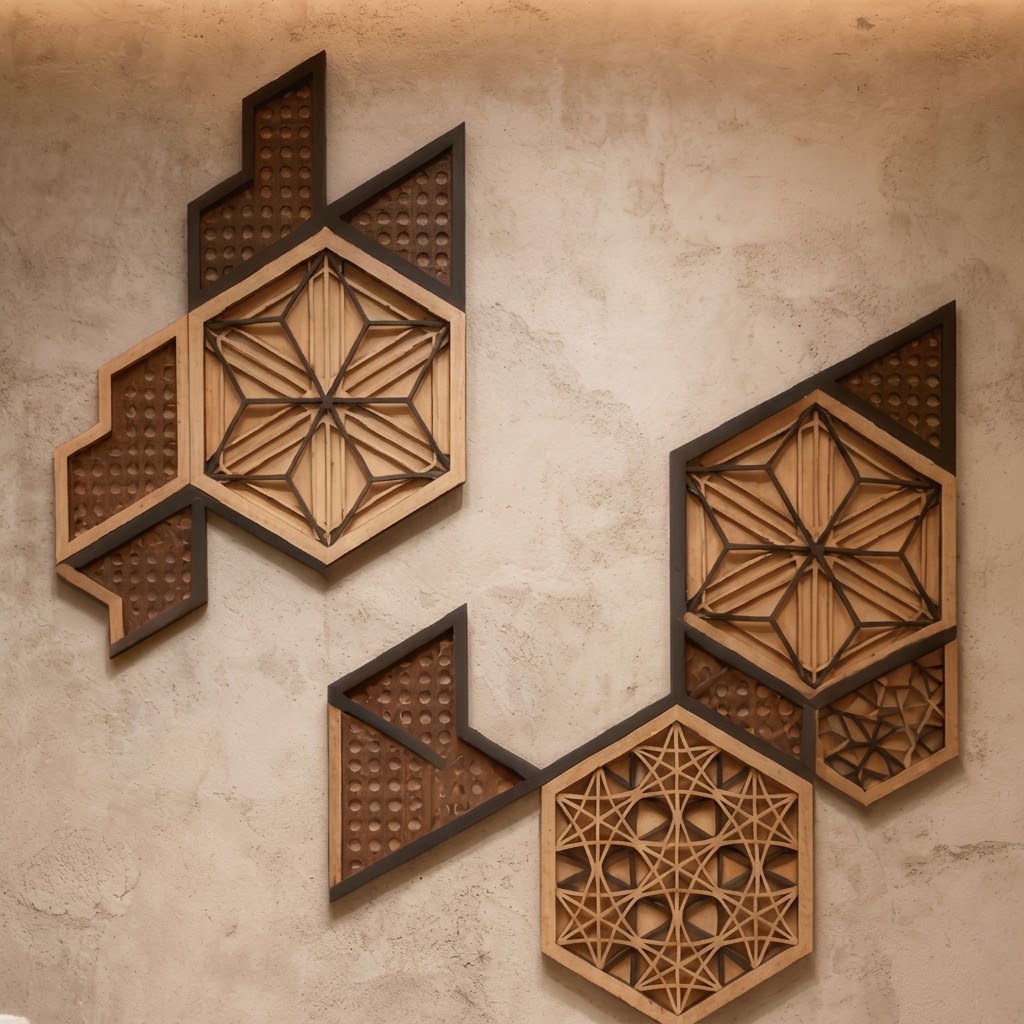
Cosun Sign offers custom architectural metal panels for commercial, retail, hospitality, and public environments. Its product range includes perforated aluminum panels, laser-cut panels, decorative metal facades, and illuminated metal panels. <sup>1</sup>
The main advantages include:
- Design flexibility: Custom dimensions, geometric patterns, and decorative details.
- Material options: Aluminum and stainless steel, selected according to application requirements.
- Surface customization: Powder coating, anodizing, PVDF coating, and other available finishes.
- Functional integration: Perforations, shading features, and selected LED lighting configurations.
- Project coordination: Fabrication based on approved drawings and project specifications.
How Are Metal Cladding Panels Manufactured?
Metal cladding panels are manufactured by converting sheet metal into specified shapes, patterns, and finished components through cutting, forming, surface treatment, and quality inspection.
A typical custom fabrication workflow includes the following stages.
What Are the Main Manufacturing Steps?
- Design review: Confirm panel dimensions, material, pattern, finish, mounting requirements, and installation environment.
- Material preparation: Select suitable aluminum or stainless steel sheet according to the project specification.
- Cutting and perforation: Use laser cutting or CNC punching where appropriate to produce decorative openings and precise outlines.
- Forming: Apply bending or other forming processes to achieve the required panel geometry.
- Surface finishing: Apply the specified coating, anodized finish, brushed appearance, or decorative treatment.
- Quality inspection: Check dimensions, surface appearance, pattern consistency, and agreed project requirements before shipment.
The exact process depends on the panel design, material, finish, and fabrication tolerances. Curved, perforated, and illuminated panels may require additional engineering and assembly steps. <sup>2</sup>
What Technical Specifications Should Buyers Confirm?
Buyers should confirm material grade, thickness, panel dimensions, finish, mounting method, environmental exposure, and applicable building requirements before approving metal cladding panels.
| Specification | Options or considerations |
|---|---|
| Material | Aluminum or stainless steel |
| Panel thickness | A published COSUN facade-panel article reports a typical range of 1.5–6 mm; confirm the range for the selected product |
| Panel geometry | Flat, perforated, laser-cut, curved, or decorative |
| Surface finish | PVDF coating, powder coating, anodizing, brushed or other specified finishes |
| Pattern | Standard geometric patterns or custom designs |
| Lighting | Optional LED integration for applicable panel designs |
| Mounting | Project-specific fixing and support arrangements |
| Quality checks | Dimensions, coating appearance, adhesion testing where specified, and fabrication conformity |
These are selection parameters, not universal specifications for every panel. Final values should be confirmed against approved drawings, product documentation, and project engineering requirements. <sup>1</sup>
For coating evaluation, ASTM D3359-23 describes test methods for assessing the adhesion of coating films to metallic substrates using pressure-sensitive tape. It does not replace the need to specify suitable coating performance for the intended environment. <sup>3</sup>
For projects in the United States, applicable building codes must also be reviewed. For example, Section 1406 of the 2025 California Building Code addresses metal composite materials used as exterior wall coverings. This requirement applies to relevant material and system types, not automatically to every solid metal panel. <sup>4</sup>
Where Are Architectural Metal Panels Commonly Used?
Architectural metal panels are used in commercial building facades, retail environments, hotels, offices, public buildings, and interior feature installations.
Typical applications include:
- Commercial buildings: Decorative exterior cladding and entrance features.
- Hotels and hospitality: Feature walls, reception areas, and decorative facade elements.
- Retail and shopping centers: Branded architectural surfaces and illuminated panels.
- Office buildings: Modern facade treatments and architectural screening.
- Public buildings: Decorative panels for transport hubs, exhibition venues, and other public environments.
- Interior spaces: Partitions, ceilings, feature walls, and selected backlit installations.
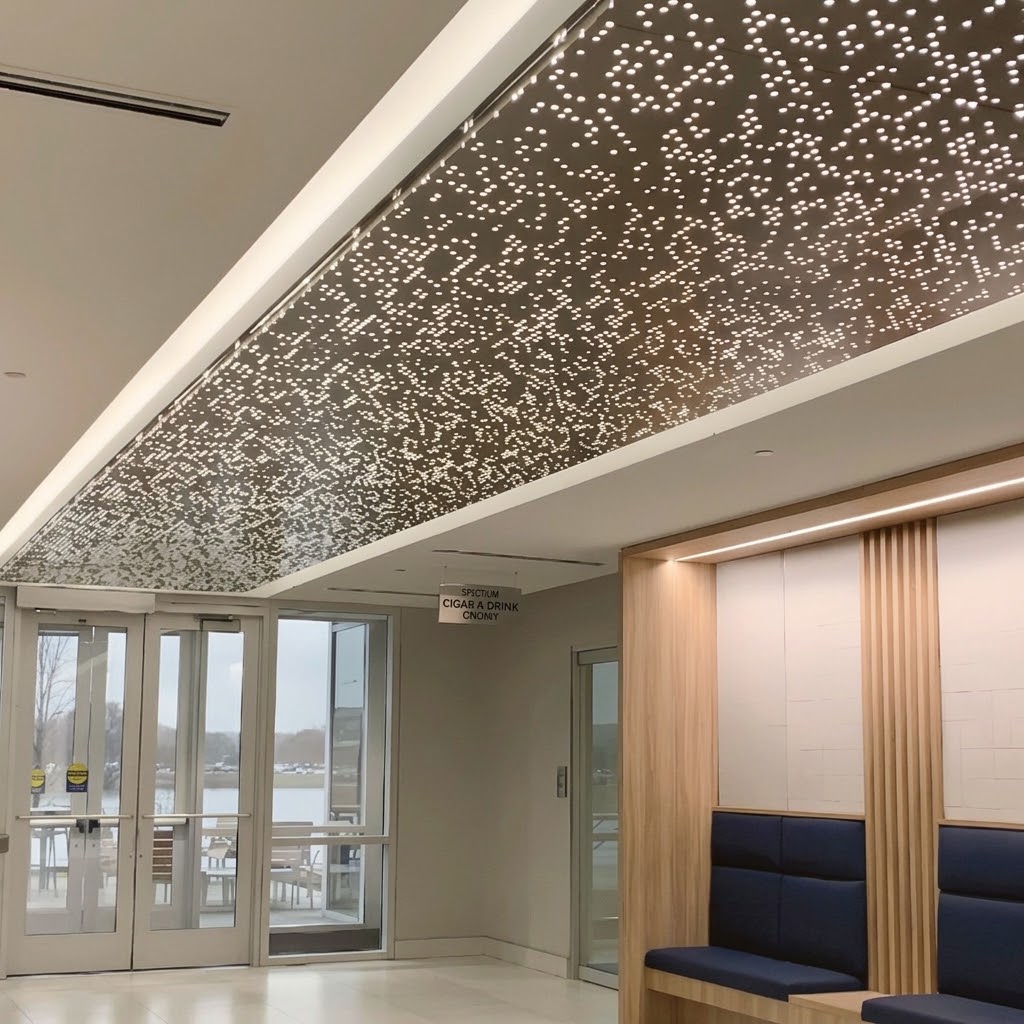
Perforated metal panels may support ventilation, daylight control, screening, or shading when the design and installation are appropriate. Actual performance depends on the opening ratio, panel arrangement, orientation, and surrounding building system.

How Should Buyers Select a Metal Cladding Panels Manufacturer?
A reliable metal cladding panels manufacturer should demonstrate relevant fabrication capabilities, documented material and finish specifications, consistent inspection procedures, and the ability to coordinate with the project’s design and installation requirements.
Before placing an order, evaluate these factors:
- Manufacturing capabilities: Confirm whether the supplier can perform the required laser cutting, punching, bending, finishing, and assembly.
- Customization: Check whether panel dimensions, patterns, colors, and finishes can match the approved design.
- Technical documentation: Request material details, drawings, finish specifications, tolerances, and relevant test reports.
- Quality control: Establish inspection criteria, sample approval procedures, and acceptable surface and dimensional tolerances.
- Project coordination: Confirm drawing review, packaging, delivery arrangements, and installation guidance.
- Compliance: Identify the codes, fire-performance requirements, structural criteria, and certifications applicable to the specific project and product.
Cosun Sign operates as a custom signage manufacturer with architectural metal fabrication capabilities. Its published offerings include custom panel fabrication, laser-cut and perforated designs, multiple surface finishes, and selected illuminated facade solutions. Buyers should verify project-specific documentation and applicable certifications rather than assume every product meets every building standard. <sup>2</sup>
How Do Metal Cladding Panels Compare With Traditional Wall Finishes?
Compared with traditional solutions such as painted plaster, masonry finishes, or other wall coverings, metal cladding panels offer different combinations of weight, fabrication flexibility, appearance, and maintenance requirements.
| Factor | Metal cladding panels | Traditional wall finishes |
|---|---|---|
| Design | Custom cuts, perforations, bends, and patterns | Depends on the material and finishing method |
| Appearance | Metallic, coated, textured, or illuminated effects | Painted, plastered, masonry, or other finishes |
| Installation | Requires suitable supports and fixing details | Varies by finish and substrate |
| Maintenance | Depends on material, coating, exposure, and access | Depends on surface type and exposure |
| Performance | Must be assessed as part of the complete wall system | Must also be assessed according to the selected system |
| Cost | Influenced by fabrication complexity and finish | Influenced by material, labor, and installation |
Metal panels are not automatically superior in every application. Selection should account for structural loads, weather exposure, fire safety, thermal performance, moisture management, and lifecycle maintenance.
What Factors Affect Metal Cladding Panel Costs?
Metal cladding panel costs depend on the selected material, sheet thickness, panel dimensions, design complexity, finish, quantity, mounting components, and packaging requirements.
The main cost considerations are:
- Material and thickness: Different metals and gauges have different material and processing costs.
- Pattern complexity: Detailed perforations, intricate laser-cut designs, and curved shapes can require additional processing.
- Surface treatment: Specialized coatings, decorative textures, and custom colors affect production cost.
- Lighting integration: LED components, wiring provisions, and assembly may add complexity.
- Order quantity: Total volume and the number of unique panel designs affect setup and production planning.
- Installation requirements: Support structures, fixing hardware, transport, and site conditions influence total project cost.
For a meaningful quotation, provide panel drawings or dimensions, material preferences, finish requirements, estimated quantity, installation location, and any applicable technical standards.
Frequently Asked Questions
What are metal cladding panels?
Metal cladding panels are metal components installed over building surfaces for architectural appearance and, depending on the design, functions such as screening, shading, or weather protection. Common options include aluminum, stainless steel, perforated panels, and decorative laser-cut designs.
How do you choose a reliable metal cladding panels manufacturer?
Evaluate the manufacturer’s relevant fabrication capabilities, material traceability, finishing options, quality-control procedures, technical documentation, and project coordination. Request samples or production drawings where appropriate, and confirm compliance with the project’s applicable building requirements.
Why choose 3D-printed metal cladding panels over traditional options?
Three-dimensional metal cladding does not necessarily mean 3D-printed metal. Custom panels are commonly produced through cutting, punching, bending, and assembly. These established processes can support complex patterns and shaped surfaces without requiring additive manufacturing. Metal 3D printing may be appropriate for specialized geometries, but its suitability depends on structural needs, production volume, cost, and material requirements.
Source & Expertise
This article is based on publicly available COSUN Sign product and manufacturing information, together with the referenced ASTM coating-adhesion test method and applicable building-code guidance. Product specifications, test results, certifications, and code compliance should be confirmed for each individual project.
Brand: COSUN SIGN
Product category: Metal Cladding Panels / Architectural Metal Panels
Relevant capabilities: Custom fabrication, laser cutting, perforation, surface finishing, and selected LED integration.
Last Updated
Last Updated: October 2026

 粤公网安备44030702001648号