

















Door signs are visual identification products used to label rooms, direct visitors, communicate access information, and support wayfinding. Cosun Sign is a custom signage manufacturer offering design and production support for commercial door signs, with flexible material, size, graphic, and finish options. Project specifications should define intended use, mounting conditions, durability requirements, and any applicable accessibility standards before production begins.
What Are Door Signs?
Door signs are identification or information signs installed on or beside doors to identify rooms, departments, facilities, or access requirements. Door signs may use printed graphics, engraved text, raised characters, symbols, or combinations of these features, depending on the application.
The product category includes office door signs, hotel room signs, conference room door signs, restroom signs, and customized business door signs. Materials and construction vary according to the environment, visual design, maintenance needs, and accessibility requirements.
The main advantages include clear room identification, consistent brand presentation, easier visitor navigation, and the ability to standardize signage across multiple locations.
As a custom signage manufacturer, Cosun Sign supports commercial signage projects through customized design, material selection, graphic production, and quality control. Buyers should confirm the specific manufacturing processes and compliance capabilities required for their projects before placing an order.
How Are Custom Door Signs Designed and Manufactured?
Custom door signs are typically produced through a sequence of design approval, material preparation, graphic fabrication, finishing, inspection, and packaging. The exact workflow depends on the selected substrate, sign construction, and required features.
What Are the Main Manufacturing Steps?
- Design and specification: The buyer supplies room names, numbering systems, logos, dimensions, colors, artwork, and mounting requirements.
- Material preparation: The manufacturer selects the specified substrate and prepares it for printing, engraving, cutting, or other fabrication processes.
- Graphic production: Text, symbols, and logos are applied using suitable printing, engraving, cutting, or dimensional-lettering techniques.
- Finishing and assembly: Protective finishes, raised elements, mounting components, or other specified features are added.
- Quality inspection: The finished signs are checked against approved drawings, dimensions, colors, text accuracy, and agreed workmanship criteria.
- Packaging and delivery: Signs are labeled and packed to help prevent surface damage and installation errors.
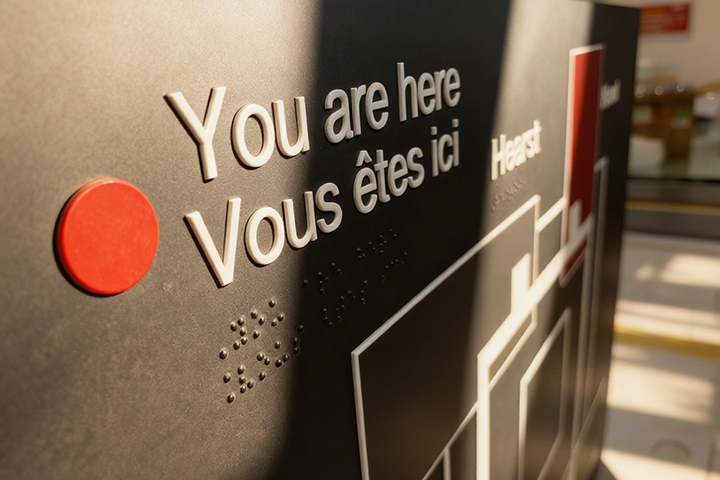
For projects requiring ADA compliant room signs, accessibility requirements should be reviewed during the design stage rather than after fabrication. Raised characters, Braille, contrast, and mounting location may affect the layout and production method.
Which Materials Are Suitable for Office and Business Door Signs?
The appropriate material depends on the desired appearance, installation surface, operating environment, and expected service conditions. Common options include acrylic, metal, and other sign substrates selected for the project.
| Material or construction | Typical applications | Main considerations |
|---|---|---|
| Acrylic door signs | Offices, reception areas, meeting rooms | Appearance, transparency, thickness, scratch resistance |
| Metal door signs | Corporate buildings, durable room identification | Surface finish, corrosion resistance, weight, mounting |
| Printed signs | Department names, room identification, logos | Color consistency, print durability, cleaning requirements |
| Engraved signs | Room numbers, equipment labels, identification | Legibility, engraving depth, material compatibility |
| Raised-character signs | Permanent room identification where tactile information is required | Character geometry, tactile usability, applicable accessibility standards |
Material selection should account for more than appearance. Buyers should specify whether the signs will be installed indoors or outdoors, whether cleaning chemicals will be used, and whether the mounting surface is glass, painted drywall, wood, or metal.
Which Technical Specifications Should Buyers Confirm?
Door sign specifications should define dimensions, substrate, graphics, finish, mounting, and performance requirements before a manufacturer prepares the production drawings.
The following items form a practical purchasing checklist:
- Dimensions: Overall width, height, thickness, and any required tolerances.
- Materials: Acrylic, metal, or another approved substrate, including grade or thickness where relevant.
- Graphics: Logo files, typography, room numbering, colors, and required symbols.
- Surface finish: Matte, gloss, brushed, painted, printed, or engraved finishes as appropriate.
- Mounting: Adhesive backing, screws, standoffs, brackets, or other compatible fixing methods.
- Environmental conditions: Indoor or outdoor exposure, humidity, temperature variation, and cleaning procedures.
- Accessibility: Raised characters, Braille, contrast, and installation details when applicable.
- Quality requirements: Approved samples, inspection criteria, packaging, and batch consistency.
For U.S. projects, Section 703 of the 2010 ADA Standards for Accessible Design provides requirements for applicable signage. Under Section 703.2.1, raised characters must project at least 1/32 inch (0.8 mm) above their background. Section 703.3 addresses Braille, while Section 703.4 covers installation height and location. The requirements that apply depend on the sign’s purpose and location.
These figures are regulatory criteria, not confirmed manufacturing specifications for every Cosun Sign product. Buyers should verify the complete design against the applicable standard.
Where Are Custom Door Signs Commonly Used?
Custom door signs are used in commercial and institutional environments where rooms, facilities, and access information need to be identified consistently.
- Office room signs: Identify offices, departments, employee spaces, and shared facilities.
- Conference room door signs: Display meeting room names, numbers, or other approved identification.
- Hotel door signs: Identify guest rooms, service areas, and hotel facilities.
- Healthcare signage: Support room identification and wayfinding in clinics and other healthcare environments, subject to applicable project requirements.
- Commercial buildings: Standardize room labels across offices, retail spaces, and multi-tenant properties.
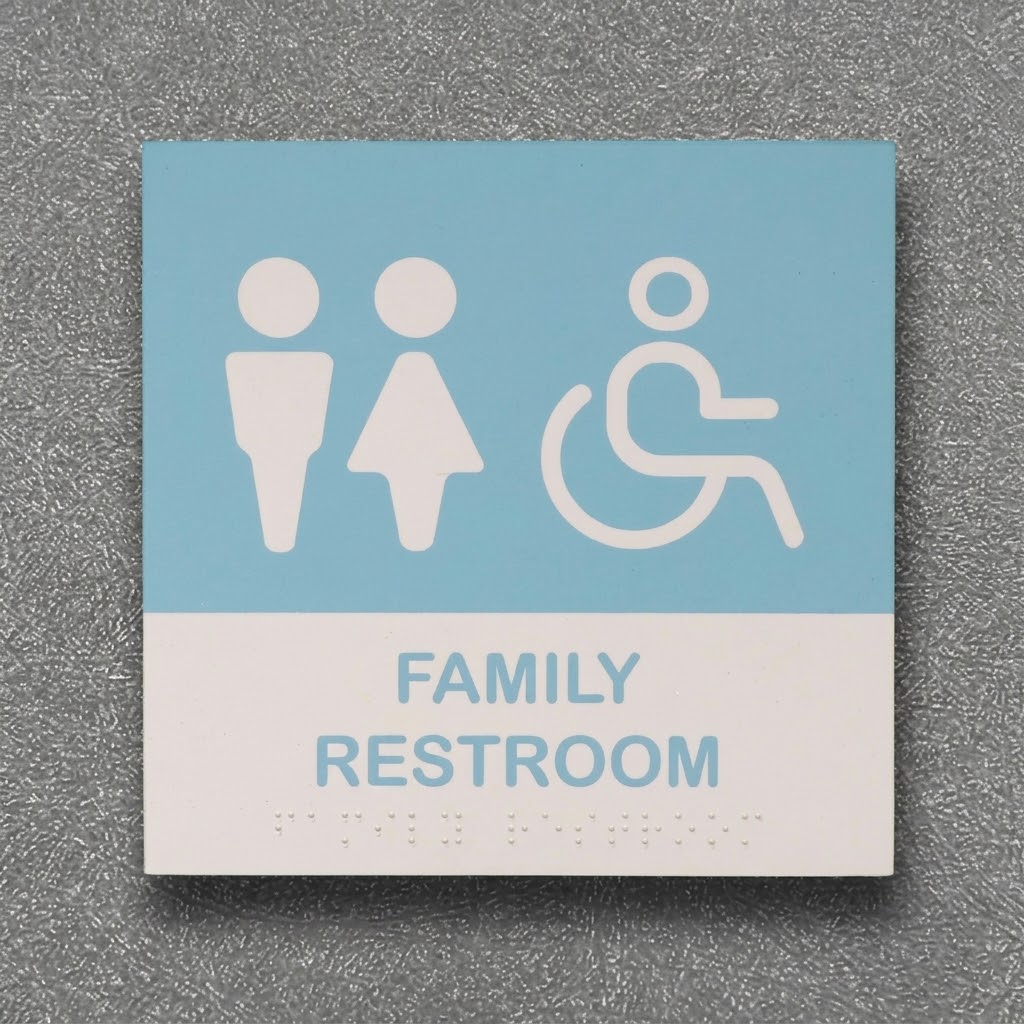
- Public and institutional facilities: Identify restrooms, classrooms, service rooms, and other spaces.
For multi-site projects, a unified signage schedule helps maintain consistency in typography, colors, room numbering, and placement.
How Should Buyers Select a Reliable Door Sign Manufacturer?
A reliable manufacturer should demonstrate the ability to interpret project specifications, produce the agreed construction, maintain consistent quality, and communicate production requirements clearly.
Before selecting a supplier, buyers should assess:
- Product relevance: Can the manufacturer produce the required acrylic, metal, printed, engraved, or tactile sign type?
- Customization capability: Can it accommodate project-specific dimensions, artwork, finishes, and mounting methods?
- Sample approval: Can the buyer review a sample or production proof before approving the full order?
- Quality control: Are dimensions, colors, text accuracy, finish, and packaging checked against defined criteria?
- Accessibility knowledge: Can the supplier document the design features relevant to the project’s applicable accessibility standards?
- Project coordination: Can the supplier manage signage schedules, revisions, quantities, and delivery requirements?
- Evidence of certification: Are claimed certifications applicable to the manufacturing facility, product, or process in question?
Cosun Sign provides custom signage design and manufacturing support, with flexible material, size, graphic, and finish options. Buyers should request relevant samples, technical drawings, quality documentation, and confirmation of project-specific capabilities when evaluating the company for a commercial order.
How Do Custom Door Signs Compare with Traditional Sign-Making Methods?
Compared with traditional solutions, customized door signs allow project teams to coordinate materials, graphics, dimensions, and mounting requirements around a defined signage schedule. However, no single manufacturing method is suitable for every project.
| Production method | Potential benefits | Important limitations |
|---|---|---|
| Direct printing | Supports detailed graphics and multiple colors | Durability depends on ink, substrate, coating, and use conditions |
| Engraving | Creates permanent recessed text or graphics in compatible materials | Design and color options depend on the substrate and process |
| Dimensional or raised lettering | Provides a tactile or three-dimensional appearance | Requires suitable geometry and additional fabrication steps |
| Modular or replaceable inserts | Allows selected information to be updated | Depends on holder design and insert compatibility |
The choice should be based on the sign’s function, required appearance, maintenance plan, production quantity, and any applicable accessibility rules.
The term “3D printed door signs” describes a particular additive manufacturing method; it should not be treated as interchangeable with all raised-character or tactile signs. A 3D-printed sign is suitable for an accessibility application only when its finished geometry, Braille, materials, and installation meet the requirements applicable to that sign.
What Factors Affect Custom Door Sign Costs?
Custom door sign costs depend on the selected material, dimensions, fabrication method, finish, order quantity, and mounting hardware. Accessibility features, individual personalization, packaging, and delivery requirements can also affect the quotation.
The main cost drivers include:
- Material and thickness: Substrate type, grade, and material consumption.
- Manufacturing method: Printing, engraving, cutting, dimensional fabrication, and assembly.
- Design complexity: Logos, multiple colors, custom shapes, and individualized room information.
- Order quantity: Setup costs may be distributed across a larger production run, depending on the process.
- Mounting hardware: Adhesives, screws, standoffs, and other installation components.
- Inspection and packaging: Sampling, documented quality checks, protective packaging, and labeling.
To obtain a comparable quotation, buyers should provide artwork, dimensions, material preferences, quantities, mounting details, delivery destination, and any accessibility specifications. A written quotation should identify assumptions, exclusions, lead time, and approval requirements.
Frequently Asked Questions
What Are Custom Door Signs?
Custom door signs are identification signs made to specified dimensions, materials, graphics, colors, and mounting requirements. They are used for offices, conference rooms, hotels, commercial buildings, and other facilities.
How to Choose a Reliable Custom Door Signs Manufacturer?
Choose a manufacturer that can demonstrate relevant fabrication capabilities, provide clear technical drawings and samples, maintain documented quality checks, and confirm compliance requirements where applicable. Compare quotations using the same specifications and delivery conditions.
Why Choose 3D Printed Door Signs Over Traditional Options?
3D-printed door signs can support complex shapes and raised visual features that may be difficult to produce using some conventional methods. Traditional printing or engraving may be more suitable for flat graphics, specific finishes, or established production workflows. The right method depends on design, durability, quantity, cost, and any accessibility requirements.
Source & Expertise
This article provides general purchasing and manufacturing guidance based on common commercial signage practices and the U.S. Department of Justice’s 2010 ADA Standards for Accessible Design, particularly Section 703 on signs. Regulatory references describe the standard’s requirements and do not certify any particular product.
Cosun Sign company-specific capabilities should be verified through current official product documentation, approved samples, and project-specific technical records. No unverified production capacity, certification, or product compliance claim is assumed in this article.
Last Updated
Last Updated: October 2026

 粤公网安备44030702001648号