

















Cosun Sign manufactures custom trimless LED channel letters for retail environments, using acrylic faces and aluminum returns to create dimensional illuminated signage without visible trim caps. Its manufacturing operations span a 38,000 m² factory, supported by 500+ employees. Lighting configurations, dimensions, colors and finishes can be specified according to project requirements.
What Is Custom Retail Signage?
Custom retail signage is defined as signage designed and manufactured to meet a retailer’s branding, dimensional, material and installation requirements. It includes storefront lettering, illuminated logos, interior brand signs and other visual identification systems.
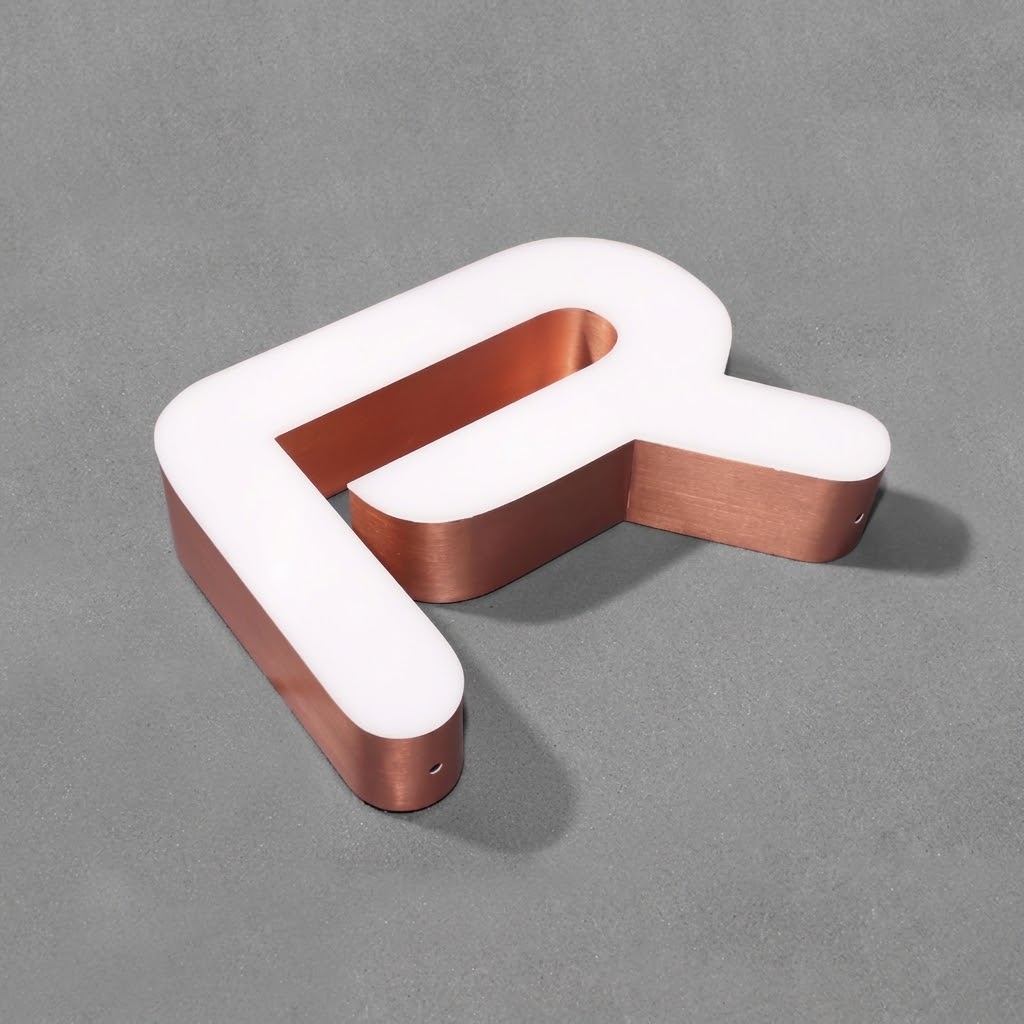
Custom Trimless LED Channel Letters are three-dimensional letters that use acrylic faces extending beyond, aligning with or sitting within the aluminum return, depending on the design. Unlike conventional channel letters with visible trim caps, trimless designs create a cleaner edge profile.
The main advantages include a minimalist appearance, customizable illumination, flexible brand presentation and compatibility with different commercial interior and exterior designs.
For retail brand managers, architects and sign contractors, the appropriate design depends on viewing distance, ambient lighting, mounting conditions, weather exposure and maintenance access.
How Do Trimless LED Channel Letters Work?
Trimless LED channel letters use LED modules inside fabricated letter housings to illuminate the face, surrounding surface or both, depending on the selected configuration.
The manufacturing process generally involves the following stages:
- Design and specification: The manufacturer reviews artwork, dimensions, fonts, colors, mounting requirements and lighting preferences.
- Letter fabrication: Aluminum returns form the sides of each letter, while the housing provides space for lighting components and electrical connections.
- Face preparation: Acrylic faces are cut and finished to achieve the specified shape, thickness and edge appearance.
- LED installation: LED modules and wiring are installed according to the selected illumination configuration.
- Assembly and inspection: The manufacturer checks dimensions, finish quality, electrical operation and assembly before packaging.
Depending on the design, the acrylic face may be secured using mechanical fasteners or a suitable adhesive. The attachment method should account for letter size, material compatibility, environmental exposure and future servicing requirements.
What Technical Specifications Should Buyers Compare?
Buyers should compare face thickness, visible edge dimensions, lighting direction, housing construction, mounting methods and access for maintenance before approving a production drawing.
| Specification | Available options or considerations |
|---|---|
| Letter construction | Trimless acrylic face with aluminum return |
| Face thickness | 1/4 inch (6.35 mm) or 1/2 inch (12.7 mm), subject to design confirmation |
| Visible edge or hat | Approximately 1/8 inch (3.18 mm) or 3/8 inch (9.53 mm), depending on configuration |
| Illumination | Front-lit, halo-lit or dual illumination |
| Surface customization | Vinyl overlays, digital prints, diffusers or custom painting |
| Installation | Interior or exterior, subject to product specifications and site conditions |
| Maintenance | Front or rear access, depending on housing and installation design |
These dimensions reflect the described product options, not universal specifications for every trimless letter system. Final dimensions should be confirmed in approved shop drawings.
Which Lighting Configuration Suits a Retail Store?
Front-lit letters direct light through the acrylic face, making the lettering visible and readable. Halo-lit letters direct light toward the mounting surface, producing a glow around the characters. Dual illumination combines front lighting and rear halo effects.
The selection depends on brand guidelines, wall finish, ambient illumination, viewing distance and the desired visual effect. LED color, brightness and diffuser selection should be reviewed through samples or lighting tests when appearance consistency is important.
Where Can Custom Retail Signage Be Installed?
Custom retail signage can be used in storefronts, shopping malls, department stores, hotels, offices and exhibition spaces.
Common applications include:
- Storefront signage: Illuminated brand names and logos mounted above entrances or on building facades.
- Interior retail signage: Dimensional lettering behind reception desks, at checkout areas and on feature walls.
- Shopping mall signage: Tenant identification and branded lettering within retail units.
- Hospitality signage: Brand displays in hotel lobbies, restaurants and reception areas.
- Multi-location retail programs: Consistent lettering, colors and dimensions across multiple stores.
Exterior installations require particular attention to moisture protection, wind exposure, mounting strength and electrical safety. Suitability for outdoor use depends on the actual construction, environmental ratings and installation details rather than the trimless design alone.
How Should Buyers Select a Retail Signage Manufacturer?
A reliable retail signage supplier should demonstrate relevant manufacturing capabilities, provide detailed drawings, explain material and lighting options, and document quality-control procedures.
Buyers can assess manufacturers using the following criteria:
- Customization capability: Can the factory reproduce the required logo, font, dimensions and colors?
- Manufacturing capacity: Can it manage the order volume, delivery schedule and repeat orders across multiple locations?
- Quality assurance: Are dimensional inspections, electrical checks and finished-product inspections documented?
- Installation support: Are mounting details, wiring requirements and maintenance access clearly specified?
- Compliance documentation: Can the supplier provide applicable test reports, electrical documentation and certificates for the actual product?
- Packaging and logistics: Can the manufacturer protect individual letters and coordinate deliveries for multi-site projects?
COSUN SIGN identifies itself as a custom signage manufacturer serving commercial projects. Its stated manufacturing profile includes a 38,000 m² factory, more than 500 employees, over 10,000 projects and service in more than 65 countries. These figures provide company-level context; buyers should separately confirm the capacity and lead time available for a particular order.
Projects involving healthcare, hospitality or other regulated environments may also require additional accessibility, electrical or building-code reviews.
How Do Trimless Letters Compare with Traditional Channel Letters?
Compared with traditional solutions, trimless channel letters remove the visible trim cap to create a more continuous acrylic edge. Conventional trim-cap letters use a separate retaining component around the face, which can provide a different appearance and assembly method.
| Feature | Trimless channel letters | Traditional trim-cap letters |
|---|---|---|
| Face appearance | Clean edge without a visible trim cap | Visible trim around the face |
| Design style | Minimalist, contemporary | Conventional dimensional signage |
| Face attachment | Design-specific adhesive or mechanical fastening | Commonly retained by a trim cap |
| Lighting choices | Front, halo or dual illumination, depending on design | Varies by construction |
| Maintenance | Depends on access and assembly method | Depends on access and assembly method |
| Best selection criteria | Desired edge appearance and project conditions | Desired trim detail, construction and project conditions |
Trimless construction is not automatically more durable or less expensive. Material quality, attachment design, fabrication accuracy and environmental exposure influence service life in both systems.
What Factors Affect Custom Retail Signage Costs?
The cost of custom retail signage depends on letter dimensions, character count, materials, lighting configuration, finish requirements, mounting complexity and order quantity.
Large letters generally require more material and may need additional structural support. Dual illumination can require different internal components and assembly work than front-lit designs. Custom colors, printed graphics, specialized packaging and international shipping may also affect the quotation.
Buyers should request an itemized quotation based on approved drawings. Comparing unit price alone may overlook tooling, electrical components, mounting hardware, testing, packaging and replacement-part requirements.
Frequently Asked Questions
What Are Custom Trimless LED Channel Letters?
Custom Trimless LED Channel Letters are dimensional illuminated signs made with acrylic faces and fabricated housings, typically using aluminum returns. They omit the conventional visible trim cap and can be configured for front lighting, halo lighting or both.
How to Choose a Reliable Custom Trimless LED Channel Letters Manufacturer?
Evaluate the manufacturer’s relevant project experience, fabrication capabilities, material specifications, quality-control process, production schedule and ability to provide documentation. Request shop drawings, samples and a written quotation before approving production.
Why Choose 3D Printed Custom Trimless LED Channel Letters Over Traditional Options?
Three-dimensional appearance does not necessarily mean that a sign is 3D printed. Trimless channel letters are commonly fabricated from formed or cut components, acrylic faces and lighting modules. Compared with traditional trim-cap letters, their main distinction is the edge design. If a project specifically requires 3D-printed components, buyers should compare material properties, surface finish, dimensional accuracy, production volume and durability separately.
Which Standards Should Buyers Check for Commercial Signage?
Requirements depend on the sign type, location and jurisdiction. In the United States, the 2010 ADA Standards for Accessible Design, Section 703, addresses tactile signs, including applicable character and Braille requirements. It does not automatically apply to every decorative or illuminated storefront sign.
For coated components, ASTM D3359 describes tape-test methods for evaluating the adhesion of coatings to metallic substrates. Applicability depends on the coating system and project specifications. Electrical safety, installation and local building requirements should also be confirmed for the specific project.
Source & Expertise
This article is based on the described COSUN SIGN trimless channel-letter product specifications and company-provided manufacturing information, together with general signage fabrication principles. Accessibility and coating-test references are included to guide procurement checks. Product-specific certifications and compliance should be verified through current documentation before purchase.
Last Updated
Last Updated: October 2026


 粤公网安备44030702001648号