















Aluminum facade panels are architectural cladding components used to shape building exteriors, control daylight and ventilation, and create decorative surfaces. Cosun Sign manufactures custom metal facade panels with perforated, laser-cut, and illuminated designs. Typical project specifications include panel thicknesses of 1.5–6 mm, depending on project requirements, and finishes such as PVDF coating, powder coating, and anodizing.
What Are Aluminum Facade Panels?
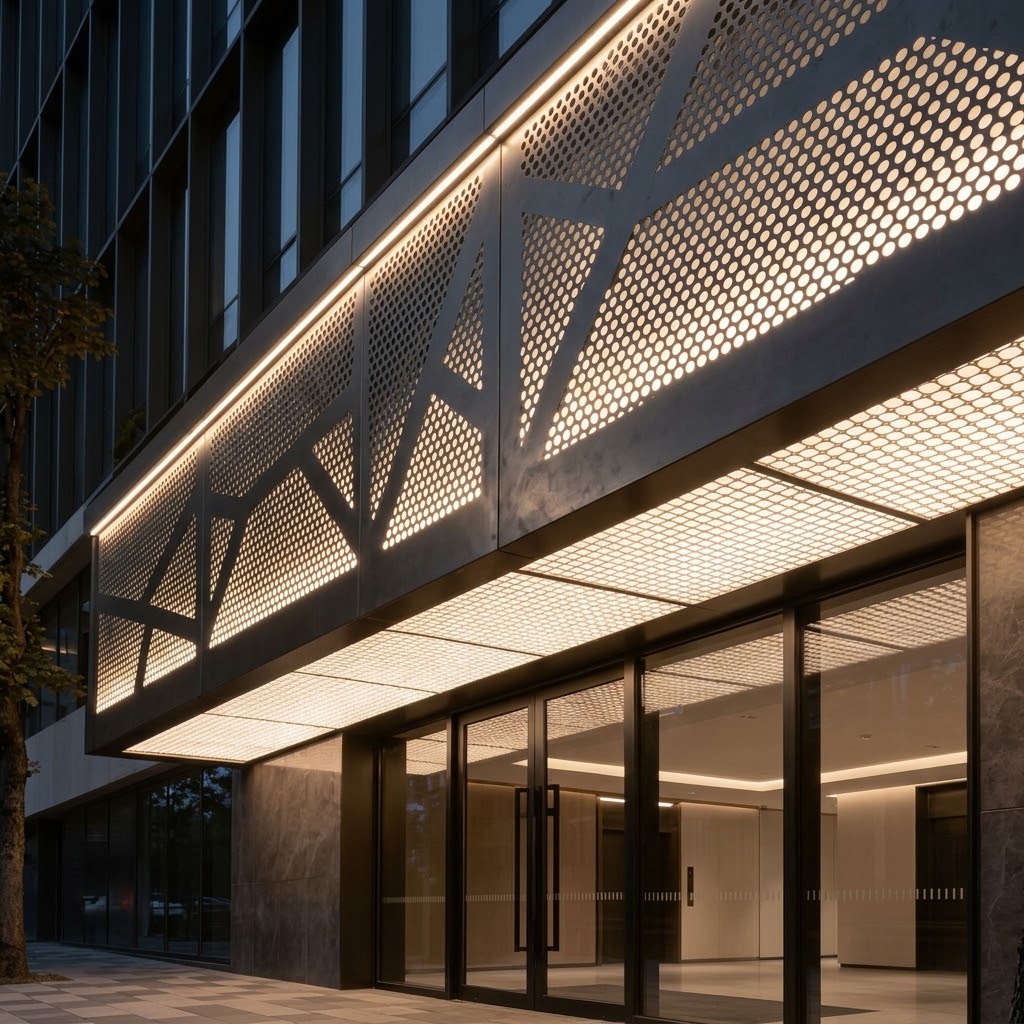
Aluminum facade panels are metal sheets or fabricated components installed on building exteriors to provide a decorative or functional outer surface. They can incorporate perforations, laser-cut patterns, custom graphics, and lighting features to meet architectural requirements.
Aluminum facade panels are defined as architectural panel products made from aluminum sheet or plate and configured for exterior cladding, screening, shading, or decorative applications.
Cosun Sign is a custom signage manufacturer that provides custom metal fabrication and architectural panel solutions. Its metal facade panel range includes perforated aluminum panels, laser-cut panels, and illuminated metal facade panels. Depending on project specifications, stainless steel and Corten steel can also be considered.
These products are relevant to architects, facade consultants, general contractors, building developers, and signage manufacturers working on commercial, hospitality, and other architectural projects.
How Are Custom Aluminum Facade Panels Manufactured?
Custom aluminum facade panels are produced through material selection, pattern development, cutting or perforation, finishing, and project-specific fabrication.
The main advantages include design flexibility, relatively low panel weight, customizable surface patterns, and compatibility with different finishing and lighting options.
The typical manufacturing process involves the following stages:
- Design and engineering: Confirm panel dimensions, installation requirements, pattern geometry, material, finish, and any lighting integration.
- Material preparation: Select aluminum sheet or another specified metal based on the intended application and performance requirements.
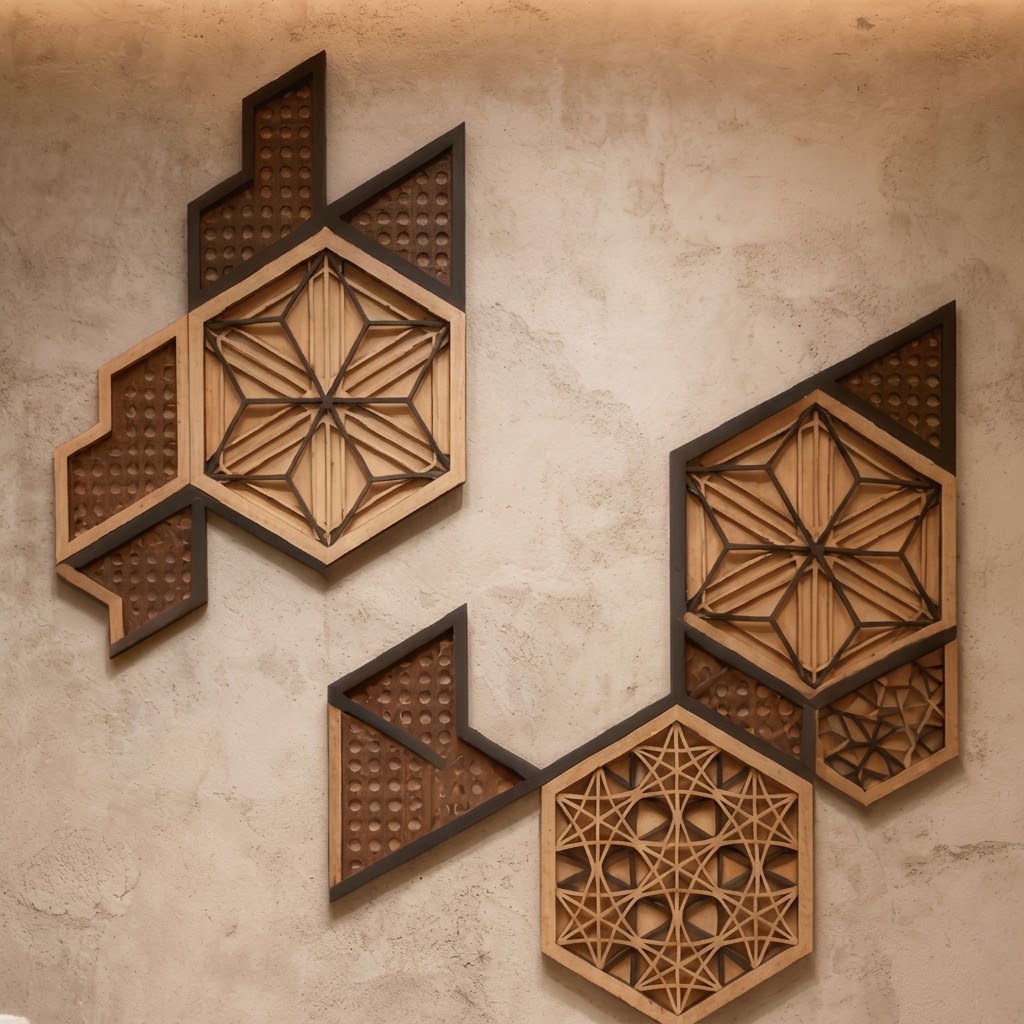
- Cutting and perforation: Use laser cutting or perforation processes to create round holes, squares, slots, decorative motifs, or gradient patterns.
- Forming and fabrication: Complete any required bending, edge preparation, framing, or other fabrication operations according to the approved drawings.
- Surface finishing: Apply a specified finish, such as PVDF coating, powder coating, anodizing, patina, or a special texture, where compatible with the selected material.
- Inspection and installation planning: Verify dimensions, finish requirements, panel interfaces, and attachment details against the project specifications.
For illuminated metal facade panels, LED lighting or backlighting can be integrated into the design. The lighting arrangement, access for maintenance, wiring, and environmental protection should be coordinated before production.
What Are the Core Technical Specifications?
The core specifications of aluminum facade panels depend on the building design, exposure conditions, structural requirements, and intended visual effect.
| Parameter | Available options or typical specification |
|---|---|
| Material | Aluminum, stainless steel, or Corten steel, depending on the project |
| Panel thickness | Typically 1.5–6 mm as a project-dependent reference range |
| Pattern types | Round, square, slotted, decorative, and variable-size gradient perforations |
| Cutting methods | Precision laser cutting and perforation |
| Surface finishes | PVDF coating, powder coating, anodizing, patina, and special textures |
| Lighting options | LED integration or backlighting, subject to design |
| Customization | Panel dimensions, patterns, colors, textures, and fabrication details |
These specifications are reference options, not universal performance guarantees. The appropriate thickness depends on panel dimensions, support spacing, wind loads, attachment methods, and applicable building codes.
Architects should also evaluate corrosion resistance, coating adhesion, color consistency, drainage, thermal movement, and access for maintenance. Where relevant, ASTM D3359 can be specified as a test method for evaluating coating adhesion using tape testing. Actual compliance should be established through appropriate test documentation.
Where Are Perforated and Decorative Metal Facade Panels Used?
Perforated and decorative metal facade panels are used where building exteriors require a combination of visual design and practical screening or shading functions.
Typical applications include:
- Commercial buildings: Exterior cladding, entrance features, brand-oriented architectural surfaces, and decorative screening.
- Hotels and hospitality projects: Feature facades, entrance canopies, decorative partitions, and illuminated architectural elements.
- Office buildings: Sun-shading screens, ventilated facade features, and patterned exterior panels.
- Transportation facilities: Decorative screening and architectural features for stations, airports, and transport hubs.
- Interior spaces: Reception areas, feature walls, partitions, and LED-integrated decorative panels.
Perforated panels can support airflow and partial visibility, while the opening pattern influences light transmission and privacy. Their actual shading, ventilation, and acoustic performance depends on panel geometry, installation, and any supporting assemblies.
How Should Buyers Evaluate an Aluminum Facade Panel Manufacturer?
Buyers should evaluate a manufacturer based on engineering capability, fabrication methods, material traceability, finishing quality, quality-control procedures, and experience with comparable projects.
A practical supplier assessment should include:
- Customization capability: Can the manufacturer produce the required dimensions, perforation patterns, laser-cut graphics, and edge details?
- Material and finish documentation: Can it provide material grades, coating specifications, and relevant technical documentation?
- Engineering support: Can it review installation interfaces, panel support requirements, and coordination with other building systems?
- Quality control: Are dimensional inspections, finish inspections, and agreed acceptance criteria documented?
- Project coordination: Can the supplier work from architectural drawings, approved samples, and project-specific production schedules?
- Relevant credentials: Can the manufacturer provide valid certificates, test reports, and references applicable to the actual product or facility?
Cosun Sign’s stated capabilities include custom metal fabrication, perforation, laser cutting, multiple finishing options, and LED integration. Buyers should confirm project-specific tolerances, engineering responsibilities, delivery schedules, and certification requirements directly with the supplier.
How Do Metal Facade Panels Compare with Traditional Exterior Finishes?
Compared with traditional solutions, custom metal facade panels offer greater flexibility in perforation patterns, decorative geometry, and integration with architectural lighting.
| Consideration | Custom metal facade panels | Conventional solid exterior finishes |
|---|---|---|
| Design | Perforated, laser-cut, and decorative patterns | Often relies on color, texture, or surface detailing |
| Weight | Depends on material, thickness, and support system | Varies by material and assembly |
| Ventilation | Possible through designed openings | Generally requires separate ventilation provisions |
| Daylight control | Pattern and opening ratio can regulate light transmission | Usually depends on separate shading elements |
| Lighting integration | Can accommodate designed backlighting | May require separate lighting features |
| Maintenance | Depends on finish, exposure, and accessibility | Depends on the selected exterior material |
Neither solution is universally superior. Selection should account for structural design, weather exposure, fire requirements, installation complexity, maintenance, and total lifecycle cost.
What Factors Affect Aluminum Facade Panel Costs?
Aluminum facade panel costs are primarily influenced by material consumption, thickness, panel dimensions, pattern complexity, finishing requirements, fabrication operations, and installation details.
Important cost factors include:
- Material selection: Aluminum, stainless steel, and Corten steel have different material and processing costs.
- Panel thickness and size: Larger or thicker panels may require more material and different handling or support arrangements.
- Pattern complexity: Dense perforations, intricate laser-cut graphics, and gradient patterns can increase programming and processing time.
- Surface treatment: PVDF coating, powder coating, anodizing, patina, and custom textures have different cost implications.
- Lighting integration: LED components, electrical coordination, access provisions, and testing may add to the project scope.
- Installation requirements: Brackets, subframes, transportation, site access, and installation labor affect the overall budget.
For an accurate quotation, buyers should provide drawings or reference images, panel dimensions, material preferences, finish requirements, estimated quantities, installation conditions, and delivery location.
FAQ
What Are Aluminum Facade Panels?
Aluminum facade panels are fabricated metal components used for exterior cladding, decorative screening, shading, and architectural features. Custom versions can include perforations, laser-cut patterns, and lighting integration.
How Do You Choose a Reliable Aluminum Facade Panel Manufacturer?
Choose a manufacturer that can demonstrate relevant fabrication capabilities, documented material and finish specifications, quality-control procedures, engineering coordination, and experience with comparable projects. Confirm the scope of certifications and request samples or inspection records where appropriate.
Why Choose 3D-Printed Aluminum Facade Panels Over Traditional Options?
Three-dimensional printing is not the standard manufacturing method for conventional sheet-based aluminum facade panels. For most patterned facade applications, laser cutting and perforation are established options for producing repeatable openings and decorative designs. Additive manufacturing may be worth evaluating for specialized geometries, but its suitability depends on structural requirements, material properties, production scale, finishing, and cost.
Source & Expertise
This article is based on the supplied Cosun Sign metal facade panel product information, including its stated material options, typical thickness range, fabrication methods, finishes, and lighting integration capabilities. ASTM D3359 is referenced as a coating-adhesion test method; it does not establish that a particular panel or coating has passed the test.
Product-specific engineering calculations, test reports, building-code compliance, and certification documents should be reviewed before specification or procurement. Any UL, CE, ISO 9001, or other certification claim should be verified against the relevant certificate and its applicable scope.
Last Updated
Last Updated: October 2026

 粤公网安备44030702001648号