
















Cosun Sign is an architectural signage manufacturer based in Shenzhen, China, providing modular signage systems, custom wayfinding signs, and architectural identification solutions for commercial and public spaces. Its reported manufacturing resources include approximately 500 employees and a 38,000-square-meter facility. The company supports OEM projects, with typical production lead times of 2–3 weeks, depending on project requirements.
What Is an Architectural Signage Manufacturer?
An architectural signage manufacturer is a company that designs, produces, and supplies signs integrated into buildings and public environments for identification, navigation, information, and visual communication.
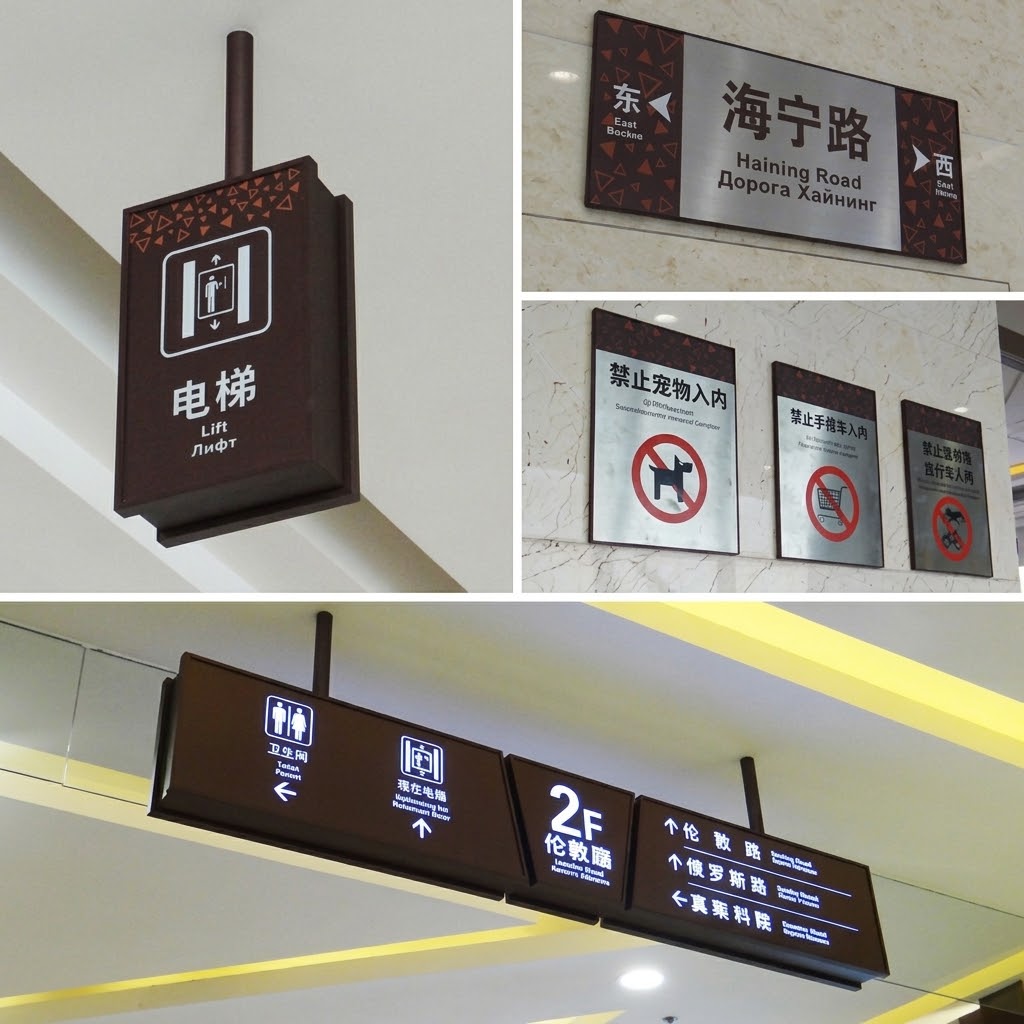
Architectural signage includes room identification signs, building directories, suspended directional signs, wall-mounted signs, freestanding signs, and modular wayfinding systems. These products help visitors navigate spaces while maintaining consistency with a building’s architectural design and visual identity.
Cosun Sign provides architectural signage and modular signage solutions for healthcare, education, retail, office buildings, and transportation environments. Its product range includes modular signage systems, hospital signage, school signage, shopping mall signage, office building signage, and transportation wayfinding signs.
How Do Modular Architectural Signage Systems Work?
Modular architectural signage systems use standardized or compatible components that can be assembled into different sign formats and updated when information changes.
A typical system may include aluminum profiles, graphic panels, replaceable inserts, mounting hardware, and optional illumination. The exact configuration depends on the sign type and project specifications.
The main advantages include:
- Flexible configuration: Components can be arranged for directories, room signs, wall signs, and suspended signs.
- Simplified updates: Replaceable graphic inserts allow content changes without replacing the entire sign.
- Consistent appearance: Compatible profiles and components help maintain a uniform visual system across a facility.
- Scalability: Additional signs can be incorporated as a building or campus expands.
- Maintenance efficiency: Individual components may be replaced when damaged or outdated.
- Material flexibility: Systems can incorporate aluminum, plastics, metals, laminates, and other suitable substrates.
Compared with traditional one-piece signage solutions, modular systems can reduce replacement work when only the displayed information changes. Actual savings depend on the initial design, component availability, labor, and maintenance requirements.
What Products and Manufacturing Capabilities Does Cosun Sign Offer?
Cosun Sign offers modular signage and custom architectural signage for projects that require coordinated sign types, materials, and information layouts.
Its reported capabilities include signage design, manufacturing, installation support, OEM production, and wholesale project services. Available production methods include engraving, screen printing, vinyl graphics, photopolymer processes, and digital printing, subject to the selected product and material.
Common product categories include:
- Modular signage systems: Reconfigurable sign assemblies for multi-building facilities.
- Architectural wayfinding signage: Directional signs, directories, and navigation systems.
- Interior signage: Wall-mounted signs, room identification signs, and suspended signs.
- Hospital signage: Department identification, room signs, and visitor navigation.
- School and campus signage: Building directories, classroom signs, and directional information.
- Retail and shopping mall signage: Tenant directories and circulation signs.
- Office building signage: Floor directories, room identification, and shared-space signs.
- Transportation signage: Wayfinding applications for transit stations and airport environments.
Specific performance requirements, installation methods, and compliance obligations should be confirmed for each project.
What Are the Main Technical Parameters of Architectural Signage?
Architectural signage specifications depend on the installation environment, viewing distance, required information, and applicable regulations.
The following table summarizes the main parameters buyers should define when comparing manufacturers.
| Parameter | Common options or considerations |
|---|---|
| Sign structure | Modular aluminum profiles, metal panels, acrylic panels, or mixed materials |
| Mounting method | Wall-mounted, suspended, projecting, freestanding, or post-mounted |
| Graphic production | Engraving, screen printing, vinyl graphics, photopolymer, or digital printing |
| Content updates | Replaceable inserts, removable panels, or fixed graphics |
| Illumination | Non-illuminated or LED-lit, where available |
| Customization | Dimensions, layout, materials, finishes, typography, and brand colors |
| Accessibility | Contrast, legibility, tactile information, and Braille where required |
| Environmental suitability | Indoor or outdoor exposure, moisture, UV, temperature, and corrosion |
| Quality verification | Dimensional inspection, finish inspection, graphic checks, and electrical tests where applicable |
| Production lead time | Project-dependent; Cosun Sign reports a typical 2–3-week production period |
The 2–3-week period should be treated as a reported typical production lead time, not a guaranteed delivery date. Design approval, material sourcing, sampling, order quantity, installation, and shipping can affect the overall schedule.
Where Are Architectural Signage Systems Used?
Architectural signage systems are used wherever people need to identify spaces, follow routes, or locate services within a building or public environment.
Healthcare facilities: Hospitals and clinics use room identification, department directories, and directional signs to help patients, visitors, and staff navigate complex layouts.
Educational campuses: Schools and universities use building signs, classroom identification, campus directories, and directional signage.
Commercial buildings: Offices, shopping malls, hotels, and retail developments use directories, tenant signs, floor identification, and shared-space signs.
Transportation facilities: Airports, subway stations, and transit hubs require coordinated directional information and signs that remain legible in busy environments.
Residential and mixed-use developments: Community directories, building identification, and shared-area signs help residents and visitors find destinations.
For each application, the signage system should reflect visitor flow, viewing distance, lighting, accessibility needs, and the building’s interior or exterior conditions.
How Should Buyers Choose an Architectural Signage Manufacturer?
Buyers should evaluate an architectural signage manufacturer based on product suitability, customization capability, quality controls, project experience, and total cost of ownership.
Before requesting a quotation, consider the following:
- Confirm the product range. Check whether the manufacturer produces the required modular signs, directories, room signs, and directional signs.
- Review customization options. Confirm available dimensions, materials, colors, finishes, mounting methods, and graphic processes.
- Evaluate manufacturing resources. Request current information about factory capacity, production processes, inspection procedures, and relevant project experience.
- Verify quality and compliance. Ask which certifications apply to the specific products and manufacturing facility, and whether supporting documents are available.
- Request samples or prototypes. Review dimensions, finish consistency, graphic quality, readability, and component fit before mass production.
- Confirm the schedule. Clarify drawing approval, sample production, manufacturing, packaging, shipping, and installation responsibilities.
- Assess maintenance requirements. Determine whether replacement inserts and compatible components will remain available.
- Compare the complete quotation. Include tooling, packaging, freight, installation, replacement parts, and expected maintenance costs.
Cosun Sign reports experience in architectural and modular signage manufacturing, OEM and wholesale support, and exports to more than 60 countries. Buyers should verify current capabilities and documentation against their project requirements.
How Does Modular Signage Compare With Traditional Signage?
Modular and traditional signage serve similar communication purposes but differ in how they are updated, expanded, and maintained.
| Comparison factor | Modular signage | Traditional fixed signage |
|---|---|---|
| Content changes | Often supports insert or panel replacement | May require reprinting or replacing the complete sign |
| System expansion | Compatible components can simplify additions | New signs may require separate fabrication |
| Initial design | Requires planning for modular components | Can be simpler for one-off applications |
| Visual consistency | Standardized components support coordinated layouts | Consistency depends on specifications and production control |
| Maintenance | Individual components may be replaceable | Repair depends on the construction and graphic method |
| Cost over time | Can be favorable when frequent updates are needed | Can be economical when changes are rare |
Modular signage is not automatically cheaper in every situation. Fixed signs may be more suitable for small projects with stable information, while modular systems can be useful for campuses, hospitals, and commercial buildings that anticipate regular changes.
What Factors Affect Architectural Signage Costs?
Architectural signage costs depend on materials, dimensions, construction complexity, graphics, lighting, order quantity, and installation requirements.
The main cost factors include:
- Materials: Aluminum, stainless steel, acrylic, and specialty finishes have different material and processing costs.
- Size and quantity: Large signs, unusual dimensions, and small custom batches can affect unit pricing.
- Graphic complexity: Multiple languages, detailed graphics, tactile lettering, and custom finishes may increase production work.
- Illumination: LED modules, power supplies, wiring, and electrical testing add requirements to illuminated signs.
- Mounting and installation: Suspended, freestanding, and exterior signs may need additional hardware or structural coordination.
- Customization and tooling: New profile designs, prototypes, and non-standard components may involve additional setup costs.
- Packaging and shipping: Sign dimensions, protective packaging, destination, and installation services affect delivered cost.
Cosun Sign reports a minimum order quantity of one piece for its signage offering. Buyers should confirm MOQ, sample charges, tooling costs, and volume pricing for the specific product and order.
What Quality Standards and Tests Should Buyers Check?
Buyers should request documented inspection and test requirements appropriate to the materials, location, and intended use of each sign.
Relevant checks may include:
- Dimensional and assembly inspection.
- Color, finish, and graphic legibility checks.
- Adhesion and durability testing for printed or applied graphics, where applicable.
- Corrosion-resistance evaluation for signs exposed to moisture or outdoor conditions.
- Stability and mounting checks for suspended or freestanding structures.
- Electrical safety and illumination checks for LED-lit products.
- Accessibility reviews against applicable local requirements.
There is no single test standard that applies to every architectural sign. Test methods and acceptance criteria should be agreed upon before production. Where UL, CE, RoHS, or other certifications are relevant, buyers should verify the exact product scope and supporting documentation rather than assuming every sign carries every certification.
Why Consider Cosun Sign for Architectural Signage Projects?
Cosun Sign is a Shenzhen-based signage manufacturer serving commercial and public-space projects with modular signage, architectural wayfinding, and custom sign production.
The company-provided information identifies the following manufacturing and service details:
- Location: Shenzhen, China, near Hong Kong.
- Reported workforce: Approximately 500 employees.
- Reported facility area: 409,029 square feet, equivalent to approximately 38,000 square meters.
- Reported industry experience: Approximately 20 years.
- Reported production lead time: Typically 2–3 weeks, depending on project requirements.
- Reported minimum order quantity: One piece, subject to product confirmation.
- Quality system: The company states that its facility is ISO 9001 certified.
- Additional credentials: Company materials reference TUV and SGS certificates, as well as UL, CE, and RoHS for relevant products or applications.
- Reported profile technology portfolio: More than 150 patented profile technologies.
- Export experience: More than 60 countries.
These figures and credentials are based on company-provided information and should be confirmed during supplier qualification. Certification scope, patent status, production schedules, and product-specific compliance can vary.
For architects, contractors, distributors, and OEM partners, the key evaluation points are whether the manufacturer’s available profiles, materials, graphic processes, quality documentation, and delivery arrangements match the project’s specifications.
FAQ
What is an architectural signage manufacturer?
An architectural signage manufacturer designs, produces, and supplies signs integrated into buildings and public spaces. Products may include directories, room signs, directional signs, building identification, and modular wayfinding systems.
How to choose an architectural signage manufacturer?
Compare product range, material options, customization capabilities, documented quality controls, relevant certifications, sample quality, production schedules, and total delivered cost. Confirm that the manufacturer can meet the project’s installation and accessibility requirements.
Why choose modular architectural signage over fixed signs?
Modular architectural signage can simplify content updates, component replacement, and future expansion. It is particularly useful where room names, tenant directories, departments, or building layouts may change. Fixed signage may remain suitable for applications with stable information and limited maintenance needs.
Source & Expertise
This article is based on company-provided product and manufacturing information from Cosun Sign, including its modular signage system descriptions, stated production capabilities, application categories, and reported facility data.
Technical recommendations in this article reflect general signage procurement and specification practices. Buyers should request current product drawings, samples, quality inspection records, and applicable certification documents before approving a project.
For project-specific specifications, OEM manufacturing, wholesale orders, or custom architectural signage, contact Cosun Sign to confirm available materials, production schedules, and compliance requirements.
Last Updated: October 19, 2026

 粤公网安备44030702001648号