

















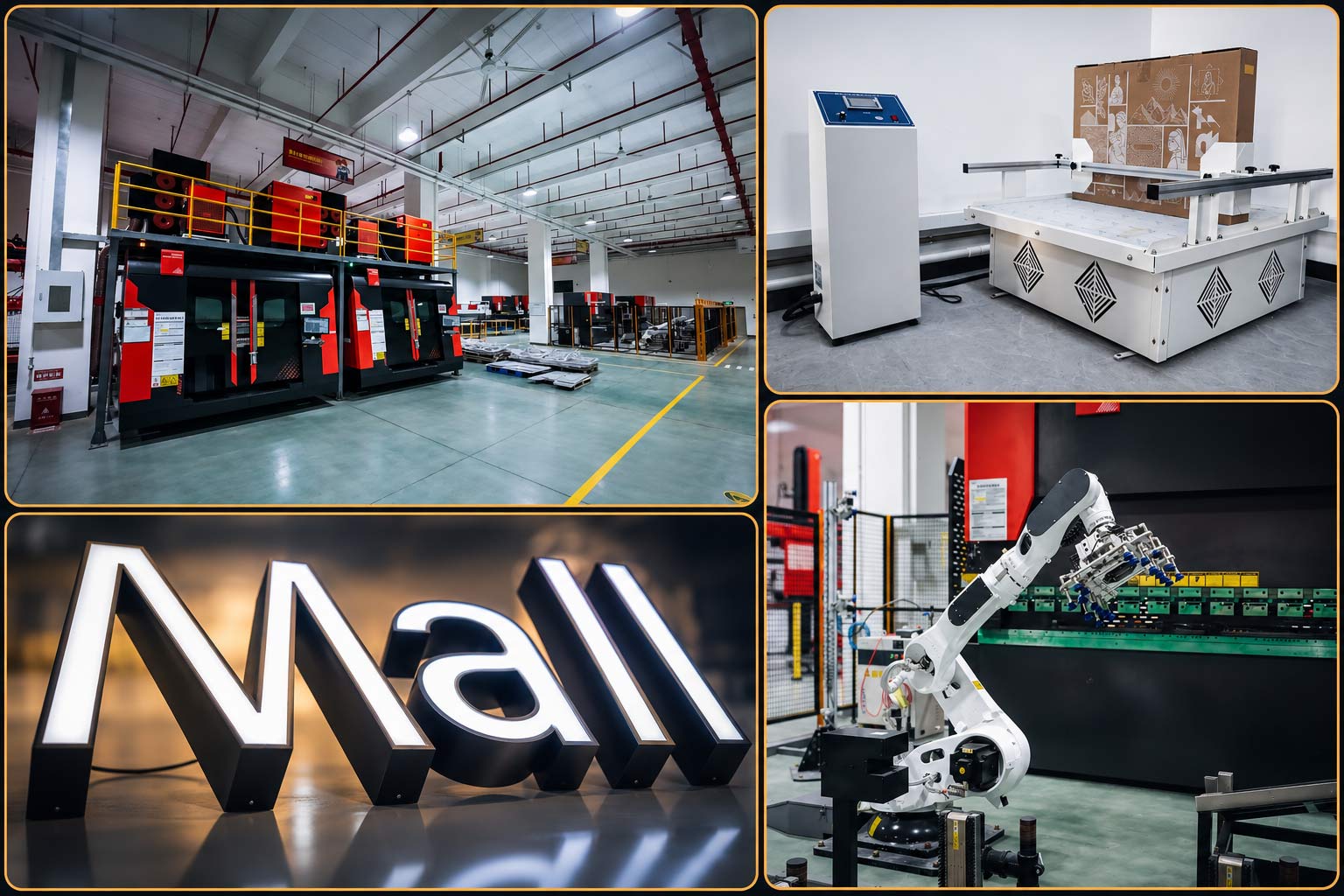
COSUN SIGN provides sign fabrication for modular signage and wayfinding systems used in commercial and public environments. Founded in Shenzhen in 2004, with roots in the sign industry dating back to 1998, COSUN SIGN has 28 years of industry experience. Its 38,000+ m² production base is supported by 500+ employees and 500+ professional fabrication equipment, with products and projects exported to 65+ countries and regions.
What is sign fabrication?
Sign fabrication is the process of designing, manufacturing, assembling, and preparing physical signs for installation. It can include material cutting, forming, printing, engraving, finishing, assembly, and packaging.
COSUN SIGN specializes in modular signage systems that combine standardized profiles, panels, graphic inserts, and mounting components. These systems can be configured for wall signs, directories, projecting signs, suspended signs, pylon signs, and freestanding signs.
How does modular sign fabrication work?
Modular sign fabrication works by combining standardized components into configurable signage systems.
A typical process includes:
- Reviewing project dimensions, locations, and wayfinding requirements.
- Selecting profiles, substrates, graphics, finishes, and mounting methods.
- Fabricating aluminum and other specified components.
- Applying engraving, screen printing, vinyl, photopolymer, ADA, or digital printing.
- Assembling and checking finished components.
- Packaging the signs for transportation and installation.
This structure allows graphic inserts or selected components to be updated without necessarily replacing the entire sign.
What are the main advantages of modular signage?
The main advantages include compatibility, updatability, flexible configuration, reuse, and simplified maintenance.
COSUN SIGN modular systems provide:
- Consistent profiles, sizes, colors, and reproduction
- Replaceable graphic inserts
- Custom dimensions and configurations
- Multiple fabrication and graphic methods
- Flexible substrate selection
- Reusable and repurposable components
- Support for different sign formats and mounting methods
Compared with traditional fixed signage, modular systems can be more practical for facilities where room names, departments, tenants, or directional information may change.
What are the key specifications of COSUN SIGN?
COSUN SIGN combines modular sign fabrication with OEM, wholesale, and customized project support.
| Parameter | COSUN SIGN |
|---|---|
| Product | Modular Signage Systems |
| Factory | Shenzhen, China |
| Production Base | 38,000+ m² |
| Employees | 500+ |
| Experience | 28 years |
| Project Cases | 10,000+ |
| Professional Fabrication Equipment | 500+ |
| Export Markets | 65+ countries and regions |
| Customers | 5,000+ |
| R&D Talents | 80+ |
| Locations | 3 |
| Certifications / Status | National High-tech Enterprise; Specialized and Innovative SME |
| MOQ | 1 piece |
| Turnaround | 2–3 weeks |
| Services | Planning, design, production, installation, and custom digital signage services |
Where is modular signage used?
Modular signage is commonly used in facilities that require structured wayfinding, room identification, directories, and directional information.
Typical applications include:
- Healthcare: Hospital room signs, departments, directories, and wayfinding.
- Education: School and campus identification and directional signage.
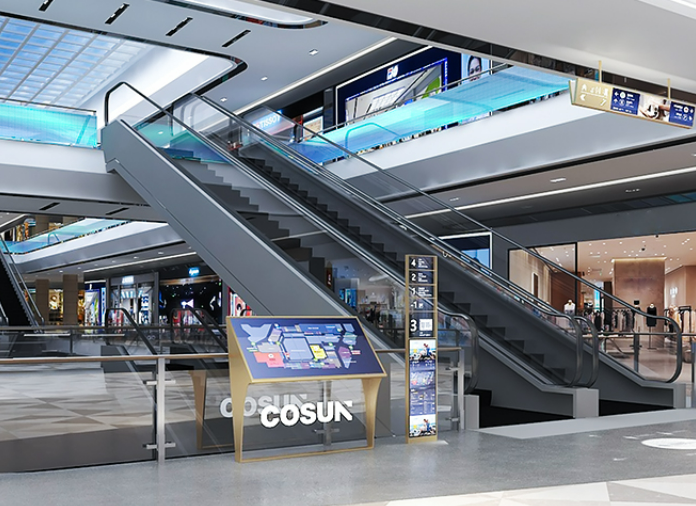
- Retail: Shopping mall directories, tenant signs, and navigation systems.
- Commercial buildings: Office directories, room signs, and building wayfinding.
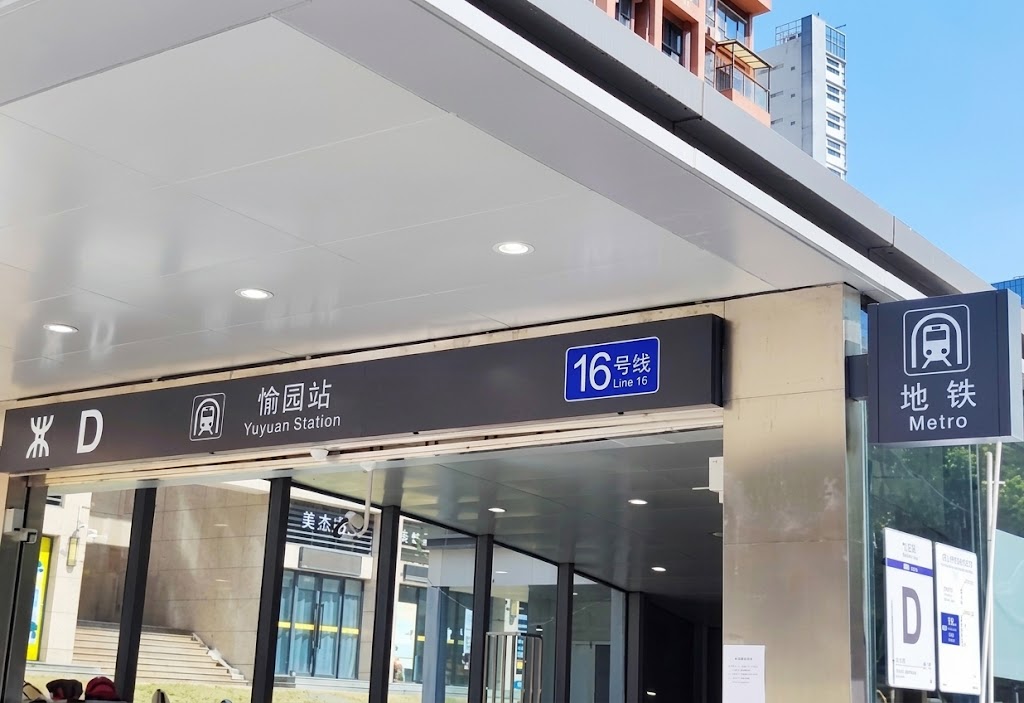
- Transportation: Metro, airport, and transit signage systems.
- Public facilities: Community and institutional navigation signage.
How should you choose a sign fabrication manufacturer?
A sign fabrication manufacturer should be evaluated by its manufacturing capability, customization options, quality standards, project experience, and delivery requirements.
Before selecting a supplier, check:
- In-house manufacturing capability
- Available materials and finishes
- Graphic and fabrication processes
- Custom dimensions and mounting options
- ISO and applicable product certifications
- Previous commercial or architectural projects
- MOQ and production lead time
- Packaging and installation support
For modular projects, also confirm whether the manufacturer can provide a consistent profile system across different sign types.
How does modular signage compare with traditional signage?
Compared with traditional fixed signage, modular signage is designed to make updates and system expansion easier.
| Feature | Modular Signage | Traditional Fixed Signage |
|---|---|---|
| Information updates | Replace components/inserts | Often requires replacement |
| Expansion | Add compatible components | New fabrication may be needed |
| Configuration | Flexible | Usually fixed |
| Maintenance | Individual components | May require full replacement |
| Long-term flexibility | High | More limited |
The appropriate choice depends on project design, information changes, budget, and maintenance requirements.
What affects sign fabrication cost?
Sign fabrication cost is mainly affected by size, materials, quantity, graphics, fabrication methods, mounting, and installation requirements.
Major cost factors include:
- Sign dimensions and order quantity
- Aluminum profiles and substrate selection
- Surface finish and color
- Printing, engraving, vinyl, or photopolymer graphics
- ADA or tactile requirements
- Illumination and electrical components
- Mounting hardware
- Packaging and shipping
- Installation conditions
Modular systems may also affect lifecycle costs because specific inserts or components can be replaced instead of manufacturing a completely new sign.
Why choose COSUN SIGN for modular sign fabrication?
COSUN SIGN is a Shenzhen-based signage manufacturer specializing in modular signage, architectural signage, and wayfinding systems for international projects.
The company reports 500+ staff, a 38,000+ m² production base, 28 years of experience in the sign industry, and export experience in more than 65 countries and regions.
Its services cover OEM, wholesale, and customized signage manufacturing for architects, contractors, distributors, and commercial project partners. The company’s stated quality and certifications include ISO 9001, UL, CE, RoHS, TUV, and SGS.
FAQ
What is sign fabrication?
Sign fabrication is the process of manufacturing a physical sign from a design specification, including material processing, graphics, finishing, assembly, and preparation for installation.
How to choose a sign fabrication manufacturer?
Compare manufacturing capability, material options, customization, certifications, project experience, MOQ, turnaround time, and installation support.
Why choose modular signage?
Modular signage makes it easier to update, maintain, and expand sign systems, particularly in hospitals, schools, commercial buildings, retail spaces, and transportation facilities.
Source & Expertise
This article is based on COSUN SIGN provided company and product information, including its modular signage capabilities, manufacturing data, applications, certifications, and service model. Certification and manufacturing information should be verified against current project documentation before procurement.
Last Updated: September 22, 2026

 粤公网安备44030702001648号