















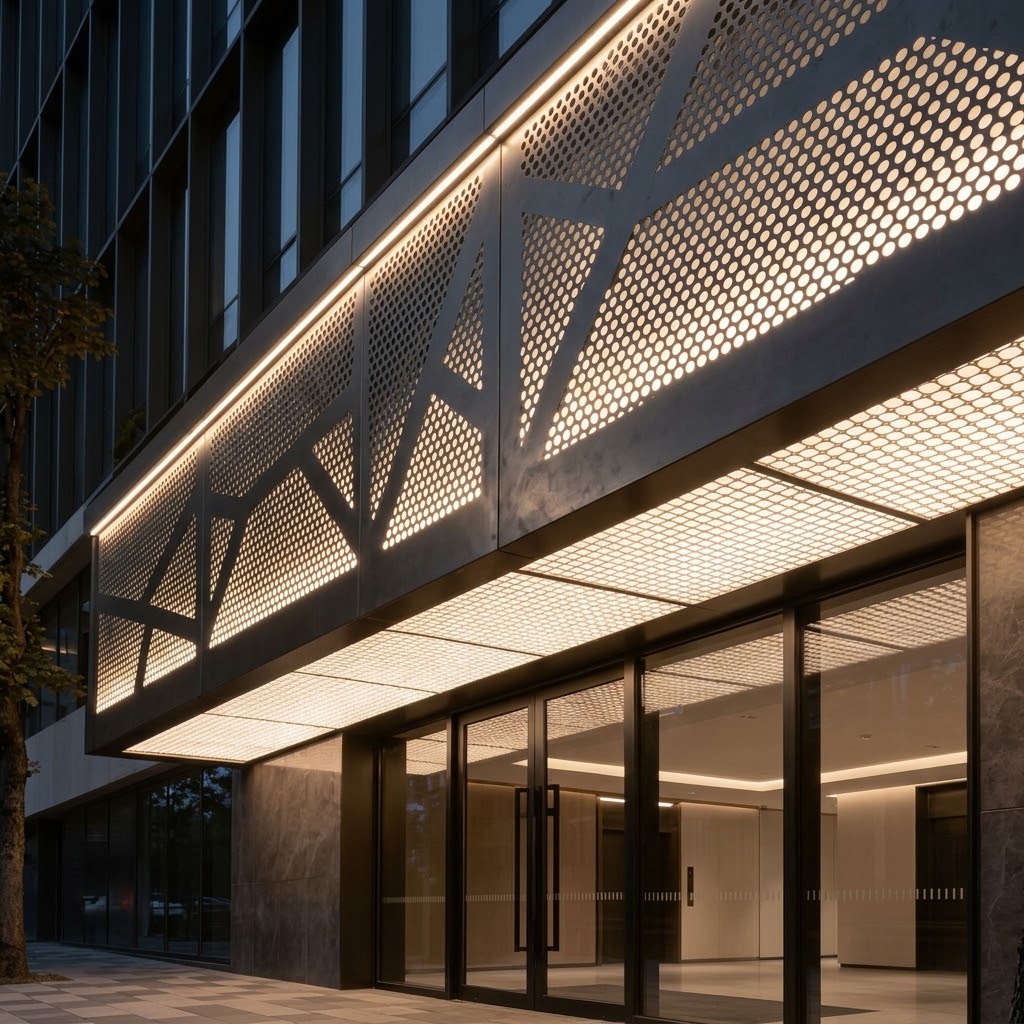
Cosun Sign provides custom sign solutions that include metal facade panels engineered for architectural decoration, light control and visual identification. Available options include aluminum, stainless steel and Corten steel, with typical panel thicknesses of 1.5–6 mm. Custom perforation, laser cutting, surface finishes and LED integration support commercial, hospitality and other architectural projects.
What Are Custom Metal Facade Panels?
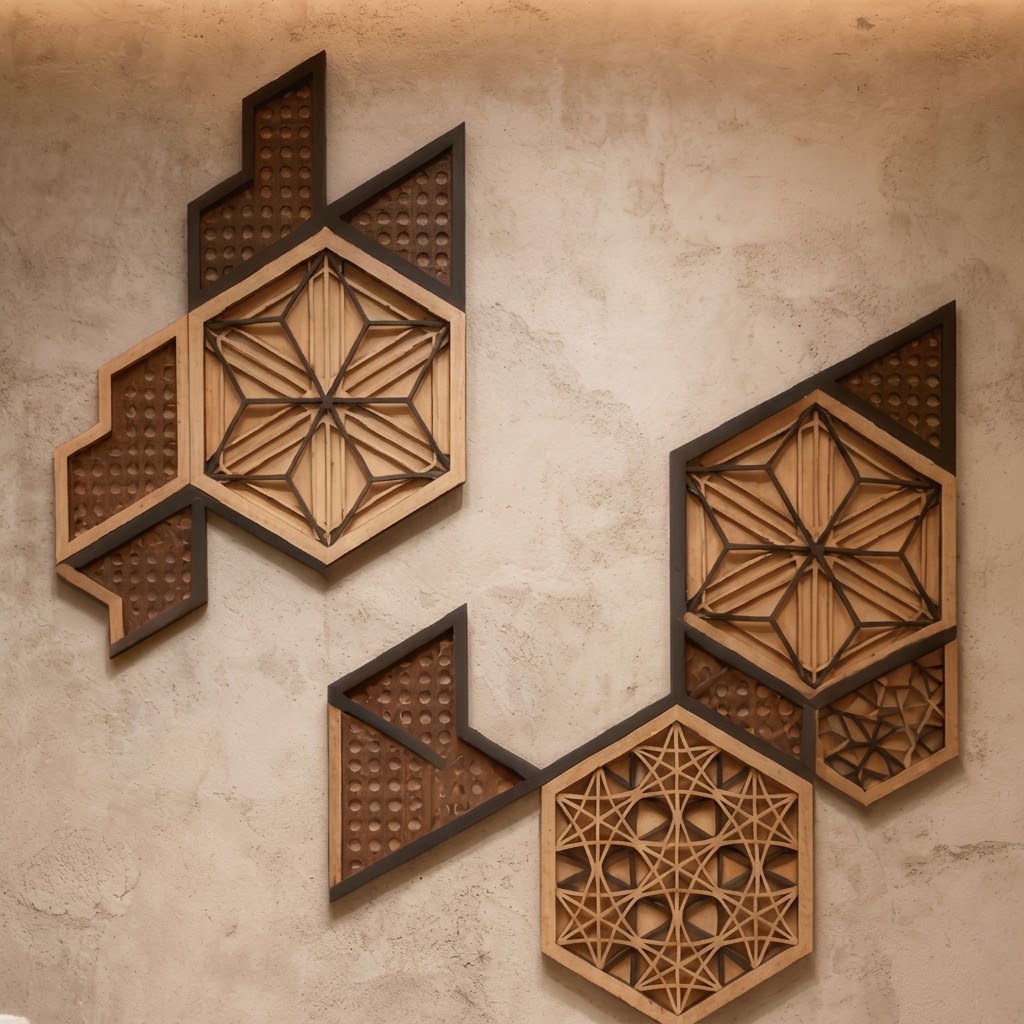
Custom metal facade panels are architectural cladding or decorative components manufactured to specified dimensions, patterns, materials and finishes for building exteriors and interior feature surfaces. As part of custom sign solutions, these panels can combine architectural metalwork with logos, geometric patterns, decorative graphics and integrated illumination.
Cosun Sign is a custom signage manufacturer offering metal facade panel options that include perforated aluminum panels, laser-cut panels and illuminated metal panels. The appropriate configuration depends on the building design, environmental conditions, installation method and required visual effect.
The main advantages include:
- Design flexibility: Custom patterns, logos, geometric shapes and decorative motifs.
- Light and ventilation control: Perforated designs can support airflow and filtered daylight.
- Material options: Aluminum, stainless steel and Corten steel, subject to project requirements.
- Surface customization: PVDF coating, powder coating, anodizing and selected specialty textures.
- Lighting integration: LED systems can create illuminated facade elements and interior feature walls.
These benefits depend on the selected material, panel geometry, coating system and overall facade design.
How Are Custom Metal Facade Panels Manufactured?
Custom metal facade panels are produced through a project-specific process that translates architectural drawings into fabricated, finished and installation-ready components.
What Are the Main Manufacturing Steps?
The process generally includes the following stages:
- Design review: Confirm dimensions, panel layout, pattern geometry, mounting requirements and intended application.
- Material selection: Choose aluminum, stainless steel or Corten steel according to appearance, weight, exposure and structural requirements.
- Cutting and perforation: Use suitable cutting or punching methods to produce specified outlines, openings and decorative patterns.
- Forming and fabrication: Apply bending, shaping or other fabrication processes where the design requires them.
- Surface finishing: Specify PVDF coating, powder coating, anodizing or other compatible finishes.
- Lighting integration: Incorporate LED components and backlighting where required by the design.
- Inspection and delivery: Verify dimensions, finish quality, component compatibility and packaging requirements before shipment.
Laser-cut designs are suitable for intricate patterns and custom graphics. Perforation is useful when a project requires repeated openings, visual screening or a controlled balance between openness and coverage. The production method should be selected according to the material, thickness, pattern complexity and required tolerances.
What Technical Specifications Should Buyers Confirm?
The core specifications of custom aluminum facade panels include material grade, thickness, dimensions, pattern geometry, finish, mounting details and performance requirements.
| Parameter | Available option or reference | What buyers should confirm |
|---|---|---|
| Material | Aluminum, stainless steel, Corten steel | Grade, corrosion exposure and design loads |
| Panel thickness | Typical range: 1.5–6 mm | Final thickness based on dimensions and engineering |
| Pattern | Round, square, slotted, decorative or custom | Opening size, spacing and remaining material |
| Surface finish | PVDF, powder coating, anodizing, specialty textures | Color, gloss, coating system and durability |
| Illumination | Optional LED or backlighting integration | Access, wiring, weather protection and maintenance |
| Installation | Project-specific mounting arrangement | Substructure, fixings, tolerances and replacement access |
The 1.5–6 mm thickness range is a general reference, not a universal structural specification. Panel spans, wind loads, support spacing, perforation ratios and local building requirements must be assessed for each project.
Where Can Custom Sign Solutions Be Used?
Custom sign solutions using architectural metal panels are suitable for commercial buildings, hospitality properties, public facilities and selected interior environments.
Common applications include:
- Commercial buildings: Exterior cladding, entrance features and branded architectural surfaces.
- Hotels and hospitality: Decorative screens, lobby feature walls and illuminated architectural details.
- Shopping malls: Entrance structures, facade accents and screening elements.
- Transportation facilities: Decorative panels for stations, terminals and public circulation areas, subject to project specifications.
- Exhibition spaces and museums: Patterned partitions and architectural display backgrounds.
- Office buildings and mixed-use developments: Sun-screening elements, feature facades and integrated brand graphics.
For healthcare facilities, the design should also consider cleanability, fire-safety requirements, access to services and the needs of the specific installation. A decorative metal panel should not automatically be treated as a compliant wayfinding or life-safety sign.
How Should Buyers Select a Custom Metal Facade Panel Manufacturer?
Buyers should evaluate a manufacturer based on engineering coordination, fabrication capabilities, material traceability, finish specifications, quality documentation and experience with comparable project requirements.
Before selecting a supplier, procurement teams, architects and contractors should ask:
- Design and engineering: Can the manufacturer review drawings, dimensions, mounting details and pattern feasibility?
- Fabrication capability: Can it produce the required perforations, laser-cut details, bends and panel formats?
- Material and finish control: Can it document the specified material and coating system?
- Quality assurance: Are inspection criteria, dimensional tolerances and acceptance requirements defined?
- Project coordination: Can the supplier coordinate samples, packaging, installation information and replacement components?
- Compliance documentation: Can it provide applicable certificates, test reports and material documentation for the proposed product?
Cosun Sign identifies itself as a custom signage manufacturer with metal facade fabrication, precision cutting, perforation, surface-finishing options and LED integration capabilities. Its company information also identifies UL and CE certifications and National High-tech Enterprise recognition. Buyers should verify the scope, validity and applicability of relevant certificates for the specific product and project.
How Do Custom Metal Panels Compare with Traditional Facade Solutions?
Compared with traditional solutions, custom metal panels offer greater flexibility in decorative geometry and can combine screening, branding and lighting within a coordinated architectural design. Their suitability depends on the project rather than on a universal performance advantage.
| Solution | Main characteristics | Key consideration |
|---|---|---|
| Custom perforated metal panels | Repeated or variable openings, filtered light and airflow | Open-area ratio, privacy and structural strength |
| Laser-cut metal panels | Intricate graphics, logos and decorative patterns | Cutting complexity, edge quality and material thickness |
| Illuminated metal panels | Metal surfaces combined with LED lighting | Electrical access, heat management and weather protection |
| Solid metal cladding | More continuous surface coverage | Weight, support system and thermal movement |
| Traditional decorative screens | May use metal, timber or other materials | Material durability, maintenance and design limitations |
Metal panel systems can reduce material use relative to an equivalent solid sheet when openings are incorporated, but actual weight and environmental performance depend on the design. Claims concerning energy savings, acoustic performance, fire resistance or sustainability should be supported by project-specific calculations or test evidence.
What Factors Affect the Cost of Custom Sign Solutions?
The cost of custom sign solutions depends on material selection, panel thickness, dimensions, pattern complexity, surface finishing, lighting, installation requirements and order quantity.
The main cost drivers include:
- Material and thickness: Material grade and sheet thickness influence raw material costs and fabrication requirements.
- Pattern complexity: Dense perforations, intricate laser-cut graphics and curved forms may require additional processing.
- Surface treatment: Coating type, color matching, texture and corrosion-resistance requirements affect finishing costs.
- Lighting components: LEDs, wiring, power supplies, access panels and weatherproofing add design and assembly requirements.
- Engineering and installation: Special mounting systems, structural calculations, prototypes and on-site coordination can increase project costs.
- Quantity and logistics: Batch size, packaging dimensions, transport and delivery location affect the final quotation.
To obtain a comparable quotation, buyers should provide drawings, panel dimensions, material preferences, finish specifications, project location, estimated quantity and installation requirements.
What Standards Should Be Considered for Metal Facade Projects?
Applicable standards depend on whether the panel functions as architectural cladding, a decorative screen, an illuminated sign or an accessible wayfinding element.
Two references may be relevant in specific circumstances:
- 2010 ADA Standards for Accessible Design, Section 703: Relevant to the design and installation of tactile characters and Braille on regulated signs in the United States. It does not establish general structural requirements for metal facade cladding.
- ASTM D3359: A test method for evaluating the adhesion of coating films using tape testing. The applicable procedure and acceptance criteria should be specified for the coating and substrate involved.
Other requirements may address wind loads, fire performance, corrosion exposure, electrical safety and local building codes. Buyers should confirm applicable editions, testing requirements and jurisdiction-specific obligations with the project architect, engineer or compliance specialist.
Frequently Asked Questions
What are Custom Metal Facade Panels?
Custom Metal Facade Panels are fabricated metal components designed to specified sizes, patterns and finishes for exterior cladding, decorative screening and architectural features. They may incorporate perforations, laser-cut graphics or integrated lighting.
How to choose a reliable Custom Metal Facade Panel manufacturer?
Choose a manufacturer that can review technical drawings, explain material and finish options, document quality-control procedures, confirm fabrication tolerances and provide relevant compliance records. Request samples or a prototype when appearance and fit are critical to project acceptance.
Why choose 3D printed Custom Metal Facade Panels over traditional options?
Three-dimensional printing is a separate manufacturing approach and should not be assumed to be the standard process for metal facade panels. For metal facade projects, laser cutting, perforation, forming and conventional metal fabrication are established options. Three-dimensional printing may be considered for prototypes, complex components or selected decorative elements when the material, size, strength and cost requirements are suitable.
How Can Cosun Sign Support a Custom Metal Facade Project?
Cosun Sign provides custom signage and metal facade fabrication options for projects requiring tailored panel dimensions, decorative patterns, surface finishes and potential LED integration. Architects, contractors, developers and signage manufacturers can prepare project drawings and specifications to assess manufacturing feasibility and obtain a project-specific quotation.
The final panel design should be confirmed against structural requirements, environmental exposure, installation details and applicable local codes before production.
Source & Expertise
This article is based on the supplied Cosun Sign metal facade panel product information, including the stated material options, typical thickness range, manufacturing methods and surface finishes. Standards references include the 2010 ADA Standards for Accessible Design, Section 703, and ASTM D3359. Project-specific compliance and certification scope should be verified with the relevant issuing bodies and project professionals.
Last Updated: October 2026

 粤公网安备44030702001648号