














In today’s rapidly evolving corporate world, the design of office buildings, headquarters, and commercial environments plays a pivotal role not only in brand identity but also in employee experience and sustainability. Among the materials shaping this transformation, architectural metal design has emerged as a cornerstone of modern corporate architecture — blending aesthetics, performance, and innovation in new and powerful ways.
1. Aesthetic Power and Brand Identity
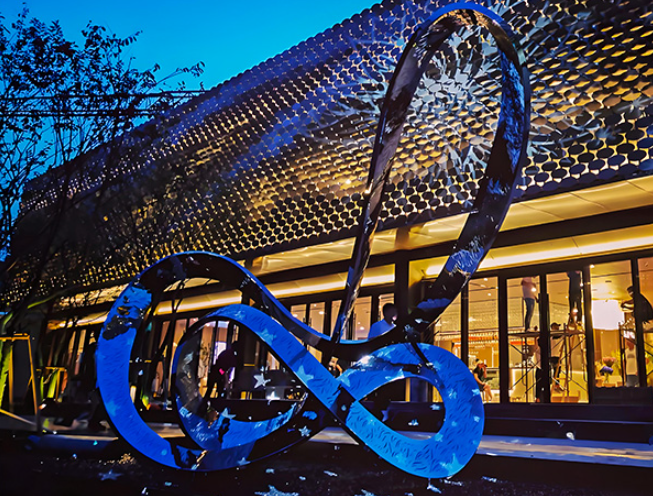
Architectural metals like aluminum, steel, and corten have become design favorites for corporate exteriors and interiors due to their sleek, modern appeal and ability to make a strong visual statement. With advanced fabrication technologies such as laser cutting, CNC machining, and 3D modeling, architects can create intricate façades, geometric patterns, and dynamic forms that reflect a company’s character and values.
Modern corporate façades often use parametric metal panels and perforated designs that bring depth, rhythm, and unique visual identities to buildings — effectively turning architecture into a branding tool rather than just a shelter.
2. Durability, Longevity, and Low Maintenance
One of the most compelling reasons companies choose metal is its long-term durability. Metals like stainless steel and aluminum resist corrosion, weathering, and heavy use, making them ideal for high-traffic corporate spaces. This longevity results in lower maintenance costs and long-term value, especially when compared to traditional materials like wood or stone.
In interiors, metal finishes such as brushed or polished surfaces elevate lobbies, conference rooms, and circulation spaces, while also enduring daily wear and tear with minimal upkeep.
3. Enhanced Sustainability and Environmental Performance
Sustainability is no longer optional for forward-thinking corporations. Architectural metals align well with eco-friendly design principles because they are often highly recyclable, and many are made from recycled content without losing integrity.
Moreover, metal façades and panel systems can improve energy efficiency. Reflective surfaces reduce heat gain, while insulated metal panels or ventilated façades can lower the energy load for heating and cooling — benefiting both the environment and operational costs.
4. Functional Integration and Smart Technology
Today’s corporate buildings are not just structures — they are intelligent, technology-driven ecosystems. Metals play a key role in embedding smart systems, from IoT sensors and building automation controls to solar integration and performance monitoring systems.
This integration allows corporate facilities to respond in real time to occupancy, energy demand, and environmental conditions, boosting comfort, safety, and operational efficiency.
5. Design Flexibility and Customization
Architectural metal offers unmatched design versatility:
-
Laser-cut screens and decorative panels create bespoke interior partitions that combine form and function.
-
Fluted or textured metal panels add subtle light-and-shadow effects.
-
Mixed-material façades that combine metal with glass, stone, or wood bring warmth, contrast, and premium character to corporate campuses.
These customizations help corporations tailor their spaces to specific cultural, brand, and functional needs — whether that’s an executive headquarters reflecting innovation or a tech campus promoting collaboration.
6. Safety and Compliance
Safety remains a priority in commercial architecture. Many architectural metals inherently meet stringent fire-resistance standards, adding a layer of protection essential for corporate buildings with high occupancy.
Conclusion
Architectural metal design is fundamentally reshaping the landscape of modern corporate spaces. From bold façades that define brand identity, to sustainable and intelligent building systems that enhance performance, metal architecture represents a convergence of form, function, and forward-thinking design. For businesses that aim to impress clients, inspire employees, and lead in environmental responsibility, architectural metal is not just a material choice — it’s a strategic investment in the future of work.


 粤公网安备44030702001648号