

















A custom signage is far more than just a logo mounted onto walls or building facades. It has to hold up visually, structurally, and keep consistent lighting performance year round.
There is no universal figure for how long custom signage will serve you. Its service life hinges on selected material, sign build quality, lighting system, mounting site, surface finish, and routine maintenance.
Business owners, architects and contractors can cut down repair work, replacement expenses and unplanned upkeep by understanding these key factors prior to placing sign orders.
How Long Does Custom Signage Typically Last?
Where you mount your sign heavily determines its real world service life. Indoor signage faces minimal environmental stress. Outdoor signage, however, withstands sun exposure, rain, moisture swings, temperature shifts, dust and wind loads.
Illuminated signage come with extra hardware including LED modules, power supplies and wiring plus protective housings. All these components must deliver stable long term operation.
| Sign Type | Typical Environment | Main Durability Concerns |
| Indoor signage | Offices, malls, hotels | Surface wear, impact, cleaning |
| Outdoor signage | Storefronts, buildings, campuses | UV, rain, corrosion, wind |
| Illuminated signage | Retail, hotels, commercial buildings | LEDs, power supply, moisture |
| Architectural signage | Buildings, public spaces | Weather, structure, surface finish |
| Digital signage | Retail, offices, airports, public spaces | Screen performance, heat, power supply, software |
A properly designed and manufactured custom sign letters can serve for many years. The actual lifespan, however, depends on the project conditions and product specifications.
7 Factors That Affect Signage Lifespan
1. Signage Materials
Material selection ranks among top priorities when designing long lasting sign solutions.
Aluminum signs are widely preferred for outdoor projects, thanks to light weight, solid corrosion resistance and simple fabrication work. Stainless steel signs deliver enhanced structural strength plus high grade surface finish, ideal for hotels, office premises, commercial complexes and upscale retail venues.
Acrylic signage are the go to option for illuminated letters and light boxes, boasting excellent light transmission and flexible shaping capability. For indoor ID markers and tactile signage, Rowmark room signage sees broad adoption; it works great for engraving and creates sharp color contrast.
No one size fits all material exists for every project. Your best pick comes down to mounting site, design style, project budget and target service lifespan.
2. Indoor or Outdoor Installation
The installation environment can make a significant difference.
Indoor commercial signage is generally protected from direct sunlight, rain, and major temperature changes. Outdoor signs have to perform under much tougher conditions.
For a building facade or storefront, the manufacturer needs to consider wind, drainage, mounting methods, moisture protection, and future maintenance.
A material that performs well indoors may not be suitable for a fully exposed outdoor location.
3. UV Exposure and Weather Conditions
Sunlight is a major concern for outdoor signs.
Continuous UV exposure can cause some paints, plastics, films, and printed surfaces to fade over time. Moisture can also increase the risk of corrosion when the wrong material or finish is used.
For outdoor signage, the material should therefore be selected together with a suitable surface finish and construction method.
For demanding projects, signage testing can also help evaluate UV resistance, waterproofing, salt spray resistance, and other performance factors.
4. Surface Finishes and Coatings
Surface finish shapes both the visual look and long term durability of any sign.
Powder coating, painting, anodizing, brushing, polishing and electroplating each deliver distinct aesthetics and protective performance. For outdoor deployments, your chosen finish needs to match local climate conditions and real world exposure levels.
Take powder coating as an example. It is widely applied to aluminum signage, delivering tough, wear resistant surfaces alongside broad choices for colors and textures.
5. Lighting System Quality
When it comes to illuminated signage, the lighting system deserves just as much focus as the sign face.
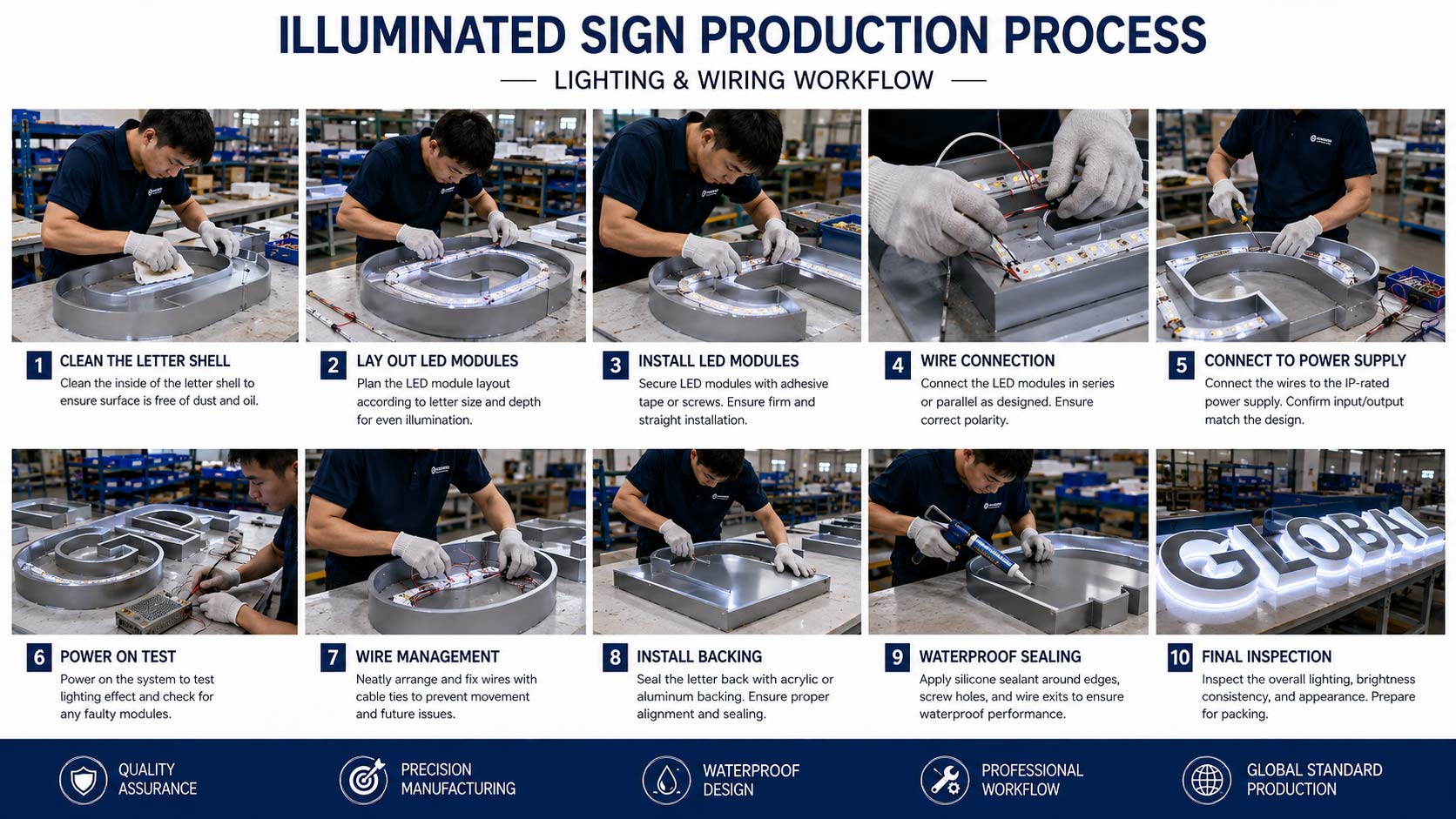
LED modules, power supplies, wiring, heat management and waterproofing all dictate long run performance. Improper LED layout creates uneven brightness, while inadequate heat dissipation shortens component service life.
A seasoned illuminated signage manufacturer treats the lighting setup, sign framework and electrical parts as one integrated design solution.
6. Manufacturing Quality
Premium raw materials alone cannot guarantee a long lived sign.
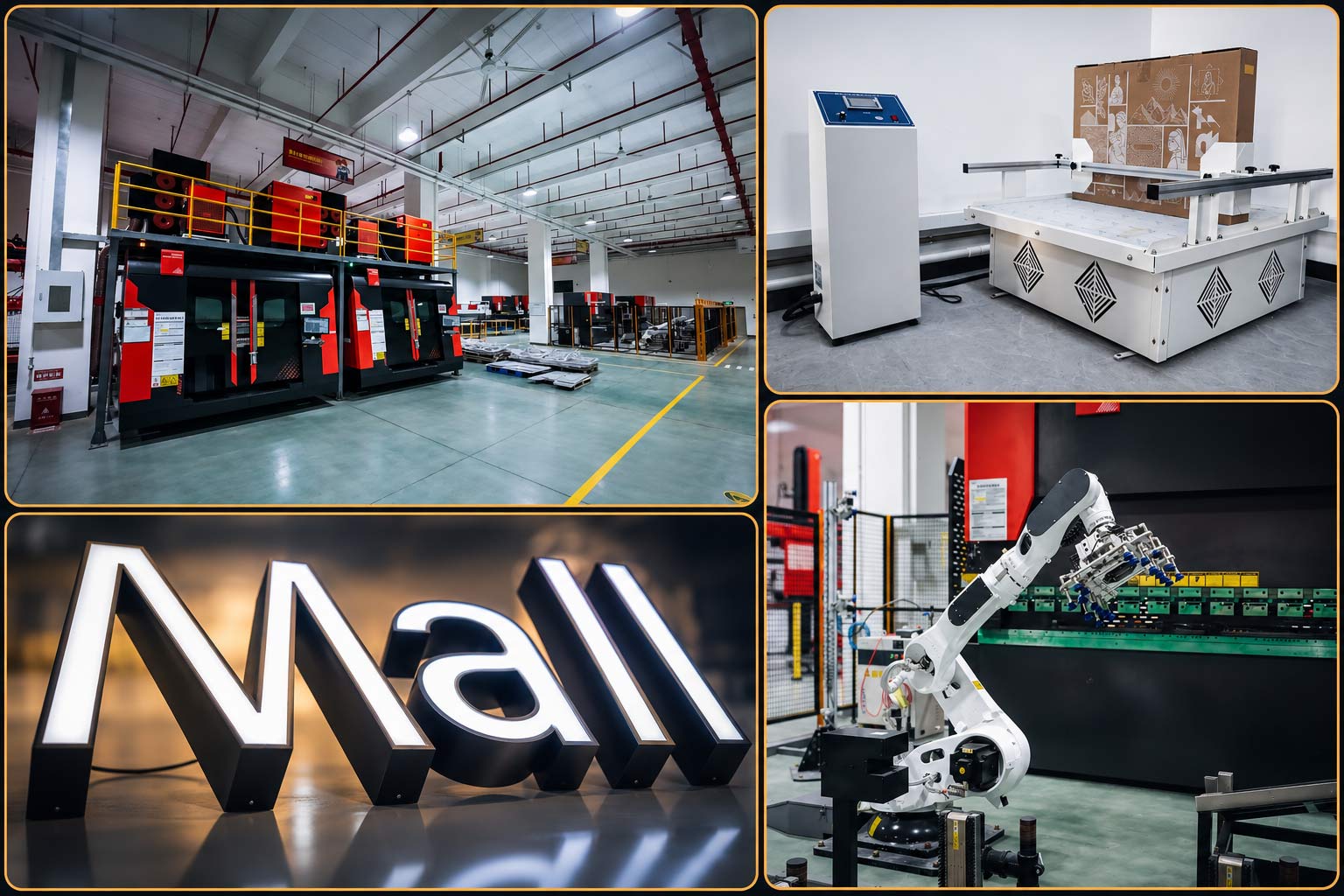
Cutting, bending, welding, bonding, polishing, assembly and sealing all shape final product reliability. Tiny production flaws often grow more obvious after years of environmental exposure.
This point carries extra weight for custom signage manufacturers handling architectural signs, channel letters, illuminated logos and large scale signage projects.
Stable, standardized production delivers precise dimensions, solid joints, neat surface finishes and dependable lighting performance.
7. Installation and Maintenance
Proper installation plays a critical role in overall sign durability.
Faulty mounting, bad drainage, uncovered wiring, compromised waterproofing or excessive structural load will cut a sign’s service life short.
Routine cleaning and inspections stop minor defects from turning into costly major repairs. Loose fittings, damaged surface finish, LED failures, corrosion and water penetration need prompt fixes as soon as they show up.
How Do Different Sign Materials Compare?
The best material depends on the application. A material that works well for an indoor tactile sign may not be the right choice for an exposed building facade.
| Material | Durability | Common Applications | Key Advantage |
| Aluminum | High | Outdoor and architectural signage | Lightweight and corrosion resistant |
| Stainless Steel | Very High | Premium architectural signs | Strength and refined finish |
| Acrylic | Medium to High | Illuminated signs and light boxes | Excellent light transmission |
| Rowmark | High for indoor use | ADA and tactile signage | Easy engraving and color contrast |
| Brass | High | Decorative and premium signage | Distinctive metallic appearance |
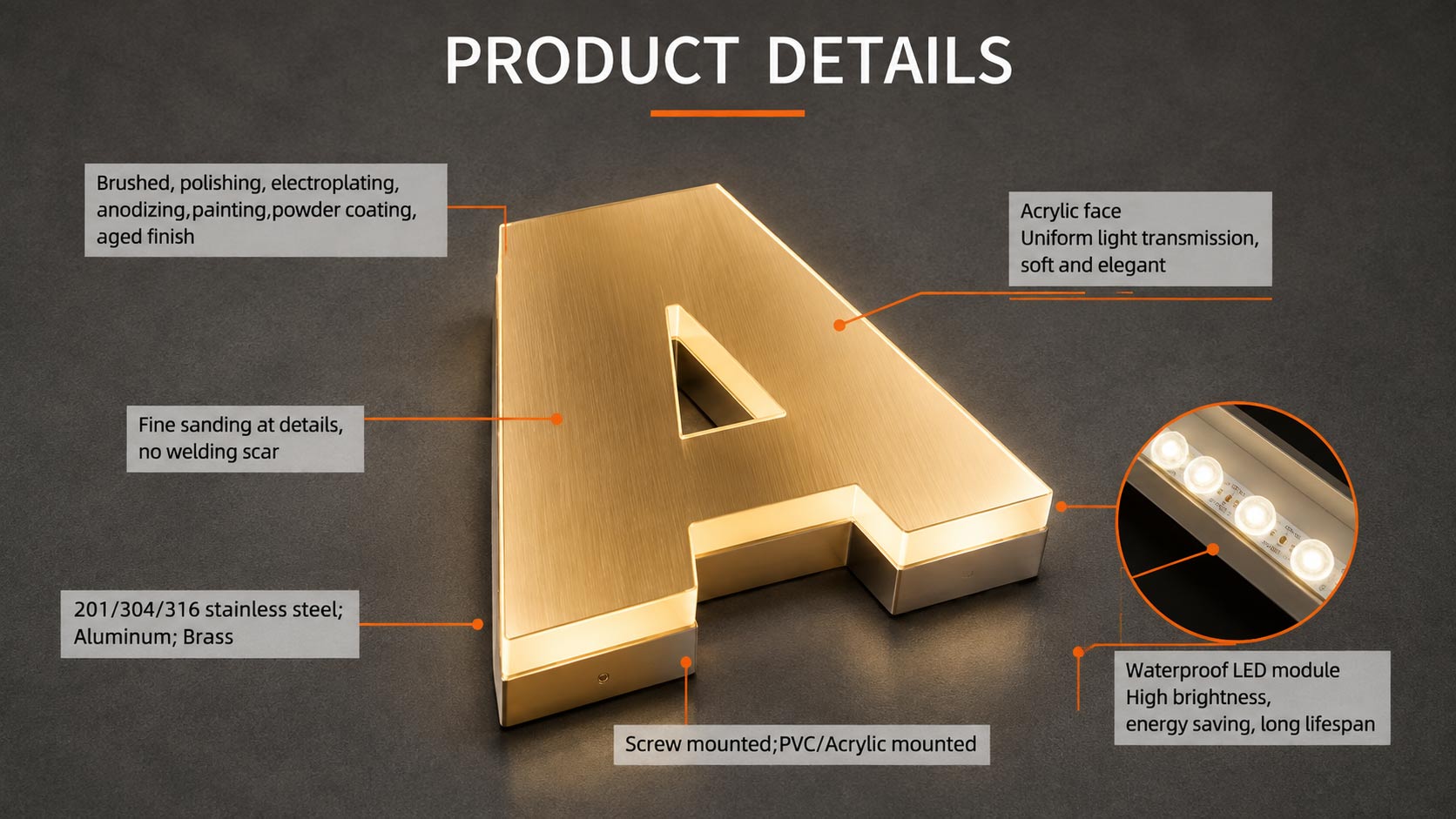
For example, stainless steel signage can be a good option for a premium building facade. Acrylic may be more suitable for a back lit logo where light transmission is important. Rowmark ADA signs are designed for interior identification and tactile applications rather than fully exposed outdoor use.
The important point is simple: choose the material according to the job.
How to Make Custom Signage Last Longer
Long lasting signage starts with the right decisions before production begins.
When working with a custom signage supplier, buyers should confirm:
- Installation location
- Sunlight and rain exposure
- Material thickness
- Surface treatment
- LED and power supply specifications
- Waterproofing requirements
- Mounting and structural support
- Maintenance access
It is also useful to ask about quality inspection and testing procedures before placing an order.
For cross border projects, an experienced signage manufacturer in China can deliver material sourcing, fabrication, finishing, lighting assembly, performance testing and export support within one streamlined production workflow.
When Should You Repair or Replace a Sign?
You do not always have to fully swap out a damaged sign.
Faded finishes, isolated LED failures, loose fittings and light surface damage can in most cases be fixed through repairs. Yet heavy corrosion, structural distortion, recurring electrical faults, cracked panels and widespread water damage usually mean full replacement makes more practical sense.
For illuminated signs, early routine checks bring huge value. Minor waterproofing or electrical faults will escalate into expensive breakdowns if you leave them unaddressed.
How to Choose Long Lasting Custom Signage
When comparing custom signage manufacturers, price should not be the only consideration.
Ask about:
- Material specifications
- Fabrication capabilities
- Surface finishing
- Lighting components
- Quality control
- Testing procedures
- Installation requirements
- After sales support
A reliable manufacturer should be able to explain why a specific material, finish, structure, or lighting system is suitable for your project.
COSUN SIGN is an experienced custom signage manufacturer providing integrated design, fabrication, finishing, lighting, and project support for commercial and architectural signage. The company is an Authorized General Distributor of Rowmark in China Mainland, UL and CE Certificate.
Conclusion
The lifespan of custom signage depends on more than the material. Installation conditions, surface treatment, lighting quality, manufacturing processes, and maintenance all play a role.
Choosing suitable materials and working with an experienced signage manufacturer from the beginning can help reduce maintenance needs and provide more reliable long term performance.
Need a custom signage solution for your project? Contact COSUN to discuss your requirements and get a professional quotation.

 粤公网安备44030702001648号