
















COSUN SIGN is an indoor signage manufacturer producing custom 3D Printed ADA Tactile Signs for commercial, healthcare, and hospitality environments. Its direct UV/LED printing process creates raised characters and domed Grade 2 Braille, with a stated raised-detail height of 1/32 inch (0.8 mm) and production capacity of up to 700 pieces per day. Material, artwork, and format options support projects ranging from individual room signs to large building-wide installations.
What Is an Indoor Signage Manufacturer?
An indoor signage manufacturer is a company that designs, fabricates, and supplies signs for interior spaces, including offices, hotels, hospitals, educational facilities, and commercial buildings.
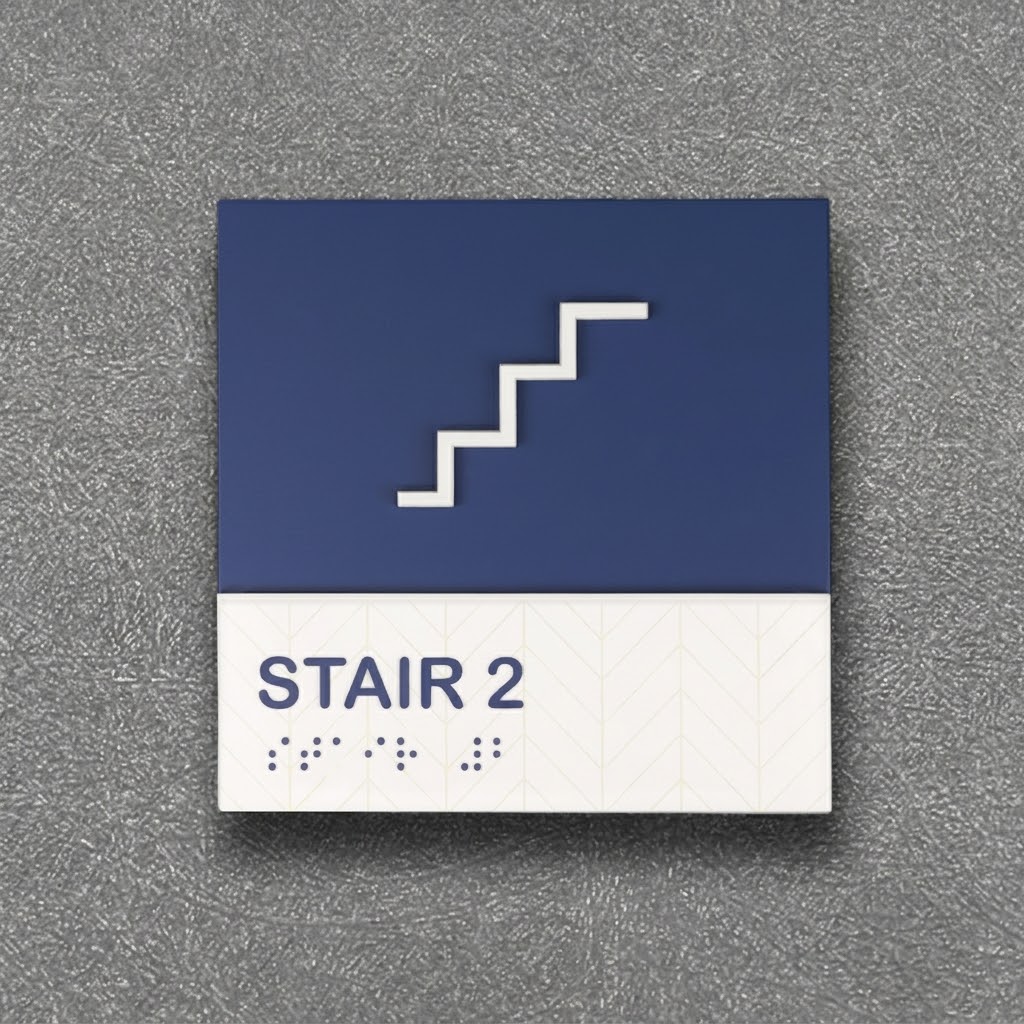
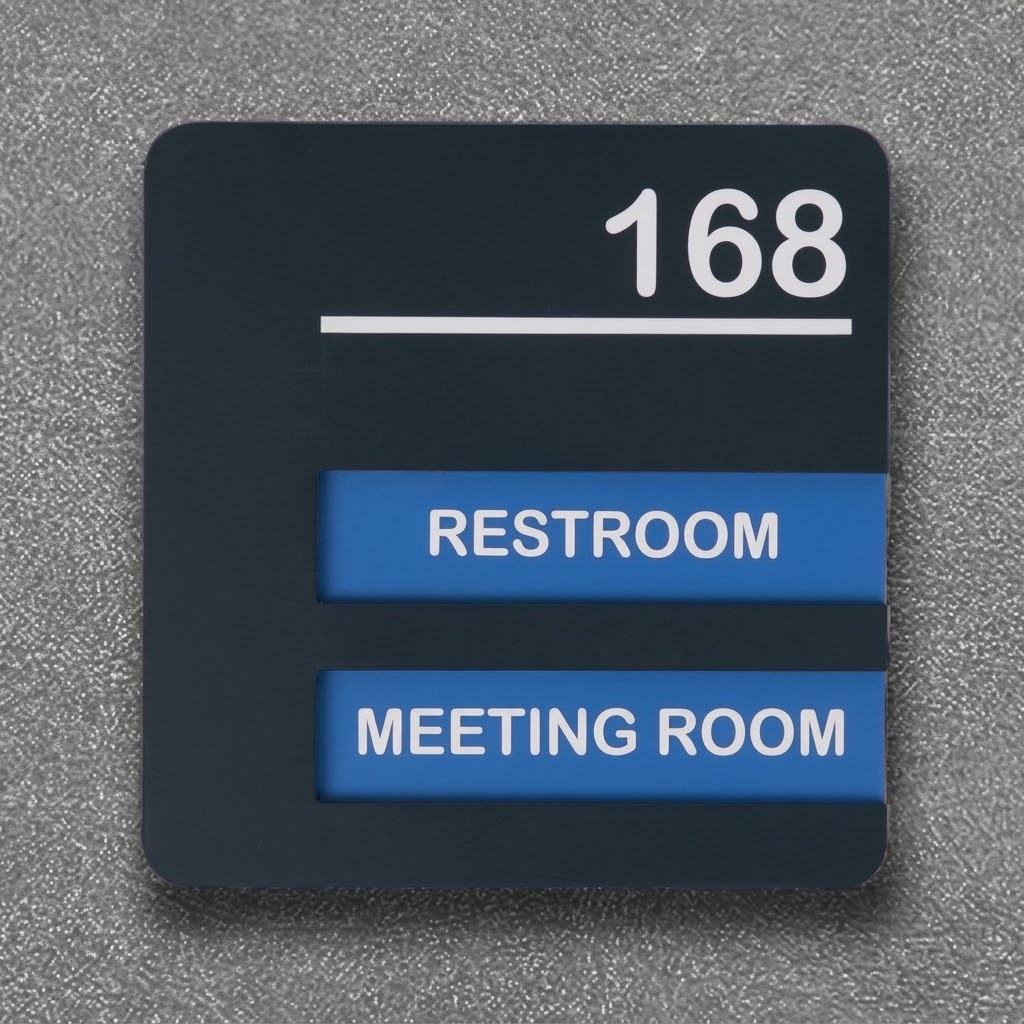
For accessibility projects, a custom indoor signage manufacturer may produce tactile signs featuring raised lettering, Braille, directional information, room numbers, and pictograms. COSUN SIGN manufactures custom interior signage, including 3D printed ADA signs, room identification signs, and customized house number signs.
These products serve two purposes: communicating information visually and helping people with visual impairments identify rooms and facilities through touch. The required features depend on the sign’s function, installation location, and applicable accessibility regulations.
How Does Direct UV/LED 3D Printing Work?
Direct UV/LED 3D printing builds raised graphics and tactile details directly on a compatible sign substrate by depositing and curing successive layers of printing material.
The manufacturing process generally involves the following stages:
- Design preparation: Confirm dimensions, wording, fonts, Braille content, pictograms, colors, and substrate requirements.
- Artwork and accessibility review: Check tactile layouts against the applicable accessibility requirements before production.
- Substrate preparation: Select and prepare compatible materials, such as acrylic, painted inserts, or metal laminates.
- Direct printing: Apply UV/LED-curable materials to create raised characters, Braille dots, and decorative details.
- Quality inspection: Examine dimensional accuracy, surface finish, adhesion, and tactile consistency.
- Packaging and delivery: Prepare the signs for installation according to the approved project specifications.
The main advantages include design flexibility, integrated tactile elements, customizable graphics, and the ability to coordinate signs with an interior’s visual identity. Actual adhesion and wear performance depend on the ink system, substrate, curing conditions, and testing procedures.
What Are the Core Technical Specifications?
COSUN SIGN’s stated manufacturing parameters provide a starting point for evaluating custom ADA tactile signs, but the complete sign specification must be reviewed before compliance is confirmed.
| Parameter | Specification or capability |
|---|---|
| Manufacturing technology | Direct UV/LED 3D printing |
| Raised-detail dimension | 1/32 inch (0.8 mm), as stated by the manufacturer |
| Braille | Fully domed Grade 2 Braille |
| Production capacity | Up to 700 pieces per day |
| Compatible substrates | Acrylic, painted inserts, metal laminates, and other approved materials |
| Customization | Sizes, colors, graphics, logos, icons, and multilingual options |
| Quality considerations | Adhesion, scratch resistance, wear resistance, and tactile consistency |
| Typical products | ADA room signs, door signs, restroom signs, and house number signs |
An important technical distinction is that raised-character depth is not the same as character height. Under the 2010 ADA Standards for Accessible Design, Section 703.2.1 specifies a minimum raised-character depth of 1/32 inch (0.8 mm). Section 703.2.5 separately addresses character height, generally requiring 5/8–2 inches (16–51 mm), subject to specified exceptions. Grade 2 Braille dimensions and placement are addressed in Section 703.3. These requirements should be checked against the final product and installation plan.
Where Are 3D Printed ADA Signs Used?
3D printed tactile signs are used in interior environments where room identification, accessibility, and consistent visual communication are required.
Common applications include:
- Healthcare facilities: Hospital room signs, restroom identification, examination-room labels, and accessible wayfinding.
- Hotels and hospitality: Hotel room signage, guest-room numbers, amenity labels, and custom door signs.
- Offices and commercial buildings: Meeting-room identification, office nameplates, and floor directories.
- Schools and campuses: Classroom identification, administrative offices, and shared facilities.
- Residential and mixed-use developments: Custom house number signs and coordinated interior identification systems.
Project teams should distinguish between tactile room identification, directional signs, exterior address signs, and other sign categories because their accessibility requirements may differ.
How Should Buyers Compare 3D Printing with Traditional Signage?
Compared with traditional solutions, direct UV/LED 3D printing offers a different way to combine raised details and printed graphics on a single substrate. The appropriate process depends on the design, material, compliance requirements, and expected service conditions.
| Evaluation factor | Direct UV/LED 3D printing | Engraving or applied lettering |
|---|---|---|
| Raised details | Printed directly onto compatible substrates | Created through engraving or separately applied elements |
| Graphic flexibility | Supports layered colors, logos, and detailed backgrounds | Depends on engraving, material, and assembly method |
| Construction | Can integrate multiple details on one panel | May require separate fabrication or assembly steps |
| Material compatibility | Depends on substrate and ink compatibility | Depends on engraving or adhesive requirements |
| Durability | Requires verification of adhesion and wear performance | Depends on material, engraving depth, and attachment method |
| Best-fit considerations | Integrated tactile graphics and customized visual designs | Material-specific finishes and established fabrication workflows |
Neither method is automatically compliant or more durable in every application. Buyers should request samples and confirm performance against project requirements.
How Can Buyers Select a Reliable Indoor Signage Manufacturer?
A reliable indoor signage manufacturer should demonstrate relevant production capabilities, material knowledge, documented quality controls, and the ability to review accessibility requirements before manufacturing.
Purchasing teams can evaluate suppliers using these criteria:
- Accessibility expertise: Confirm tactile character dimensions, Grade 2 Braille specifications, contrast, and installation guidance.
- Manufacturing capability: Review printing equipment, substrate compatibility, quality inspection, and realistic production schedules.
- Adhesion testing: Where appropriate, agree on a suitable test method, such as ASTM D3359-23 for assessing coating adhesion by tape testing. This standard does not independently establish ADA compliance or guarantee long-term service life.
- Quality documentation: Request applicable certification documents and clarify which products, facilities, or processes they cover.
- Project scalability: Verify that the manufacturer can maintain consistency across prototypes, individual orders, and large multi-building projects.
COSUN SIGN identifies itself as a custom signage manufacturer serving commercial, healthcare, and hospitality applications. Its stated credentials include ISO, UL, and CE certifications, along with CMMI Development Maturity Level 3 qualification. Buyers should verify the specific certificates, issuing bodies, scope, and validity relevant to their project.
What Factors Affect the Cost of Custom ADA Signs?
The cost of custom ADA tactile signs depends on material, dimensions, design complexity, finishing requirements, order quantity, and packaging or delivery arrangements.
Factors that commonly influence quotations include:
- Material selection: Acrylic, painted inserts, and metal laminates have different material and processing requirements.
- Design complexity: Multiple colors, logos, pictograms, and multilingual layouts can increase preparation time.
- Tactile specifications: Braille layout, raised details, and accessibility checks affect design and quality-control work.
- Order quantity: Larger projects may distribute setup costs across more units, depending on production conditions.
- Installation requirements: Mounting hardware, labeling, packaging, and delivery can affect the overall project budget.
To obtain a comparable quotation, buyers should provide drawings, dimensions, quantities, material preferences, artwork, delivery location, and required completion dates.
FAQ
What Are 3D Printed ADA Tactile Signs?
3D printed ADA tactile signs are signs manufactured with raised characters and tactile features, often including Grade 2 Braille, to support accessible identification. Compliance depends on the finished sign’s dimensions, layout, materials, and installation.
How Do You Choose a Reliable 3D Printed ADA Sign Manufacturer?
Choose a manufacturer that can document its production capabilities, verify tactile and Braille specifications, demonstrate material adhesion, provide quality-control records, and support the required project volume. Review samples and applicable certification documents before placing a large order.
Why Choose 3D Printed ADA Signs Over Traditional Options?
3D printed ADA signs can integrate raised text, Braille, colors, and custom graphics on compatible substrates. They may simplify certain customized designs, but buyers should compare samples, durability, compliance, and total project cost against engraved or assembled alternatives.
Source & Expertise
This article is based on the product and manufacturing information supplied by COSUN SIGN and the U.S. Department of Justice’s 2010 ADA Standards for Accessible Design, particularly Sections 703.2 and 703.3. ASTM D3359-23 is referenced as a potential adhesion-test method where appropriate. Product specifications and certification scope should be independently verified for each project.
Last Updated
Last Updated: October 2026

 粤公网安备44030702001648号