

















Complex commercial and public facilities need more than a collection of directional signs. Multiple entrances, buildings, floors, user groups, and changing destinations create a navigation system that must be planned from the floor plan and visitor journey. Digital wayfinding signage can add searchable or changeable information, but it only works well when physical identification, directories, directional signs, room signs, and digital touchpoints share one hierarchy.
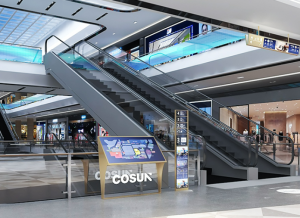
For procurement teams, the task is to assign the right product to each decision point, keep the visual language consistent, and make sure accessibility, multilingual communication, readability, serviceability, and future expansion are considered before manufacturing begins.
Designing Wayfinding for Multi-Zone and Multi-Building Sites
Complex environments rarely have a single visitor route. A hospital campus, mixed-use development, industrial park, or multi-building commercial site may need to guide people from parking to lobby, entrance to tenant, building to building, or reception to a final room. Digital wayfinding signage should therefore begin with the most important user journeys and decision points rather than with a list of available screens.
A clear hierarchy normally moves from outdoor pylons and building identification to directories and directional signs, then to interactive kiosks where destination choice is complex, and finally to room or destination signs. Typography, icons, color coding, arrows, naming rules, and brand elements should remain consistent across physical and digital touchpoints so users recognize one coordinated system.
Choosing Products That Can Adapt as the Site Changes
Information does not change at the same frequency everywhere. Modular static signs with replaceable panels can handle tenant names, department changes, and room information that changes occasionally. Digital directories and maps are more suitable where tenant lists, events, temporary routes, or service information change frequently. Interactive kiosks are most useful where users need search, not simply where a touchscreen is technically possible.
Expansion and serviceability should also be part of the original specification. Future buildings, additional kiosks, replacement screens, access panels, mounting systems, spare parts, and repeat-order consistency can all affect long-term operation. This is why custom wayfinding signage should be planned as a complete product system rather than a series of unrelated signs.
Creating a Coordinated Wayfinding System for Complex Spaces
Digital wayfinding signage performs best when every sign type has a defined role within one visual hierarchy. Static signs provide permanent information, digital displays handle content that changes, interactive kiosks support high-choice search, and modular structures make selected physical information easier to update.
For project teams that need these elements manufactured as one coordinated package, cosun can support the development of custom signage products around floor plans, traffic routes, branding, accessibility requirements, environmental conditions, and future expansion needs.

 粤公网安备44030702001648号