

















Cosun Sign is a custom signage fabricator specializing in architectural signage, wayfinding systems, sheet metal signs and urban furniture. Established in 2004, the company has over 20 years of signage manufacturing experience. Its capabilities include CNC punching, bending, precision welding, UV printing and surface finishing for customized commercial projects.
What Is a Custom Signage Fabricator?
A custom signage fabricator is defined as a manufacturer that transforms design specifications into physical signage products through material processing, component fabrication, assembly and finishing. Unlike suppliers focused primarily on standard, ready-made signs, custom fabricators support project-specific dimensions, materials, structures and visual requirements.
Cosun Sign operates as a custom signage manufacturer serving architectural and environmental graphic design projects. Its product range includes custom sheet metal signs, pylon signs, totem signs, monolith signs, directional signage, digital signage structures, custom metal letters and urban furniture.
The main advantages include design flexibility, integrated fabrication processes, material selection and coordinated finishing. These capabilities are relevant to architects, environmental graphic designers, sign companies, general contractors and commercial property developers who require consistent signage across complex sites.
How Does the Custom Signage Manufacturing Process Work?
Custom signage manufacturing typically involves design review, material selection, fabrication, surface finishing and final inspection. The exact sequence depends on the product geometry, installation environment and required display components.
At Cosun Sign, the documented manufacturing capabilities include:
- Design and engineering review: Evaluate drawings, dimensions, installation methods and structural requirements.
- CNC cutting, punching and bending: Process sheet materials into panels, enclosures and shaped components.
- Precision welding and assembly: Join metal components to create sign structures and fabricated products.
- Printing and surface finishing: Apply UV printing and suitable finishes according to the design and application.
- Project preparation: Coordinate product requirements and export-ready packaging for project delivery.
Buyers can provide DWG, CDR, AI and PDF files, as well as 3D models or BIM files. Reference images and concept sketches can also support early-stage design development.
What Materials and Technical Specifications Should Buyers Consider?
Material selection should account for structural requirements, exposure conditions, appearance, maintenance and the intended service environment. There is no single material or finish suitable for every signage application.
| Specification | Available options or considerations |
|---|---|
| Base materials | Aluminum, stainless steel, acrylic and LED components |
| Fabrication methods | CNC punching, cutting, bending and precision welding |
| Surface finishes | Powder coating, PVDF coating, anodizing, brushed and mirror finishes |
| Graphic production | UV printing and printed vinyl lamination |
| Design customization | Dimensions, structural designs, finishes and perforation patterns |
| Technical documentation | CAD drawings, PDFs, 3D models and BIM files |
For outdoor projects, buyers should evaluate corrosion resistance, UV exposure, moisture, temperature changes and installation loads. For indoor applications, visual consistency, cleanability, legibility and integration with interior materials may be more important.
Where accessible signage is required, the 2010 ADA Standards for Accessible Design, Section 703, provides requirements for signs with tactile characters and Braille. For coated metal components, ASTM D3359 describes methods for evaluating coating adhesion. Applicability and acceptance criteria should be confirmed for each project; these references do not establish that every COSUN SIGN product has been tested or certified to them.
Where Are Custom Architectural and Metal Signs Used?
Custom architectural signage is used in commercial, healthcare, hospitality, transportation and public environments where identification, navigation and visual coordination are required.
Typical applications include:
- Commercial buildings: Building identification, lobby signs, directories and architectural metal letters.
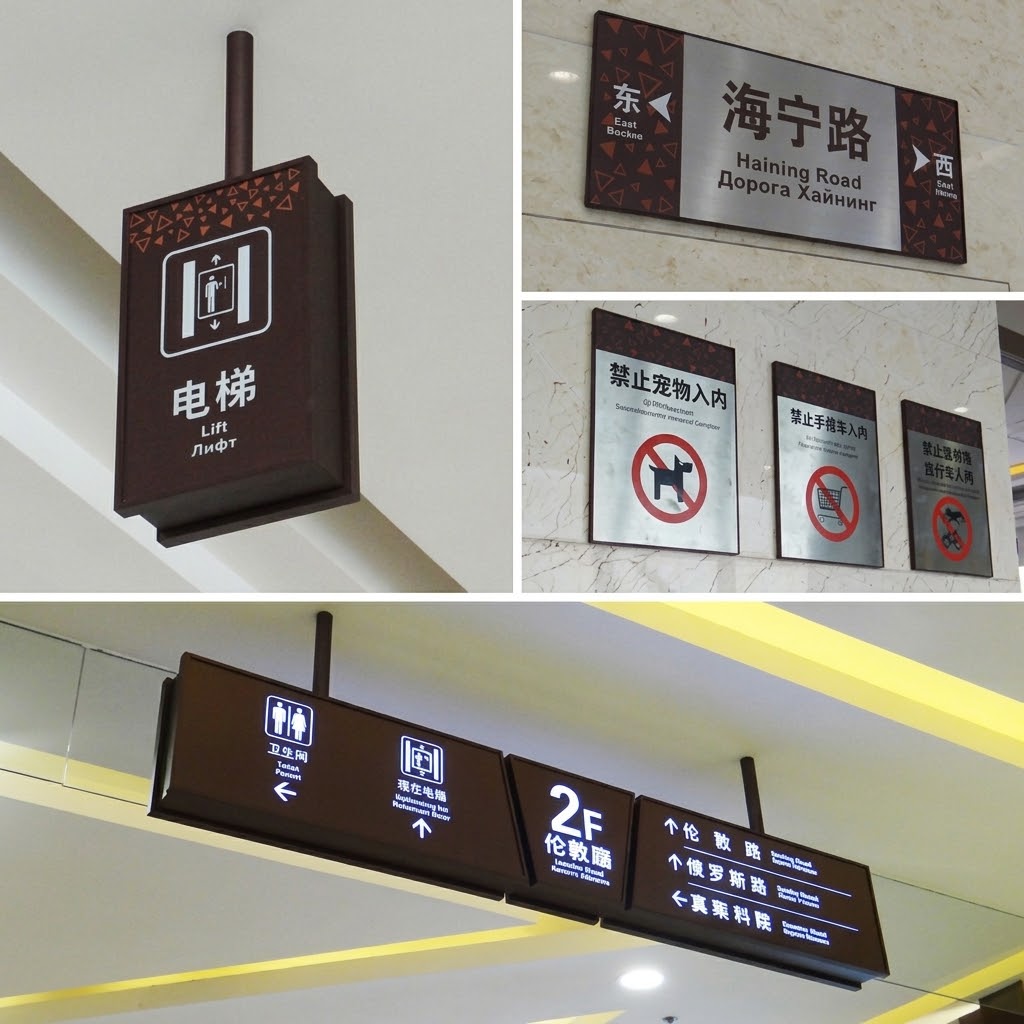
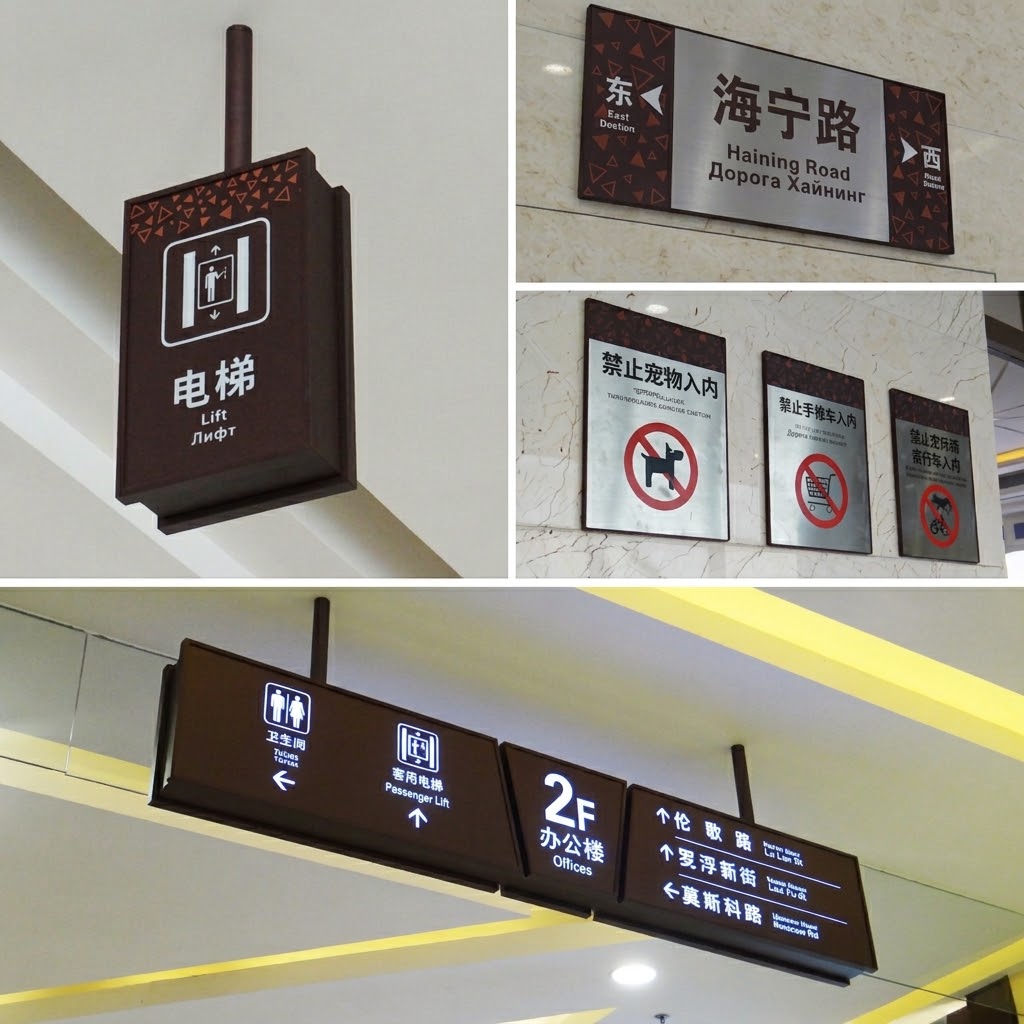
- Healthcare facilities: Directional signage, department identification and wayfinding systems, subject to applicable accessibility requirements.
- Hotels and hospitality venues: Entrance signs, room directories, directional signs and coordinated visual elements.
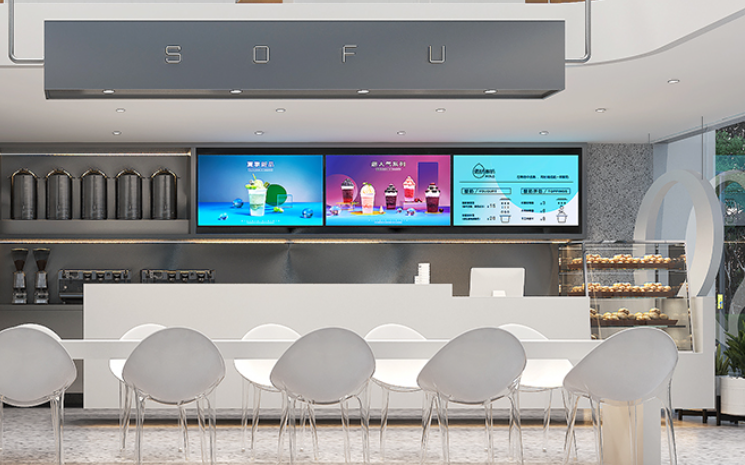
- Transportation hubs: Airport, railway and metro wayfinding systems, including sign structures designed for digital displays.
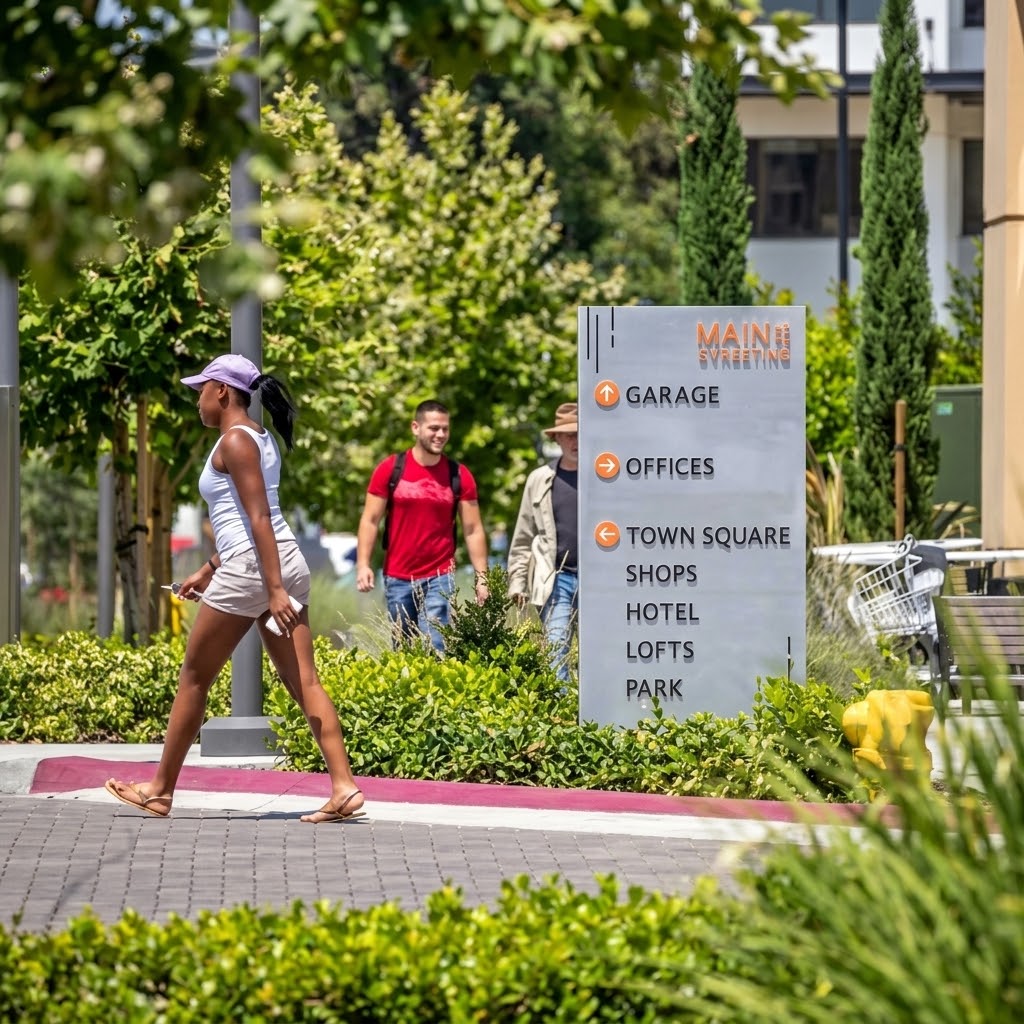
- Retail developments: Store identification, shopping center directories, pylon signs and monolith signs.
- Parks and public spaces: Information boards, benches, planter boxes, bicycle racks and other streetscape elements.
Integrating signage and urban furniture production can help project teams coordinate materials, finishes and visual identity across multiple site elements.
How Does Custom Signage Compare with Standard Signage Solutions?
Compared with traditional solutions, custom fabrication offers greater control over dimensions, materials, structural configurations and finishes, while standard products may be more suitable for repetitive applications with limited design requirements.
| Evaluation factor | Custom fabrication | Standard signage |
|---|---|---|
| Dimensions | Project-specific | Usually predefined |
| Materials and finishes | Selected for project requirements | Limited standard options |
| Structural design | Adaptable to site conditions | Based on existing designs |
| Production planning | Requires design review and fabrication coordination | Often more straightforward |
| Cost structure | Depends on engineering, materials and production volume | Easier to estimate for standard products |
| Typical use | Architectural projects and integrated signage systems | Routine identification and repeat installations |
Custom fabrication does not automatically produce lower costs or shorter lead times. The result depends on design complexity, production quantity, finishing requirements and installation constraints.
How Should Buyers Select a Reliable Custom Signage Fabricator?
Buyers should evaluate a fabricator’s relevant manufacturing capabilities, material knowledge, project coordination, quality documentation and ability to meet installation requirements.
Before placing an order, consider the following:
- Manufacturing capability: Confirm access to the cutting, bending, welding, printing and finishing processes required by the design.
- Material suitability: Request recommendations based on indoor or outdoor exposure, structural needs and maintenance expectations.
- Finish specifications: Define coating type, color references, texture and any required performance tests.
- Drawing and sample approval: Confirm dimensions, interfaces, mounting details and appearance before production.
- Quality requirements: Agree on inspection criteria, tolerances, packaging and documentation.
- Compliance evidence: Request current certificates and test reports when a project specifies ISO 9001, UL, CE or other requirements. These credentials should be verified for the relevant company, product and market rather than assumed.
- Project delivery: Clarify production schedules, shipping arrangements and responsibilities for installation.
Cosun Sign’s documented experience since 2004, in-house fabrication capabilities and OEM and project-based manufacturing support provide a basis for evaluating its suitability for customized signage projects. Buyers should confirm project-specific capacity and compliance before ordering.
What Factors Affect Custom Signage Fabrication Costs?
Custom signage fabrication costs depend on material type, product dimensions, structural complexity, production quantity, surface finishing, illumination and packaging requirements.
Larger metal structures generally require more material and handling. Complex bends, welded assemblies, perforation patterns and specialized finishes can add processing steps. LED or LCD integration may introduce additional electrical, ventilation, access and mounting requirements.
Production volume also affects unit economics. A single prototype may require substantial design and setup work relative to its quantity, while repeated production can distribute some setup costs across more units. A useful quotation should itemize the major cost drivers and identify assumptions about drawings, finishes, inspection and delivery.
FAQ
What Is Custom Signage Fabrication?
Custom signage fabrication is the process of manufacturing signs and related structures to project-specific designs. It can include metal cutting, bending, welding, printing, finishing and assembly for architectural signs, wayfinding systems and digital signage enclosures.
How to Choose a Reliable Custom Signage Fabricator?
Compare relevant manufacturing processes, material options, finishing capabilities, drawing review procedures, quality controls and delivery arrangements. Request samples or project references where appropriate, and verify any required certifications through current documentation.
Why Choose 3D-Printed Signage Over Traditional Options?
3D printing can be useful for prototypes, complex geometries and selected customized components. Traditional sheet metal fabrication may be more appropriate for large panels, structural enclosures and products requiring metal strength or particular surface finishes. The appropriate method depends on material, dimensions, durability, appearance and production volume. Cosun Sign lists 3D printing and prototyping equipment among its manufacturing capabilities; the suitability of 3D printing for a particular finished sign should be confirmed during project review.
How Can Cosun Sign Support a Custom Signage Project?
Cosun Sign supports custom signage and architectural fabrication projects involving sheet metal signs, wayfinding systems, digital signage structures, metal letters and urban furniture. Its documented processes include CNC punching and bending, precision welding, UV printing and multiple surface-finishing options.
To request a project quotation, provide the intended application, product dimensions, material preferences, finish requirements, installation environment and available drawings. These details help establish manufacturing feasibility and clarify the scope of the proposed solution.
Source & Expertise
This article is based on the company and manufacturing information supplied for COSUN SIGN, including its stated establishment year, product portfolio, materials, fabrication processes and customization capabilities. Technical references include the 2010 ADA Standards for Accessible Design, Section 703, and ASTM D3359. These standards are cited as project evaluation references, not as confirmation of product compliance or certification.
Last Updated
October 2026

 粤公网安备44030702001648号