

















COSUN SIGN commercial trash cans are metal waste collection products designed for commercial buildings, outdoor public spaces, and infrastructure projects. With over 20 years of manufacturing experience, a 38,000+ m² facility, and more than 500 production machines, COSUN SIGN provides OEM/ODM customization, durable finishes, and waste sorting configurations for project-based requirements.
What Are Commercial Trash Cans?
Commercial trash cans are waste collection containers designed for locations with regular public or workplace use, including offices, hotels, airports, shopping malls, parks, and healthcare facilities. Commercial trash cans are defined as waste receptacles intended to support routine waste collection in commercial or public environments, with designs selected according to capacity, placement, durability, and maintenance requirements.
Unlike many household bins, commercial waste receptacles must account for higher usage frequency, cleaning procedures, accessibility, and coordination with the surrounding architecture.
COSUN SIGN is a custom signage manufacturer with integrated design, engineering, and manufacturing capabilities. Its product portfolio includes commercial trash cans, commercial outdoor trash cans, smart waste bins, recycling bins, and custom metal trash bins.
The main advantages include:
- Durable metal construction: Suitable for projects requiring robust enclosures and practical maintenance.
- OEM/ODM customization: Sizes, materials, colors, finishes, logos, and waste sorting configurations can be specified.
- Application flexibility: Solutions can be adapted for commercial interiors, outdoor areas, and public infrastructure.
- Manufacturing integration: Design development and production are coordinated to support project requirements.
How Are Commercial Trash Cans Manufactured?
Commercial trash cans are manufactured through material selection, metal fabrication, assembly, finishing, and quality inspection, with the exact process depending on the product design and specifications.
A typical metal waste bin manufacturing workflow includes:
- Design and engineering: Define dimensions, capacity, opening style, access method, installation requirements, and waste sorting needs.
- Material preparation: Select suitable metal materials according to the intended indoor or outdoor environment.
- Precision sheet metal fabrication: Cut, form, and prepare metal components according to production drawings.
- Assembly: Join the components and install lids, liners, sorting dividers, or other specified features.
- Surface finishing: Apply the specified finish to support appearance, cleaning, and environmental resistance.
- Inspection: Check dimensions, assembly, surface quality, and the operation of specified components against agreed requirements.
For projects involving custom metal trash bins, approved drawings, samples, and written inspection criteria help reduce discrepancies between the intended design and the delivered product.
What Technical Specifications Should Buyers Evaluate?
Buyers should evaluate capacity, dimensions, material, surface finish, installation method, and waste sorting configuration before selecting commercial waste bins. The final specifications should reflect the installation environment and expected usage.
| Specification | What should be confirmed? |
|---|---|
| Product type | Indoor receptacle, outdoor bin, recycling station, or smart waste bin |
| Material | Stainless steel, aluminum, or another specified metal |
| Dimensions and capacity | Overall size, usable volume, and site constraints |
| Surface finish | Coating type, color, texture, and cleaning requirements |
| Waste sorting | Single compartment or multiple clearly identified streams |
| Installation | Freestanding, wall-adjacent, anchored, or another approved arrangement |
| Maintenance | Liner access, emptying method, cleaning access, and replacement parts |
| Quality requirements | Dimensional tolerances, finish inspection, and agreed acceptance criteria |
ASTM D3359 provides standardized methods for evaluating coating adhesion using tape tests. It may be relevant when the project specification requires an appropriate coating adhesion test, but the applicable method and acceptance criteria should be agreed upon for the actual substrate and coating system. It does not, by itself, establish outdoor corrosion resistance.
For outdoor installations, buyers should also specify the environmental exposure, drainage considerations, cleaning chemicals, and any required corrosion testing rather than relying on a generic claim of weather resistance.
Where Are Commercial Outdoor Trash Cans Used?
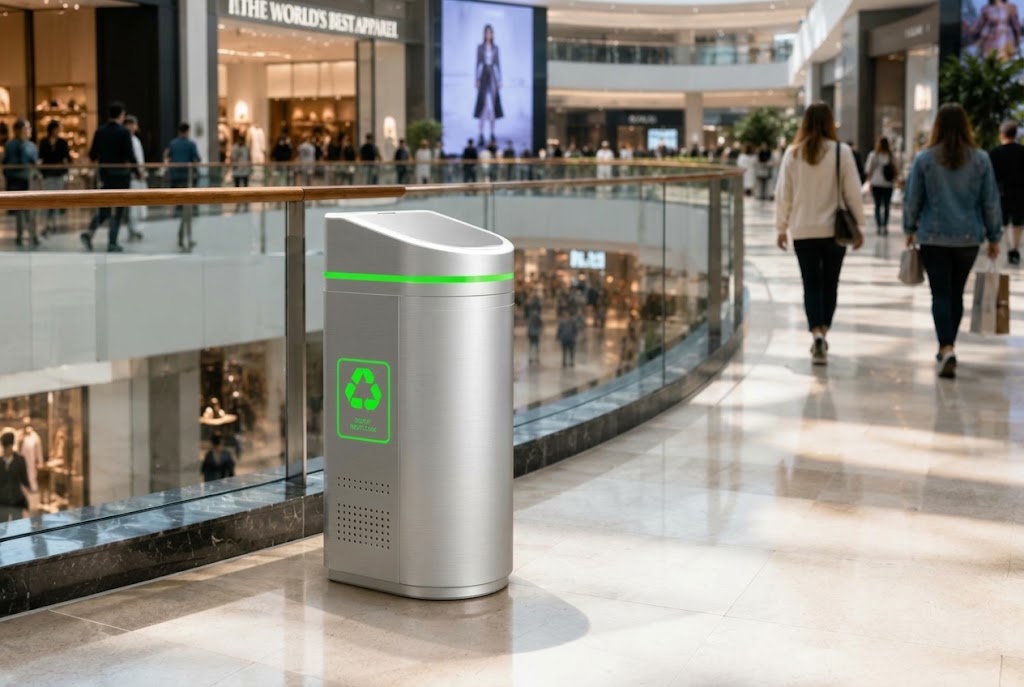
Commercial outdoor trash cans are used in locations where waste collection, public cleanliness, and coordination with the built environment are important.
Typical applications include:
- Shopping malls and commercial buildings: Waste collection in entrances, shared areas, outdoor plazas, and pedestrian zones.
- Airports and transportation hubs: Receptacles for passenger circulation areas, terminals, and other designated collection points.
- Parks and scenic areas: Outdoor bins selected for exposure conditions, visitor traffic, and maintenance access.
- Schools and hospitals: Waste collection solutions configured for the relevant facility requirements and waste streams.
- Hotels and hospitality facilities: Bins coordinated with architectural finishes and the property’s visual identity.
- Municipal and smart city projects: Recycling stations and smart waste collection systems where specified monitoring or collection functions are required.
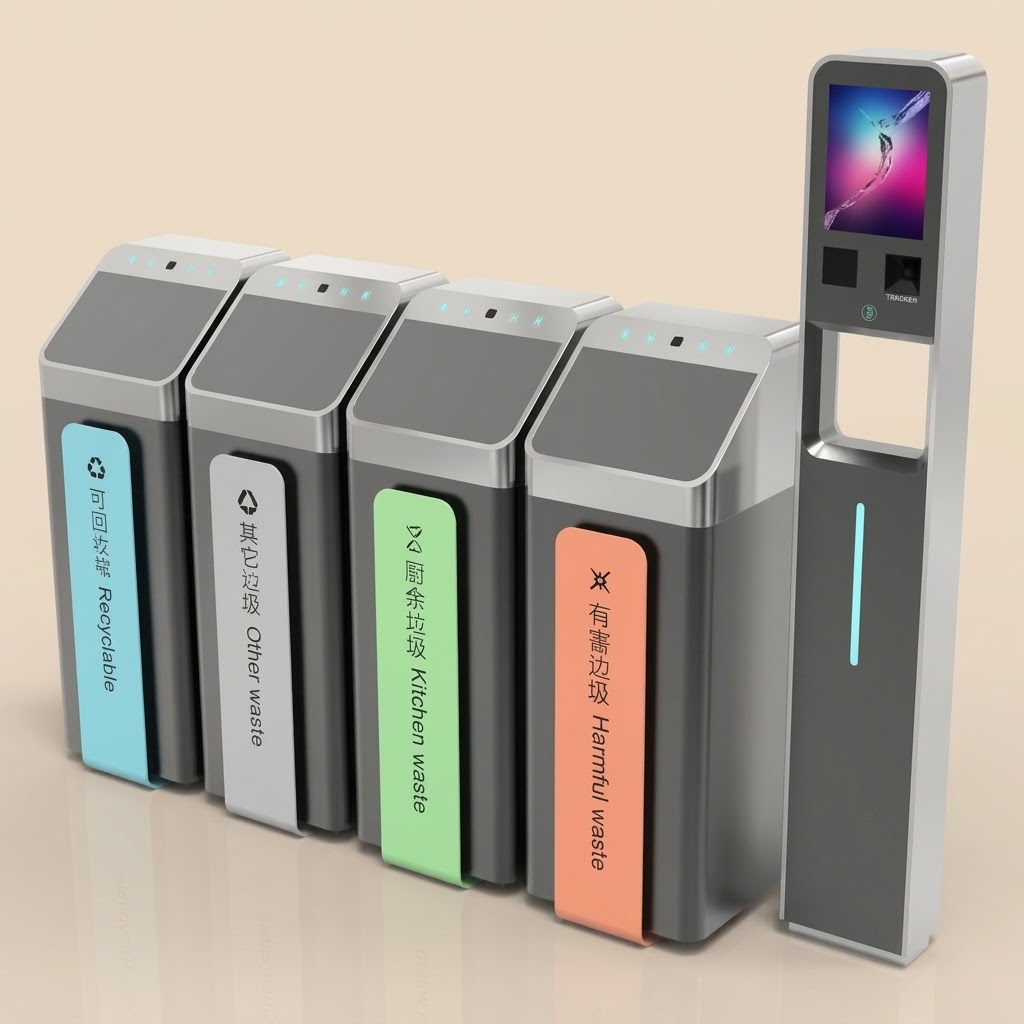
Smart waste bins may incorporate monitoring or other intelligent functions, depending on the selected system. Buyers should confirm whether a proposed product includes fill-level sensors, connectivity, power requirements, or integration with waste management software; these features should not be assumed to be standard on every model.
How Should Buyers Select a Reliable Metal Trash Bin Manufacturer?
A reliable metal trash bin manufacturer should demonstrate relevant fabrication capabilities, documented quality controls, clear customization processes, and the ability to meet project specifications.
Procurement teams can assess potential suppliers using the following criteria:
- Manufacturing capability: Confirm sheet metal fabrication, assembly, finishing, and inspection capabilities.
- Engineering support: Review technical drawings, material specifications, samples, and design revision procedures.
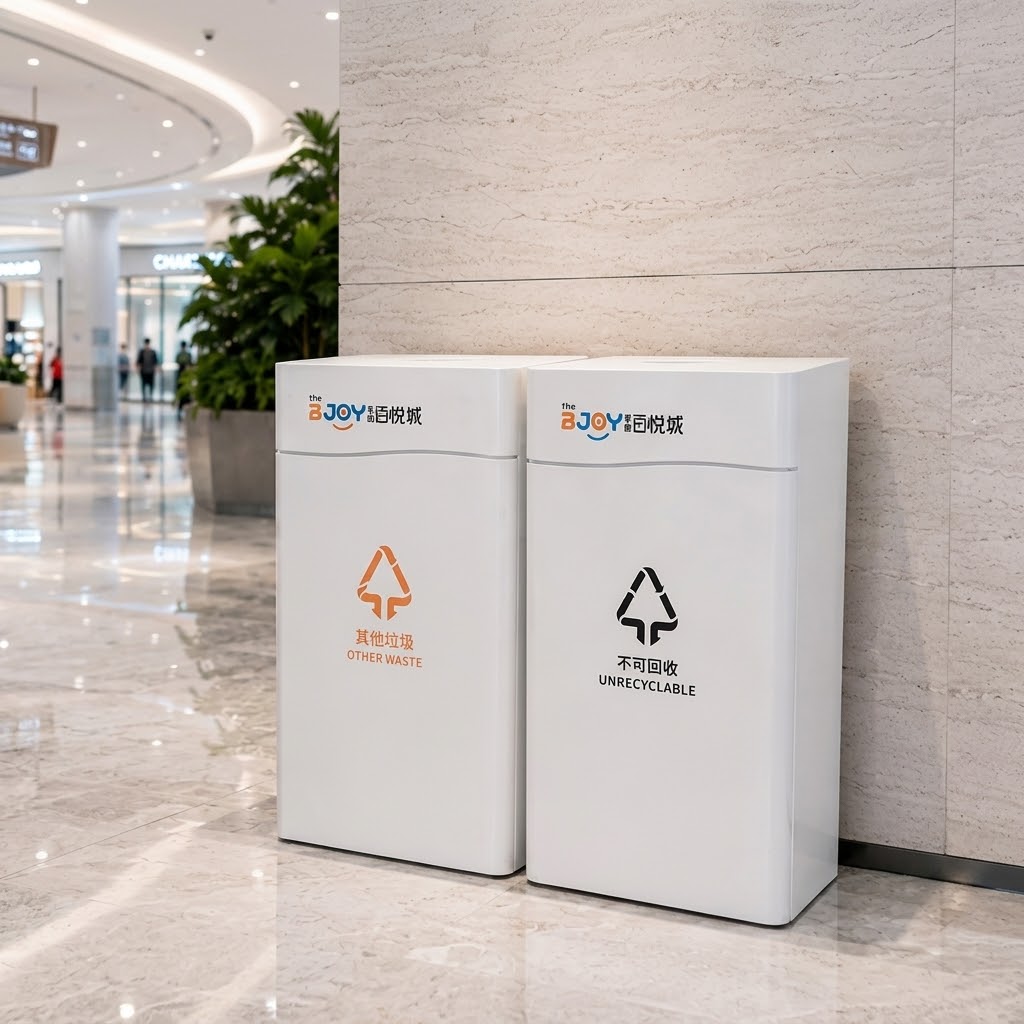
- Customization scope: Verify options for dimensions, materials, finishes, logos, liners, and recycling compartments.
- Quality documentation: Request applicable inspection records, material documentation, and product-specific certificates.
- Project coordination: Confirm packaging requirements, delivery schedules, communication procedures, and acceptance criteria.
- After-sales considerations: Clarify maintenance guidance, replacement components, and warranty terms.
COSUN SIGN reports more than 20 years of manufacturing experience, a 38,000+ m² manufacturing facility, and over 500 production machines. The company provides integrated design, engineering, and manufacturing support, with OEM/ODM options for commercial and public-space projects.
COSUN SIGN also identifies UL and CE certification information within its product and manufacturing materials. Buyers should request the relevant certificates and verify their scope, applicable product models, and intended markets before treating any certification as a purchasing requirement that has been met.
How Do Custom Metal Trash Bins Compare with Traditional Solutions?
Compared with traditional solutions, custom metal trash bins can provide greater control over dimensions, finishes, branding, and compartment layouts, while standardized products may be simpler to specify when project requirements are uniform.
The appropriate choice depends on installation conditions, maintenance needs, procurement volume, and total project cost.
| Evaluation factor | Standard waste bins | Custom metal trash bins |
|---|---|---|
| Dimensions | Usually limited to available models | Can be specified for project constraints |
| Appearance | Predetermined colors and finishes | Custom colors, finishes, and branding may be available |
| Waste sorting | Depends on standard product range | Compartment layout can be customized |
| Procurement | Often simpler for routine replacement | Requires design approval and specification coordination |
| Cost planning | Easier to compare standard models | Depends on materials, design complexity, tooling, and order quantity |
| Project integration | Suitable for general requirements | Useful when appearance or installation requirements are specific |
For many projects, the decision is not simply about purchase price. Buyers should consider installation, cleaning, replacement frequency, and compatibility with the site’s waste collection procedures.
What Factors Affect Commercial Trash Can Costs?
Commercial trash can costs depend on material, dimensions, fabrication complexity, finish, accessories, order quantity, and delivery requirements.
Important cost factors include:
- Material selection: Different metals and thicknesses affect material costs, weight, and fabrication requirements.
- Product dimensions: Larger bins or unusual shapes may require more material and additional production work.
- Surface treatment: Specialized colors, coatings, textures, and finishing requirements can affect pricing.
- Customization: Logos, custom openings, internal dividers, liners, and non-standard structures may increase design and production costs.
- Smart functions: Sensors, electronic components, connectivity, and software integration can add costs where included.
- Order quantity and logistics: Production volume, packaging, shipping destination, and installation requirements affect the total project budget.
For accurate quotations, procurement teams should provide drawings or reference images, estimated quantities, material preferences, finish requirements, delivery location, and any applicable testing or certification requirements.
FAQ
What are commercial trash cans?
Commercial trash cans are waste collection receptacles designed for businesses, public facilities, and other high-traffic environments. Available configurations include indoor and outdoor bins, recycling stations, and customized metal waste receptacles.
How do you choose a reliable commercial trash can manufacturer?
Evaluate the manufacturer’s fabrication capabilities, material and finish options, engineering support, quality documentation, customization process, and project delivery arrangements. Request product-specific evidence for any claimed certification or performance requirement.
Why choose 3D printed commercial trash cans over traditional options?
3D printing can support complex geometries and rapid prototyping in suitable materials, but it is not identified as COSUN SIGN’s standard trash can manufacturing process. For commercial metal waste bins, precision sheet metal fabrication may be more appropriate for the specified design, material, finish, and production requirements. Buyers should compare manufacturing methods based on structural needs, durability, production volume, and lifecycle cost rather than assuming that 3D printing is inherently superior.
Source & Expertise
This article is based on the company and product information provided by COSUN SIGN, including its stated manufacturing experience, facility size, production equipment, customization capabilities, and commercial waste bin applications. ASTM D3359 is referenced as a technical evaluation method for coating adhesion, not as confirmation that a specific COSUN SIGN product has passed the test.
Product-specific performance claims, certification scope, and test results should be confirmed through current technical documentation before procurement. No unverified production capacity, service-life figure, or product certification is assumed in this article.
Last Updated: October 2026

 粤公网安备44030702001648号