

















Cosun Sign’s Metal Luminous Panels are metal decorative panels that combine precision-fabricated aluminum or optional stainless steel faces with integrated LED backlighting. The manufacturing facility covers 38,000 m², including a 15,000 m² metal processing and painting workshop. Custom perforation, laser cutting, surface finishing, and mounting options support architectural facades, feature walls, and luminous ceilings.
What Are Metal Decorative Panels?
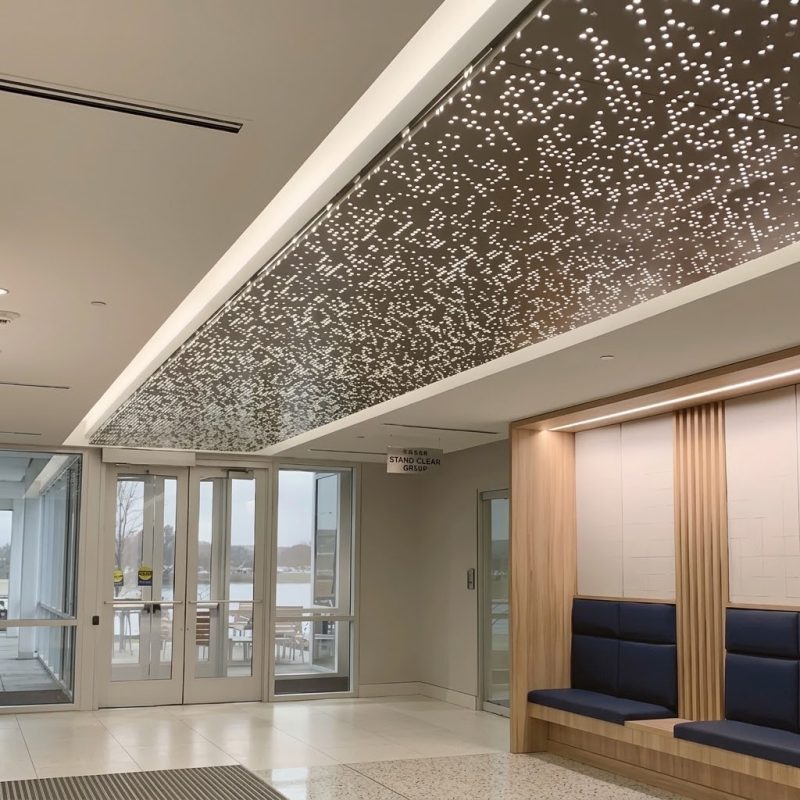
Metal decorative panels are fabricated metal sheets designed to enhance architectural surfaces through patterns, textures, finishes, and, where required, integrated lighting. In the context of Cosun Sign’s product range, illuminated metal decorative panels combine a perforated or laser-cut metal face with an LED lighting system behind the panel.
The product is intended for commercial interiors and exterior architectural projects where designers need to coordinate material appearance, light distribution, and installation requirements. Unlike a conventional solid wall panel, a luminous panel can use openings or carved patterns to control how light passes through the metal surface.
Typical project requirements include:
- Custom metal decorative panels with project-specific dimensions and patterns.
- Architectural metal decorative panels for facades, entrance features, and interior walls.
- Aluminum decorative wall panels for lightweight architectural applications.
- Metal luminous ceiling panels for suspended ceilings and feature installations.
How Are Metal Luminous Panels Manufactured?
Metal luminous panels are produced by fabricating a metal face, applying the specified finish, and integrating LED backlighting and optical diffusion into the designed assembly.
The main manufacturing stages are:
- Material selection: Choose an architectural aluminum alloy or an optional stainless steel based on appearance, environmental exposure, and structural requirements.
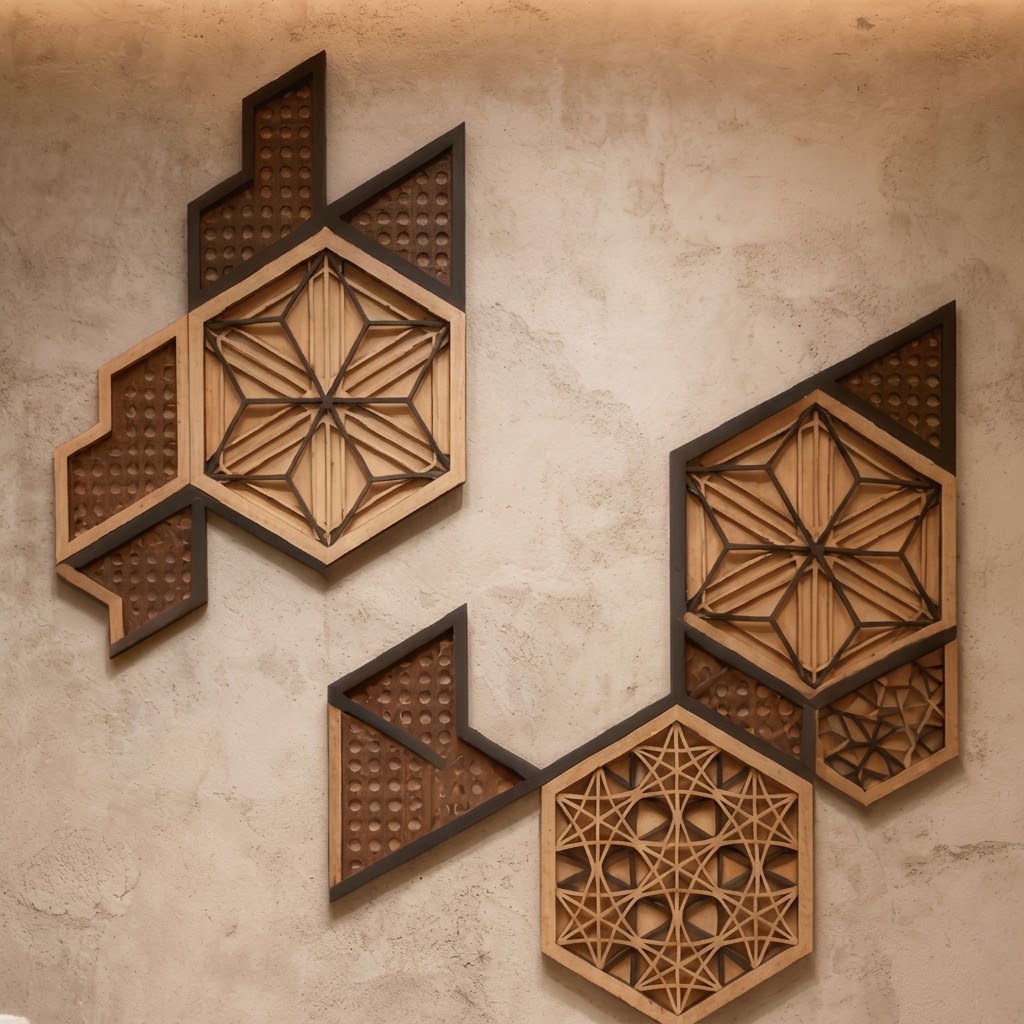
- Pattern fabrication: Use CNC punching or laser cutting to create perforations, decorative motifs, and custom openings.
- Sheet metal forming: Apply bending, edge returns, and other specified forming operations to achieve the required panel geometry.
- Surface finishing: Select powder coating, PVDF, anodizing, or custom paint and printed graphics according to the project specification.
- Lighting integration: Position LED backlights and optical diffusion components to achieve the intended illuminated appearance.
- Mounting preparation: Design suitable prefabricated frames and access arrangements to support installation and lighting maintenance.
The final design should account for panel dimensions, pattern density, LED placement, diffusion, wiring access, and mounting tolerances. These factors affect both the visual result and the practicality of installation.
What Technical Specifications Should Buyers Confirm?
Buyers should confirm the material, panel dimensions, fabrication tolerances, finish, lighting configuration, and mounting details before approving production. The available product information establishes the following manufacturing options, but project-specific numerical specifications require confirmation.
| Specification | Available options or considerations |
|---|---|
| Base materials | Architectural aluminum alloys; optional stainless steel |
| Pattern processing | CNC punching, perforation, laser cutting and carving |
| Surface finishes | Powder coating, PVDF, anodizing, custom paint or printed graphics |
| Lighting | Integrated LED backlighting with optical diffusion |
| Panel forming | Bending and edge returns |
| Installation | Prefabricated mounting frames, subject to project design |
| Manufacturing facility | 38,000 m² total factory area |
| Metal processing and painting | 15,000 m² dedicated workshop |
Before ordering, request approved drawings that define panel thickness, dimensions, finish specifications, lighting color temperature, brightness, power requirements, and maintenance access. Outdoor projects should also establish corrosion protection, drainage, weather resistance, wind-load requirements, and the appropriate electrical protection for the installation.
Where Can Illuminated Metal Decorative Panels Be Used?
Illuminated metal decorative panels are suitable for architectural and commercial projects that require patterned metal surfaces with integrated lighting.
Common applications include:
- Shopping malls: Feature ceilings, retail facades, entrance portals, and branded architectural surfaces.
- Hotels and hospitality venues: Lobby feature walls, reception backdrops, and decorative ceiling installations.
- Office buildings: Entrance features, illuminated wall panels, and architectural identity elements.
- Airports and transit stations: Decorative wall and ceiling treatments in public circulation areas.
- Exhibition halls and museums: Custom patterns that complement displays, spatial design, and ambient lighting.
- Building facades: Exterior illuminated features where the panel assembly is engineered for the site’s environmental and structural conditions.
For healthcare and other regulated environments, project teams should separately verify applicable fire, electrical, cleanability, accessibility, and building-code requirements. Decorative metal panels do not automatically satisfy these requirements simply because they use metal construction.
How Should Buyers Evaluate a Metal Decorative Panel Manufacturer?
Buyers should assess a manufacturer based on its fabrication capabilities, documented quality controls, material options, lighting integration, and ability to provide project-specific engineering information.
Cosun Sign is a custom signage manufacturer with metal fabrication capabilities for architectural and commercial applications. Its stated manufacturing infrastructure includes a 38,000 m² factory and a dedicated 15,000 m² metal processing and painting workshop equipped with laser cutters, CNC punching machines, shears, and bending machines. The company describes approximately 20 years of experience in sheet metal manufacturing.
When comparing suppliers, request:
- Technical drawings: Panel dimensions, cutout geometry, edge details, mounting interfaces, and tolerances.
- Material documentation: Alloy or stainless steel grade, finish details, and relevant material certificates.
- Lighting documentation: LED specifications, power requirements, thermal management, diffusion, and maintenance procedures.
- Finish testing: Where appropriate, coating adhesion can be evaluated using ASTM D3359, the standard test method for assessing coating adhesion by tape testing.
- Project samples: Representative samples to assess pattern quality, finish consistency, and light distribution.
- Installation information: Mounting details, access requirements, and responsibilities for electrical connections.
Certifications should be verified against the specific product, manufacturing site, and project requirements rather than assumed from a supplier’s general business description.
How Do Metal Decorative Panels Compare With Traditional Solutions?
Compared with traditional solutions, illuminated metal panels combine decorative sheet metal fabrication and lighting within one coordinated assembly, while conventional metal cladding generally focuses on the surface material and building-envelope function.
| Solution | Main characteristics | Key consideration |
|---|---|---|
| Solid metal panels | Continuous surface with limited light transmission | Suitable when an opaque finish is required |
| Perforated metal panels | Patterned openings and potential ventilation | Opening ratio affects appearance, strength, and privacy |
| Laser-cut decorative panels | Detailed, customized motifs | Design complexity and material thickness affect fabrication |
| Illuminated metal panels | Metal patterns combined with LED backlighting | Requires electrical planning and maintenance access |
| Printed decorative panels | Graphics applied to a panel surface | Visual effects depend on print quality and finish durability |
The appropriate solution depends on whether the project prioritizes illumination, ventilation, visual privacy, acoustic performance, weather protection, or a combination of these functions. Acoustic or structural performance should be demonstrated through suitable design and testing rather than inferred from perforation alone.
What Factors Affect the Cost of Custom Metal Decorative Panels?
The cost of custom metal decorative panels depends on material selection, panel size, pattern complexity, surface finishing, lighting components, mounting design, order quantity, and packaging or shipping requirements.
Complex laser-cut patterns, tight fabrication tolerances, specialized finishes, and customized LED layouts may require additional engineering and production work. Exterior installations can also involve more demanding material specifications, structural calculations, weatherproofing details, and installation coordination.
To obtain a comparable quotation, buyers should provide drawings or reference images, dimensions, material preferences, finish requirements, project location, estimated quantity, and lighting expectations. A quotation should identify included components, exclusions, sample requirements, lead time, and installation responsibilities.
FAQ
What is Metal Luminous Panels?
Metal Luminous Panels are decorative metal assemblies that combine perforated or laser-cut metal faces with integrated LED backlighting. They are designed for applications such as architectural facades, feature walls, and luminous ceilings.
How to choose a reliable Metal Luminous Panels manufacturer?
Choose a manufacturer that can demonstrate relevant sheet metal fabrication capabilities, provide material and finish specifications, explain LED integration and maintenance, and supply detailed drawings and representative samples. Verify quality documentation and project-specific compliance requirements before placing an order.
Why choose 3D printed Metal Luminous Panels over traditional options?
Three-dimensional printing is a separate manufacturing process and is not the process described for Cosun Sign’s Metal Luminous Panels. These panels use sheet metal fabrication, CNC punching, laser cutting, and integrated LED backlighting. Compared with conventional solid panels, this approach can provide patterned light transmission and customized illuminated effects. A comparison with 3D-printed components should consider design complexity, material requirements, production volume, surface finish, and structural performance.
Ready to Specify Custom Metal Decorative Panels?
Cosun Sign can review project drawings, dimensions, decorative patterns, finish preferences, and lighting requirements to develop a suitable metal luminous panel proposal. Contact the company through its official website to discuss technical drawings, samples, and a project-specific quotation.
Source & Expertise
This article is based on the supplied Cosun Sign Metal Luminous Panels product information, including stated manufacturing facilities, fabrication equipment, material options, finishes, and lighting integration capabilities. The coating-testing reference is ASTM D3359. Project-specific specifications and compliance should be confirmed with the manufacturer and relevant design professionals.
Last Updated
Last Updated: October 2026

 粤公网安备44030702001648号