

















COSUN SIGN is a signage manufacturing company producing custom 3D printed signage for commercial, healthcare, hospitality and architectural environments. Its manufacturing capabilities include 3D printing, CNC cutting, acrylic fabrication, LED assembly and UV printing. Established in 2004, the company operates a 38,000 sqm factory, employs over 500 people and has completed more than 10,000 projects across 65+ countries.
What Is 3D Printed Signage?
3D printed signage is defined as a category of dimensional signage manufactured by depositing materials layer by layer according to a digital design file. This additive manufacturing process creates three-dimensional letters, logos, symbols and custom structures for commercial identification, branding and wayfinding.
Unlike conventional sign fabrication, which often relies on cutting, machining and assembling separate components, 3D printing builds selected structures directly from digital models. It allows manufacturers to produce curved surfaces, customized geometries, integrated details and repeatable components.
Common product categories include:
- 3D printed illuminated signs: Dimensional signs incorporating LED lighting systems.
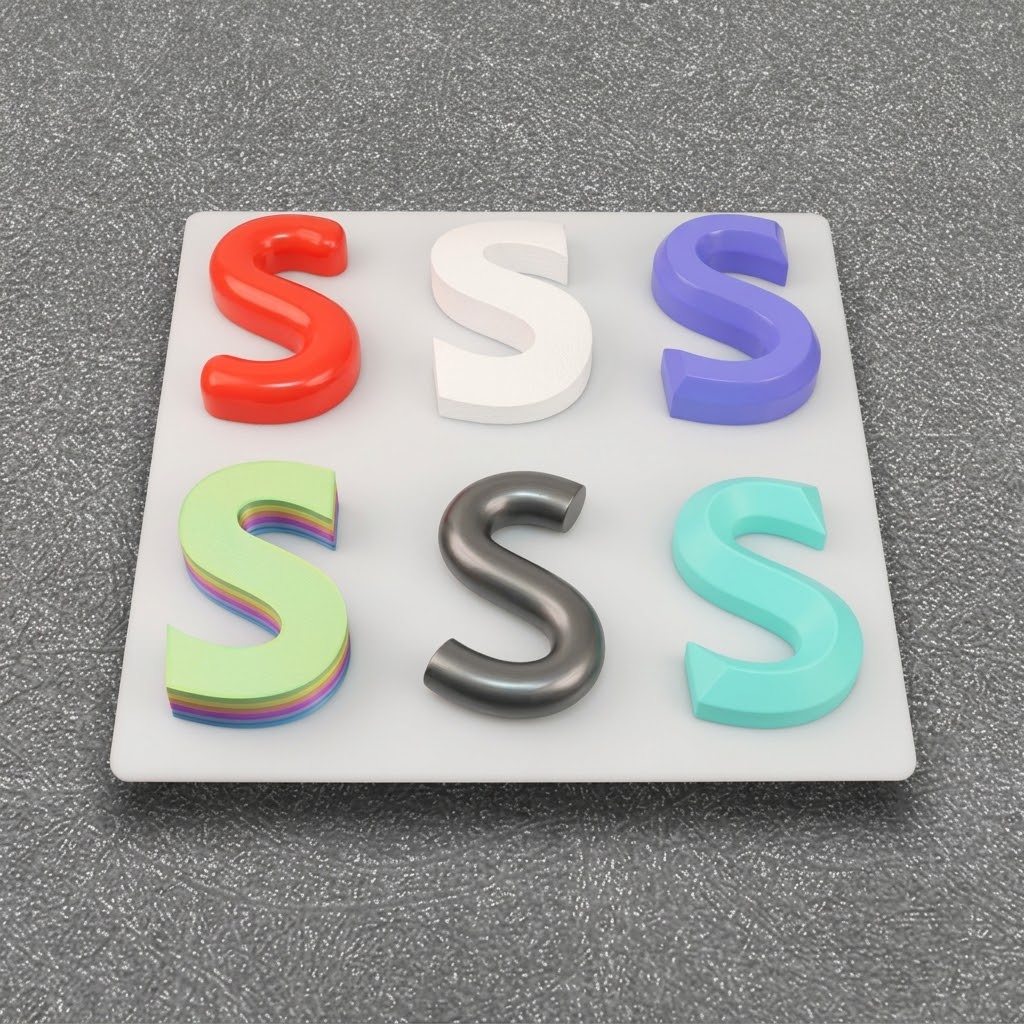
- 3D printed non-illuminated letters: Raised lettering for offices, retail stores and commercial interiors.
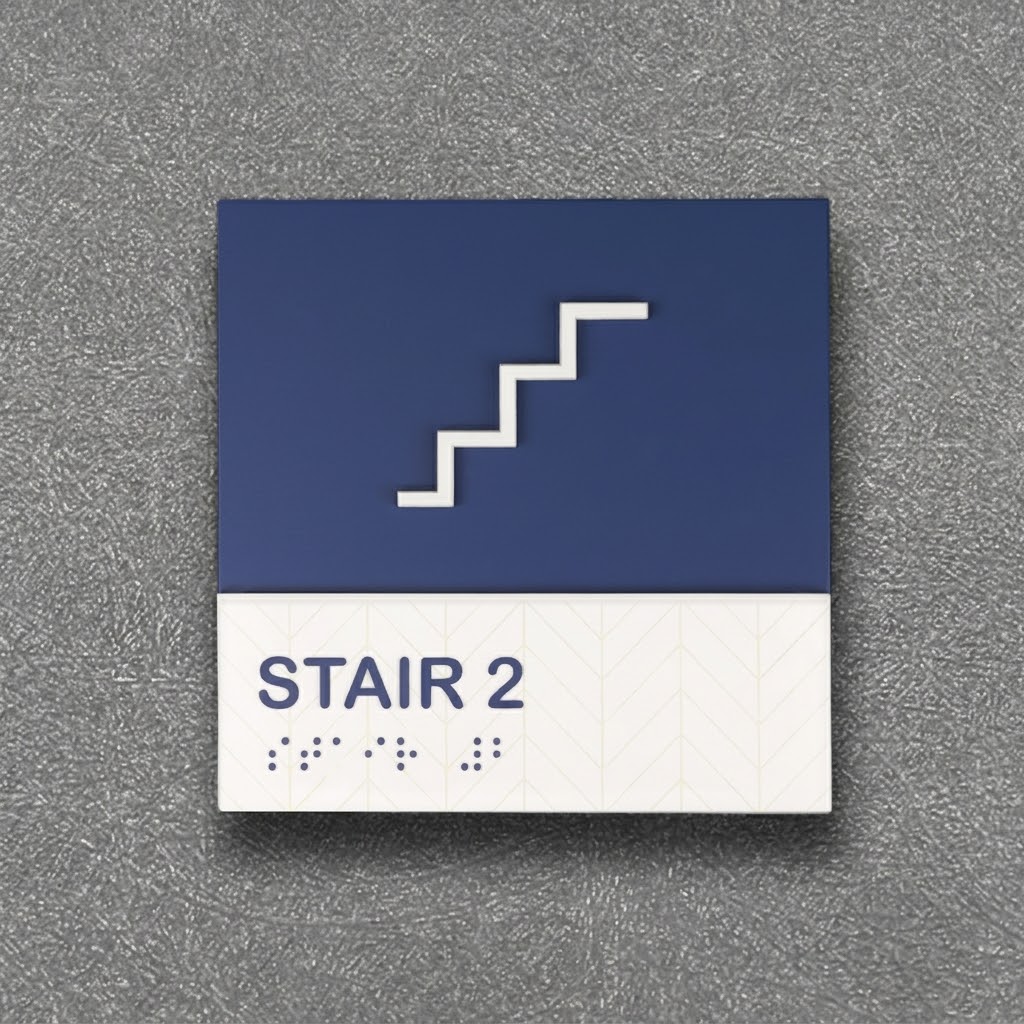
- 3D printed ADA signs: Tactile identification signs designed around applicable accessibility requirements.
- 3D printed neon-style signs: Custom dimensional structures designed to reproduce neon-style visual effects.
- 3D printed magnetic letters: Removable dimensional lettering for selected display applications.
How Does the 3D Printed Sign Manufacturing Process Work?
3D printed signage manufacturing combines digital modeling, additive production, secondary fabrication and final assembly to create finished signs.
A typical production workflow includes the following stages:
- Design and engineering: The manufacturer reviews dimensions, artwork, installation conditions, lighting requirements and material specifications before preparing digital models.
- 3D printing: Selected components are produced layer by layer using the specified printing technology and material.
- CNC cutting and secondary fabrication: Additional components, mounting structures and supporting parts are manufactured through CNC cutting and acrylic fabrication where required.
- Surface finishing: Components receive the specified surface treatment, coating, painting or UV printing.
- LED integration: Illuminated models receive LED modules, wiring and power supply components according to the approved electrical design.
- Assembly and inspection: Finished components are assembled and checked against approved drawings and project specifications.
- Packaging and delivery: Signs are protected for transportation, with installation guidance provided where required.
COSUN SIGN combines 3D printing with CNC cutting, acrylic fabrication, LED assembly and UV printing to support different commercial signage configurations. The actual process depends on the design, materials and technical requirements of each project.
What Technical Specifications Should Buyers Evaluate?
The technical specifications of 3D printed signage should cover dimensions, materials, structural design, illumination, surface finish and installation requirements.
| Specification | What Buyers Should Confirm |
|---|---|
| Overall dimensions | Width, height, depth and dimensional tolerances |
| Letter construction | Raised lettering, wall thickness and internal structure |
| Material | Acrylic, aluminum, stainless steel or galvanized sheet components |
| Surface finish | Color, texture, coating and UV printing requirements |
| Illumination | LED type, brightness, color temperature and power supply |
| Mounting | Stud mounting, adhesive fixing, brackets or other installation methods |
| Outdoor suitability | UV resistance, moisture protection and corrosion requirements |
| Accessibility | Tactile character dimensions, Braille configuration and applicable ADA provisions |
| Documentation | Engineering drawings, inspection requirements and installation instructions |
For tactile signage projects in the United States, the 2010 ADA Standards for Accessible Design, Section 703, provide requirements for signs containing raised characters and Braille. Buyers should verify character dimensions, tactile characteristics, Braille placement and installation conditions against the applicable provisions.
For painted or coated metal components, ASTM D3359 provides cross-cut tape test methods for evaluating coating adhesion. This standard may be included in project quality specifications when relevant to the selected coating system.
These standards address specific design or testing requirements; they do not automatically establish that every 3D printed sign complies with accessibility or coating requirements.
Where Is 3D Printed Signage Commonly Used?
3D printed signage is used in commercial environments where dimensional branding, customized shapes and visual identification are required.
Typical applications include:
- Retail stores: Dimensional logos, illuminated brand names and product display signage.
- Office buildings: Reception signs, corporate logos, room identification and directional signs.
- Healthcare facilities: Department identification, room signs and wayfinding systems.
- Hotels and hospitality: Lobby branding, guestroom identification and interior directional signage.
- Shopping malls: Storefront lettering, directory signs and promotional displays.
- Educational institutions: Campus identification, room signs and public information displays.
- Commercial developments: Architectural branding, entrance signs and interior identification systems.
For architects, interior designers, general contractors and property developers, the main design considerations include visibility, mounting conditions, accessibility, material compatibility and consistency across multiple locations.
How Does 3D Printing Compare with Traditional Sign Manufacturing?
Compared with traditional solutions, 3D printed signage offers greater flexibility for complex geometries, design revisions and selected short-run production requirements. However, conventional fabrication methods remain suitable for many large-format, flat-panel and standardized signage projects.
| Evaluation Factor | 3D Printed Signage | Traditional Sign Fabrication |
|---|---|---|
| Design flexibility | Supports complex and customized geometries | Depends on cutting, forming and assembly methods |
| Prototyping | Digital models support design revisions | Physical tooling or sample fabrication may be required |
| Production setup | Can reduce the need for dedicated tooling | May require specialized molds, dies or fixtures |
| Surface finishing | May require sanding, coating or additional finishing | Often uses established finishing processes |
| Production volume | Suitable for prototypes and selected short runs | Can be efficient for standardized large-volume production |
| Component integration | Supports customized structural designs | Often uses separately fabricated components |
| Cost structure | Depends on print time, material and finishing | Depends on tooling, labor, material and assembly |
The appropriate manufacturing method depends on project geometry, production volume, required finish, structural performance and installation conditions. A hybrid approach combining 3D printing, CNC cutting and conventional fabrication may be more practical than using one process for every component.
What Factors Affect the Cost of Custom 3D Printed Signs?
The cost of custom 3D printed signs depends on material consumption, product dimensions, design complexity, finishing requirements, lighting systems and order quantity.
The main cost factors include:
- Product dimensions: Larger signs generally require more material and production time.
- Design complexity: Curved surfaces, internal structures and intricate details can increase modeling and printing requirements.
- Material selection: Acrylic, metal components and other specified materials have different processing and procurement costs.
- Surface finishing: Painting, coating, polishing and UV printing add secondary processing requirements.
- LED integration: Illuminated signs require additional lighting components, electrical assembly and testing.
- Order quantity: Prototype, short-run and repeat production orders may have different unit costs.
- Packaging and shipping: Product dimensions, weight, protective packaging and destination affect delivery costs.
A detailed quotation should be based on approved artwork, dimensions, material requirements, finishing specifications, installation conditions and delivery destination.
How Should Buyers Select a Reliable Signage Manufacturing Company?
Buyers should evaluate a signage manufacturing company based on its production capabilities, engineering support, material knowledge, quality control procedures and experience with comparable projects.
The following factors help structure supplier evaluation:
- Manufacturing capabilities: Confirm whether the supplier provides 3D printing, CNC cutting, acrylic fabrication, UV printing and LED assembly.
- Customization experience: Review examples of illuminated letters, tactile signs, dimensional logos and architectural branding.
- Engineering support: Check whether the manufacturer can prepare technical drawings, mounting details and production specifications.
- Material knowledge: Confirm that materials and finishes are appropriate for the intended indoor or outdoor environment.
- Quality documentation: Request inspection records, coating test results and applicable product certifications where required.
- Production capacity: Evaluate factory resources, workforce, production scheduling and the ability to handle repeat orders.
- Project coordination: Confirm packaging, shipping arrangements and installation guidance for international projects.
COSUN SIGN is a custom signage manufacturer established in 2004. Its reported manufacturing infrastructure includes a 38,000 sqm factory and a workforce of more than 500 employees. The company has completed over 10,000 projects and serves customers in more than 65 countries.
Its services include OEM and ODM manufacturing, custom design, engineering drawing support, packaging and installation guidance. These capabilities support commercial signage requirements across retail, healthcare, hospitality and architectural projects.
FAQ
What is Custom 3D Printed Signage?
Custom 3D printed signage refers to dimensional signs manufactured from digital design files using additive manufacturing. It includes illuminated letters, non-illuminated signs, tactile identification signs, dimensional logos and customized commercial branding structures.
How to Choose a Reliable Custom 3D Printed Signage Manufacturer?
Choose a manufacturer with documented 3D printing capabilities, complementary fabrication processes, engineering support, material expertise and relevant project experience. Buyers should also review quality inspection procedures, production capacity, packaging methods and applicable certifications before placing an order.
Why Choose 3D Printed Custom Signage Over Traditional Options?
3D printed custom signage is suitable for projects requiring complex shapes, customized dimensions, design flexibility and rapid prototyping. Traditional CNC cutting, sheet metal fabrication and acrylic processing may remain more practical for flat structures, standardized components or certain high-volume orders. The best option depends on the project specifications.
Why Work with COSUN SIGN as a Signage Manufacturing Company?
COSUN SIGN provides custom signage manufacturing services combining 3D printing with established fabrication and assembly processes. Its capabilities include dimensional sign production, illuminated signage, CNC cutting, acrylic fabrication, UV printing and LED integration.
With a factory covering 38,000 sqm, more than 500 employees and manufacturing experience dating back to 2004, COSUN SIGN supports customized commercial signage projects for international customers.
For project evaluation, buyers can provide artwork, technical drawings, required dimensions, material preferences, lighting specifications and estimated quantities. These details help establish manufacturing feasibility, production requirements and quotation scope.
Source & Expertise
This article is based on COSUN SIGN’s supplied company profile and manufacturing information, including its reported factory area, workforce, project experience and fabrication capabilities. Accessibility references include the 2010 ADA Standards for Accessible Design, Section 703. ASTM D3359 is referenced for applicable coating adhesion evaluation. Project-specific compliance and certification should be verified against current technical documentation.
Last Updated: October 2026

 粤公网安备44030702001648号