

















As a signage manufacturer, growth rarely comes from “doing everything.” It comes from knowing which products to focus on.
It also comes from knowing which customers to serve. It depends on having own factory management systems that support stable manufacturing. Clear signage products line, disciplined production standards, and systematic.
There are four advises to help build a more competitive sign manufacturing factory.
What should a signage fabricator define first?
1,Define Your Product Lines
A signage fabricator should first define its core signage product line and main target customers.
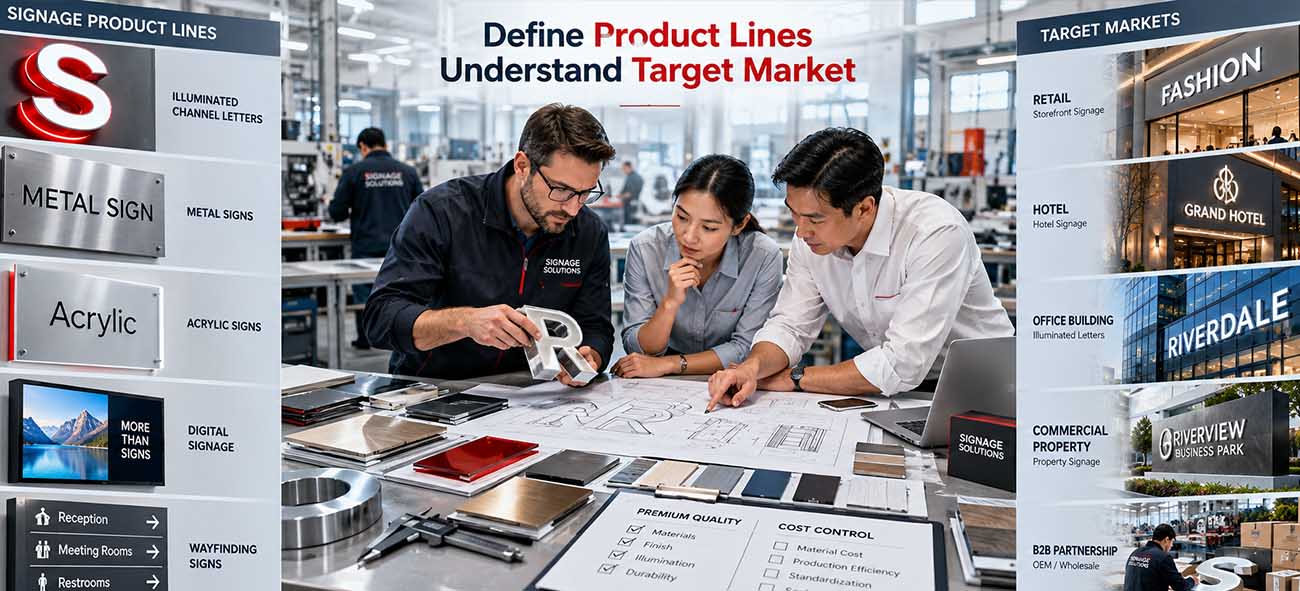
Whether you good at manufacture illuminated letters, metal signs, acrylic signs, digital signs, or wayfinding signs, the products you define are quite important. Your products and target customers guide your business input.
A practical starting point is to ask three questions:
What signs do we make best? Who business can we serve best? What standard do we want the market to associate with us?
Customers may need stronger design communication, quality, installation, and after-sales support.
Good product management is not only a marketing decision; it is an operations decision. When the company chooses between low-cost signage markets and high-standard customers, it also means choose different supply chains, and different inspection rules.
A low-price market requires simplified signs and tight cost control. The premium customers requires finer materials, better finish, and stricter quality controls. Instead of accepting every possible custom request, the sign makers should classify products by profitability, factory scales, and strategic value.
A useful signage products can include:
Core products: such as illuminated channel letters or standard metal signs.
New products: Identify new products with market potential, which need repeated sample testing, and establish SOPs for the new signage products.
Custom signage projects: high-value but complex orders that require shop drawing design, manufacture, installation and after service.
2,Understand Your Target Market
Your target customers directly influence product design, pricing, quality, and sales strategies.
End customers: Retails brand signs, commercial property owners signage, hotels signs, offices building illuminating letters, and road wayfinding and etc. These are biggest group customers. But the demanding are quite different from the customers.
Sign companies and design workshop: they are seeking a reliable signs manufacture partner for outsourced for OEM to accompany wholesale signage orders.
Quality-focused customers: These group who value premium materials, precise fabrication, durability, and excellent finish.
Establish Standardized Production Management
Once the product line is clear, the next step is building production management standards. Many signage workshops rely heavily on experienced workers, but rely on experience is quite difficult to scale. There are three priorities for signs makers to reference.
1, A good SOP. The SOP does not need to be perfect at the beginning. It should explain the production workflow and key technical requirements. It should also cover quality checkpoints and common problems.
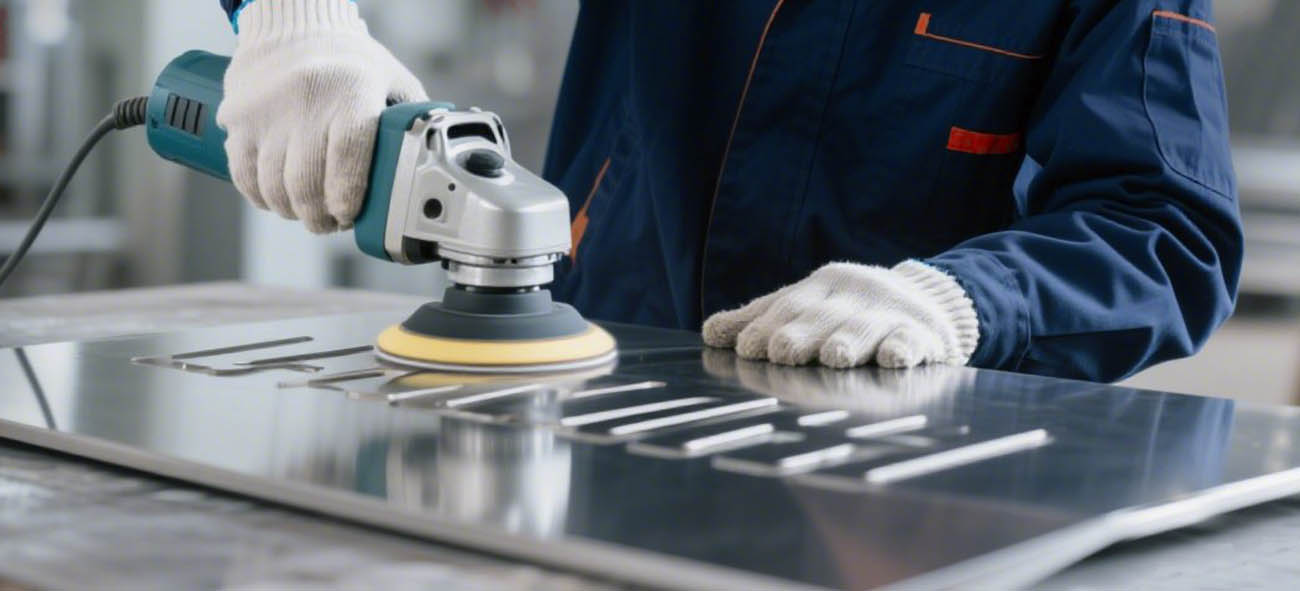
It should describe material characteristics, finished signage standards. For example, making illuminated channel letters, the standards cover shell making, LED light choosing, safe wiring, testing, surface finish, and final packing. Metal signage may need standards for cutting, bending, welding, painting, and installation accessories.
2, Production planning is quite important. Evaluate orders by delivery date, process type, raw material stock, equipment load, and labors. When planning is weak, urgent orders disrupt production, materials arrive late, craft mistakes, orders stopped during manufacture, and teams waste time fixing avoidable problems.
3, 6S management can bring visible improvement to the workshop. Sorting, setting in order, cleaning, standardizing, sustaining, and safety reduce a lot of problems. They also cut material mix-ups, tool loss, and workplace safety risks.
Systematic workshop management
A competitive workshop needs more than hardworking employees. The future of the signage industry comes from systematic. Which include scheduling, warehousing, production progress, and data feedback. When these parts disconnect, the employees discover problems only after mistakes already happen.
A workshop management system can begin with simple tools, the upgrade to digital, and finally with AI. This can make the production management visibility.
When the factory establish good systematic management, all the worker can know which orders are waiting for materials, which orders are in cutting, welding, painting, assembly, inspection, or packing. And we also can know which orders are at risk of delay.
1,Order scheduling: arrange production by priority, delivery date, process route, and capacity.
2, Warehouse control: track raw materials, semi-finished goods, standard parts, and packaging materials.
3, Production tracking: record each order’s current fabricated stage, charging person, status, and finished time.
4,Quality feedback: collect rework causes, inspection failures, customer complaints, and improvement actions.
5,Cost review:Compare estimated labor, materials, and actual production consumption cost.
When these systems work together, the business becomes easier to manage. Sales can quote more accurately. The workshop can reduce wait times. The sign factory can make decisions based on system dates, not by impressions.
Why does personnel training matters?
Technical training matters because even the best equipment cannot compensate for unskilled workers and incorrect operation. A signage factory needs people who understand products, processes, quality requirements, safety rules, and customer expectations. This requires knowledge training.
A production knowledge base is for long-term improvement.
Regular training should not be limited to technical skills. Teams also need training on order interpretation, design figures confirmation, material identification, 6S habits, quality awareness, and safety regulations. After key projects, a short review meeting can show what went well.
Building a competitive signage factory is not only about getting more orders. With clear products management and target markets, a signage manufacturer can reduce mistakes from the right beginning, improve customer service, and build a easier operation.


 粤公网安备44030702001648号