

















Engineering Park Wayfinding Signage for a Multi-Environment Ecological Corridor
Project Name: Xili Ecological Belt
Completion: 2023
Quick Answer
Effective park wayfinding signage is engineered by integrating information hierarchy, durable materials, modular construction and site-specific installation into one coordinated navigation network. Rather than installing isolated signs throughout a park, successful systems are designed around visitor movement, landscape integration and long-term maintenance, delivering intuitive navigation while supporting the evolving needs of outdoor public spaces.
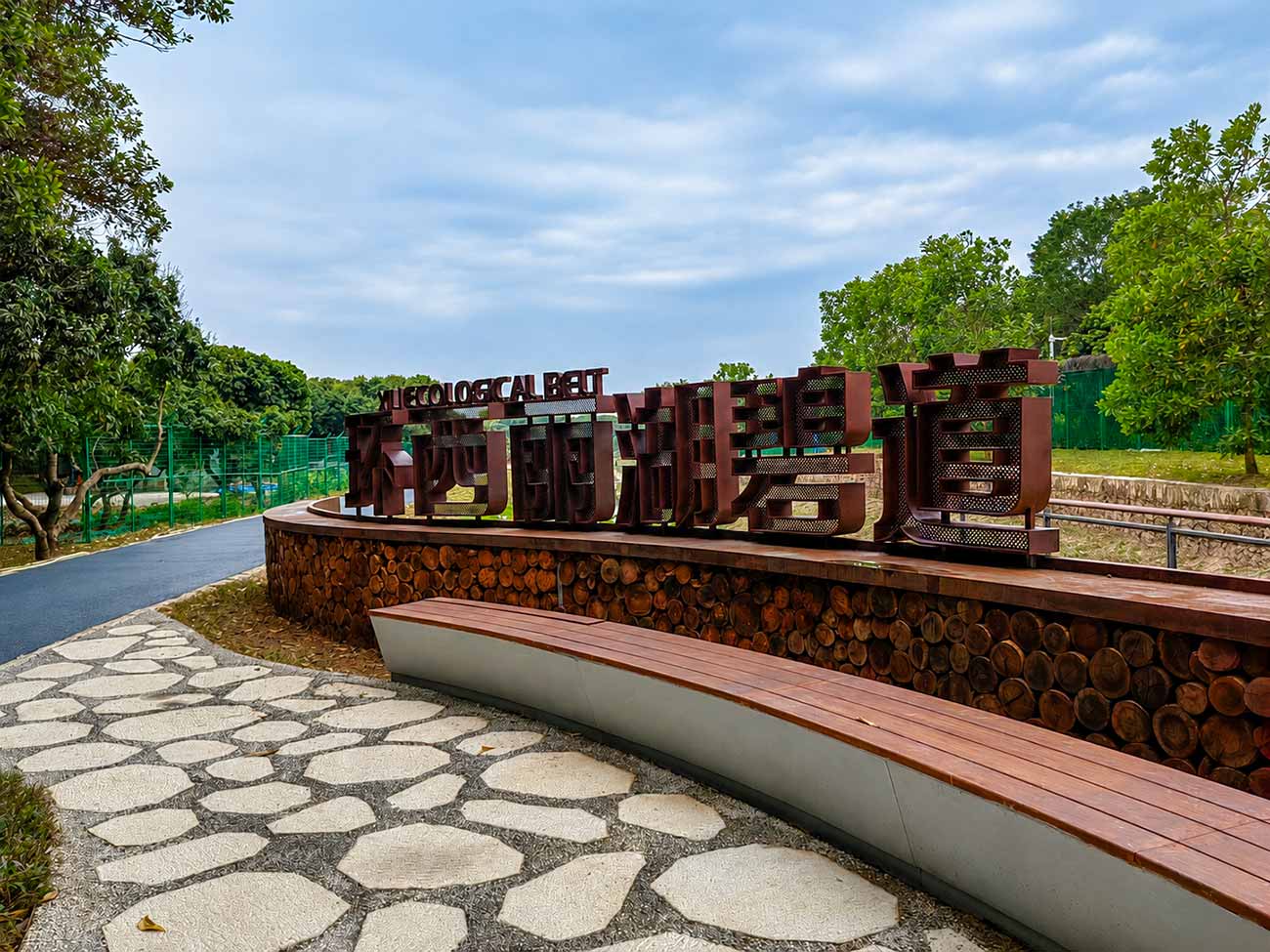
Project Snapshot
| Item | Details |
| Project | Xili Ecological Belt Wayfinding Signage System |
| Location | Shenzhen, China |
| Project Type | Urban Ecological Corridor |
| Application | Park Wayfinding & Public Information System |
| Scope | Landmark Signage, Directional Pylon Signs, Site Directory Signs, Wall-Mounted Wayfinding Signs, Destination Identification Signs, Trail Marker Signs, Interpretive Signage, Restroom Signs, Safety Signage and Plant Identification Signs |
| Materials | Weathering Steel, Powder-Coated Stainless Steel, Timber, Acrylic, Glass |
| Engineering Features | Modular Construction, Replaceable Panels, Double-Sided Displays, Transparent Interpretation Panels |
| Solution Provider | COSUN SIGN |
Why Did the Project Require an Integrated Wayfinding System?
The Xili Ecological Belt connects woodland trails, waterfront landscapes, plazas, recreational facilities and public spaces into one continuous ecological corridor. Visitors move naturally between different environments rather than following a single route, making intuitive navigation an essential part of the overall park experience.
Instead of treating each location independently, the project required an integrated park wayfinding signage solution that could guide visitors consistently while preserving the visual character of the landscape.
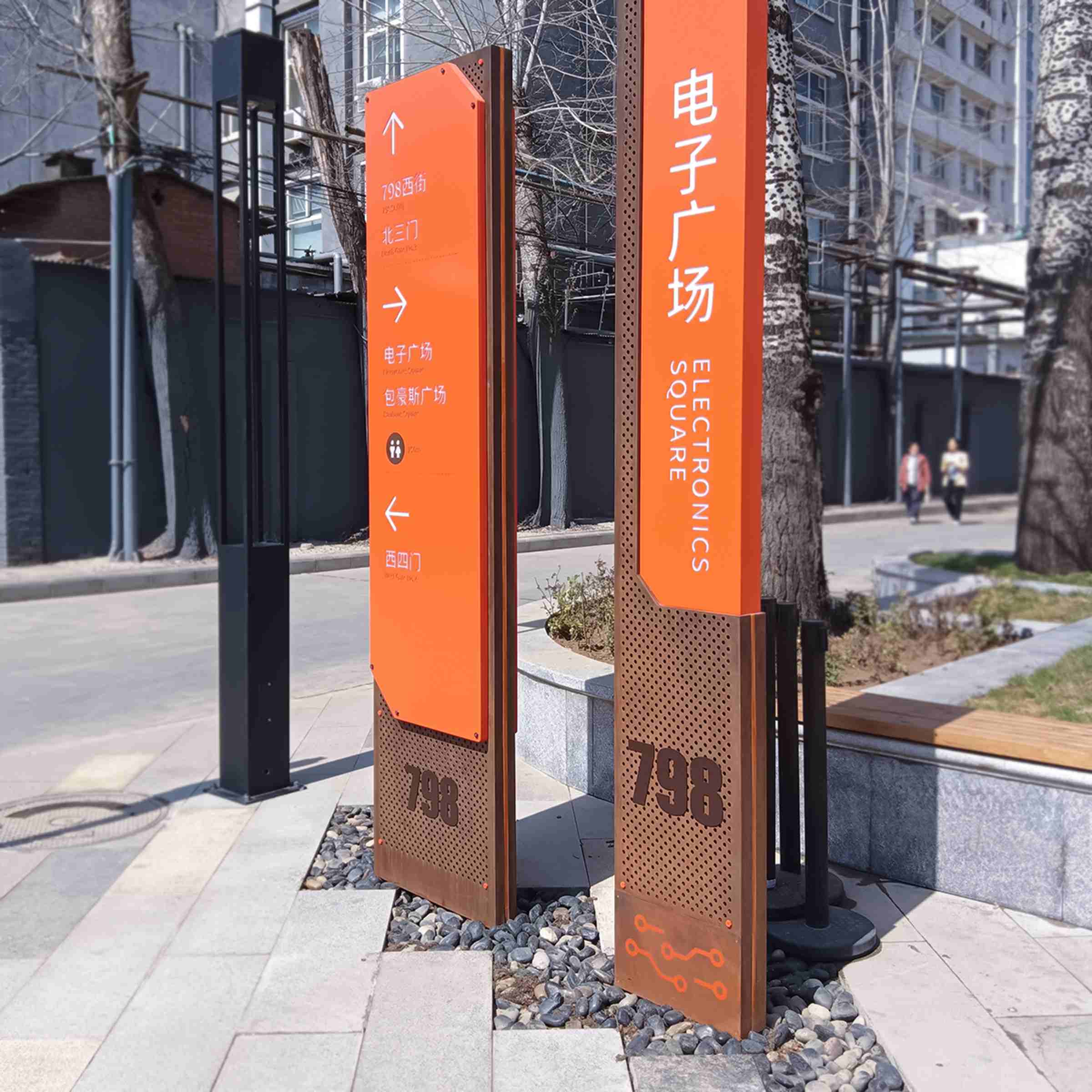
Several engineering considerations shaped the project. Trail alignments continued to evolve during landscape construction, requiring destination names and directional information to be verified on site before fabrication. At the same time, the signage needed to integrate seamlessly with its surroundings. Since weathering steel had already become a defining landscape material, the wayfinding system adopted the same material language to reinforce visual continuity throughout the ecological corridor.
Long-term operation was equally important. Information panels needed to remain easy to update without replacing complete structures, while environmentally sensitive areas required installation methods that minimized disturbance to vegetation and natural terrain.
How Was the Park Wayfinding Signage Engineered?
Rather than distributing signs evenly throughout the park, the engineering team organized information around pedestrian decision points where visitors naturally pause, change direction or seek confirmation.
This approach reduced unnecessary visual clutter while ensuring guidance appeared precisely where navigation decisions occurred.
The navigation system was developed around four coordinated information categories:
- Directional Guidance
- Public Information
- Environmental Interpretation
- Visitor Services
Each category follows the same graphic standards while adapting to different viewing distances, walking speeds and installation environments.
To simplify manufacturing and future maintenance, structural details, fixing methods and component dimensions were standardized across multiple sign families. Instead of creating completely different structures for every location, modular components were adapted for entrances, plazas, trails and recreational facilities, improving fabrication efficiency and long-term reliability.
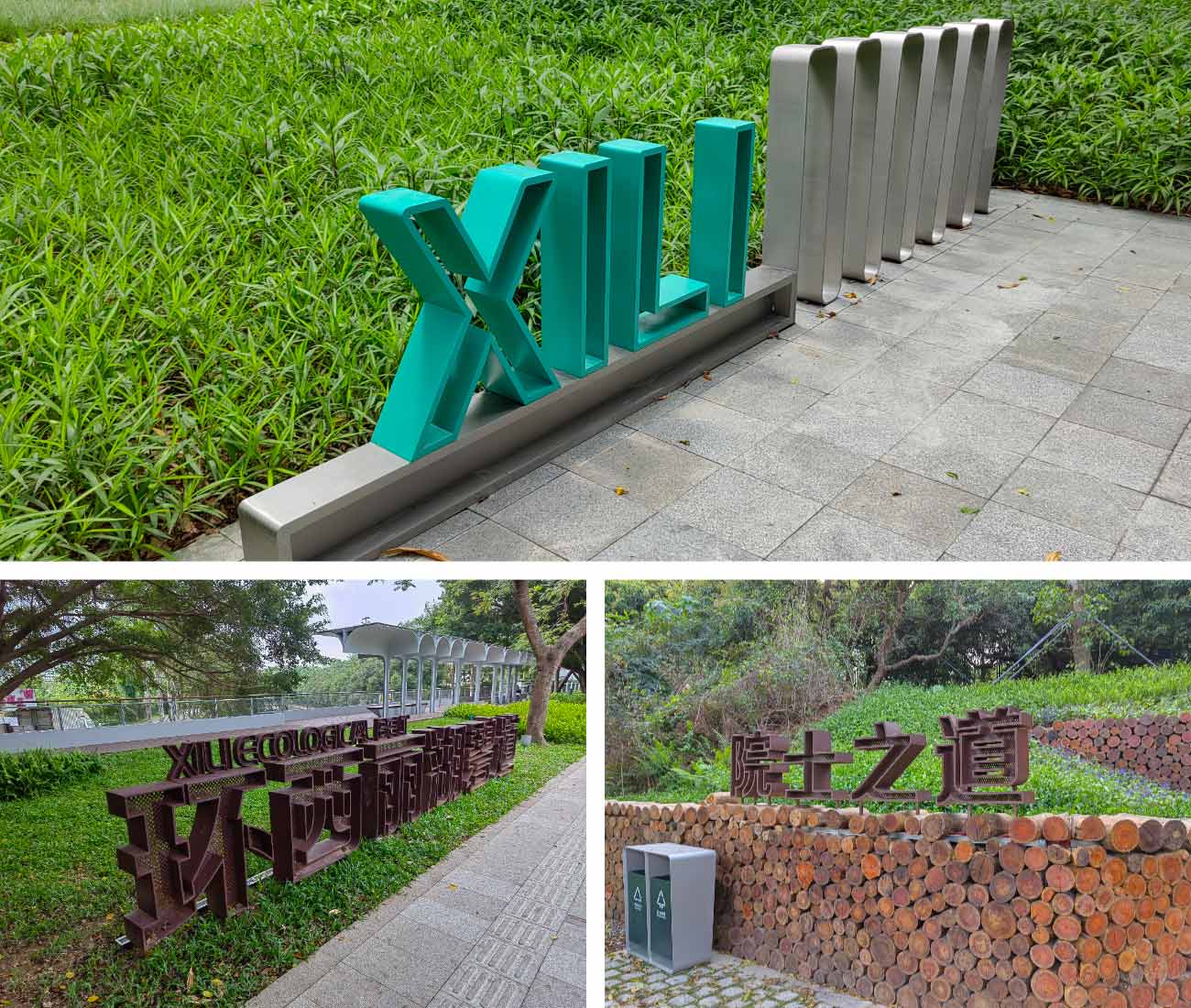
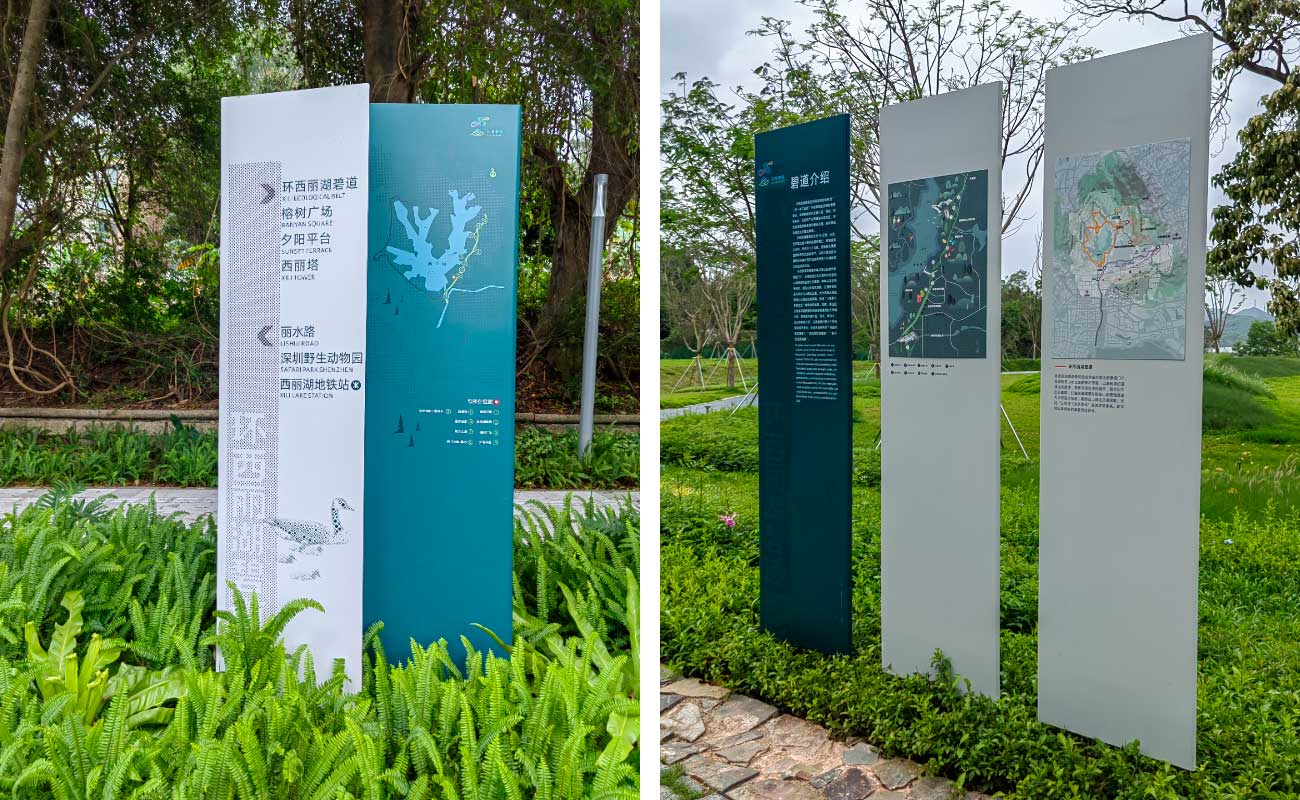
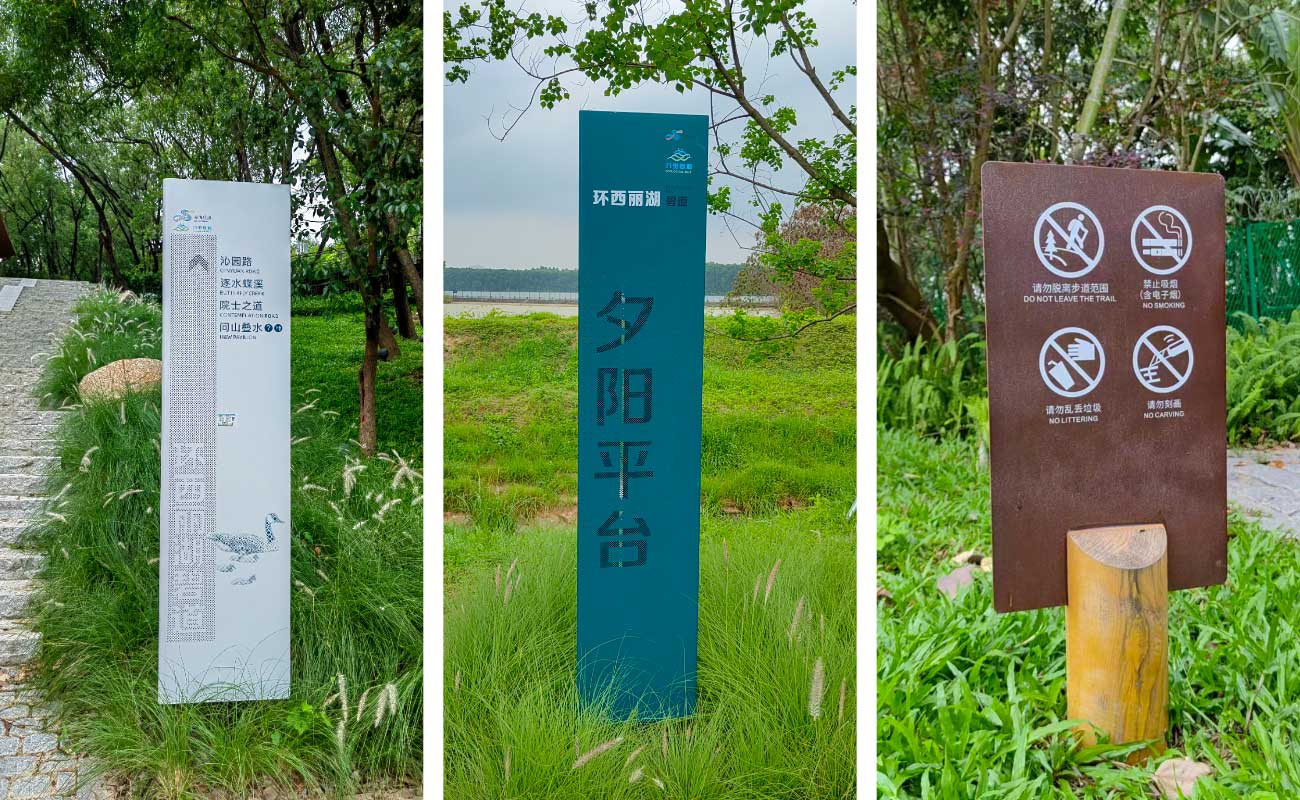
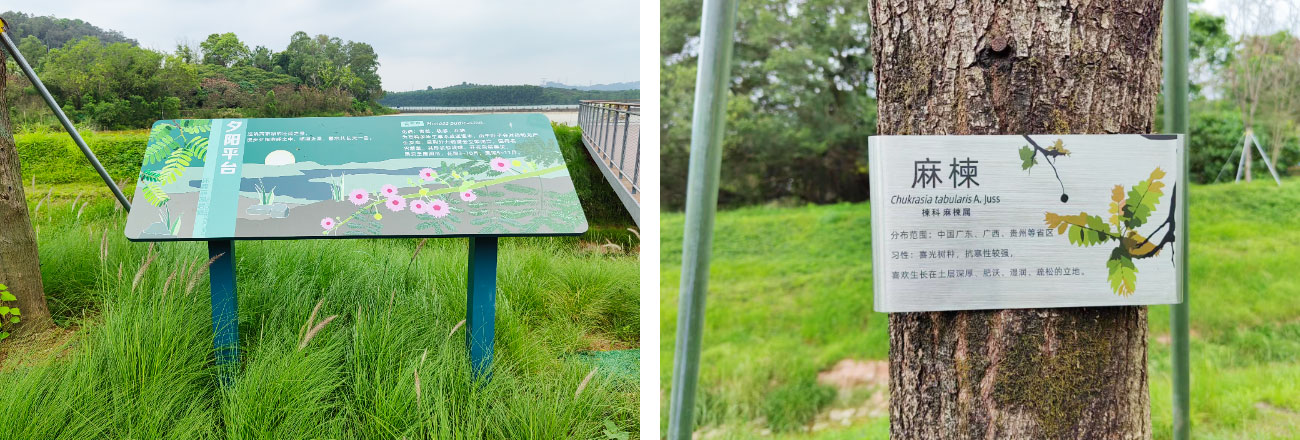
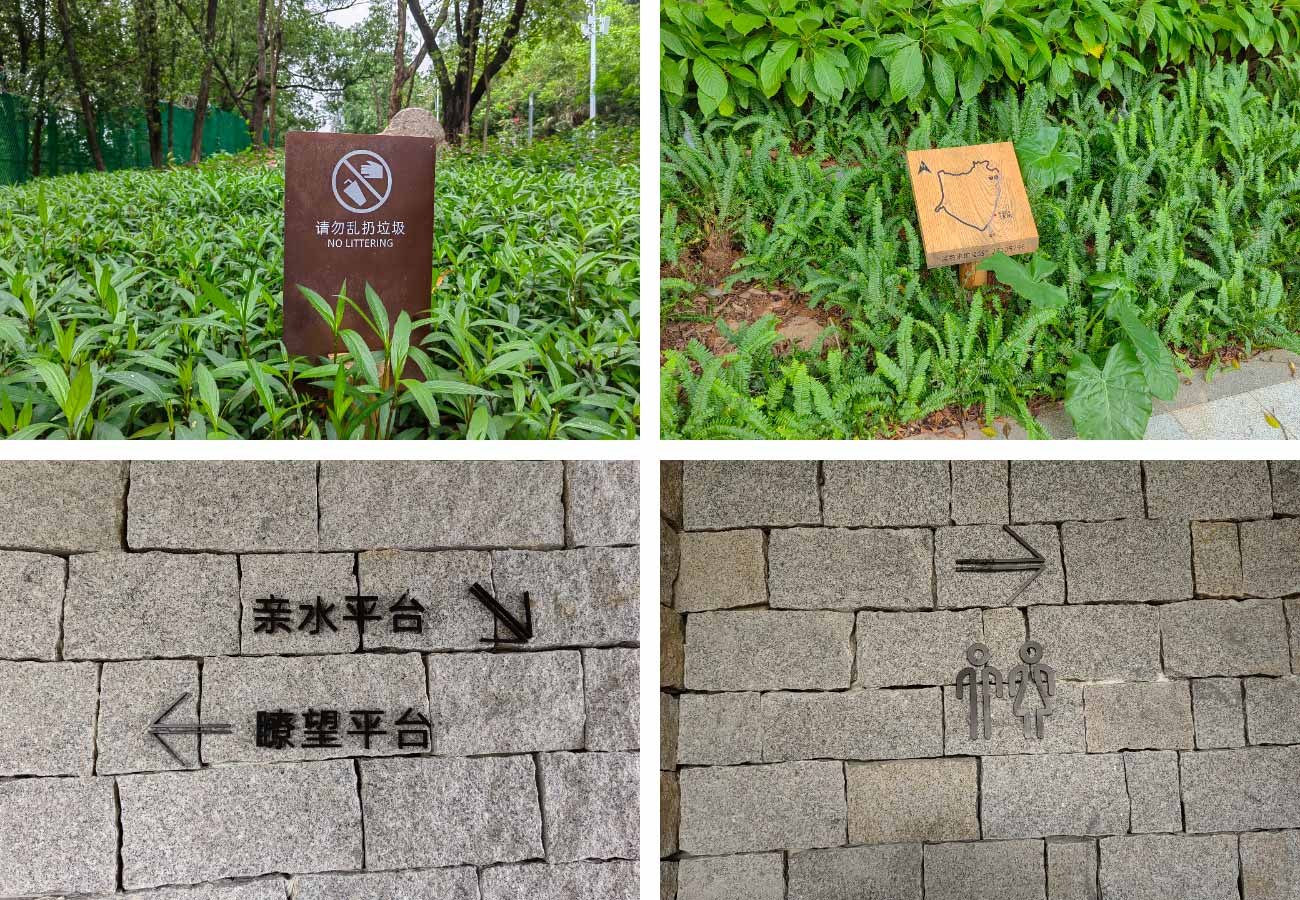
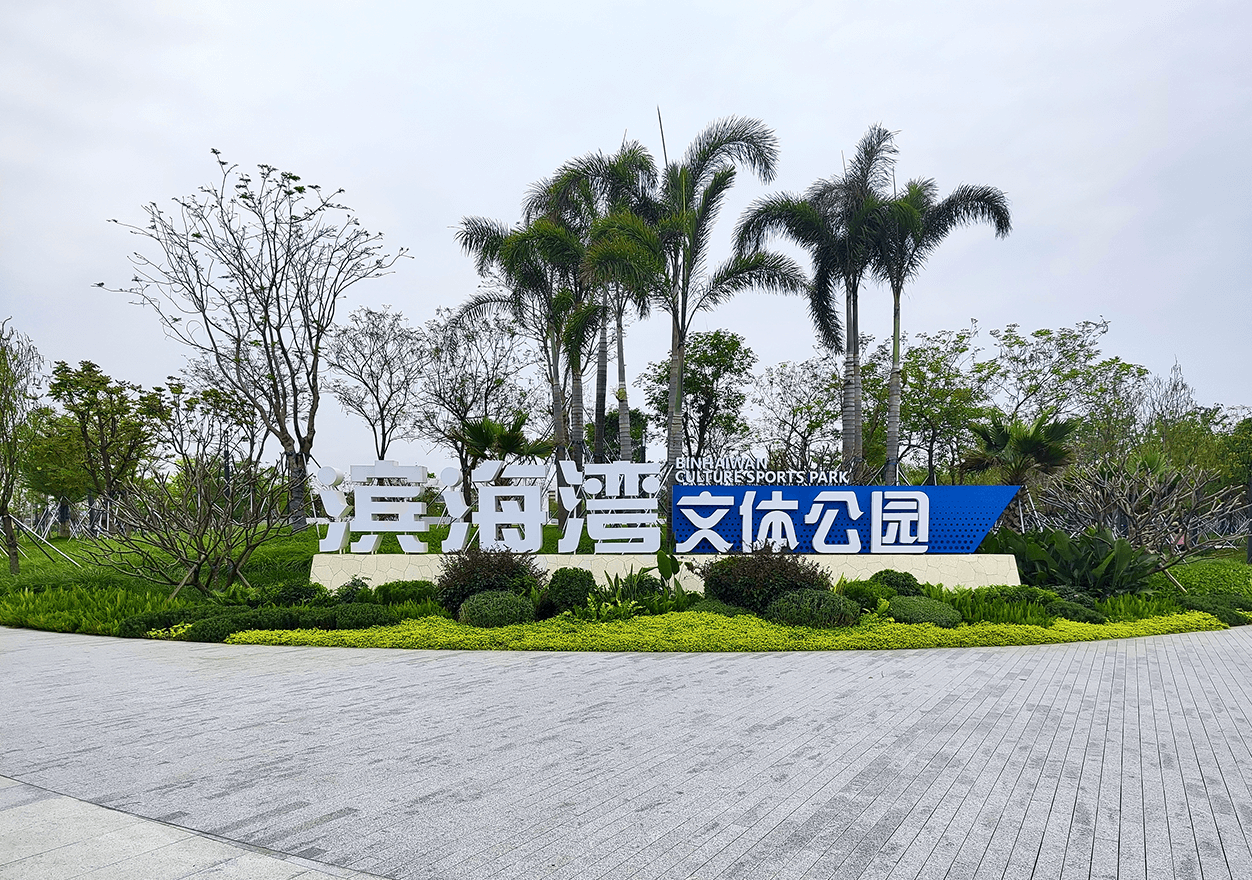
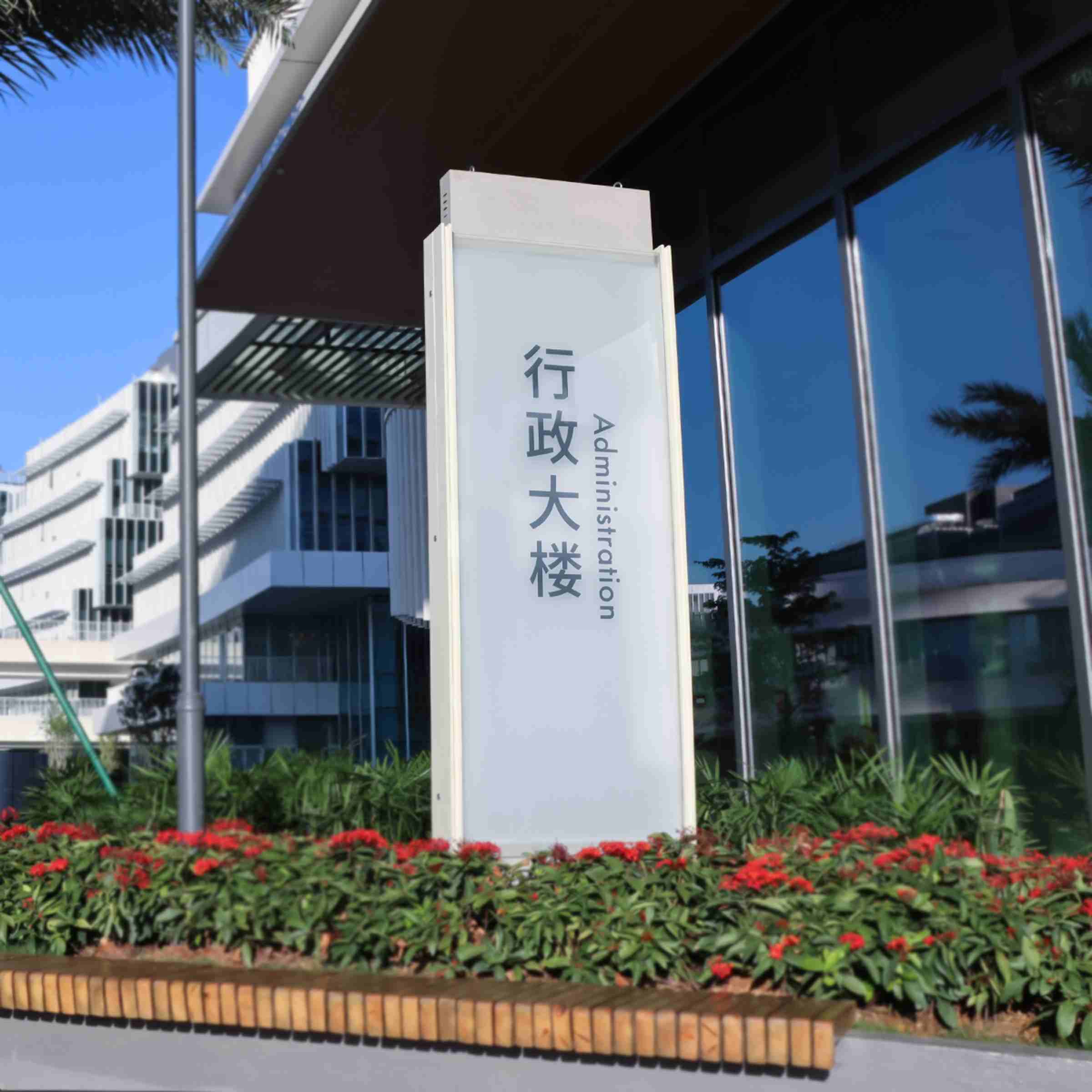
The completed system incorporates a coordinated family of landmark signage, directional pylon signs, site directory signs, wall-mounted wayfinding signs, destination identification signs, trail marker signs, interpretive signage and supporting visitor facilities, including restroom signs, safety signage and plant identification signs. Each sign family follows unified engineering standards while responding to different landscape conditions and viewing distances.
Engineering Insight
Effective park wayfinding signage follows visitor movement rather than fixed spacing intervals. Positioning information where people naturally make decisions improves navigation while reducing unnecessary installations.
What Materials and Engineering Methods Were Selected?
Material selection focused on outdoor durability, maintenance efficiency and compatibility with the surrounding landscape.
Weathering steel became the primary material because it naturally complements existing architectural elements while providing long-term corrosion resistance with minimal maintenance. Powder-coated stainless steel reinforces structures in exposed environments, while timber softens the appearance within woodland areas. Acrylic and glass improve readability for site directory signs and interpretive signage without overpowering the landscape.
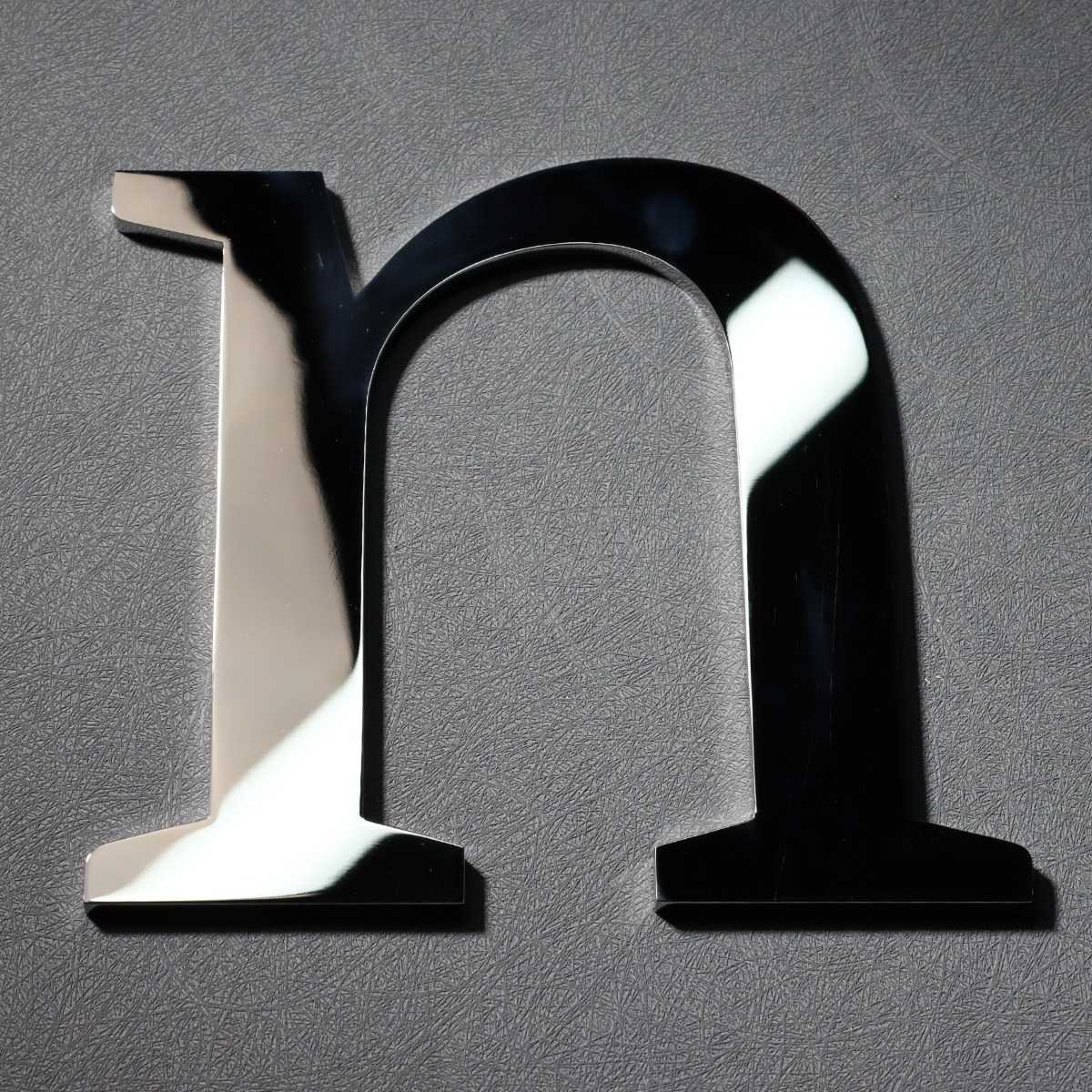
Manufacturing combined laser cutting, fabricated lettering, decorative perforation, etched graphics, silk-screen printing and UV printing to achieve consistent quality across different sign types. Decorative cut-out patterns were carefully optimized according to material thickness, preventing deformation while maintaining precise visual details.
How Was Installation Optimized for the Landscape?
Field verification formed an essential part of the engineering process. Before fabrication began, every destination name, directional arrow and installation location was confirmed on site to ensure the completed navigation system accurately reflected the final landscape layout.
Different installation methods—including freestanding, wall-mounted, railing-mounted and ground-mounted systems—were coordinated according to site conditions while minimizing disruption to existing vegetation and public access.
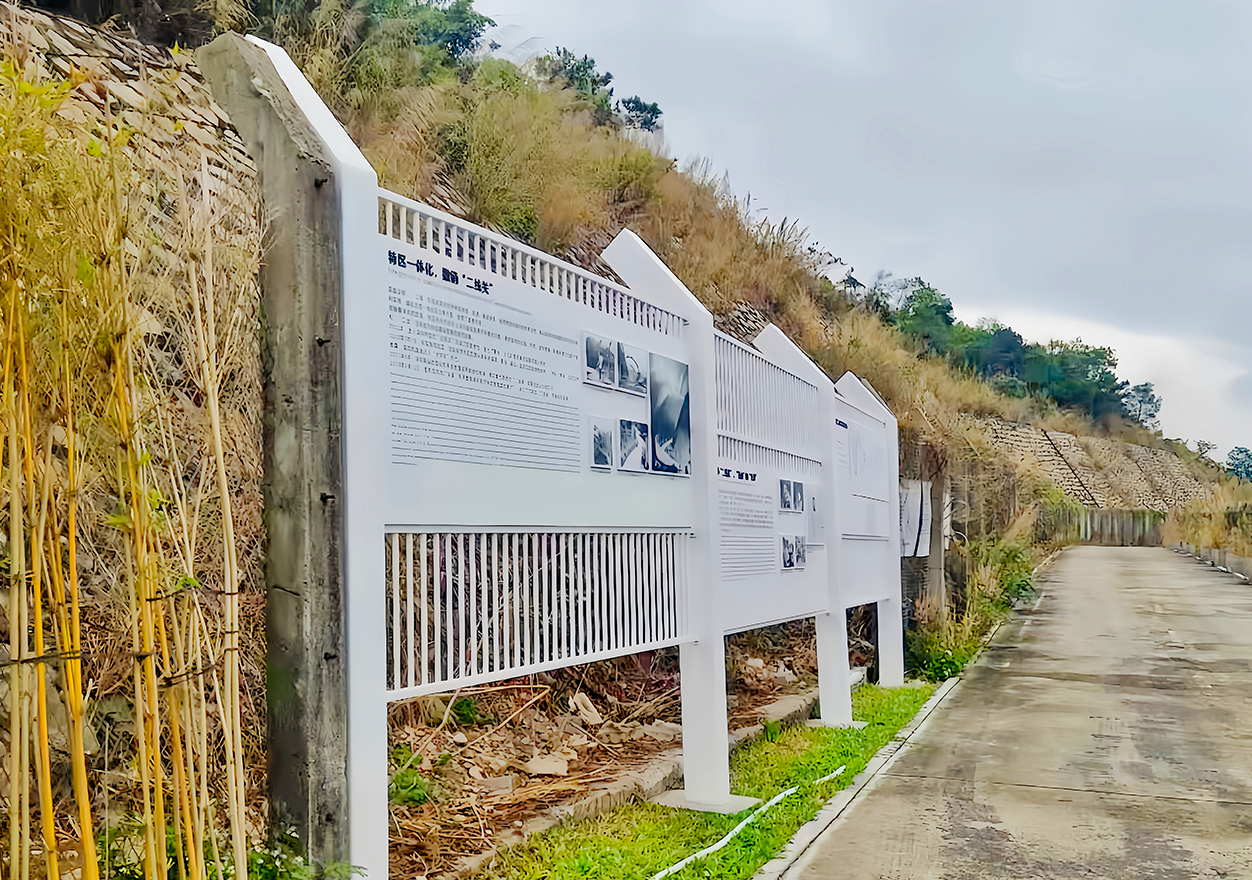
Several engineering details further improved long-term operation. Replaceable information panels allow graphics to be updated without dismantling supporting structures. Double-sided displays increase information capacity while reducing the number of installations. Transparent interpretation panels preserve open waterfront views while delivering educational content without obstructing the surrounding landscape.
Best Practice
Modular construction reduces lifecycle costs because damaged information panels can be replaced independently, extending the service life of the overall signage system.
What Results Were Achieved?
The completed park wayfinding signage network provides consistent navigation across entrances, scenic destinations, recreational facilities and visitor services through one coordinated visual language.
Standardized engineering improved manufacturing efficiency, simplified installation and reduced future maintenance requirements. Material consistency strengthened the identity of the ecological corridor, while modular construction allows the signage system to evolve alongside future landscape improvements.
More importantly, the project demonstrates that successful wayfinding signage solutions depend on engineering decisions made long before installation begins. When planning, engineering, manufacturing and installation are coordinated from the outset, navigation becomes an integrated part of the landscape rather than an element added afterwards.
Key Engineering Takeaways
The Xili Ecological Belt highlights four engineering principles applicable to large public landscape projects:
- Build navigation around pedestrian decision points instead of evenly spaced signs.
- Standardize structures to improve manufacturing, installation and long-term maintenance.
- Select durable materials that integrate naturally with surrounding architecture and landscapes.
- Design modular components that support future updates without replacing complete structures.
When these principles are integrated from planning through fabrication and installation, park wayfinding signage becomes easier to maintain, easier to expand and more intuitive for everyday visitors.
Project Specifications
| Category | Specification |
| Project Type | Urban Ecological Corridor |
| Signage Types | Landmark Signage, Directional Pylon Signs, Site Directory Signs, Wall-Mounted Wayfinding Signs, Destination Identification Signs, Trail Marker Signs, Interpretive Signage, Restroom Signs, Safety Signage, Plant Identification Signs |
| Materials | Weathering Steel, Powder-Coated Stainless Steel, Timber, Acrylic, Glass |
| Manufacturing | Laser Cutting, Fabricated Lettering, Perforation, Etching, Silk-Screen Printing, UV Printing |
| Installation | Freestanding, Wall-Mounted, Ground-Mounted, Railing-Mounted |
| Engineering Features | Modular Construction, Replaceable Panels, Double-Sided Displays, Transparent Interpretation Panels |
About COSUN SIGN
As a National High-tech Enterprise, COSUN SIGN specializes in engineering integrated architectural signage and wayfinding systems for public parks, transportation hubs, educational campuses, healthcare facilities, commercial developments and civic infrastructure. Backed by more than 20 years of industry experience, a 38,000 m² manufacturing base and projects delivered in 65+ countries, we provide complete services covering engineering, manufacturing and installation for complex built environments worldwide.
Planning a Park Wayfinding Project?
Every landscape has unique requirements for navigation, durability, accessibility and long-term maintenance.
Whether you are developing a public park, ecological corridor, campus, transportation hub or urban landscape, COSUN SIGN can help optimize your project through information hierarchy planning, sign family engineering, material selection, structural design, prototype development, manufacturing optimization and international project delivery.
Share your architectural drawings, landscape plans, sign schedules, BOQs, design concepts or tender documents with our engineering team. Early engineering involvement helps improve manufacturability, installation efficiency and lifecycle performance while delivering park wayfinding signage that integrates naturally with its environment.
正面-已修.jpg)
侧面-已修.jpg)

 粤公网安备44030702001648号