

















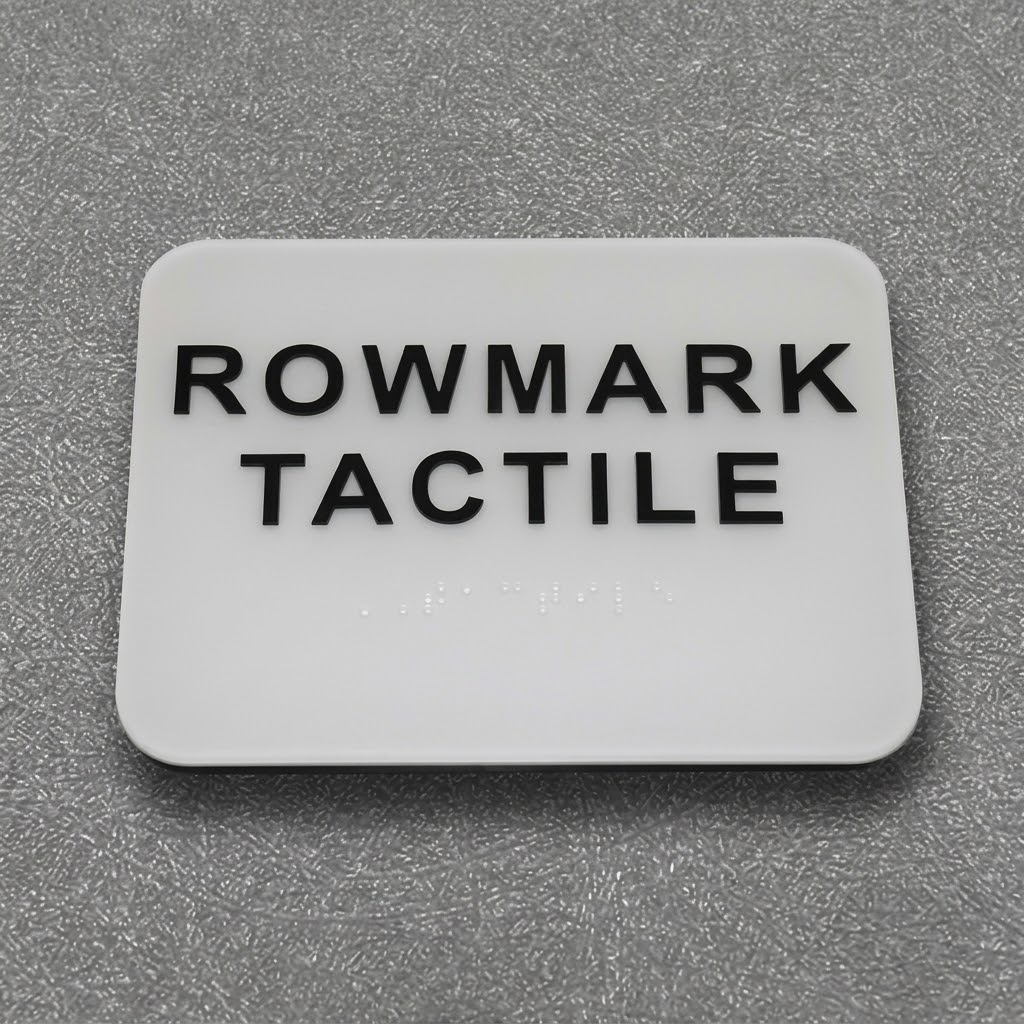
A tactile signage manufacturer produces signs with raised characters and tactile features to support accessible navigation. COSUN SIGN supplies custom Rowmark Tactile ADA Signs made from Rowmark ADA Alternative engraving material, with approximately 1/32-inch raised characters, Grade II Braille options, matte finishes, and flexible mounting methods for commercial and public buildings.
What Is a Tactile Signage Manufacturer?
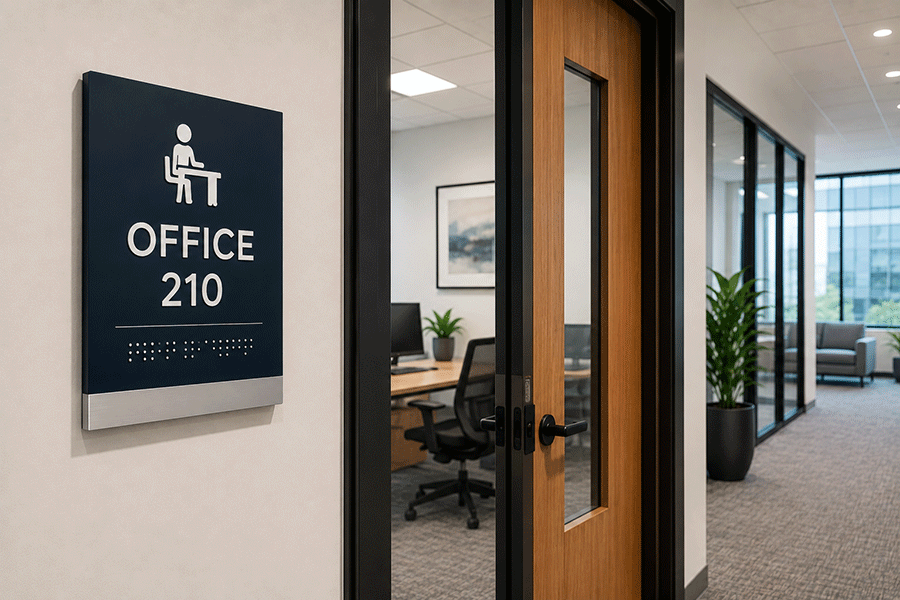
A tactile signage manufacturer is a company that produces signs with raised characters, Braille, and other touch-readable elements for people with visual impairments. These signs are commonly used for room identification, restrooms, elevators, and accessible wayfinding in public and commercial buildings.
COSUN SIGN provides custom Rowmark Tactile ADA Signs for projects that require tactile room signs and Braille identification. Its product options include room numbers, pictograms, custom colors, and different mounting configurations.
Rowmark ADA Alternative is an engraving-grade material designed for tactile sign fabrication. When selecting a manufacturer, buyers should evaluate not only the material but also character dimensions, Braille accuracy, visual contrast, mounting location, and applicable accessibility requirements.
How Do Rowmark Tactile ADA Signs Work?
Rowmark tactile signs combine raised lettering and Braille so users can identify room names, numbers, and designated facilities through touch. Visual contrast and non-glare surfaces can also help people with limited vision distinguish sign information.
The main advantages include:
- Tactile identification: Raised characters and Braille support touch-based reading.
- Material flexibility: Rowmark engraving sheets are available in different colors and finishes.
- Custom fabrication: Signs can incorporate room numbers, pictograms, and project-specific layouts.
- Installation options: Adhesive backing or mechanical mounting can accommodate different wall and door surfaces.
Compared with traditional flat printed signs, tactile ADA signs provide physical information that can be read by touch. However, a tactile sign’s accessibility depends on its dimensions, layout, installation position, and compliance with the standards applicable to the project.
What Are the Key Specifications of Rowmark Tactile ADA Signs?
COSUN SIGN offers configurable specifications for Rowmark Tactile ADA Signs, with final dimensions and fabrication details determined by project requirements.
| Specification | Available option or stated detail |
|---|---|
| Material | Rowmark ADA Alternative single-ply engraving plastic |
| Surface finish | Matte, non-glare options |
| Raised characters | Approximately 1/32 inch, subject to applicable requirements |
| Braille | Grade II contracted Braille option |
| Braille dots | Domed or rounded tactile dots |
| Fabrication | Laser engraving and CNC routing, depending on design |
| Adhesive mounting | 3M 467MP adhesive option |
| Mechanical mounting | Standoffs and other suitable hardware |
| Dimensions | Standard sizes and custom dimensions |
| Design | Custom colors, room numbers, text, and pictograms |
These specifications describe available product configurations rather than a guarantee that every sign meets every accessibility requirement. Buyers should confirm the applicable standard, character dimensions, Braille spacing, contrast, and installation requirements before production.
Where Are Tactile ADA Signs Commonly Used?
Tactile ADA signs are used in buildings where accessible room identification and navigation are required or specified.
Common applications include:
- Hotels: Guest room identification, restrooms, elevators, and shared facilities.
- Hospitals and healthcare facilities: Room numbers, treatment areas, and designated service spaces.
- Offices: Meeting rooms, individual offices, restrooms, and circulation areas.
- Schools and universities: Classrooms, laboratories, administrative offices, and common facilities.
- Public buildings and venues: Accessible room identification and selected wayfinding locations.
For multi-building projects, a consistent sign schedule helps maintain uniform dimensions, color combinations, wording, Braille placement, and mounting positions.
How Should You Choose a Tactile Signage Manufacturer?
The right tactile signage manufacturer should demonstrate suitable material knowledge, fabrication capabilities, quality controls, and experience with project-specific accessibility requirements.
Before placing an order, evaluate the following factors:
- Material suitability: Confirm that the selected engraving material is appropriate for the intended indoor or outdoor environment.
- Braille production: Ask how Grade II Braille is translated, positioned, and checked.
- Raised character accuracy: Request drawings or samples to verify character dimensions and tactile quality.
- Contrast and finish: Select color combinations and matte finishes appropriate for visual accessibility.
- Mounting requirements: Confirm adhesive compatibility, mechanical fixing options, and installation location.
- Quality documentation: Request material information, inspection records, and relevant compliance documentation.
- Supply capability: Check material availability, sample lead times, production schedules, and capacity for repeat orders.
COSUN SIGN identifies itself as an authorized Rowmark distributor in mainland China and supplies custom tactile ADA signage. Its stated services include material selection, engraving and routing, Braille preparation, pictogram integration, and mounting hardware options.
How Do Tactile Signs Compare With Other Sign Types?
Different sign types serve different accessibility and navigation purposes. Selection should reflect the information users need and the requirements of the installation location.
| Sign type | Main function | Key consideration |
|---|---|---|
| Tactile ADA signs | Touch-readable room identification | Raised characters, Braille, and placement |
| Flat printed signs | Visual identification and information | Readability, contrast, and viewing distance |
| Directional signs | Guide people between locations | Arrow clarity, positioning, and consistent terminology |
| Illuminated signs | Improve visibility in selected environments | Lighting, glare, power, and maintenance |
| Exterior signs | Identify buildings, entrances, or destinations | Weather resistance, visibility, and mounting |
Tactile signs may be combined with visual wayfinding systems, but a flat printed sign is not a substitute for a required tactile sign.
What Affects the Cost of Custom ADA Braille Signs?
The cost of custom ADA Braille signs depends on material selection, sign dimensions, design complexity, production quantity, and installation requirements.
Important cost factors include:
- Material and color: Different Rowmark material options and finishes may have different costs.
- Size and thickness: Larger signs or project-specific material requirements can increase material consumption.
- Design complexity: Braille, pictograms, multiple text elements, and customized layouts affect production preparation.
- Quantity: Larger orders may distribute setup costs across more signs.
- Mounting method: Adhesive backing, standoffs, and other hardware affect the final specification.
- Inspection and documentation: Project-specific quality checks or documentation may influence the quotation.
- Delivery schedule: Urgent production and shipping requirements may affect total project costs.
For an accurate quotation, provide the sign schedule, dimensions, material and color preferences, Braille requirements, mounting details, quantity, and delivery destination.
FAQ
What is a tactile ADA sign?
A tactile ADA sign is a sign designed with raised characters and, where required, Braille to make designated information accessible through touch. Compliance depends on the applicable accessibility standards and the sign’s final fabrication and installation.
How do you choose a tactile signage manufacturer?
Choose a manufacturer that can verify material suitability, raised character dimensions, Braille accuracy, visual contrast, mounting options, and quality inspection procedures. Request samples and technical drawings when the project requires consistent signage across multiple buildings.
Why choose Rowmark material for custom ADA signs?
Rowmark ADA Alternative material offers engraving-oriented fabrication options, a range of colors and finishes, and compatibility with custom tactile sign designs. Its suitability depends on the project specification, required tactile features, and intended installation environment.
Source & Expertise
This article is based on the product specifications and company information provided by COSUN SIGN for its Rowmark Tactile ADA Signs. The described options include Rowmark ADA Alternative engraving material, raised characters, Grade II Braille, matte finishes, custom fabrication, and adhesive or mechanical mounting.
COSUN SIGN identifies itself as an authorized Rowmark distributor in mainland China and provides custom signage services for commercial and institutional projects. The company also states that it holds UL and CE certificates; the scope and applicability of those certificates should be verified against the relevant documentation.
For accessibility-related projects, consult the applicable ADA requirements and relevant standards, including the 2010 ADA Standards for Accessible Design where applicable. Product specifications alone do not establish compliance for every installation.
Send COSUN SIGN your sign schedule, drawings, quantities, dimensions, color requirements, and mounting preferences to request a tailored specification and quotation.
Last Updated: October 20, 2026

 粤公网安备44030702001648号