

















Integrated Custom Wayfinding Signage Solutions for Cross-Border Transportation Signage Projects
Project Name: Shenzhen Wenjindu Port
Time: 2020
Project Snapshot
| Item | Details |
| Project | Shenzhen Wenjindu Port Wayfinding Signage |
| Sector | Transportation infrastructure · National Class I land port |
| Location | Shenzhen, China |
| Site area | Approx. 130,000 m² |
| Building area | 47,646.5 m² |
| Operation | Passenger and freight border crossing |
| Operating hours | 07:00–22:00 daily |
| COSUN SIGN scope | Planning, engineering, manufacturing and installation of an integrated wayfinding signage system |
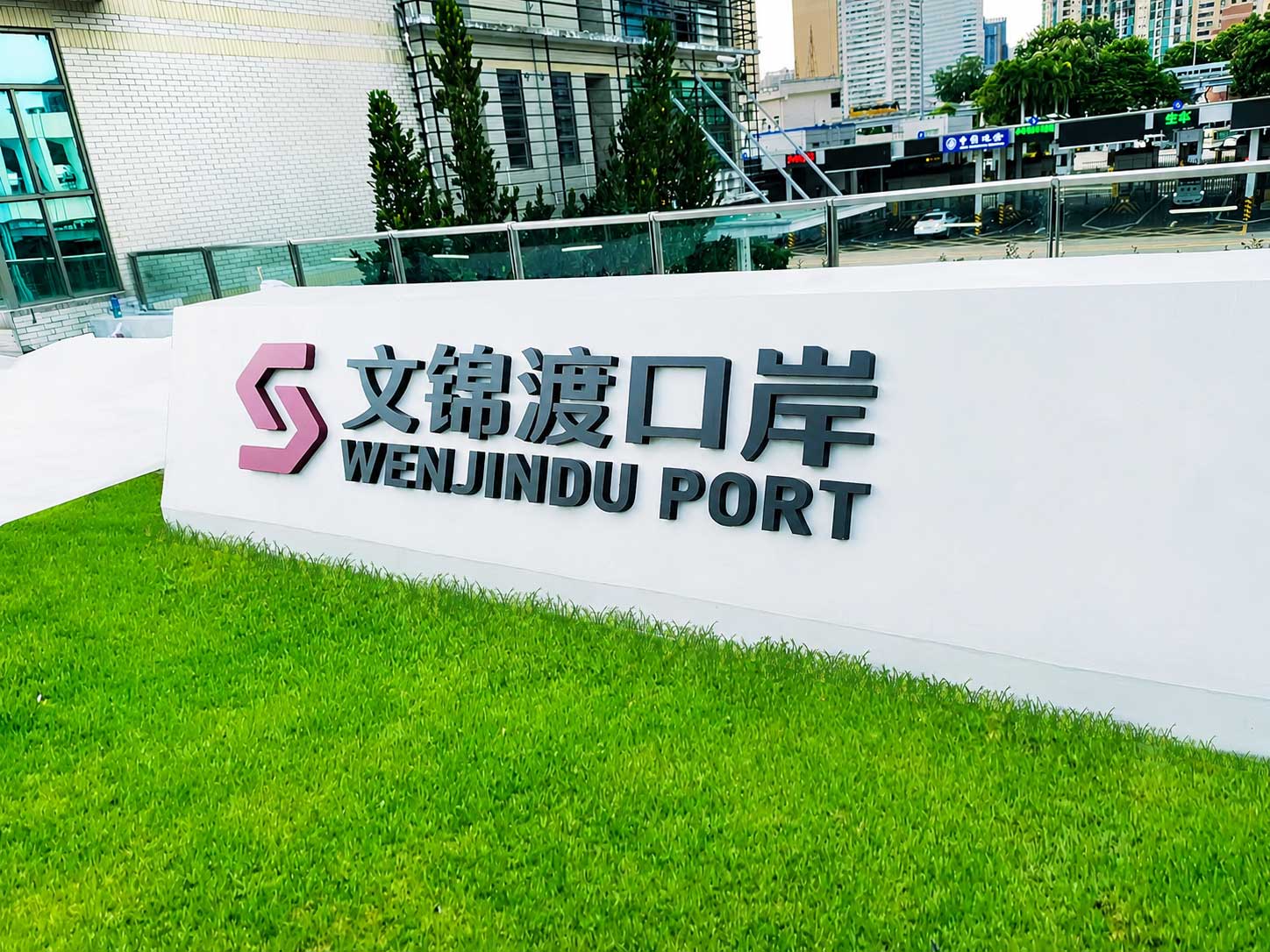
Why This Port Matters
Shenzhen Wenjindu Port is one of the most important land ports linking Shenzhen and Hong Kong. It handles cross-border freight transportation while also serving passenger clearance, making it a critical logistics gateway for the region.
The port operates under the “Two Places, Two Inspections” model, where customs and border control procedures are completed separately by Shenzhen and Hong Kong authorities. This creates a transport environment in which freight operators, passenger vehicles, pedestrians and government agencies all move through the same site according to different operational rules.
Beyond transportation, the port has a direct impact on regional supply chains. It is the designated exit port for live poultry, livestock and aquatic animals supplied to Hong Kong, and it is also a major entry channel for imported fruit into Shenzhen. Nearly ninety percent of the fresh vegetables supplied to Hong Kong pass through Wenjindu Port, making uninterrupted circulation essential to daily operations.
Understanding the Site
The redevelopment combines a contemporary inspection complex with extensive outdoor transportation infrastructure. Visitors first encounter a large arrival plaza before entering the six-storey joint inspection building, whose shell-like form opens towards both Shenzhen and Hong Kong.
Inside the building, large immigration halls on the first two floors create long visual corridors where information must remain readable across considerable distances. Outside, separate circulation systems organise passenger vehicles, freight trucks, customs inspection areas and parking facilities without crossing operational routes.
Unlike airports or railway stations, border ports accommodate pedestrians, passenger vehicles, freight trucks and government operations simultaneously. Each group follows a different circulation path while sharing the same site, making navigation decisions more complex and time-sensitive.
Organising Movement Before Designing Signs
The project was developed as a coordinated custom wayfinding signage system across the entire port rather than as a collection of individual signs. Information was organised according to the sequence of decisions users make while moving through the site.
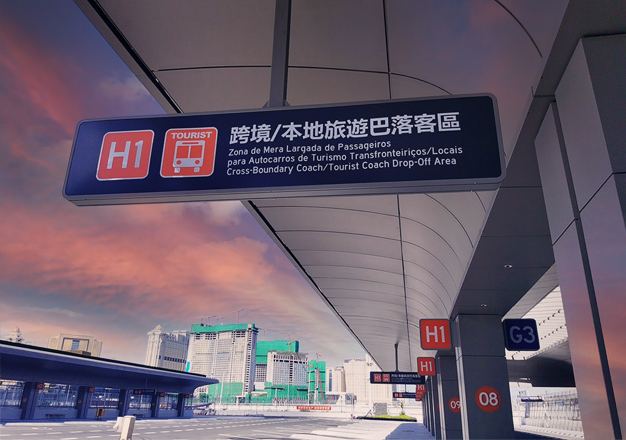
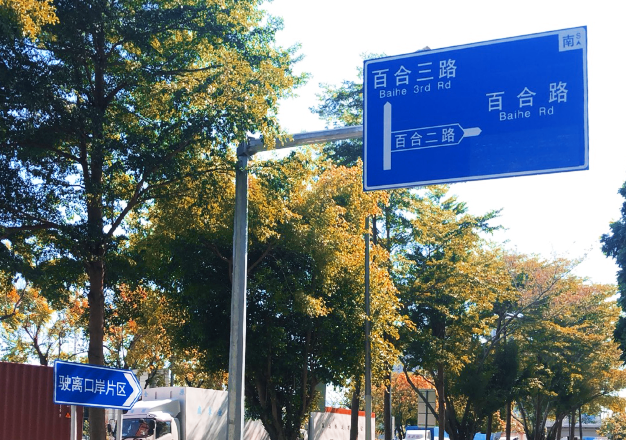
- Road orientation: Gantry signs establish direction before vehicles enter inspection areas.
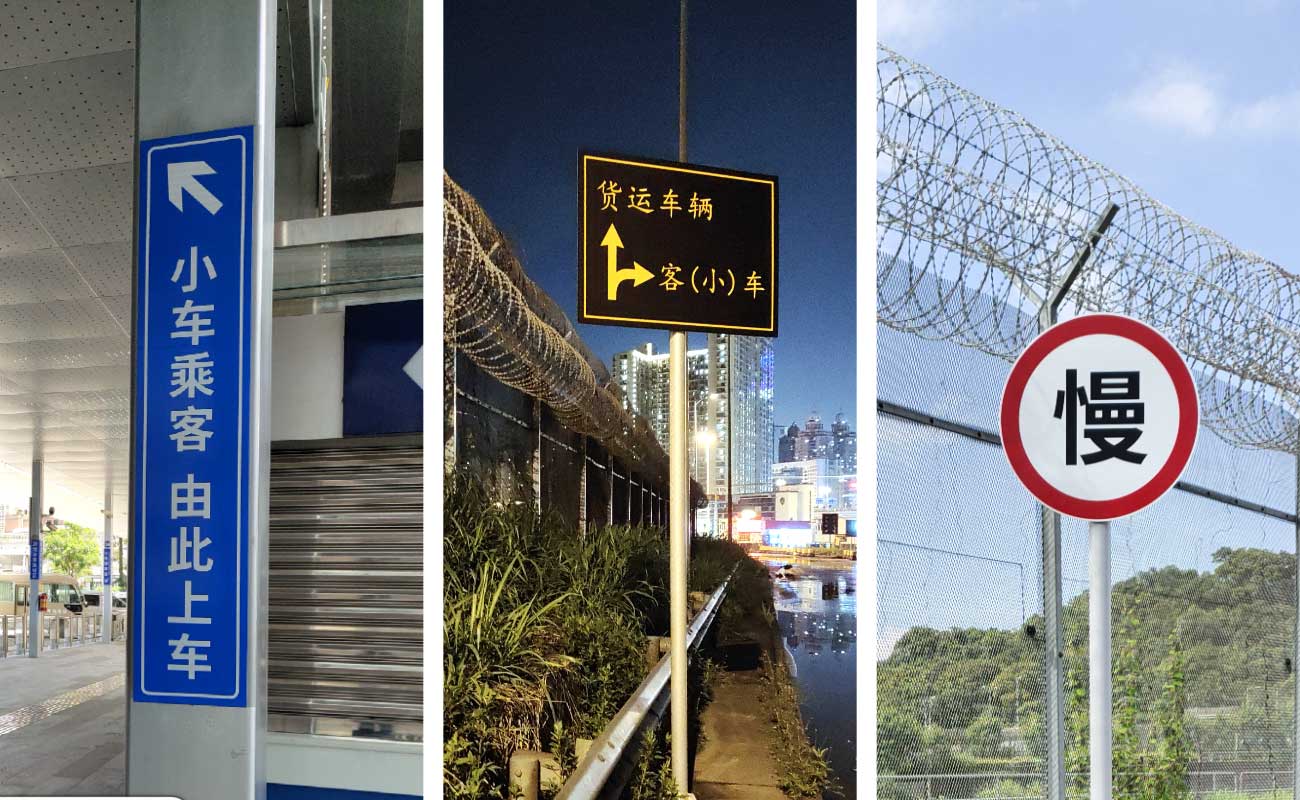
- Vehicle allocation: Directional pylons guide drivers towards passenger or freight facilities.
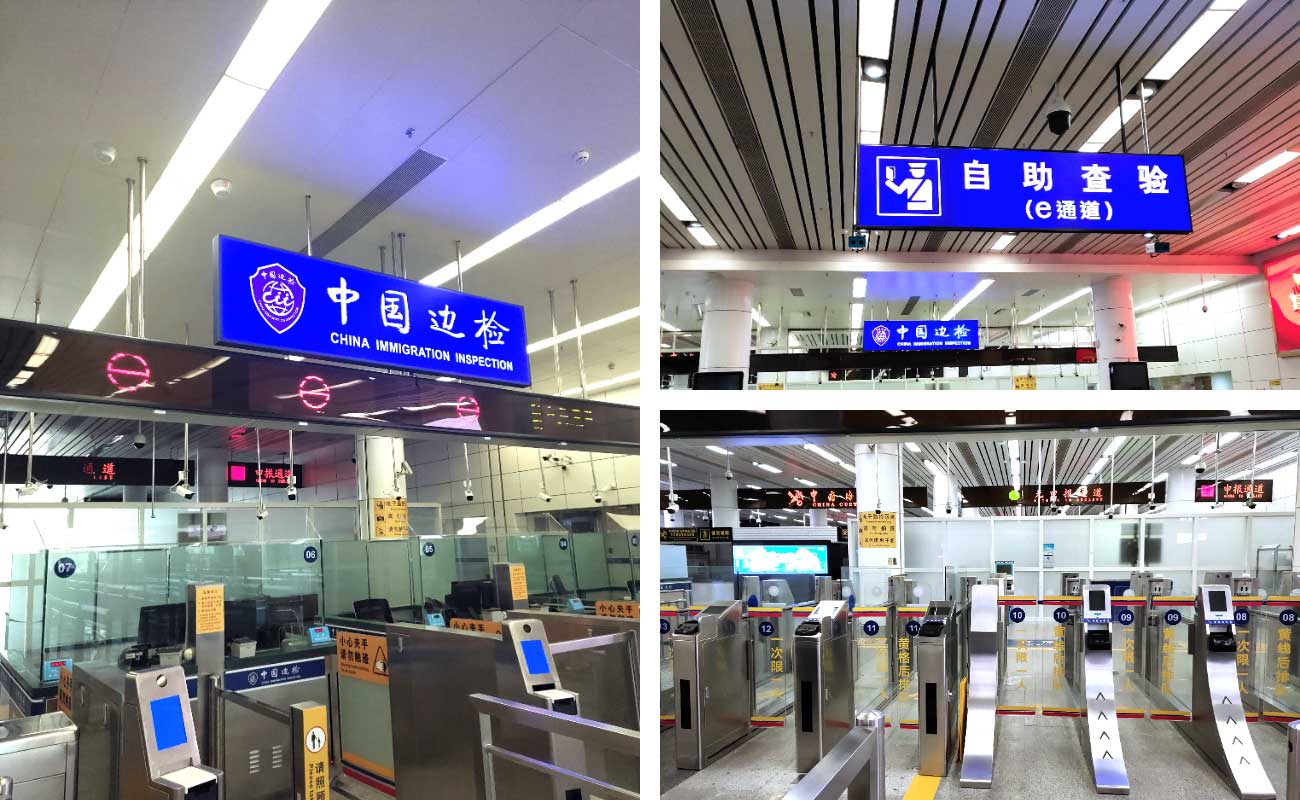
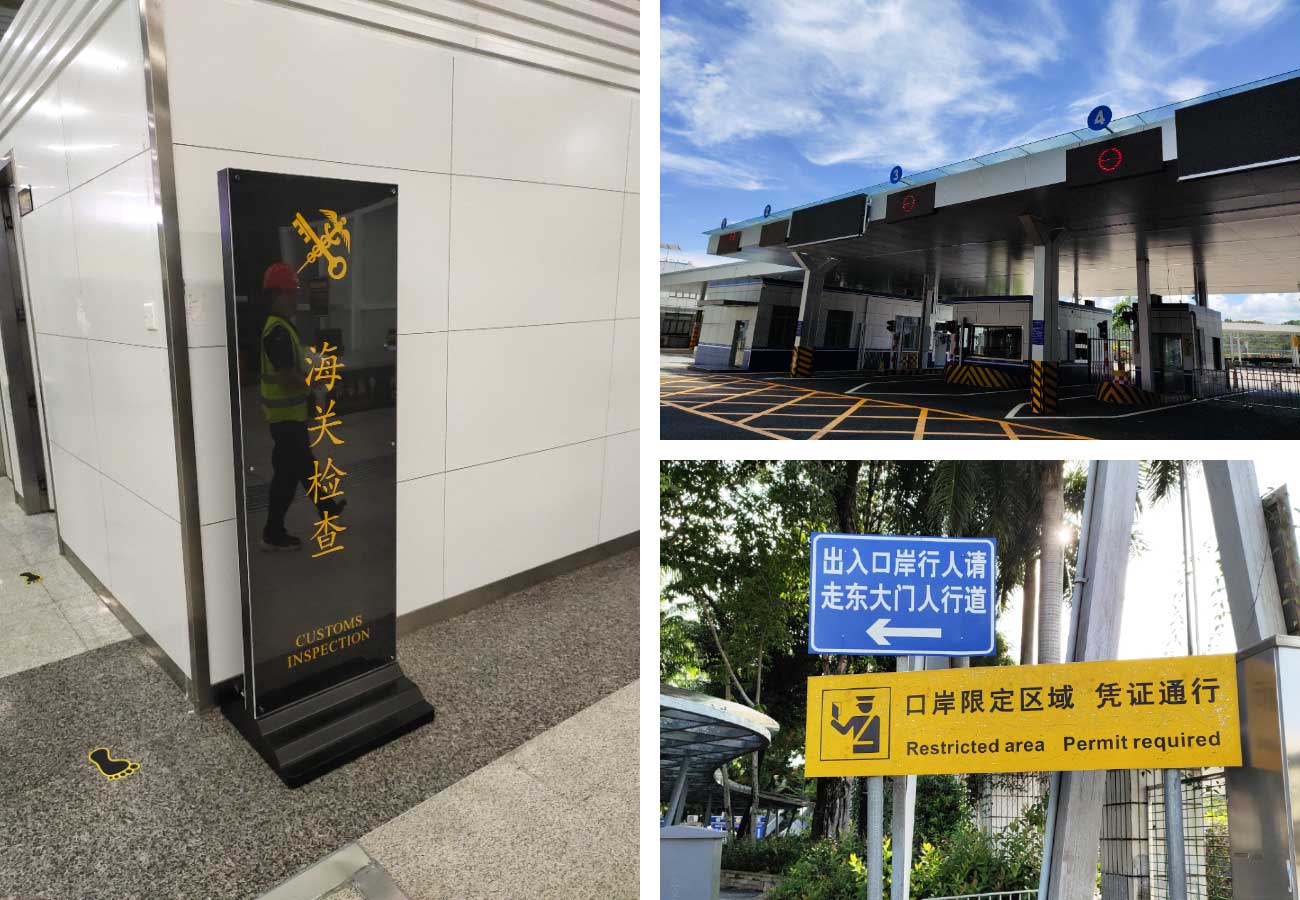
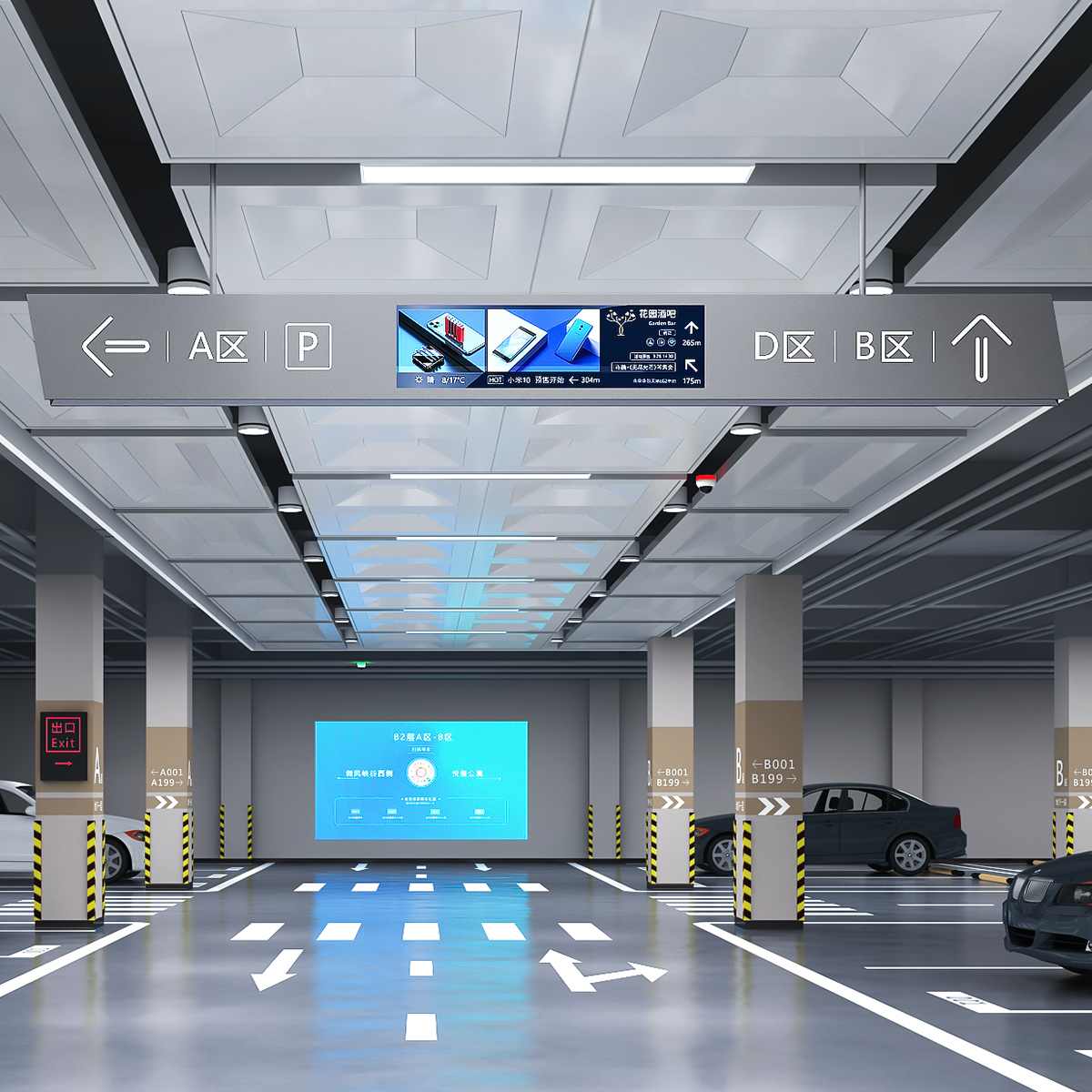
- Inspection decisions: Hanging wayfinding signage and wall-mounted information continue the navigation sequence inside the inspection building.
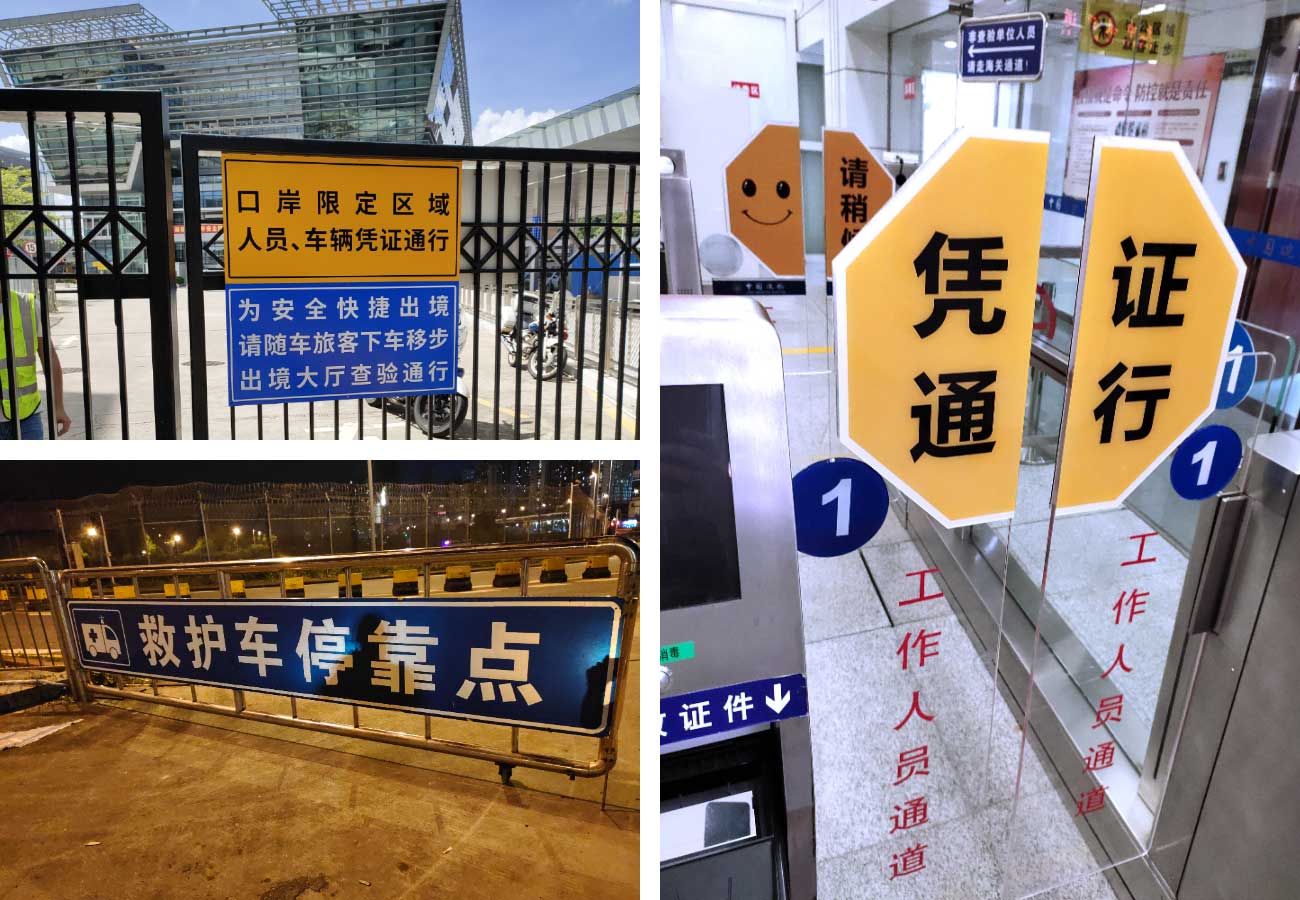
- Confirmation: Gate numbering, service counters and emergency facilities provide reassurance at decision points.
- Regulatory information: Public amenities and operational identifiers follow a consistent visual language across the port.
This hierarchy allows information to become progressively more specific as users move deeper into the facility, reducing unnecessary visual complexity while maintaining confidence at every transition.
Engineering Note
Border ports differ from airports because navigation decisions are made simultaneously by pedestrians, freight operators and government agencies. A successful transport wayfinding must separate these journeys while maintaining one coherent visual language.
Designing Signs That Match the Architecture
Material selection was driven by architectural context, environmental durability and long-term maintenance requirements.
Outdoor gateway structures, freestanding monuments and traffic signage were manufactured using galvanized steel structures with stainless steel finishes engineered for continuous exposure to weather and vehicle movement. Fluorocarbon and powder-coated finishes provide corrosion resistance while maintaining visual consistency with the modern architectural palette.
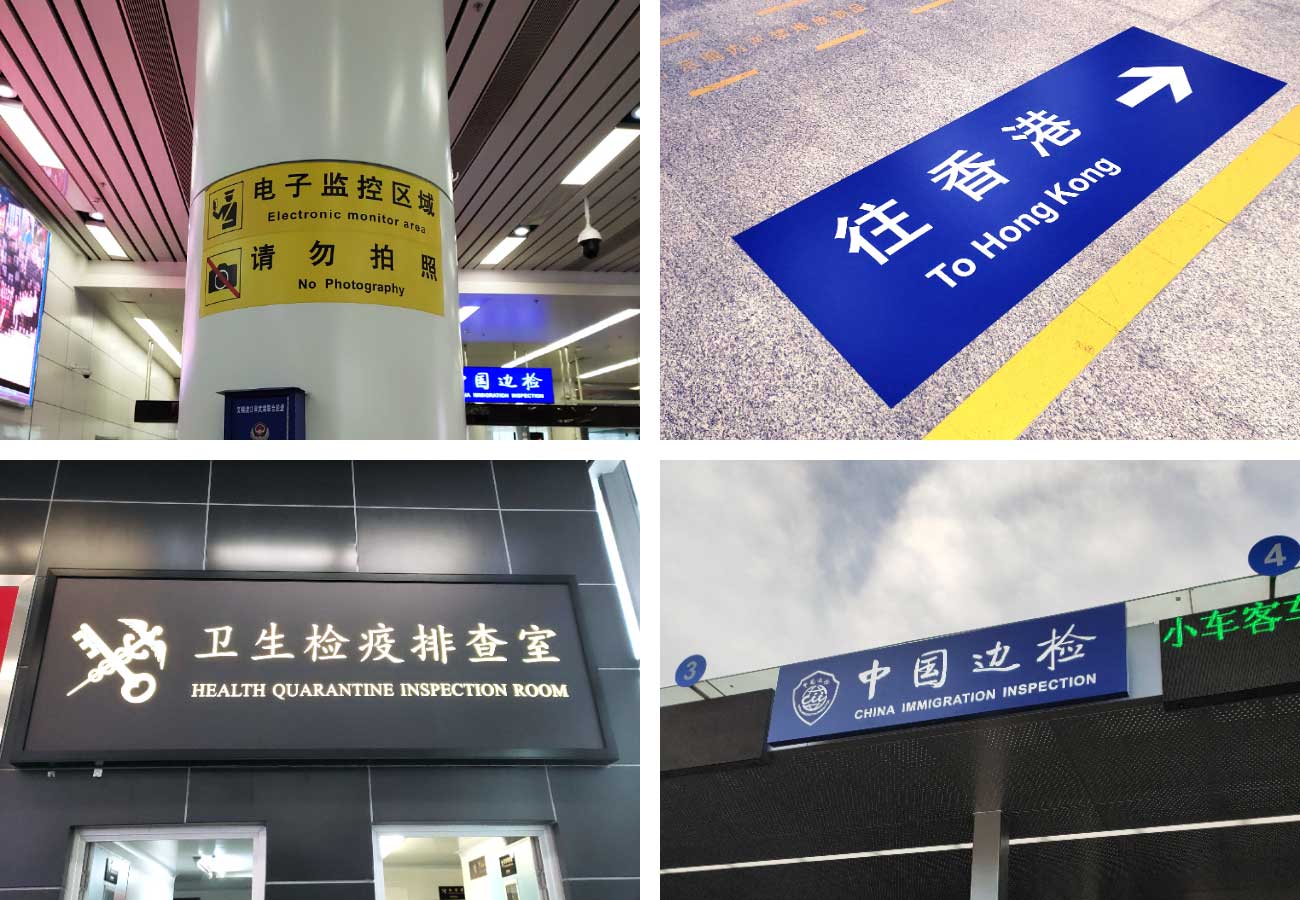
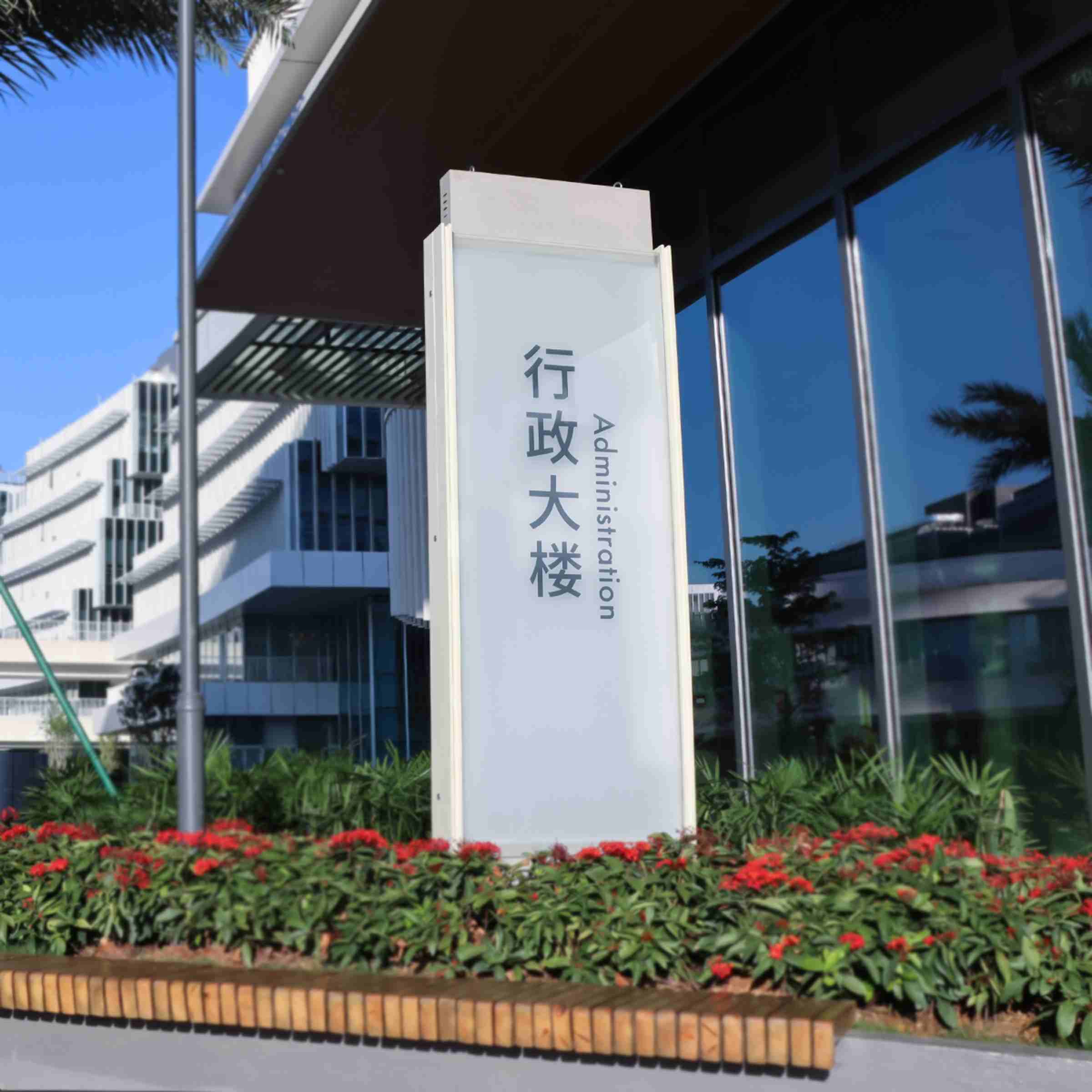
Within the inspection building, aluminium profiles, stainless steel panels and acrylic graphics create a lighter appearance that complements the clean interior spaces and extensive glass façades. Light box signage and illuminated channel letters improve visibility under changing lighting conditions without competing with the architecture.
Ground graphics, reflective warning signs and emergency identification were produced using durable anti-slip materials and high-performance reflective films suitable for intensive public use.
Material Insight
Reflective glass façades can reduce sign legibility if finish, contrast and viewing angle are not considered during engineering. Matte finishes and controlled colour contrast were therefore important to maintaining readability across the port environment.
Building Without Interrupting Border Operations
Construction took place while the port remained fully operational. Because Wenjindu Port serves as a critical logistics corridor for fresh agricultural products entering Hong Kong, installation activities could not interrupt daily border operations.
Work was therefore carefully phased around customs schedules, with many installation tasks completed during off-peak periods and overnight working windows. Temporary traffic adjustments and staged replacement of signage ensured that navigation remained continuous for both passengers and freight operators.
The project was delivered during pandemic prevention measures, requiring additional on-site safety procedures and coordination for every construction team entering the facility. At the same time, the signage system had to comply with evolving national border signage standards, including bilingual layouts, prescribed colour schemes and internationally recognised pictograms.
Close coordination between customs, immigration, public security, transportation and emergency authorities ensured that engineering, regulatory compliance and operational requirements were resolved before installation began.
What Changed After Installation
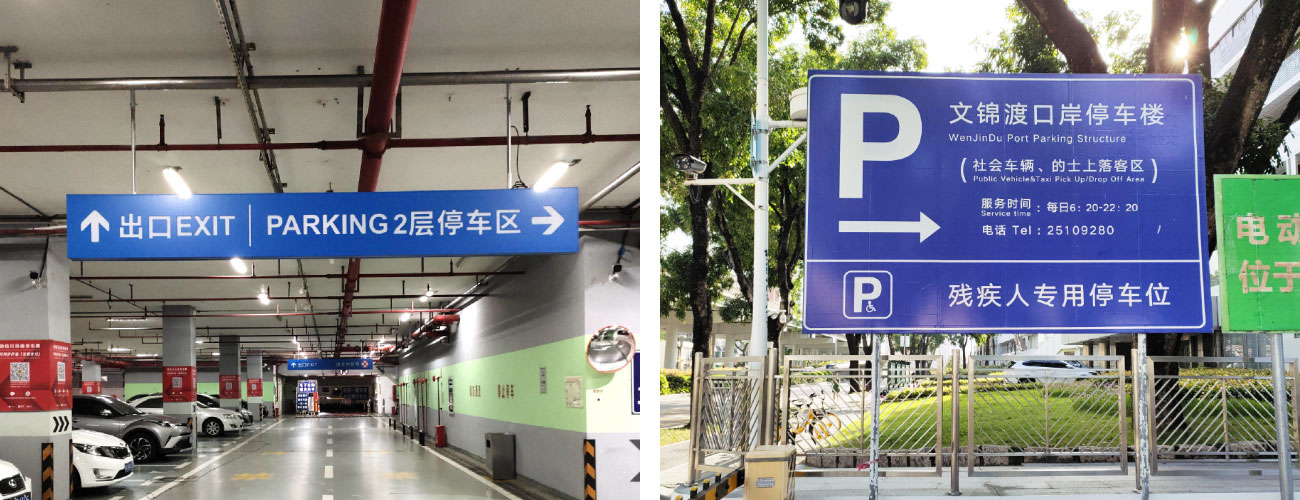
The completed signage system supports every major functional area across the port, including passenger immigration halls, customs inspection facilities, vehicle inspection lanes, freight truck circulation, passenger vehicle routes, multi-storey parking, charging station identification, gantry traffic signage, public facilities and emergency information.
More importantly, the project demonstrates how a navigation system can contribute to the identity of a place. Alongside strict operational requirements, the signage reflects the historical character of Wenjindu Port while supporting its transformation into a contemporary international gateway.
Observable changes after installation include:
- Drivers can recognise inspection lanes earlier and make routing decisions with less hesitation.
- Passengers experience clearer transitions between parking, inspection halls and departure areas.
- Information standards became more consistent across customs, immigration, public security and transportation departments.
- Maintenance management became easier because sign categories, materials and visual standards were unified across the port.
Engineering Lessons
The Wenjindu Port project demonstrates a “function and human context” approach to wayfinding design. In the modernisation of an established border port, navigation was treated as both a spatial management tool and a carrier of place identity.
- Navigation begins outside the building. Gantry signs and traffic guidance establish orientation before users reach the inspection complex.
- Different users require different information density. Drivers, pedestrians and inspection officers each need information tailored to their decision-making speed.
- Border facilities require operational clarity before branding. Regulatory compliance, bilingual layouts and standardised pictograms were prioritised throughout the system.
- Consistency reduces maintenance more than complexity. A unified engineering process covering planning, design, manufacturing, installation and service created a more manageable long-term system.
Project Lesson
The most effective wayfinding systems reduce uncertainty rather than increase information. At Wenjindu Port, clarity came from organising movement first and applying signage only where each decision point required confirmation.
Project Specifications
| Category | Description |
| Building type | National Class I land border port |
| Site area | Approx. 130,000 m² |
| Building area | 47,646.5 m² |
| Architectural features | Glass curtain wall inspection complex with integrated transport infrastructure |
| Signage categories | Gantry signs, pylons, suspended signs, wall-mounted signs, illuminated signs, channel letters, ground graphics, gate numbering and emergency signage |
| Primary materials | Galvanized steel, stainless steel, aluminium profiles, acrylic, PVC, reflective film and LED lighting |
| Manufacturing processes | Laser cutting, CNC fabrication, sheet metal forming, welding, powder coating, fluorocarbon coating, UV printing, screen printing, polishing and LED assembly |
| Installation challenge | Phased construction during continuous border operation with multi-agency coordination |
About COSUN SIGN
As a signage manufacturer in China, COSUN SIGN provided engineering, manufacturing and installation for the Shenzhen Wenjindu Port wayfinding signage project, delivering an integrated signage system for a complex transportation signage project environment.
Planning a Transport Infrastructure Project?
If your project involves airports, border crossings, rail transit or logistics hubs, early wayfinding planning can reduce operational complexity long before construction begins.
Talk with our engineering team to discuss signage planning, engineering, manufacturing and installation for transportation infrastructure projects.

正面-已修.jpg)
侧面-已修.jpg)

 粤公网安备44030702001648号