

















Wayfinding Engineering for a 24-Hour International Land Border Crossing
Project Name: Huanggang Port
Time: 2020
Project Snapshot
| Item | Details |
| Location | Futian District, Shenzhen, China |
| Project Type | National Land Border Port & Cross-Border Transit Hub |
| Delivery | Phased installation during port reconstruction |
| Design Consultant | Port Design Team |
| Signage Contractor | COSUN SIGN |
| Scope | Traffic signs, pedestrian wayfinding, inspection buildings, parking, bus interchange, emergency evacuation, temporary traffic guidance |
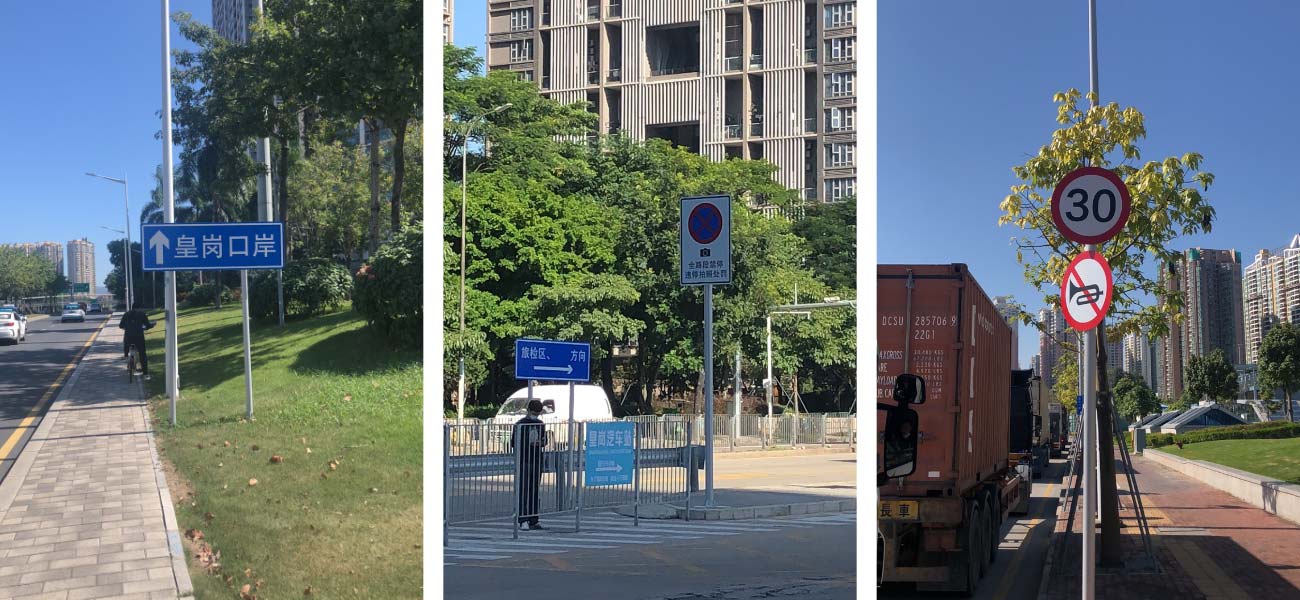
Project Background
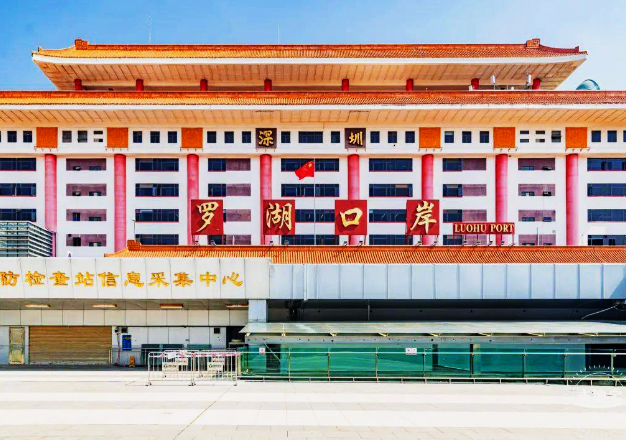
Huanggang Port is a 1,000,000 m² land border crossing connecting Shenzhen and Hong Kong. The port integrates passenger inspection, freight clearance, public transportation signage, parking facilities, border plazas, and cross-border vehicle corridors within a single transportation complex. Following the reopening of cross-border travel in February 2023, Huanggang Port resumed operation as Shenzhen’s only 24-hour passenger port.
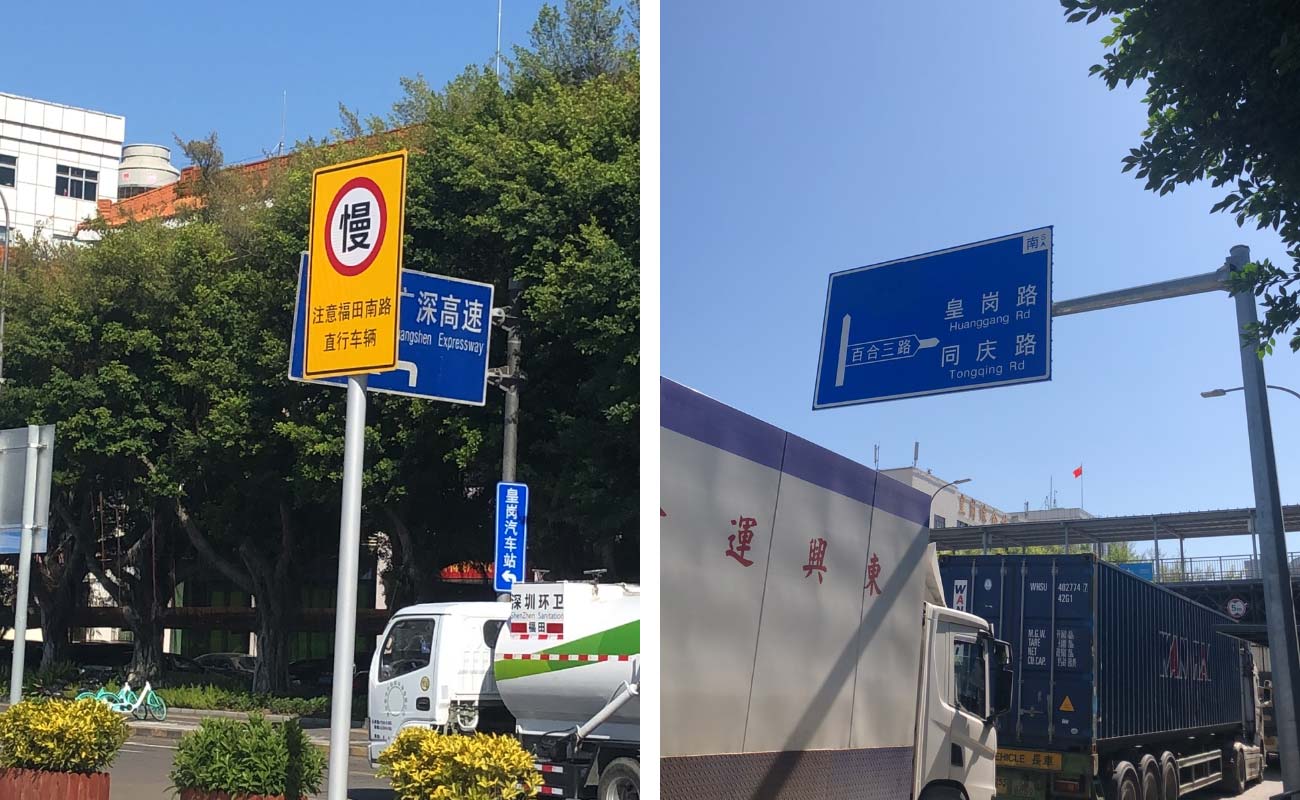
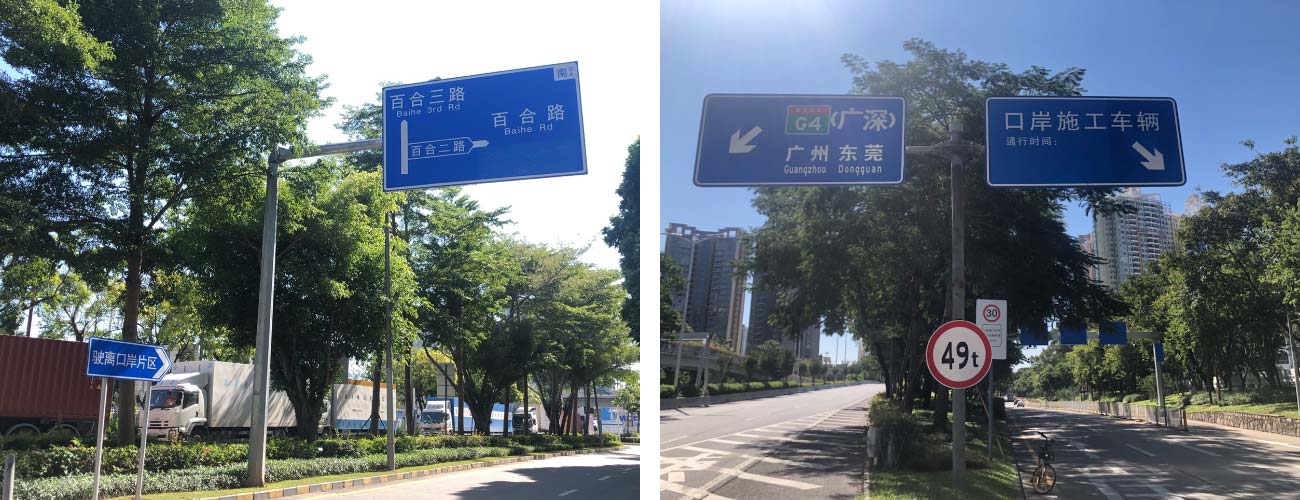
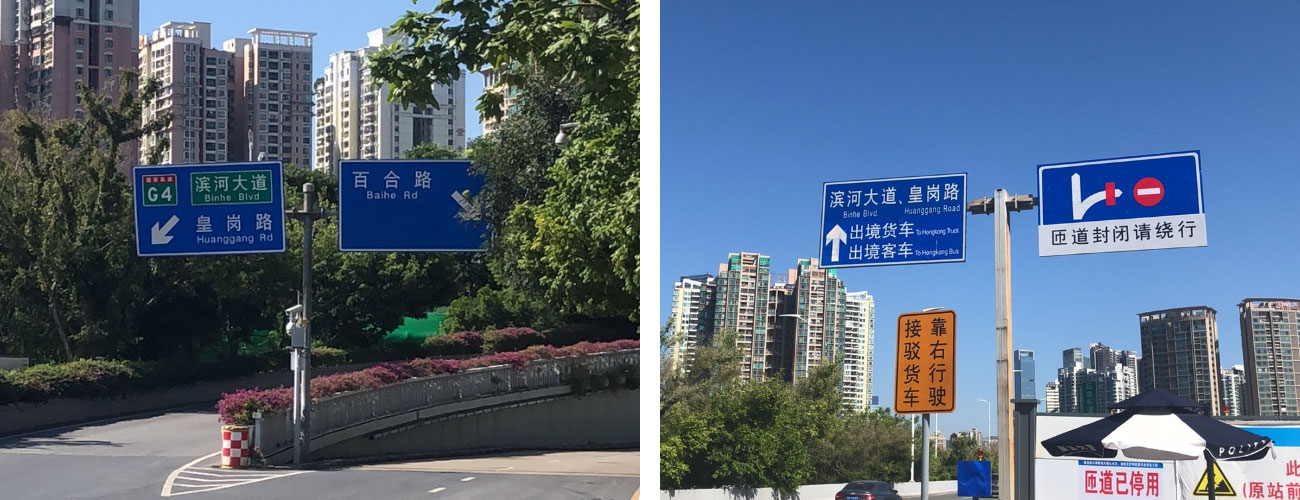
COSUN SIGN delivered the wayfinding signage system across the restricted operational areas of the port. The project covered vehicle guidance, pedestrian navigation, inspection buildings, bus transfer areas, parking facilities, emergency evacuation routes, and temporary guidance during reconstruction. The signage system forms part of the port’s transportation infrastructure, supporting continuous traffic organization during reconstruction and daily operation.
Site & Engineering Challenges
24-Hour Operation
The port remained fully operational throughout construction. Installation work was limited to short overnight windows, typically between midnight and early morning, without interrupting customs clearance or daily traffic.
Active Roadway Installation
Large overhead traffic signs were installed above live traffic lanes serving passenger vehicles, freight trucks, and cross-border buses. Lifting operations required temporary lane control, precise scheduling, and strict safety management.
Underground Utility Constraints
Underground utilities were surveyed before foundation construction. In utility-sensitive areas, weighted foundations replaced conventional embedded foundations to avoid conflicts with existing underground infrastructure.
Multi-Trade Coordination
Signage installation was synchronized with civil works, MEP systems, intelligent transportation systems (ITS), road construction, and architectural works to match the overall construction schedule.
Engineering Strategy
Temporary First, Permanent Later
Temporary directional signs, printed barricades, modular information boards, and ground markings were installed before permanent signage became available. As construction progressed, permanent signs replaced temporary facilities in stages without interrupting navigation or traffic organization.
This phased approach accommodated changing construction layouts while avoiding repeated installation of permanent structures.
Standardized Bilingual System
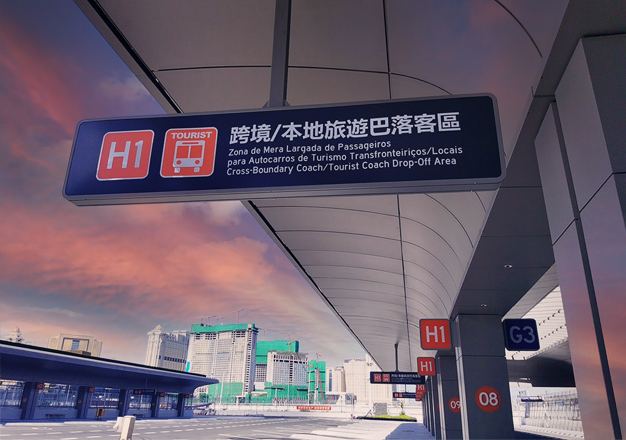
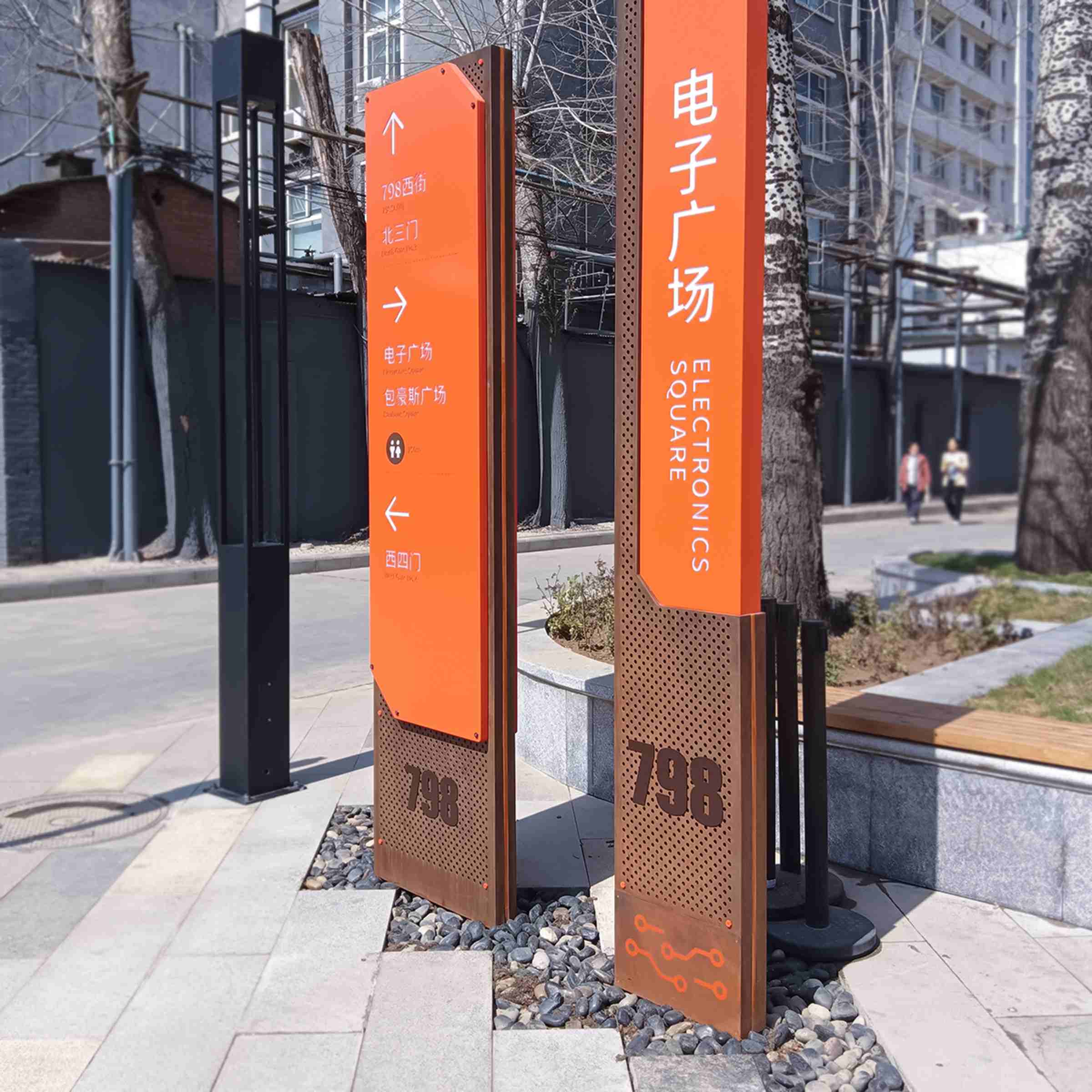
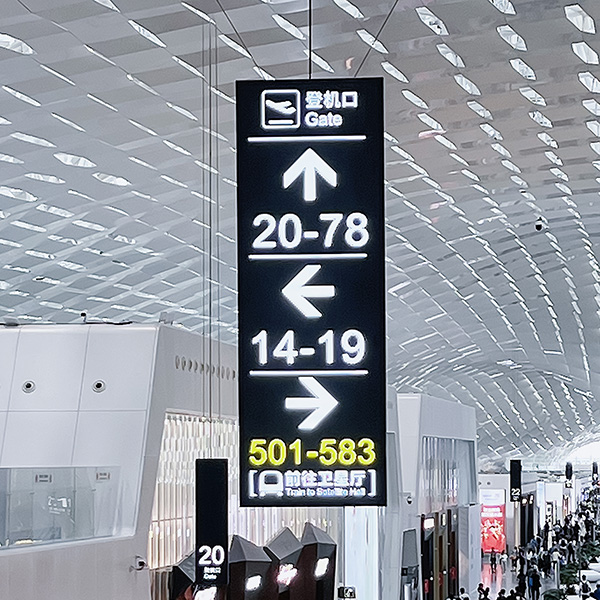
All signage followed unified Chinese and English typography, international pictograms, standardized color coding, and layouts approved by customs and border authorities. The consistent information system reduced recognition time across inspection buildings, vehicle routes, and pedestrian circulation.
Modular Maintenance Design
Traffic signs and directory totems use replaceable information panels. Future updates to traffic patterns, operational requirements, or directional information can be completed by replacing the panel rather than the entire sign structure.
Materials & Engineering Specifications
Road Traffic Signs
Material
High-strength aluminum alloy or galvanized steel.
Finish
Fluorocarbon anti-corrosion coating.
Performance
HIP or Diamond Grade (DG) reflective sheeting provides long-distance visibility in both day and night conditions.
Overhead Sign Structures
Configuration
Multi-panel cantilever and gantry structures.
Purpose
Simplifies transportation, fabrication, on-site assembly, and future maintenance while accommodating large information layouts.
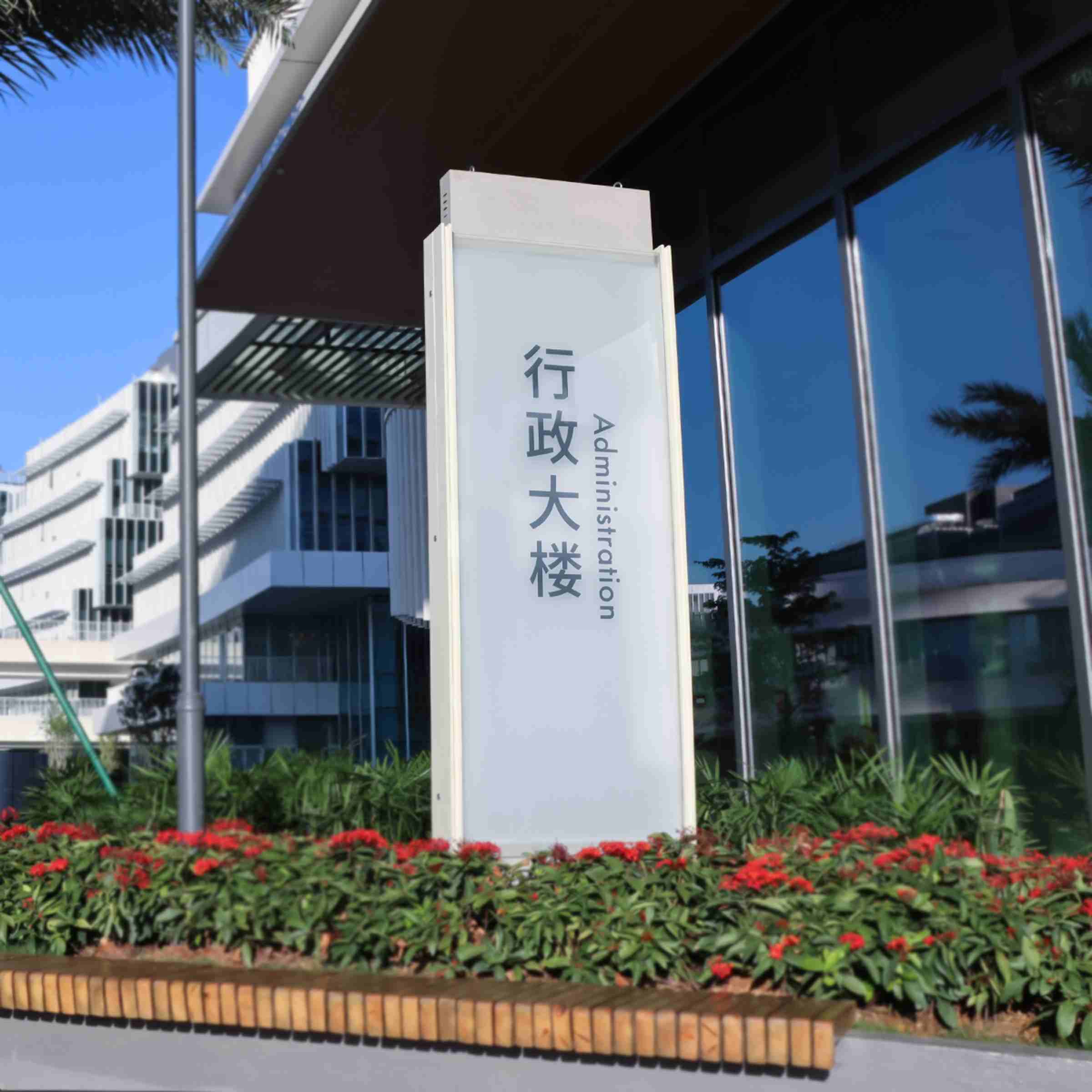
Directory Totems
Material
Stainless steel frame with acrylic information panels. Tempered glass protection is applied where required.
Illumination
LED edge-lighting with optical diffusion delivers uniform illumination for 24-hour readability.
Maintenance
Modular insert panels allow information updates without replacing the complete structure.
Ground Guidance
Material
Epoxy floor coating and heavy-duty PVC graphics.
Finish
Anti-slip, weather-resistant surface treatment.
Application
Precision templates and screen-printing ensure consistent alignment throughout pedestrian routes.
Structural Foundations
Foundation
Reinforced concrete where site conditions permit; weighted foundation systems in underground utility zones.
Protection
Protective bollards installed around freestanding signs.
Clearance
Minimum 5.5 m for overhead traffic signs.
Performance
Designed for wind resistance, seismic performance, corrosion resistance, and continuous 24-hour outdoor operation.
Installation & Coordination
Major installation work was completed during overnight low-traffic periods. Each work zone was opened, installed, inspected, and reopened before morning traffic resumed.
Overhead sign installation required coordination between crane operators, traffic management teams, safety supervisors, and installation crews. Construction sequences were planned in advance to minimize disruption.
Installation schedules were continuously coordinated with civil, electrical, ITS, and road contractors, allowing each signage section to be commissioned immediately after the associated infrastructure was completed.
Project Outcome
Since the full reopening of cross-border travel in February 2023, the completed signage system has supported daily vehicle and passenger circulation throughout Huanggang Port.
The system provides continuous guidance across inspection buildings, road networks, pedestrian corridors, parking facilities, and bus interchange areas. Reflective traffic signs, illuminated wayfinding, and bilingual information continue to support efficient traffic organization under 24-hour operation.
Lessons Learned
Temporary wayfinding should be engineered as part of the permanent delivery strategy rather than treated as a temporary construction measure.
The “Temporary First, Permanent Later” approach maintained continuous navigation throughout reconstruction while minimizing repeated installation work. The same methodology can be applied to airports, railway stations, ports, metro systems, and other transportation infrastructure that must remain operational during phased construction.
Project Specifications
| Item | Specification |
| Project Type | National Land Border Port & Cross-Border Transit Hub |
| Signage System | Traffic Signs, Pedestrian Wayfinding, Directory Totems, Ground Guidance, Emergency Evacuation, Temporary Wayfinding |
| Coverage | Vehicle Roads, Inspection Buildings, Passenger Routes, Parking Areas, Bus Interchange, Border Corridors |
| Primary Materials | Aluminum Alloy, Galvanized Steel, Stainless Steel, Acrylic, Tempered Glass, Epoxy Flooring, PVC Graphics |
| Manufacturing | CNC Fabrication, Reflective Film Application, Screen Printing, Digital Printing, LED Light Guide Assembly |
| Surface Finish | Fluorocarbon Coating, Anti-slip Treatment, Weather-resistant Finish |
| Illumination | LED Edge-Lighting System |
| Installation | Reinforced Concrete Foundations, Weighted Foundations, Galvanized Steel Structures, Modular Replaceable Panels |
| Environmental Consideration | Corrosion-resistant materials, long-life reflective sheeting, energy-efficient LED lighting, modular maintenance |
About COSUN SIGN
COSUN SIGN is a signage manufacturer in China specializing in integrated wayfinding signage systems for transportation, commercial, healthcare, education, and public infrastructure projects. Our services cover engineering design, manufacturing, installation, and lifecycle maintenance for large-scale wayfinding systems.
Build Wayfinding for Continuous Operation
Planning a border crossing, airport, railway station, metro system, or public infrastructure project?
COSUN SIGN delivers engineered wayfinding systems for phased construction, continuous operation, and long-term maintenance.

 粤公网安备44030702001648号