

















Opening a new business location should strengthen an established brand rather than create another version of it. As companies expand across cities or regions, differences in sign dimensions, colors, materials, lighting, and installation details can gradually weaken visual consistency. At COSUN SIGN, we help growing businesses address this challenge by treating signage as a standardized brand asset rather than an isolated local purchase.
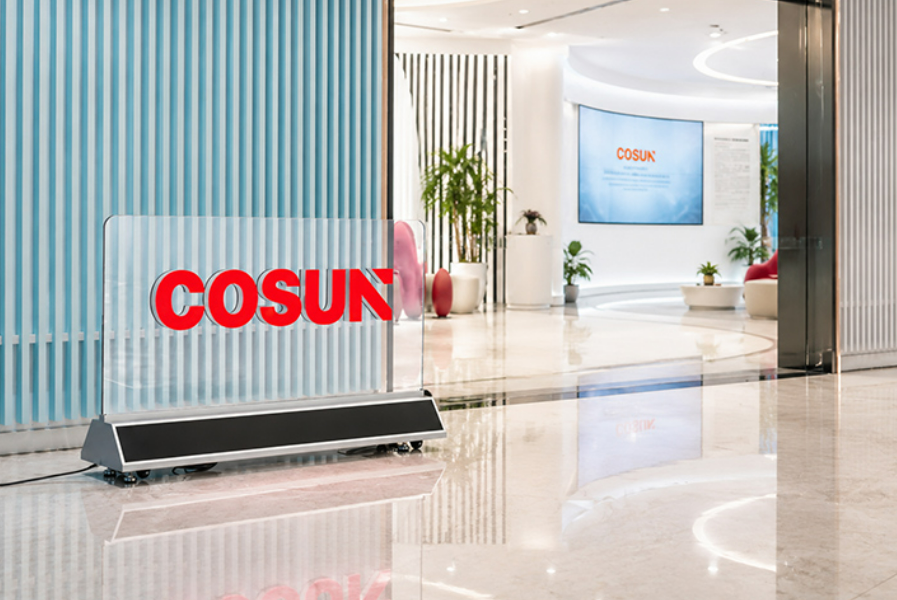
Turning a Brand Identity Into a Repeatable Signage Standard
For multi-location businesses, the first priority is creating a clear visual standard that can be reproduced as the company grows. A logo may remain unchanged, but its physical presentation can vary significantly when different suppliers interpret materials, dimensions, finishes, or lighting requirements differently.
Our approach begins by translating brand requirements into practical production specifications. This gives every future location a defined reference for sign construction instead of requiring each project team to recreate the original design.
As a direct-factory custom signage supplier, we can coordinate design requirements with manufacturing processes more closely. This connection helps reduce unnecessary variation between production batches and gives businesses a more consistent foundation for future rollouts.
Using Manufacturing Control to Maintain Visual Consistency
Multi-location branding depends on more than simply using the same artwork. Physical production also needs to remain consistent, particularly for channel letters, illuminated signs, acrylic elements, aluminum structures, and other fabricated components.
We use computer-controlled manufacturing processes where appropriate to maintain repeatable dimensions and fabrication standards. CNC processing, laser cutting, bending, and controlled LED installation can help ensure that repeated signage components follow the approved specifications.
Color is another important part of physical brand recognition. We can coordinate specified color requirements across materials such as acrylic and powder-coated aluminum so that future orders are produced according to the established brand standard rather than individual supplier interpretation.
Our custom signage services can also be supported by documented specifications covering materials, dimensions, finishes, lighting components, and mounting requirements. Once these details are established, subsequent locations can refer to the same production basis.
Replacing Local Vendor Management With One Coordinated Process
A growing company may otherwise need to communicate with different signage manufacturers in different markets. Each supplier can have its own quotation process, production methods, quality expectations, and communication practices.
That arrangement can make a multi-location rollout difficult to coordinate. A change approved for one store may not automatically be reflected at another location, while procurement teams may spend additional time comparing suppliers and managing separate production schedules.
We provide businesses with a centralized manufacturing relationship for their signage requirements. As a custom signage supplier, we can coordinate multiple orders according to an agreed specification and help maintain a consistent communication process throughout the project.
This structure does not eliminate the need for local installation or site-specific considerations. Instead, it separates manufacturing consistency from location-specific execution, making responsibilities easier to define.
Connecting Production Planning With Store Opening Schedules
Signage is often one part of a larger opening schedule that includes construction, interior fit-out, equipment installation, and final site preparation. Delays in one area can affect the entire opening process.
For multi-location projects, we can organize production around phased delivery requirements rather than treating every sign as an unrelated order. Different locations can be scheduled according to their confirmed project timelines while still following the same approved specifications.
This approach is particularly useful when a business is opening locations across several phases. The first group can enter production while later locations remain aligned with the same manufacturing standard, reducing the need to restart the design process for every new order.
Clear documentation also makes revisions easier to manage. When a site requires an adjustment because of architectural conditions or local installation requirements, the change can be evaluated against the established brand standard before production proceeds.
Making Scale Work for Procurement and Budget Management
Expansion naturally changes the economics of signage procurement. Producing individual signs for separate locations may involve repeated setup work, communication, material purchasing, and production coordination.
Larger coordinated orders can create manufacturing efficiencies because similar components can be planned and produced together. The actual cost benefit depends on specifications, order structure, materials, shipping requirements, and project timing, so each rollout should be evaluated according to its specific conditions.
We focus on making these production efficiencies practical for growing businesses rather than relying on generalized pricing claims. A standardized design can also reduce repeated engineering and approval work when additional locations use the same signage system.
For procurement teams, this creates a clearer basis for comparing future orders. Instead of starting from an entirely new specification every time, they can work from an established signage framework and modify only the elements that genuinely need to change.
Reducing Maintenance Complexity After Installation
The operational value of standardized signage continues after installation. When multiple locations use unrelated sign designs or components, maintenance teams may need to identify different materials, LED modules, power components, and structural details.
A consistent signage specification can simplify this process. Replacement components can be selected according to the established system, while maintenance teams have a clearer understanding of what was originally supplied.
Our custom signage services can support this type of long-term standardization by maintaining consistency in the components and construction methods used across repeat orders. This does not mean every site must use identical hardware, since local conditions may require appropriate adjustments.
Instead, the objective is to minimize unnecessary variation. When a replacement or future order is required, the original specifications provide a practical reference for identifying compatible components.
Keeping Future Locations Aligned With the Original Brand
A successful signage program should remain useful beyond the first expansion phase. Businesses may change store formats, enter new markets, renovate existing locations, or introduce updated branding while still needing continuity with their established identity.
For this reason, we treat the master signage specification as a working reference rather than a one-time production document. When a business updates its logo, colors, materials, or lighting approach, the specification can be revised so that future projects use the latest approved version.
This also helps distinguish intentional brand evolution from accidental inconsistency. A new sign should look different because the brand has changed, not because a new supplier interpreted the existing requirements differently.
As a direct custom signage supplier, we combine manufacturing capability with repeat-order coordination so that businesses can manage signage as part of a broader expansion system. The result is a more structured process for adding locations without rebuilding the signage workflow each time.
Building a More Manageable Multi-Location Signage Strategy
Multi-location branding becomes easier to manage when design, manufacturing, procurement, delivery, and maintenance are connected through consistent standards. The objective is not to make every location completely identical regardless of its environment, but to ensure that necessary local adaptations do not compromise the core visual identity.
We help businesses establish that balance through repeatable fabrication, centralized communication, documented specifications, coordinated production, and component consistency. These practices give internal teams a clearer framework for managing signage as the business continues to expand.
For growing companies, this approach can also reduce unnecessary administrative work. Instead of treating every new storefront as a completely separate signage project, teams can build upon an established system and focus their attention on the location-specific decisions that actually require review.
Supporting Brand Expansion Through Controlled Manufacturing
The physical sign represents a brand in every location where customers encounter it. Maintaining that representation requires more than attractive design; it requires a manufacturing process capable of reproducing approved details consistently while accommodating practical project requirements.
COSUN SIGN provides OEM/ODM signage manufacturing and supports businesses that require repeatable custom signage for multiple locations. Our role is to connect brand requirements with controlled fabrication, coordinated production, and practical project management.
By working from established specifications and maintaining communication between design and manufacturing, we help businesses create a signage process that can support expansion without introducing unnecessary variation. For companies planning their next group of locations, COSUN SIGN offers a structured manufacturing partnership for companies that need consistent custom signage across multiple locations and future rollout phases.

 粤公网安备44030702001648号