

















Wayfinding is often described as helping people get from one place to another, but the real challenge is broader. Visitors need to understand their current position, identify possible destinations, make route decisions, confirm that they are still moving correctly, and recognize the destination when they arrive. Custom wayfinding signage supports this sequence through a coordinated hierarchy of identification, directional, directory, floor-level, room, and digital information products.
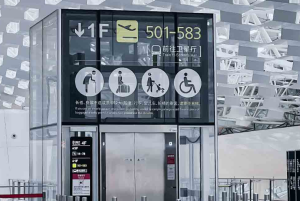
A user-friendly public space does not necessarily have more signs. It has the right signs in the right places, using a visual language that people can learn as they move. Digital and interactive products are added where information changes frequently or where users face many destination choices, while stable information remains on durable physical signage.
What Wayfinding Signage Actually Needs to Accomplish
The practical wayfinding signage meaning is broader than a directional arrow. A complete system helps people understand where they are, decide where to go next, confirm that they are still following the correct route, and recognize the destination when they arrive. If any one of these steps is missing, visitors may still become confused even when individual signs look attractive.
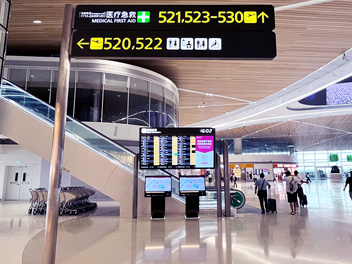
This is why custom wayfinding signage is usually organized as a hierarchy. Building identification and pylons provide the macro layer. Directories and directional signs support route decisions. Floor-level information narrows the search, and room or destination signs provide final confirmation. The system becomes easier to learn when typography, arrows, icons, color coding, naming conventions, and mounting logic remain consistent across all of these sign types.
Choosing Static, Digital, and Interactive Wayfinding by Information Type
Not every message benefits from a screen. Permanent building names, restroom identification, exits, room numbers, and long-term directions are usually better served by durable static signage because they remain available without power and require limited updating. Digital displays become more useful when tenant directories, event information, temporary routes, or other operational content changes frequently.
Interactive kiosks add value at high-choice decision points where users may need to search many destinations. A shopping-mall entrance, large office complex, mixed-use development, or industrial-park visitor center can justify a searchable interface. A simple corridor with one or two destinations usually does not. Understanding this distinction is central to the wayfinding signage meaning from a procurement perspective: each product should solve a defined navigation task.
Applying Wayfinding Principles in High-Value Commercial Environments
Shopping centers need to connect entrances, parking links, anchor stores, vertical circulation, restrooms, and service areas without overwhelming shoppers. Office buildings and mixed-use developments need to separate public, tenant, retail, hotel, parking, and service journeys. Industrial parks often need a longer route that begins at the gate, continues through roads and building identification, and ends with lobby or floor-level information for first-time visitors, suppliers, and contractors.
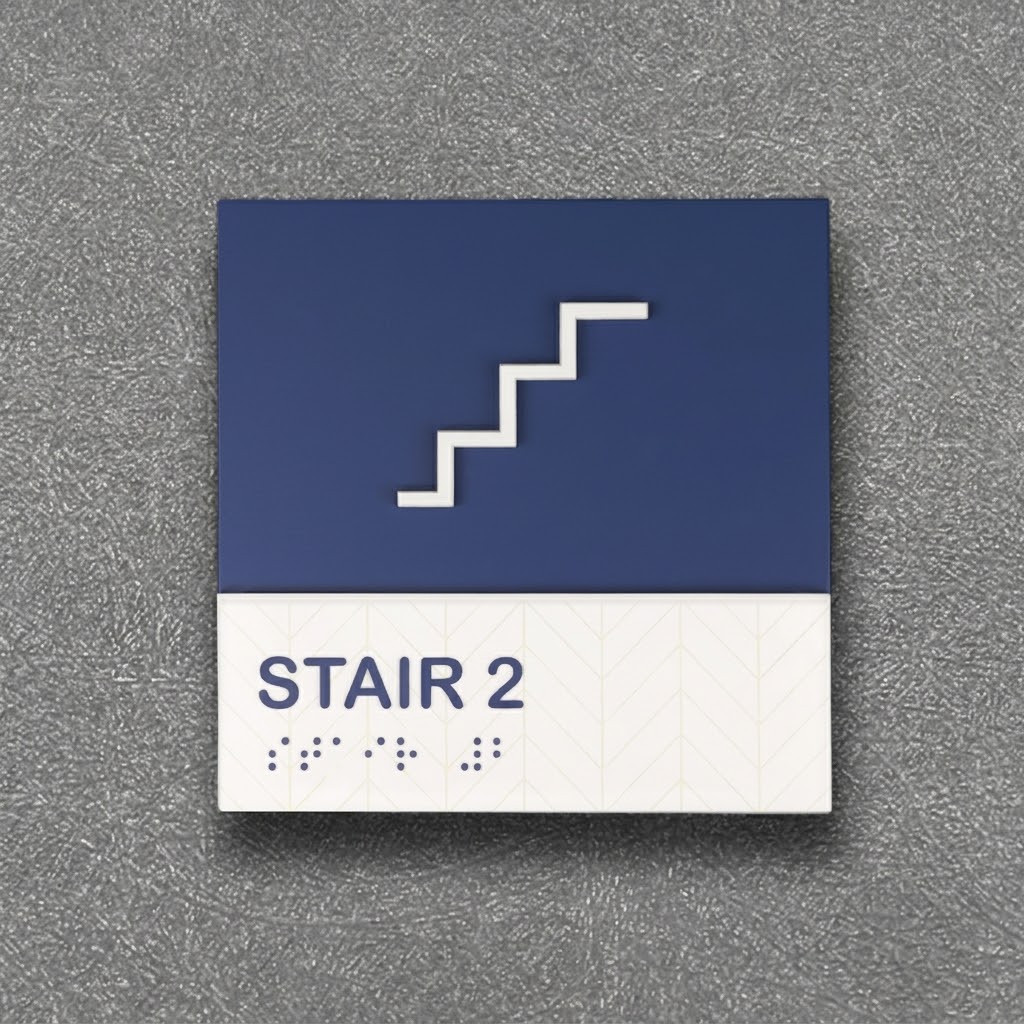
In each environment, accessibility and readability should be planned from the beginning. Tactile or Braille signs, text size, contrast, symbols, viewing distance, and mounting height can influence how well different users understand the system. Local code requirements should be confirmed for the destination market rather than assumed from another project.
Creating a Wayfinding System People Can Learn as They Move
Good custom wayfinding signage does not try to place the maximum amount of information on every surface. It gives people the right amount of information at the point where a decision is required and then confirms the route in a consistent visual language. Digital wayfinding adds flexibility where information changes or search is useful, but it remains one part of the wider spatial communication system.
For complex commercial and public environments, COSUN SIGN can manufacture coordinated physical and digital signage products around the project’s architecture, user journeys, branding, accessibility requirements, and update frequency.

 粤公网安备44030702001648号