

















Signage procurement involves more than selecting a logo format, material, or illuminated display. The real difference often appears behind the finished product: how the design is engineered, where components are manufactured, how quality is controlled, and who remains responsible when project requirements change. At COSUN SIGN, we approach signage as a complete manufacturing project rather than a simple assembly process. Our experience in custom production, metal fabrication, CNC processing, and project coordination allows us to develop signage around specific brand, architectural, and installation requirements.
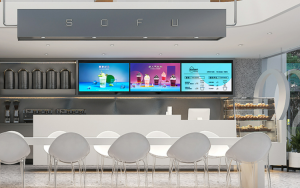
Manufacturing Control Starts Behind the Finished Sign
A professional custom signage fabricator should be evaluated by more than the appearance of its completed products. Manufacturing capability determines how accurately a supplier can reproduce approved designs and how effectively it can respond when a project involves non-standard dimensions, materials, structures, or finishes.
We place importance on controlling key manufacturing processes within our own production system. Metal components, structural parts, and other fabricated elements can be developed according to the technical requirements of a project rather than being limited to a fixed catalog of standard components.
This approach provides greater control over production coordination. When different fabrication processes need to work together, keeping them within an integrated manufacturing workflow can reduce communication gaps between separate suppliers and make technical adjustments easier to manage.
For B2B customers, this matters particularly when signage is being developed for multiple locations. Consistent drawings, specifications, materials, and production procedures provide a stronger foundation for maintaining visual consistency throughout a rollout.
Precision Manufacturing Turns Design Files into Repeatable Products
A custom project is only successful when the approved design can be translated accurately into physical products. Manual fabrication can be appropriate for certain applications, but projects involving repeated dimensions, complex letterforms, or detailed components require controlled manufacturing processes.
As a custom signage maker, we use CNC-based production and other fabrication methods where appropriate to improve dimensional consistency. Digital production files can guide cutting, machining, bending, and other processes, helping reduce unnecessary variation between components.
This is especially relevant for corporate logos and branded signage. A small change in letter proportions, spacing, depth, or finish may become noticeable when the same identity is displayed across many locations.
Precision does not mean every project should follow the same production method. Instead, we determine the appropriate process according to the material, structure, design, installation conditions, and required finish.
Engineering Should Come Before Production
Standard sign manufacturers may focus primarily on producing a defined range of products. Professional custom work requires a different starting point because the sign itself must often be adapted to its installation environment.
We consider factors such as mounting surfaces, dimensions, structural requirements, electrical arrangements, weather exposure, access for maintenance, and transportation before production begins. These considerations can influence both the internal construction and the external appearance of a sign.
For illuminated signage, the relationship between the face material, internal structure, lighting arrangement, power requirements, and access points also needs to be considered during development. Addressing these details early can prevent avoidable modifications after manufacturing.
This engineering-oriented process gives customers a clearer connection between design intent and final installation. Rather than simply producing a visual concept, we work toward a specification that can be manufactured, transported, installed, and maintained.
Quality Control Needs to Be Part of the Process
Quality cannot be determined only by looking at a sign after it has arrived at a project site. Production-stage controls are important because correcting a problem before shipment is generally more practical than discovering the same issue after installation.
Our manufacturing workflow incorporates visual checks and functional checks appropriate to the signage type before products are prepared for delivery. For illuminated signs, this includes checking the lighting system and overall finish before shipment.
The purpose of these procedures is not to suggest that every possible installation issue can be eliminated at the factory. Site conditions, transportation, installation methods, and local requirements can also affect the final result. Instead, factory-level quality control provides an important opportunity to identify manufacturing-related issues before the product leaves the production environment.
For distributors and international buyers, this process also improves communication. Clear inspection procedures and production documentation make it easier to establish expectations before products are shipped.
OEM and ODM Capability Changes the Supplier Relationship
A professional custom signage fabricator can provide value beyond manufacturing individual signs. For distributors, contractors, and brand owners, the supplier may become part of a broader product-development and sourcing process.
OEM projects require the manufacturer to follow customer specifications accurately. ODM projects may involve a deeper level of cooperation, including design development, material selection, structural decisions, and production optimization.
We support this type of cooperation by connecting design considerations with manufacturing capabilities. When a customer needs to modify dimensions, materials, finishes, mounting methods, or other specifications, an integrated production team can evaluate how those changes affect the final product.
This creates a more practical communication process between the buyer and factory. Instead of treating design and manufacturing as completely separate stages, both can be considered together when developing a custom solution.
Production Scalability Requires Process Consistency
A prototype and a large production order create different manufacturing challenges. Producing one approved sample is not enough to demonstrate that a supplier can maintain the same standards throughout a larger project.
A reliable custom signage maker needs production procedures that can be repeated. Material specifications, color references, fabrication drawings, component standards, assembly methods, and inspection requirements should be documented clearly enough to guide subsequent production.
We use this principle when supporting projects that involve multiple signs or locations. The objective is not simply to produce a large quantity but to maintain the approved design and technical specifications throughout the manufacturing process.
At the same time, scalability should not eliminate flexibility. Commercial signage projects can change during development, and a capable manufacturer needs to assess revisions without losing control of the overall production process.
Long-Term Value Depends on the Complete Specification
The lowest quotation does not necessarily represent the lowest project cost. Signage has to function within a particular environment, and material or component decisions can influence maintenance requirements, appearance, and serviceability over time.
At COSUN SIGN, we therefore consider material selection according to the application. Aluminum, acrylic, stainless steel, LED components, coatings, and other materials may each be appropriate under different conditions. The correct choice depends on factors such as exposure, structure, design requirements, expected maintenance, and budget.
This approach differs from choosing components simply because they have the lowest initial price. A professional manufacturer should explain how material and construction decisions affect the finished sign so that buyers can evaluate the complete specification rather than comparing quotations based only on the headline price.
Lifecycle considerations are particularly important for exterior signage. Weather exposure, mounting conditions, electrical access, and structural design all influence how a sign performs after installation.
One Manufacturing Partner Can Simplify Project Management
Large signage projects often involve designers, manufacturers, distributors, installers, property owners, and brand teams. When responsibility is divided among too many suppliers, communication can become more complicated.
As a professional custom signage fabricator, we aim to connect the major stages of the project through one coordinated manufacturing partner. Design information can be reviewed alongside production requirements, and technical questions can be addressed before they become manufacturing problems.
This does not remove the need for local installation expertise or project-specific coordination. Instead, it creates a clearer division of responsibility between the factory and other project participants.
For B2B customers, this can make supplier management more straightforward. A single manufacturing partner can provide a consistent point of communication for specifications, production progress, quality requirements, packaging, and technical support.
A Manufacturing Partner Should Be Measured by More Than Price
The difference between a standard sign manufacturer and a professional custom signage maker is ultimately reflected in how the entire project is handled. Manufacturing control, precision processes, engineering support, quality management, production scalability, material selection, and coordinated project support all influence whether the finished signage can meet the approved requirements consistently. For B2B buyers, these capabilities provide a more reliable basis for evaluating a manufacturing partner beyond unit price alone.

 粤公网安备44030702001648号