

















Creating accessible commercial building designs involves many details. In order to meet ADA signage requirements throughout your building, you must familiarize yourself with the ADA sign requirements for each sign you intend to install in public areas of your building. All signs in a facility with people who are blind and others with disabilities must meet ADA sign requirements.
This guide outlines the ADA sign requirements and goes into considerable detail on creating suitable, accessible, and effective ADA-compliant signs that are not only functional but also visually appealing.
Overview of ADA Signs
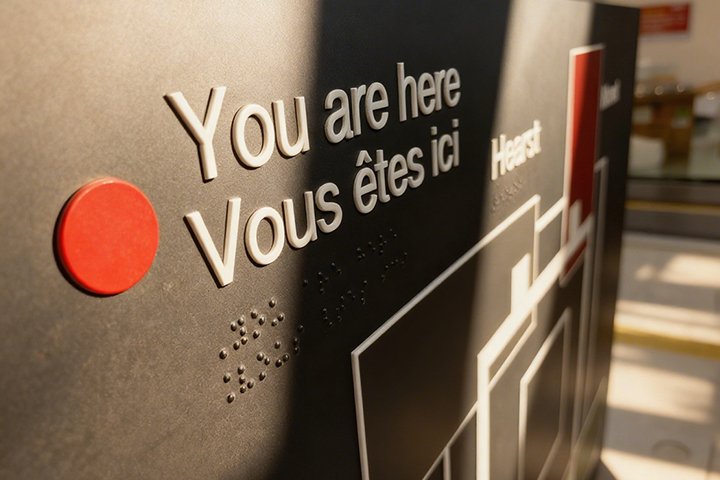
An ADA sign is an architectural element specifically designed and manufactured to comply with the regulations outlined in the Americans with Disabilities Act (ADA). These signs incorporate specific visual and tactile features, such as high-contrast colors, raised characters, and Braille, to ensure that information is accessible to individuals with visual or cognitive disabilities.
Where Are ADA Signs Required?
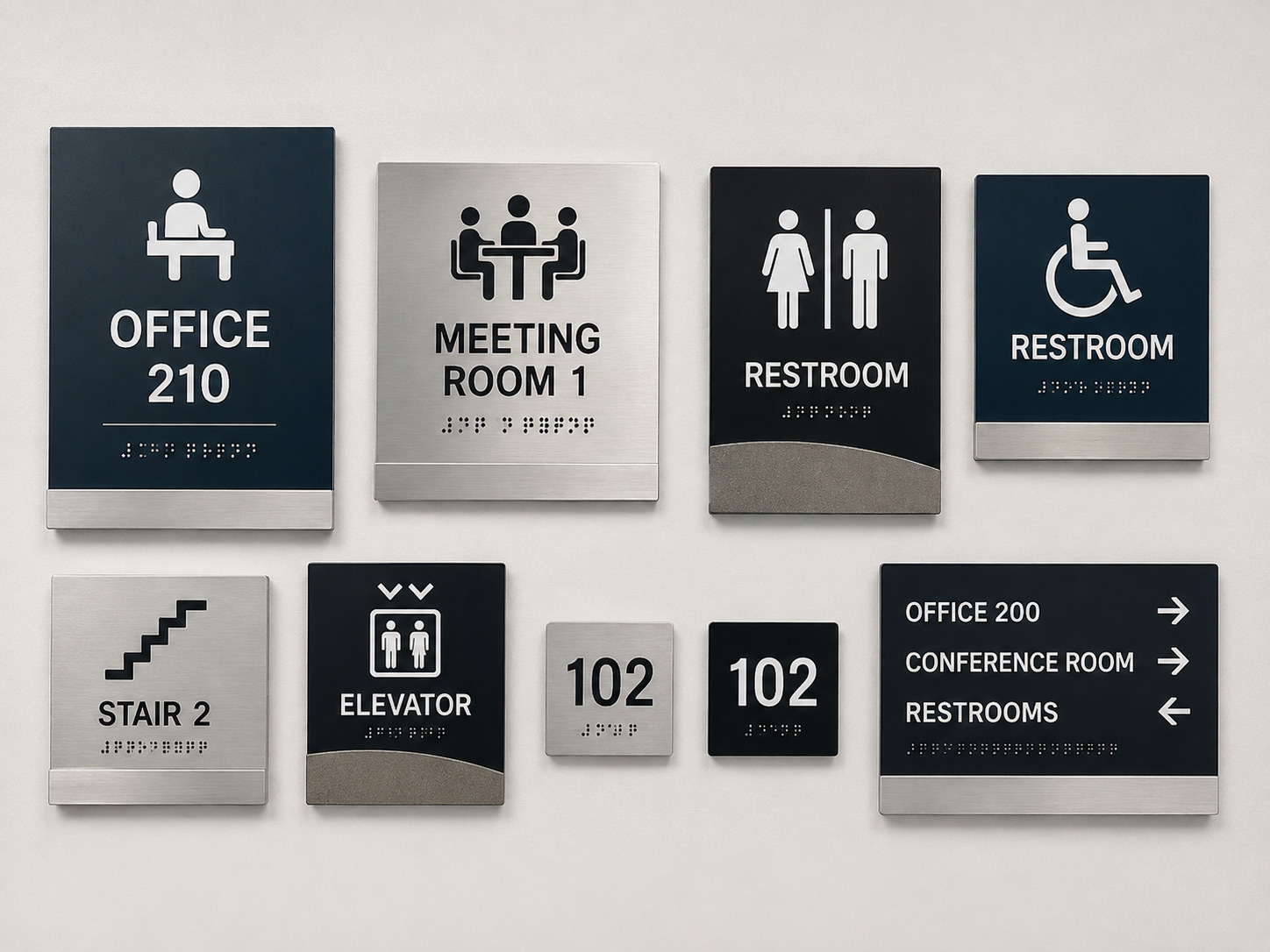
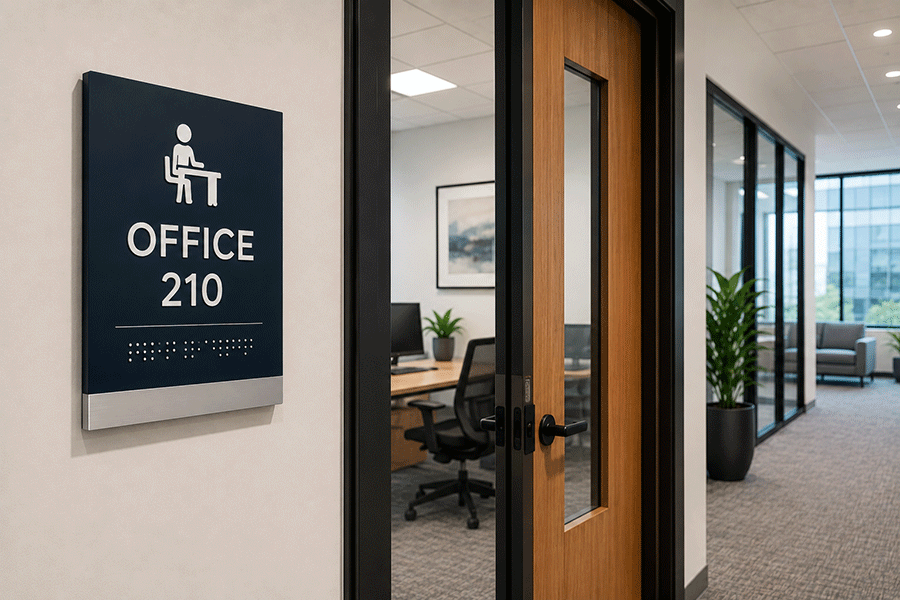
Under the 2010 ADA Standards, signs identifying permanent interior and exterior rooms and spaces are subject to accessibility requirements where provided.[1] Examples include room numbers, room names, restrooms, locker rooms, conference rooms, libraries, cafeterias, and other permanent spaces.
This is why ADA room number signs and ADA room signs are common in:
- Office buildings
- Hotels
- Healthcare facilities
- Educational facilities
- Government buildings
- Retail and commercial properties
- Public facilities
Other required signs include certain signs identifying accessible entrances, toilet and bathing facilities, parking spaces, exits, elevators, and other accessible elements. The exact requirements depend on the facility and sign type.
Exempted Areas from ADA Rules
Not every sign in a building falls under these strict mandates. The Access Board identifies several categories that are generally exempt from the visual and tactile requirements of Section 216, including building directories, menus, occupant names, building addresses, company names and logos, and temporary signs posted for seven days or less. Certain signs in non-public areas of detention and correctional facilities are also exempt.
These exemptions should not be interpreted as a blanket exemption for an entire building. Each sign should be evaluated based on its purpose and location.
Why ADA Signs Matter
ADA signs are essential for the following reasons:
1. Legal Compliance
Failing to install sufficient, proper signs on facilities can result in severe federal fines and costly civil actions for the property owner.
2. Accessibility
The main reason people with visual impairments or low vision need equal access to facilities and to wayfinding information is because accessibility is a fundamental civil right. Properly designed ADA signs provide this.
3. User Experience
Clear signage benefits a broad range of users. Consistent room numbering, recognizable symbols, readable typography, and logical placement can make a facility easier to navigate.
4. Cost-Effectiveness
Planning an ADA sign system early can reduce the risk of costly redesigns, replacement signs, or installation changes later in a project.
5. Social Responsibility
Accessible environments support more inclusive public and commercial spaces. Compliance is therefore more than a technical exercise: it is part of creating buildings that can be used more independently by people with different abilities.
Tactile Sign Requirements
Tactile information is one of the most recognizable features of an ADA sign. It should satisfy the following requirements:
1. Raised Characters
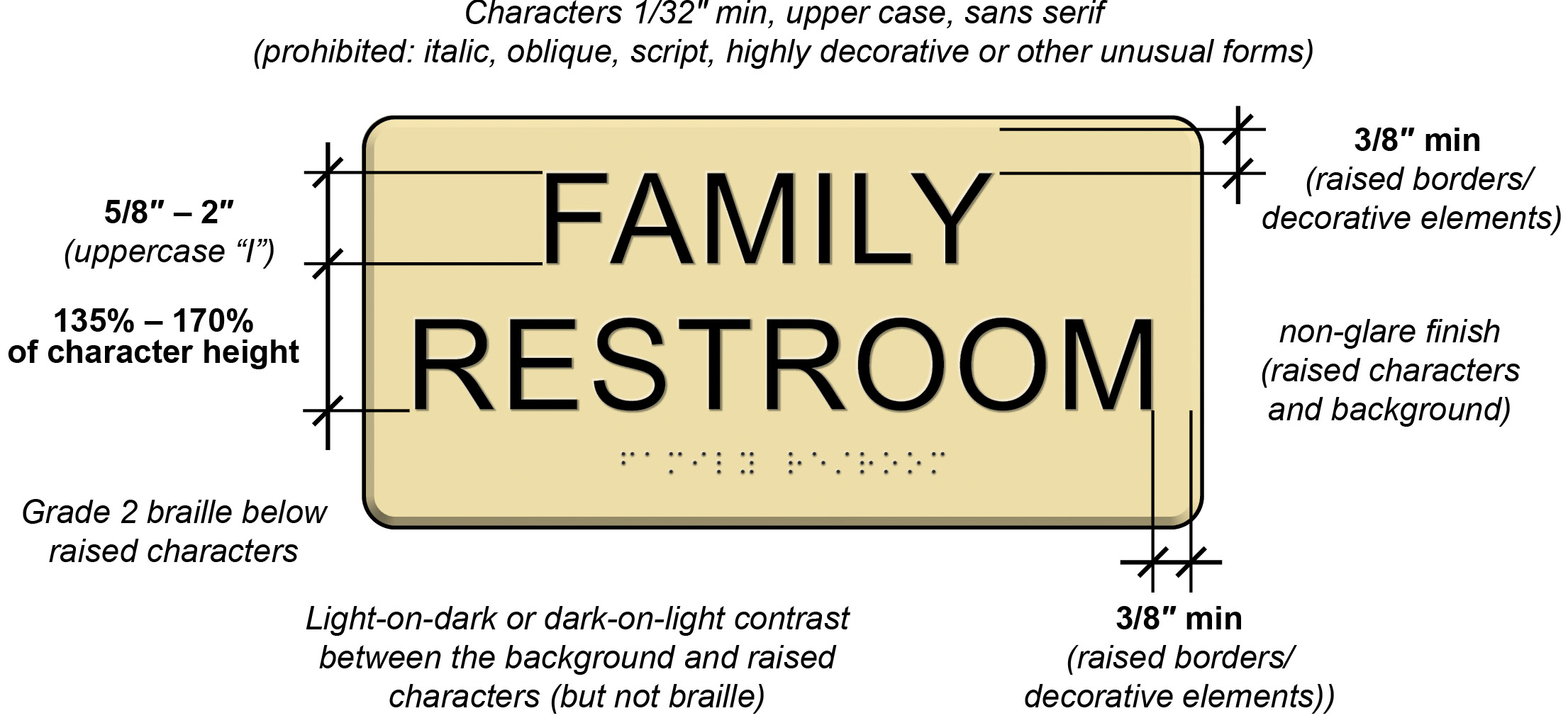
Raised characters must project at least 1/32 inch (0.8 mm) above the background. They must be uppercase, use a sans-serif style, and avoid italic, oblique, script, highly decorative, or unusual forms. Character proportions and spacing are also regulated.
For visual and tactile characters on the same sign, the standard specifies a character height of 5/8 inch to 2 inches, measured using the uppercase “I.”
2. Braille Standards
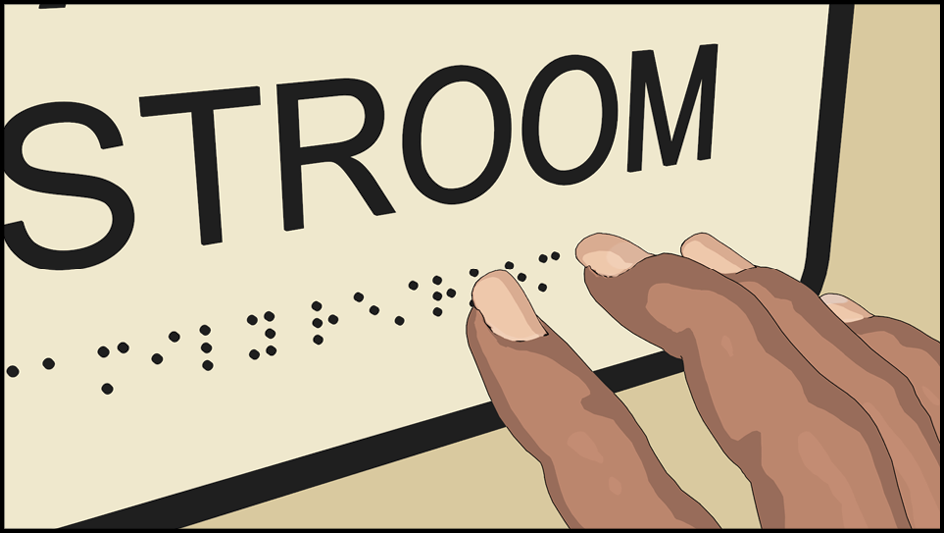
Most tactile room and space signs must include ADA braille signs with contracted Grade 2 Braille. Grade 2 Braille uses contractions for common words and letter combinations. The Braille dots must be rounded or domed and manufactured with accurate dot height, diameter, spacing, and cell alignment.
3. Mounting Height & Location
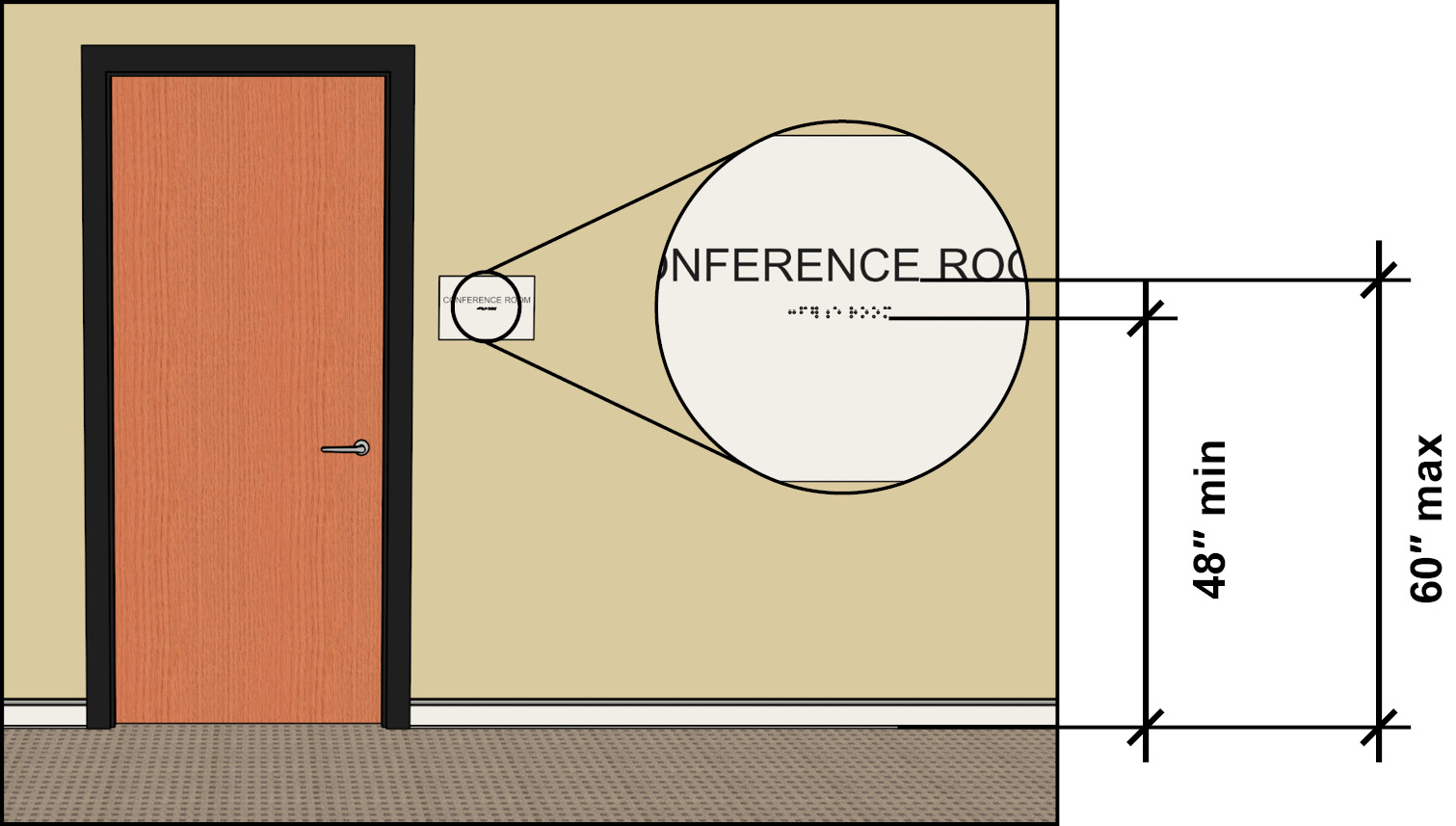
The lowest point of the lowest tactile character must be at a baseline of at least 48 inches above the finished floor. The highest point of the highest tactile character must be at a baseline of no higher than 60 inches above the finished floor. There must also be an unobstructed clear floor space of at least 18 by 18 inches, measured to the center of the lowest and highest tactile characters.
At single doors, the sign is generally placed on the latch side. If there is no wall space on that side, it may be installed on the nearest adjacent wall. The sign must be positioned outside the door swing so that a person can approach and read it safely.
Visual Sign Requirements
Directional and informational signs generally need to comply with visual requirements when they are provided.
1. Finish and Contrast
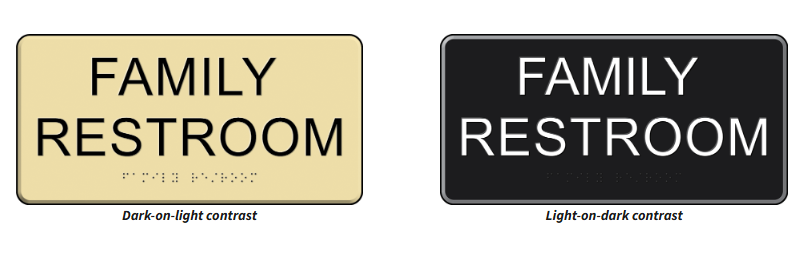
For visual characters and backgrounds, ADA signage must be non-glare and either light-on-dark or dark-on-light to be readable. While the 2010 ADA Standards do not identify a single numerical contrast ratio applicable to all visual characters, greater contrast typically improves legibility.
A sign with a glossy surface, a reflective metal surface, a textured background, or inadequate contrast will not be easily readable in changing light conditions.
2. Character Style and Height
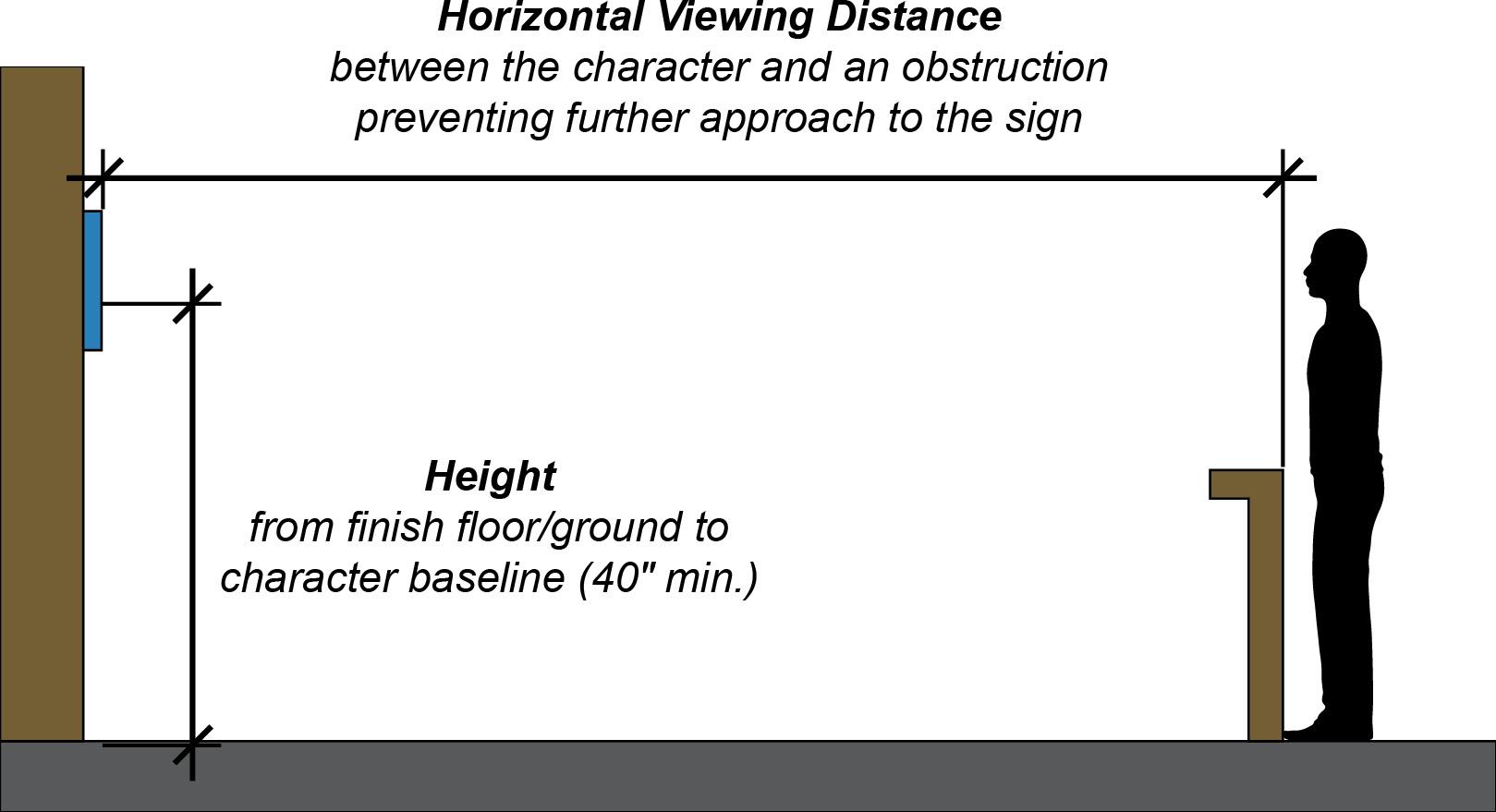
Visual lettering should use a conventional typeface. Italic, oblique, script, and highly decorative styles are generally unsuitable for required visual information. Character height depends on the sign’s mounting height and horizontal viewing distance.
Refer to the table below for details:
| Height | Viewing Distance | Min. Character Height |
| 40″ – 70″ | under 6′ | 5/8″ |
| 6′ or more | 5/8″ + 1/8″ per foot of viewing distance above 6’ | |
| above 70″ to 10′ | under 15′ | 2″ |
| 15′ or more | 2″ + 1/8″ per foot of viewing distance above 15′ | |
| above 10′ | under 21′ | 3″ |
| 21′ or more | 3″ + 1/8″ per foot of viewing distance above 21′ |
3. Mounting Height Requirements
Visual characters must generally be positioned at least 40 inches above the finished floor or ground. This requirement differs from the 48-to-60-inch tactile-character range. Therefore, a combined visual and tactile sign needs to be designed as a complete system rather than as ordinary printed signage with Braille added later.
Pictogram Signs Requirements
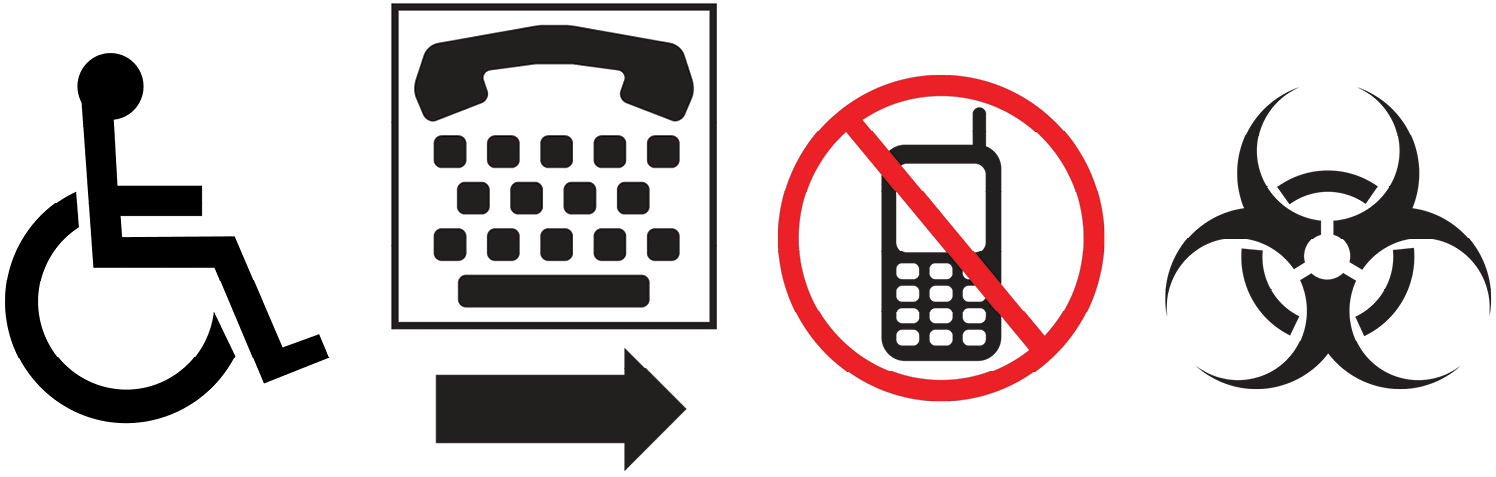
Pictograms are commonly used to identify restrooms, facilities, and other destinations. They should meet the following requirements:
1. Pictogram Field
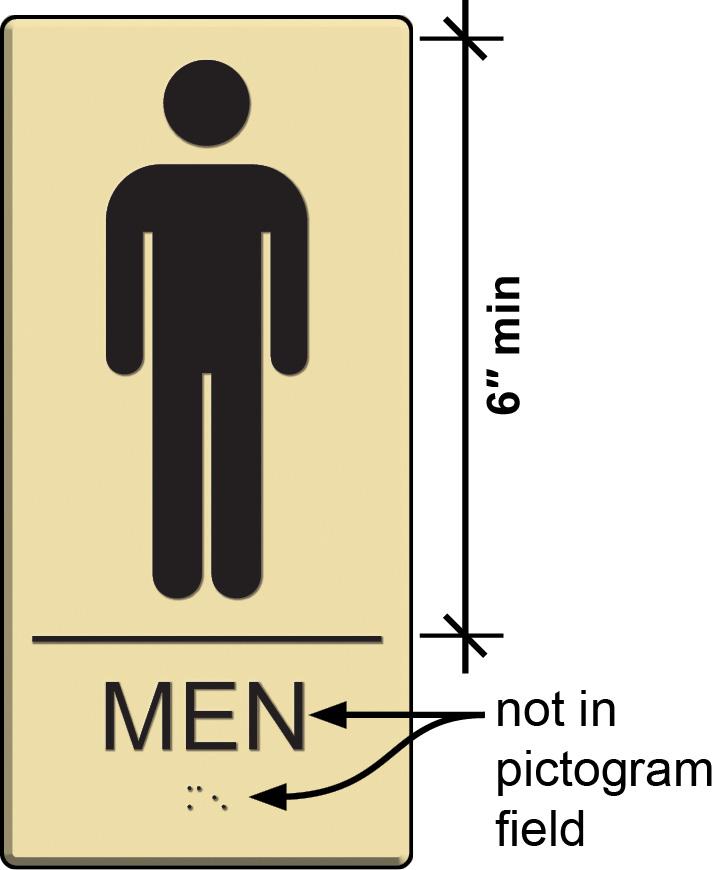
When a pictogram is used to designate a permanent room or space, the pictogram field must generally be at least 6 inches high. Raised characters and Braille should not be placed inside the pictogram field.
2. Visual Compliance for Pictograms
Pictograms and their fields should have non-glare finishes and clear light-on-dark or dark-on-light contrast. The pictogram itself does not necessarily need to be raised when used as a room designation, but the associated text descriptor must follow the tactile requirements.
3. Text Descriptors
Where a pictogram is used to designate a permanent interior room or space, it must have an equivalent text descriptor. The text descriptor is positioned directly below the pictogram field and is subject to the applicable tactile and visual requirements.
Manufacturing and Material Considerations
Meeting ADA sign requirements involves more than choosing the right text. Manufacturing decisions can affect tactile quality, contrast, durability, appearance, and installation.
1. Sign Materials
Common material options for custom signage include:
- Acrylic: Suitable for versatile, cost-conscious interior applications and layered visual designs.
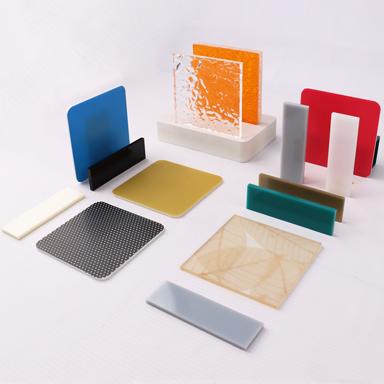
- Polycarbonate, PVC, and PC: Useful where impact resistance, lightweight construction, or flexible fabrication is needed.
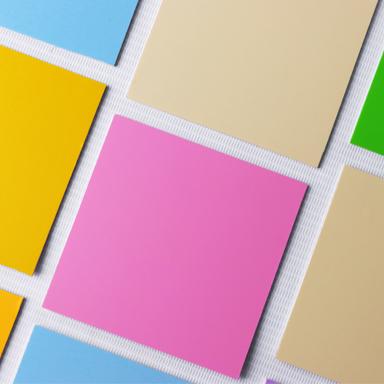
- Stainless steel and aluminum: Durable metal options for commercial, institutional, and premium architectural environments.
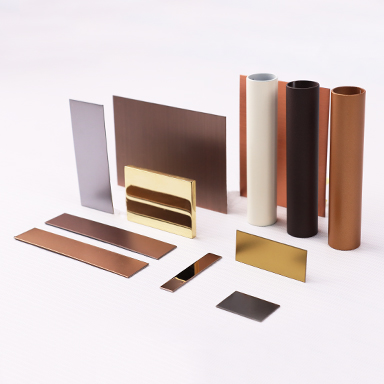
- Copper, brass, and iron: Suitable for projects seeking a traditional, decorative, or high-end metal appearance.
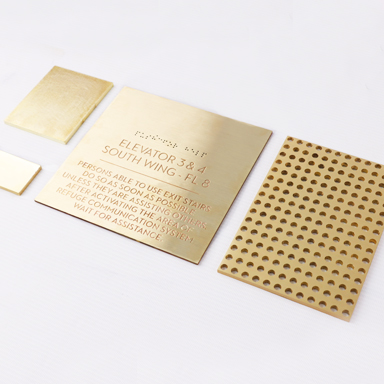
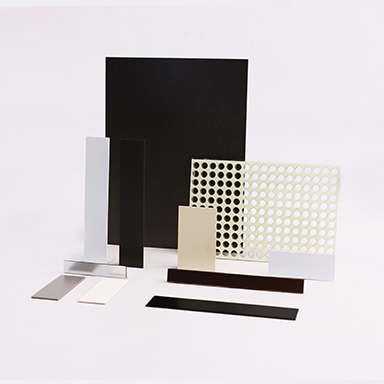
- Rowmark materials: Engraving materials commonly used for tactile room signage and Braille applications.
2. Surface Finish
Surface finish is equally important. Options may include:
- Electroplated: Provides a sophisticated, metallic sheen.

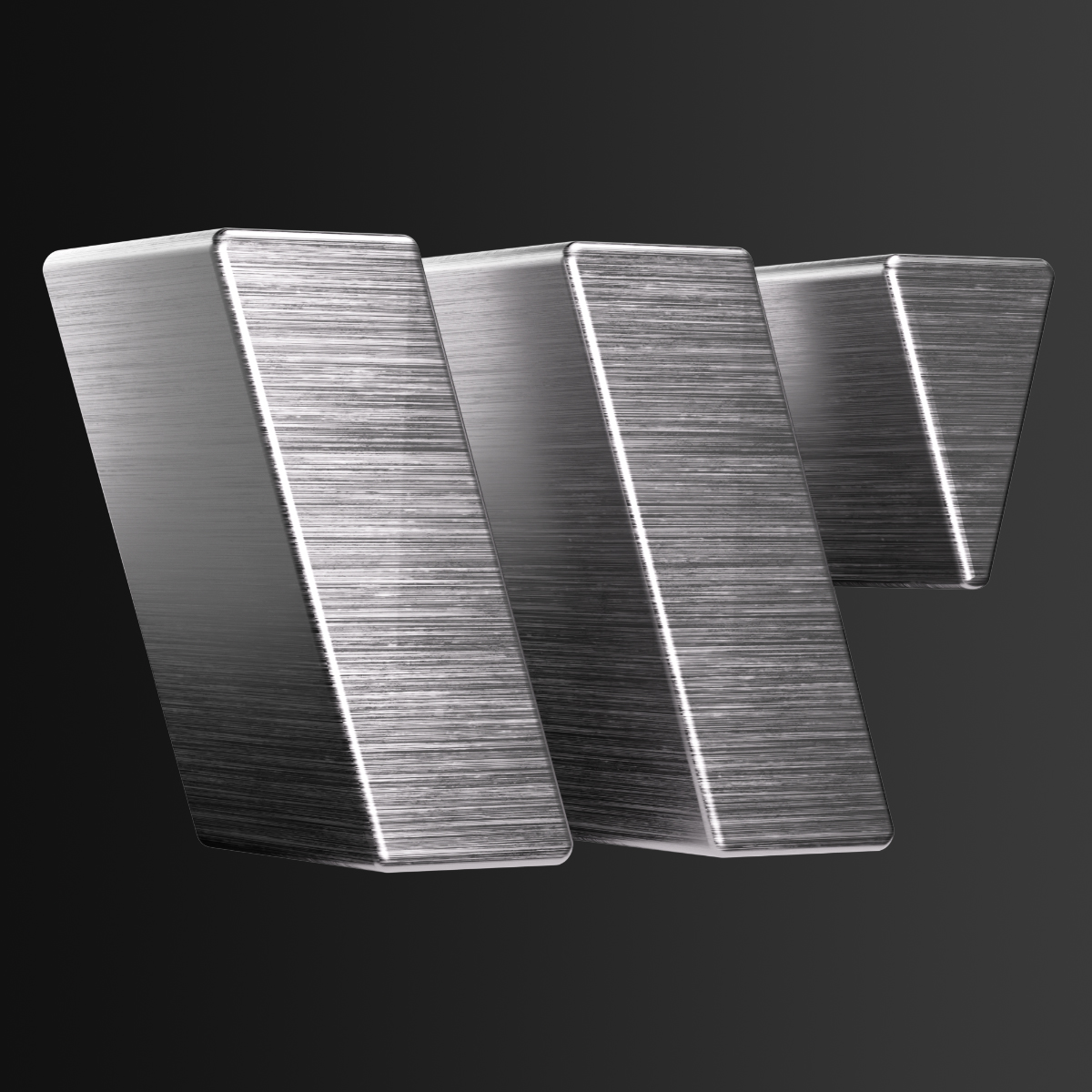
- Brushed: Offers a refined texture that naturally reduces glare, making it highly suitable for an ADA sign.
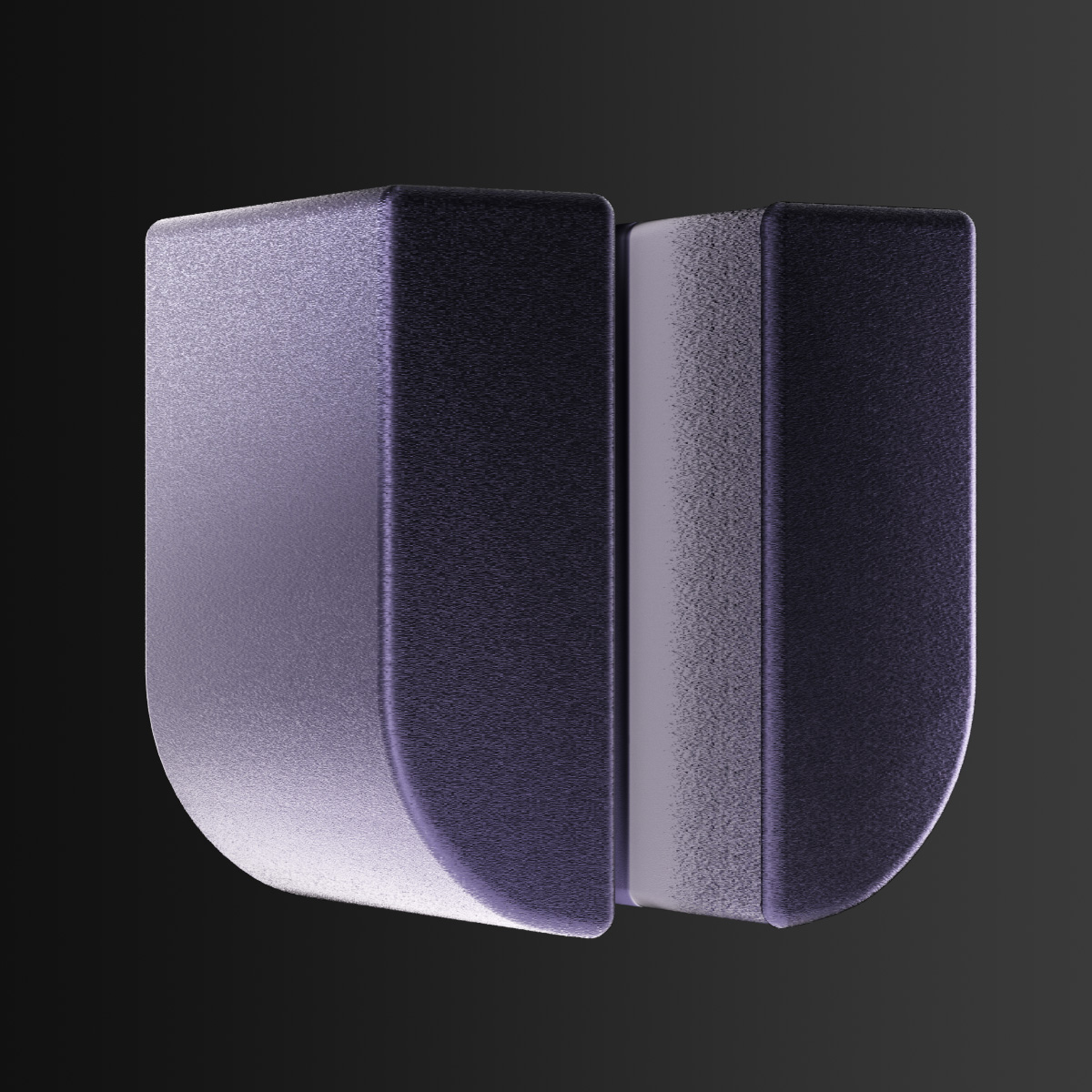
- Sand Blasting: Creates a matte, non-glare surface that perfectly complies with ADA visual contrast rules.
State and Local Variations
While federal ADA guidelines provide a baseline, certain states enforce stricter building codes, such as California and Texas.
| Feature | Federal ADA Standards | California (CBC Title 24) | Texas (TAS) |
| Restroom Signs | Single wall sign with tactile text and Braille. | Requires TWO signs: A geometric door sign (circle/triangle) PLUS a standard tactile wall sign. | Closely mirrors Federal ADA with strict enforcement on mounting placement. |
| Braille Spacing | Standard ADA spacing guidelines. | Stricter California-specific spacing for Braille dots (Title 24 spacing). | Follows Federal ADA spacing guidelines. |
| Mounting Height | 48″ min to 60″ max to baseline of tactile characters. | Strict adherence to the 48″-60″ rule, but dual sign placements require careful coordination. | Closely monitors location relative to double doors and push-side placements. |
Cosun Sign: Compliant ADA Sign Solutions
If you are looking for a reliable partner to upgrade your facility, Cosun Sign provides industry-leading, turnkey architectural signage solutions.
Cosun Sign specializes in manufacturing fully compliant custom ADA braille signs. Whether you need standard ADA room number signs for a hotel or complex directional systems for a hospital, our products are engineered to meet strict U.S. federal and state codes, including California Title 24. We utilize advanced manufacturing techniques, including durable Rowmark tactile materials and cutting-edge 3d printed ADA signs, to ensure precise, long-lasting compliance.
Accessibility does not necessarily mean sacrificing a project’s visual identity. For custom ADA signs, our designers can consider brand colors, materials, finishes, shapes, and overall design language while ensuring that required accessibility characteristics remain intact.
FAQs
1. Must Every ADA Sign Use Grade 2 Braille?
No. Grade 2 Braille is required for tactile characters covered by the applicable ADA requirements, but not every type of sign is required to be tactile. For example, directional and informational signs generally need to meet visual requirements but are not necessarily required to include tactile characters.
2. Are ADA Sign Rules the Same in Every State?
No. Federal ADA standards apply nationally to covered facilities, but states and local jurisdictions may adopt additional accessibility, building, fire, or installation requirements. You must comply with both federal and local codes.
3. Are all signs in a building required to be ADA compliant?
No. The requirements depend on the type and purpose of the sign. Permanent room and space identification signs have tactile and visual requirements, while some directories, menus, temporary signs, occupant names, addresses, and logos are among the categories that may be exempt from specific ADA sign provisions.
4. What are the consequences of non-compliant ADA signs?
Non-compliance can lead to failed building inspections, delayed openings, significant federal fines (up to $75,000 for a first violation), and exposure to costly civil accessibility lawsuits.
Summary
Understanding and implementing proper ADA sign regulations is a critical step in commercial building management and architectural design. From precise Braille dot shapes to specific mounting heights and material contrasts, every detail matters in creating an accessible, legally compliant space. By partnering with an experienced manufacturer like Cosun Sign, you can seamlessly blend aesthetic brand guidelines with rigorous accessibility standards.
Ready to upgrade your building’s wayfinding and accessibility? Contact Cosun Sign today to discuss your customized, turnkey ADA signage solutions.
References
- Guide to the ADA Accessibility Standards. Available at: https://www.access-board.gov/ada/guides/.Accessed August 26, 2026
- 2010 ADA Standards for Accessible Design. Available at: https://www.ada.gov/law-and-regs/design-standards/2010-stds/.Accessed August 26, 2026
- ANSI A117.1-2017: Accessible and Usable Buildings. Available at: https://blog.ansi.org/ansi/icc-ansi-a117-1-2017-accessible-buildings/.Accessed August, 2026


 粤公网安备44030702001648号