

















When planning an exterior identity overhaul, selecting the perfect exterior freestanding signage is one of the first and most vital steps. Pylon and monolith signs are both excellent options for commercial signage but have different characteristics. These two giant sign types can dominate the roadside and a building’s entrance, so choosing what suits your business better might be challenging.
What are Pylon Signs?
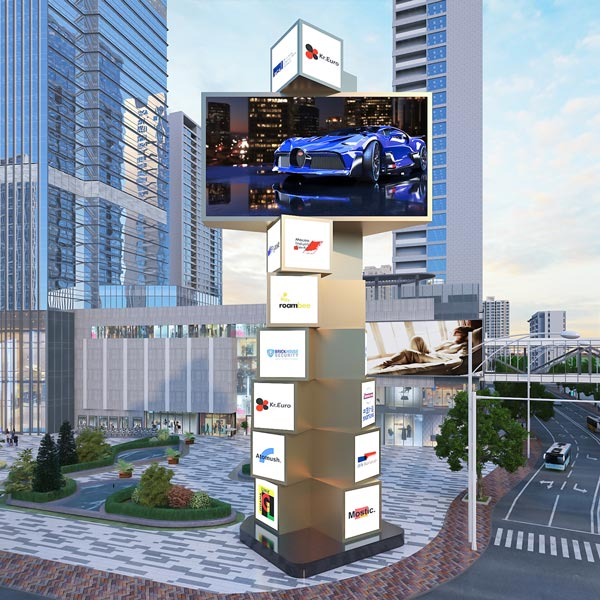
A pylon sign is an elevated, freestanding outdoor sign structure, typically mounted on one or two vertical steel poles or columns. They are designed to provide distant visibility of the sign message, lifting it well above potential ground-level obstructions such as cars, buildings, trees, or other street furnishings.
These towering signs are often placed along the sides of high-speed roadways, expressways, and commercial spines. You may have seen custom pylon signs on the side of a multi-tenant shopping center, industrial park, highway service plaza, car dealership, or gas station. Pylon cabinets can be single tenant, stand alone monuments, or include multiple tenants, with removable panels for easy changes as tenants renew.
What are Monolith Signs?
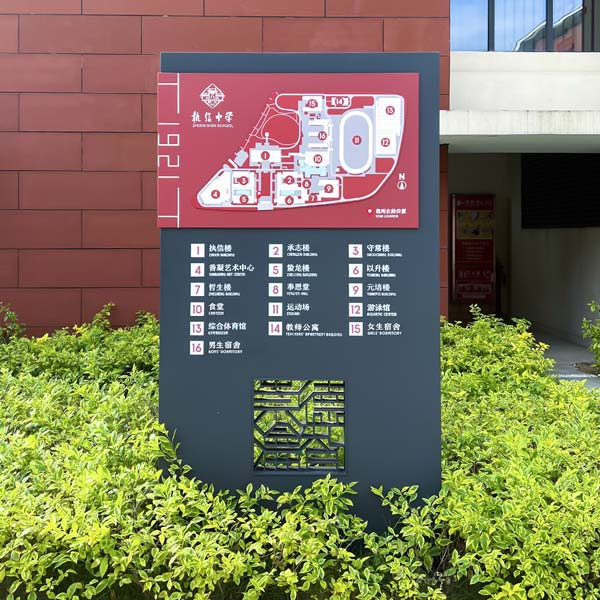
So, what is a monolith sign? A monolith sign (often referred to as a monument or totem sign) is a tall, seamless, ground-based vertical structure with no visible posts or gaps between the sign cabinet and the foundation. The internal structural framing, typically heavy-gauge steel or aluminum, is completely enclosed by sleek outer cladding that runs seamlessly all the way down to the ground.
Compared to conventional low-profile monument signs, these signs take the shape of a low retaining wall but have a more elongated and sleek look. The monolith sign is perfect for corporate campuses, luxury hotel entrances, medical centers, universities, upscale housing developments, and office parks.
6 Factors to Consider Before Buying
Here are 6 factors worth considering before investing:
1. Visibility and Viewing Distance
Vehicle speed, viewing distance, surrounding buildings, landscaping, and potential visual obstructions all influence the height, dimensions, and placement of signage. As a rule of thumb, for every 10 meters or 30 feet of distance, add 25 millimeters (1 inch) to the text size.[1]
2. Site Conditions and Available Space
When choosing the signs, such factors as the width of the street frontage, setbacks, access to pedestrian pathways, ground conditions, and available space for sign installation must be taken into account. In addition, the sign must not restrict traffic or restrict the driver’s view. Such built-property features as improvements and underground facilities should also be considered, as well as planning and zoning restrictions.
3. Branding and Design Requirements
The shape, proportions, logo, typography, color, and lighting of signage should be well-coordinated to reinforce brand identity. Pylon signs are effective for enhancing long-range visibility, while monolith signs integrate more seamlessly into the surrounding architecture and landscape. Both can be tailored—through their form, materials, and finishes—to suit diverse architectural styles and brand objectives.
4. Information Display and Tenant Needs
Whether a sign is intended to display a single brand, multiple tenants, a directory, wayfinding information, or dynamic content will directly influence its layout, structure, and dimensions. It is essential to ensure a clear hierarchy of information and legible font sizes. Furthermore, provisions should be made for replaceable panels or digital display modules to accommodate tenant changes or content updates.
5. Materials, Durability, and Maintenance
Aluminum is lightweight and corrosion-resistant, steel is well-suited for structural support, and acrylic is frequently used for light-transmitting panels. The selection of materials and surface treatments should account for environmental factors, such as exposure to sunlight, rain, wind, and salt spray, while also incorporating access paths for the inspection of lighting systems and internal components, thereby reducing the difficulty and cost of long-term maintenance.
6. Budget, Installation, and Local Regulations
The budget should cover dimensions, materials, lighting, foundation and structural engineering, transportation and installation, as well as ongoing maintenance costs. Since regulations regarding permits, height, setback distances, and lighting vary by location, you should verify these requirements with the local authorities before making a purchase, and then finalize your design and quotation accordingly.
Which Sign Is Right for Your Business?
Pylon signs are suitable for the following types of scenarios:
- The property is located along a high-speed highway, freeway, or commercial roadbuildings, overpasses, or trees block the view of ground-level signs.
- You have a multiple-tenant business such as a commercial center, shopping plaza, or auto mall and need signs for your tenants.
- You need maximum distant visibility for your business from many hundreds of yards.
Monolith signs are recommended for the following applications:
- You need to create an impressive image at the entrance of a corporate office building, university, hospital, or hotel.
- Your architect has designed a modern building with matching architectural elements.
- You need directory listings, street address numbers, or other information at eye- level for visitors.
- Local municipal sign bylaws restrict tall pole-mounted structures in your commercial district.
Get Custom Pylon Signs and Monolith Signs from Cosun Sign
Choosing the right signage supplier is an important step in turning a design concept into a practical installation.
Cosun Sign offers customized pylon signs and monolith signs. Our product information describes customization options covering sign dimensions, shapes, colors, structural configurations, graphics, materials, and illumination.
As a custom signage fabricator having successfully delivered over 10,000 landmark signage projects across more than 65 countries and regions, we can work with project teams to discuss design requirements and develop a signage solution suited to the intended application.
When discussing your project, prepare the following information:
- Project location: Share the installation site and any known planning restrictions.
- Sign dimensions: Provide preferred dimensions or the available installation space.
- Structural design: Explain whether you are considering signage types, such as a pole-supported pylon sign or an integrated monolith structure.
- Branding requirements: Supply logos, brand colors, typography guidelines, and artwork where available.
- Information layout: Identify tenant names, directories, directional content, or other messages to include.
- Material and lighting preferences: Discuss finishes, illumination, and expected outdoor exposure.
- Installation scope: Clarify whether the project requires structural documentation, foundation work, transportation, or installation coordination.
Once you’ve submitted this information, leave the rest to us. We will craft a solution tailored specifically to your needs.
FAQs
1. Are Pylon Signs and Monolith Signs the Same?
No, although they are both freestanding outdoor advertising structures, they are different in many ways and are used for different purposes. Pylon signs have a sign cabinet mounted on top of one or more visible or enclosed structural columns which can be 20 to 50+ feet high, towering over the roadways to draw attention from passing drivers. Monolith signs are a ground-mounted vertical structure with a solid surface and no visible supports, normally under 18 feet in height.
2. What Materials Are Commonly Used for Pylon Signs and Monolith Signs?
Common materials that can be used are aluminum, steel, acrylic, and polycarbonate. The first one is used for fabricated panels or sign cabinets. The second metal can be used to make structural parts. Then, sheet-like acrylic or polycarbonate can be utilized for faces and illuminated signs.
The materials to be used depend on the design, structure, weather exposure, finish, and serviceability.
3. Do Pylon Signs and Monolith Signs Need Planning Permission?
Yes. Commercial exterior signs usually need the approval of the local municipal zoning department, which often requires plan approval from engineers and contractors. Wind-load calculations, foundation requirements and depth, lighting, illumination, and set-backs from property lines and utility easements are a few items that will need to be reviewed and approved. By working with a commercial pylon sign manufacturer like Cosun Sign, you can rest assured that all engineered documents will meet your local building safety codes.
4. Can Pylon Signs and Monolith Signs Be Customized?
Absolutely. As a professional custom signage fabricator, Cosun Sign offers pylon and monolith signs that can be tailored to the specific size, color schemes, materials, architectural style, and lighting scheme of every project that needs them. Our signs can also be digitally enhanced with LED message displays, have slots for tenant directory signs, incorporate embossed 3D logos, feature push-through lettering, and have other special architectural surfaces created.
References
[1] https://www.fhwa.dot.gov/publications/research/safety/15027/004.cfm


 粤公网安备44030702001648号