

















Creating a Seamless Hospitality Wayfinding Experience Through Custom Architectural Signage | Case Study
Project Name: The St. Regis Qingdao
Time: 2020
The best hotel wayfinding is almost invisible. Guests remember the journey, not the signs.
Introduction
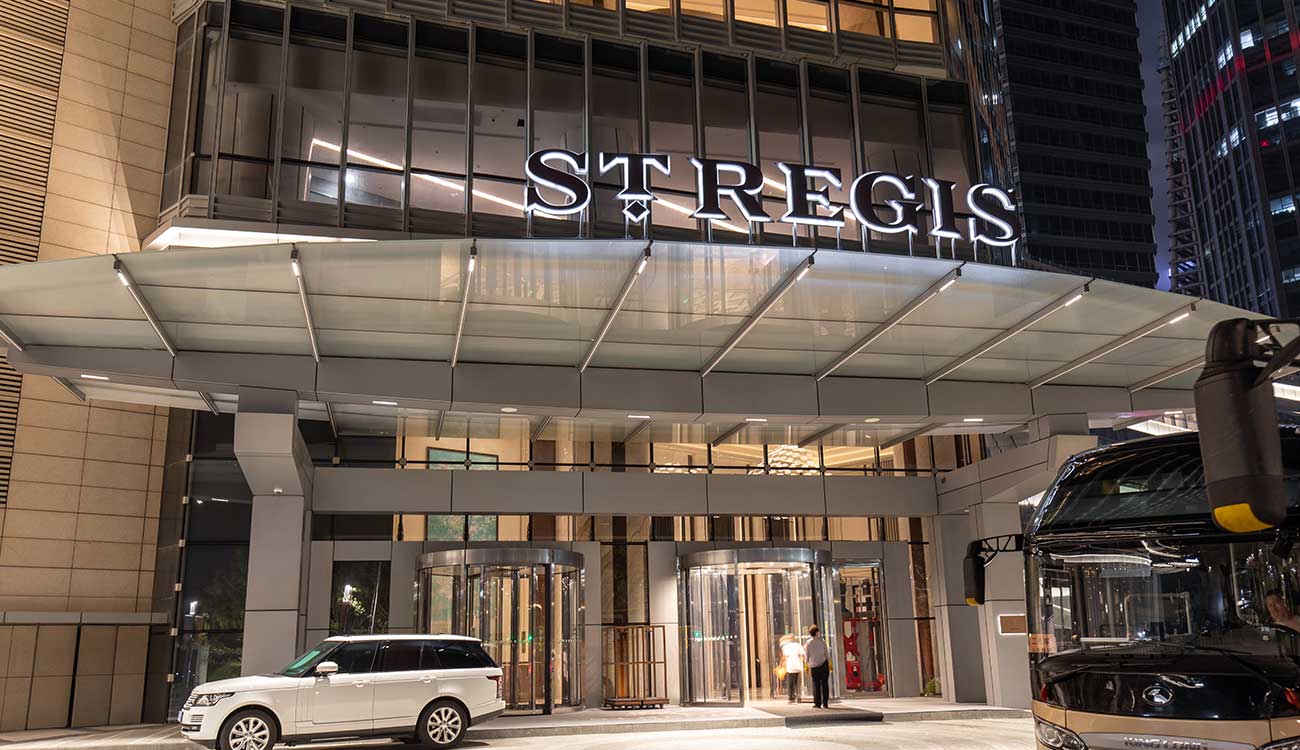
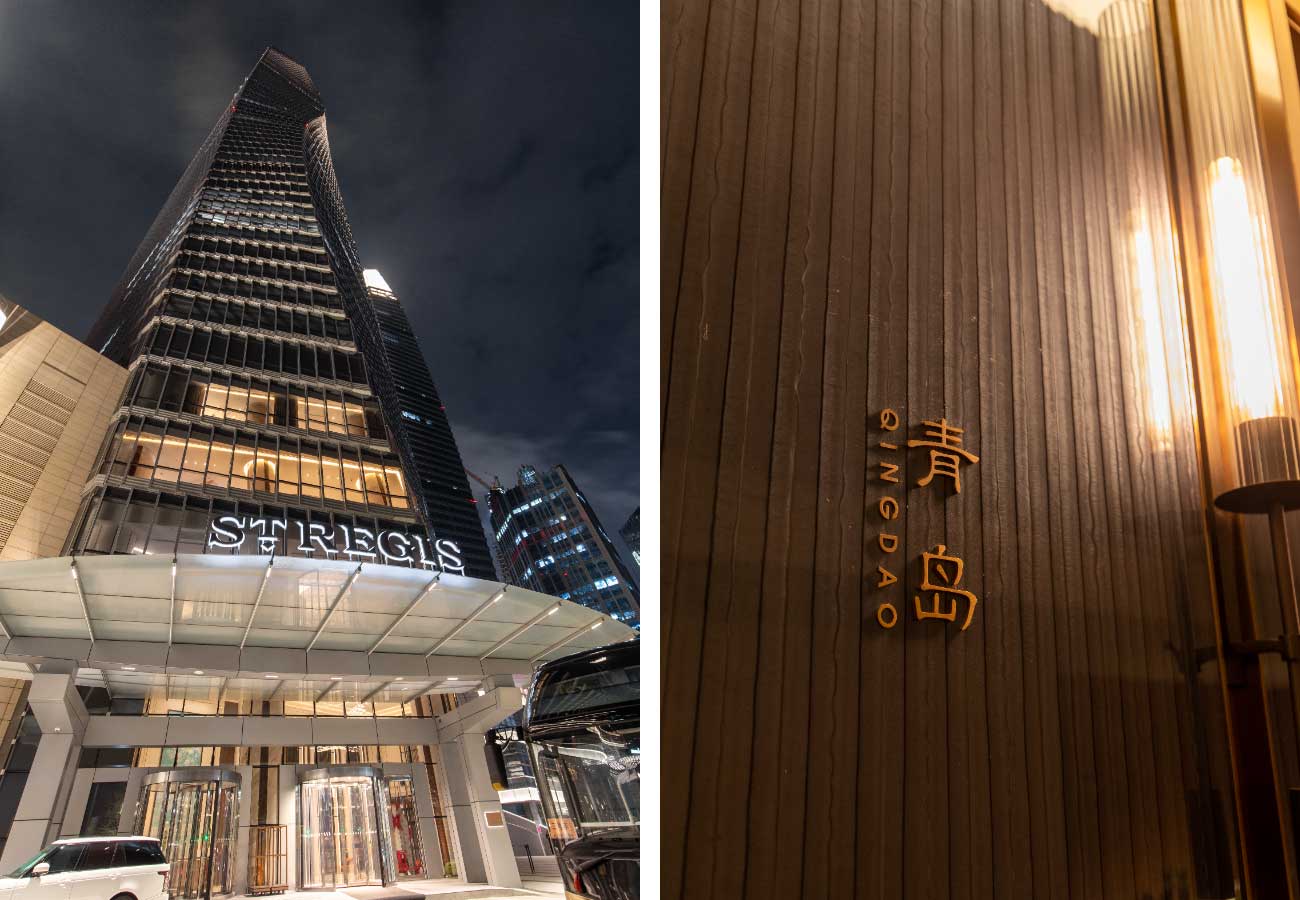
Located on Levels 58–78 of the 369-metre Haitian Center Tower, The St. Regis Qingdao overlooks Fushan Bay from one of the tallest buildings in China. COSUN SIGN delivered a complete architectural signage and system, covering rooftop identification, illuminated façade signage, lobby signs, guest room signs and interior directional signage. Every element follows one visual language, allowing the signage to support navigation without competing with the architecture.
Project Snapshot
| Item | Details |
| Project | The St. Regis Qingdao |
| Location | Qingdao, China |
| Sector | Luxury Hospitality |
| Completion | 2020 |
| Building Height | 369 m |
| Hotel Floors | 58–78 |
| Scope | Architectural Signage & Hotel Wayfinding |
| Products | Rooftop Signs, Façade Signs, Lobby Signs, Room Signs, Directional Signs |
| Materials | Stainless Steel, Aluminium, Acrylic, LED |
Key Takeaways
- One integrated wayfinding system instead of separate sign packages.
- Information hierarchyreduces visual clutter throughout the hotel.
- Signs are positioned at decision points, not along every route.
- Exterior and interior signage share one architectural language.
- The system is ready for future digital wayfinding
The Challenge
Luxury hotels require a different approach to navigation.
Guests expect the building to feel calm and intuitive. Too much information creates distraction. Too little creates uncertainty.
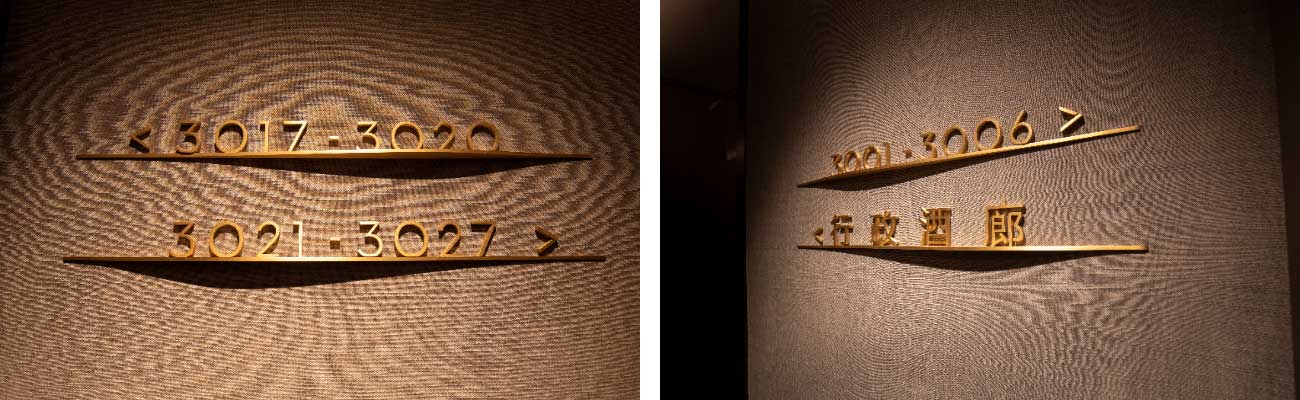
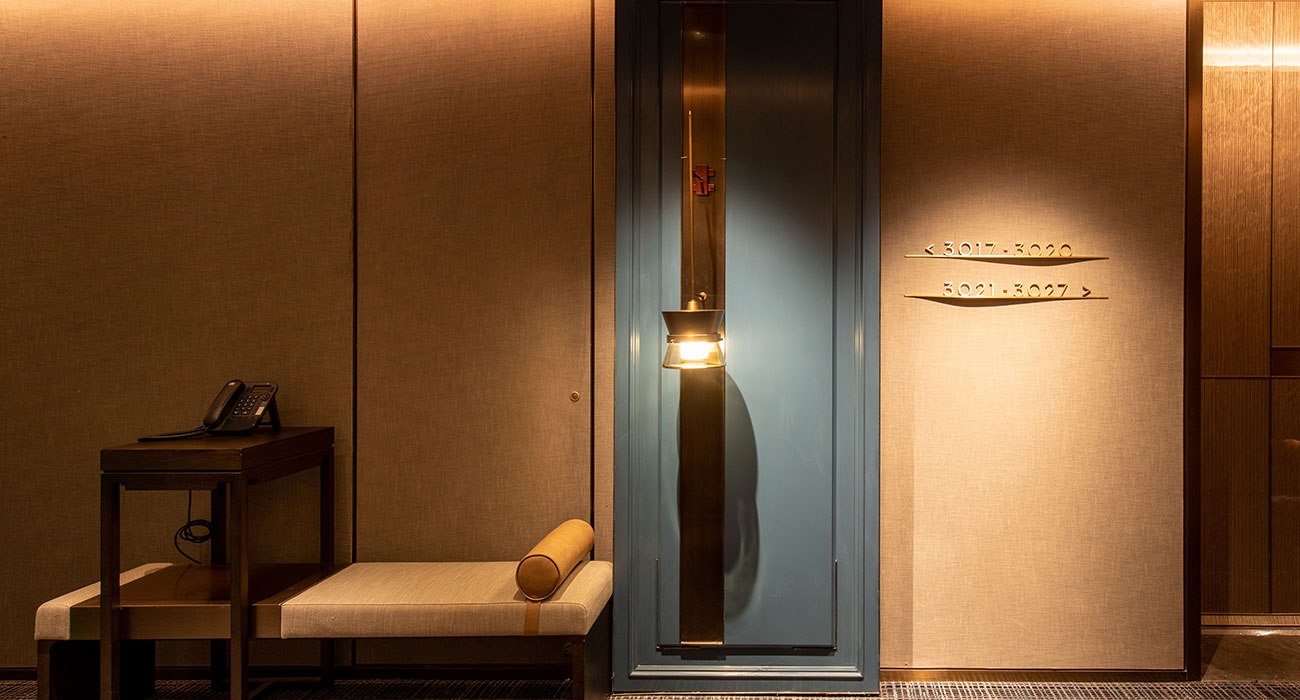
Most navigation decisions happen at predictable locations—entrances, lift lobbies, corridor intersections and destination doors. Effective hotel signage provides information only where those decisions are made.
The tower also needed exterior identification that remained legible across Qingdao’s waterfront while staying proportional to the architecture.
Design Strategy
The project followed three design principles.
One Visual Language
Typography, proportions and finishes remain consistent across every sign category. Guests recognise the system without learning a new visual style on each floor.
Information Hierarchy
Primary destinations receive priority. Supporting information remains secondary. Clear hierarchy shortens decision time and improves readability.
Decision-Point Placement
Signs appear where visitors naturally choose a direction. Removing unnecessary repetition keeps interiors visually quiet while improving orientation.
Engineering & Installation
Exterior signage combines stainless steel, aluminium and LED modules selected for long-term coastal conditions.
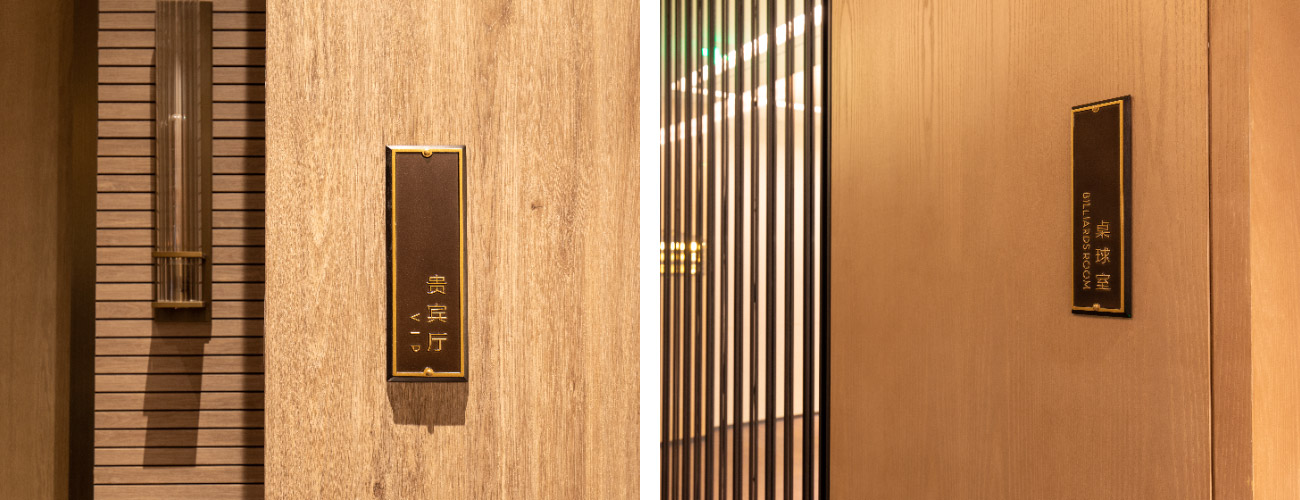
Interior signs use precision-machined metal and acrylic to achieve consistent detailing across public areas and guest floors.
Prototype assemblies were trial-fitted before production. Dimensions, illumination and concealed fixing details were verified before manufacturing.
Installation progressed floor by floor as interior construction reached completion. Concealed fixing minimised visible hardware and preserved surrounding finishes.
Completed Project
Today the wayfinding system supports daily hotel operations without becoming a visual focal point.
Guests move naturally between reception, restaurants, meeting facilities and accommodation floors. Exterior identification reinforces the tower’s presence across Fushan Bay, while interior signage provides clear orientation with minimal visual impact.
Design Insight
Good wayfinding design reduces the number of decisions people need to make.
People rarely read every sign. They look for confirmation that they are moving in the right direction.
This is why luxury hotels use fewer, better-positioned signs instead of larger or more prominent ones. The architecture remains the primary experience. The signage simply supports it.
Expert Answers
Why is hotel wayfinding different from retail signage?
Retail signage attracts attention. Hotel wayfinding reduces cognitive effort. Information appears only where guests need to make a decision.
What is a decision point?
A decision point is any location where visitors choose between two or more routes, such as lift lobbies, corridor intersections or building entrances. These locations determine where directional information is most effective.
Why do luxury hotels use concealed fixing?
Concealed fixing removes visible hardware from the finished sign, creating a cleaner architectural appearance while simplifying future maintenance.
Products Featured
Hotel Lobby Signs
Arrival identification that establishes the visual language for the property.
Hotel Room Signs
Room identification with concealed fixing and durable architectural finishes.
Directional Signs
Clear guidance positioned at key decision points throughout the hotel.
Rooftop & Façade Signs
Large-scale building identification designed for long-distance visibility.
Related Knowledge
- Hotel Wayfinding Design Principles
- Architectural Signage for Luxury Hospitality
- Directional Sign Placement in High-Rise Buildings
- Choosing Materials for Exterior Hotel Signage
About COSUN SIGN
For more than two decades, COSUN SIGN has partnered with architects, developers, hotel operators and contractors to deliver architectural signage and wayfinding systems for hospitality, healthcare, transportation, education and commercial developments worldwide. Every project combines design, engineering and manufacturing to create signage that improves navigation while respecting the architecture it serves.

 粤公网安备44030702001648号