

















Engineering an Integrated Digital Wayfinding Signage System for an Industrial Heritage Art District
Project Name: Beijing 798 Art Center
Time: 2022
Quick Answer
As one of China’s best-known industrial heritage renewal projects, Beijing 798 Art Zone covers more than 500,000 m². The site was renovated from the original Joint Factory 718 and has become a core local cultural district.
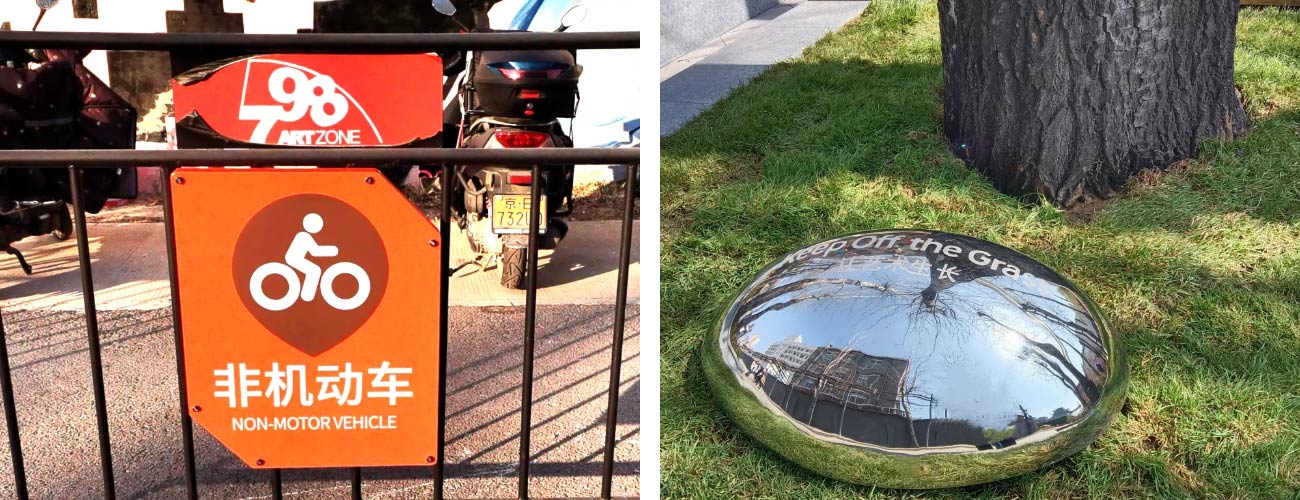
In 2022, COSUN SIGN, a national high-tech enterprise and professional signage manufacturer, delivered of the integrated digital wayfinding signage system for the park. The system integrates building identification, directional guidance and digital smart signage functions.
Instead of adding independent signage, the project integrated navigation into the existing architecture through a coordinated system of physical signs, digital totems and information hierarchy. The result demonstrates how custom signage manufacturers can create scalable navigation systems for urban park wayfinding, heritage destinations and complex public environments.
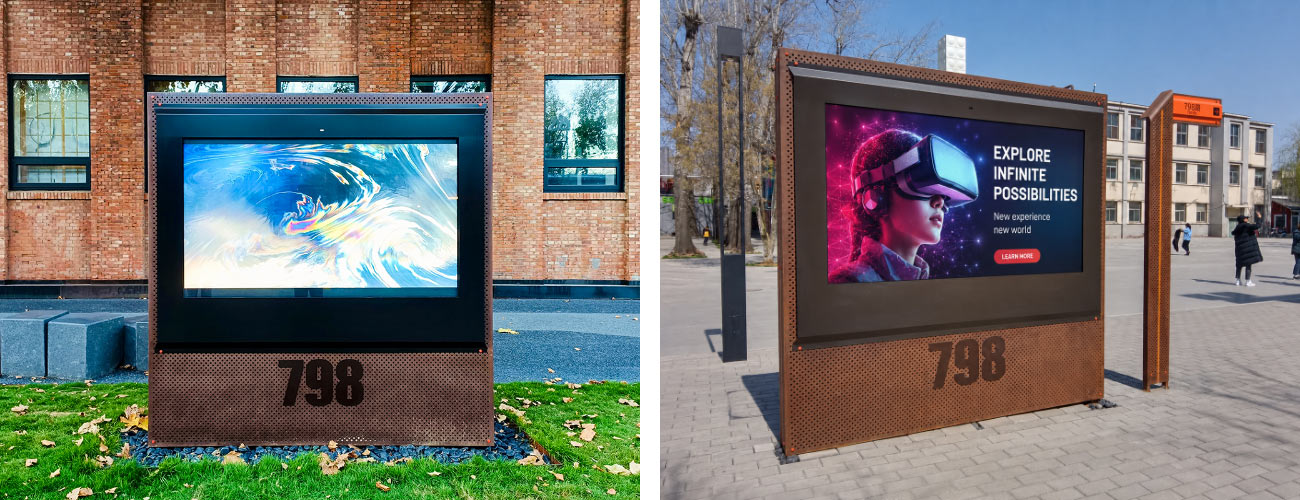
Project Snapshot
| Item | Details |
| Location | Beijing, China |
| Completion | 2022 |
| Scale | 500,000+ m² |
| Project Type | Industrial Heritage Cultural District |
| Services | Wayfinding Planning, Engineering Design, Manufacturing & Installation |
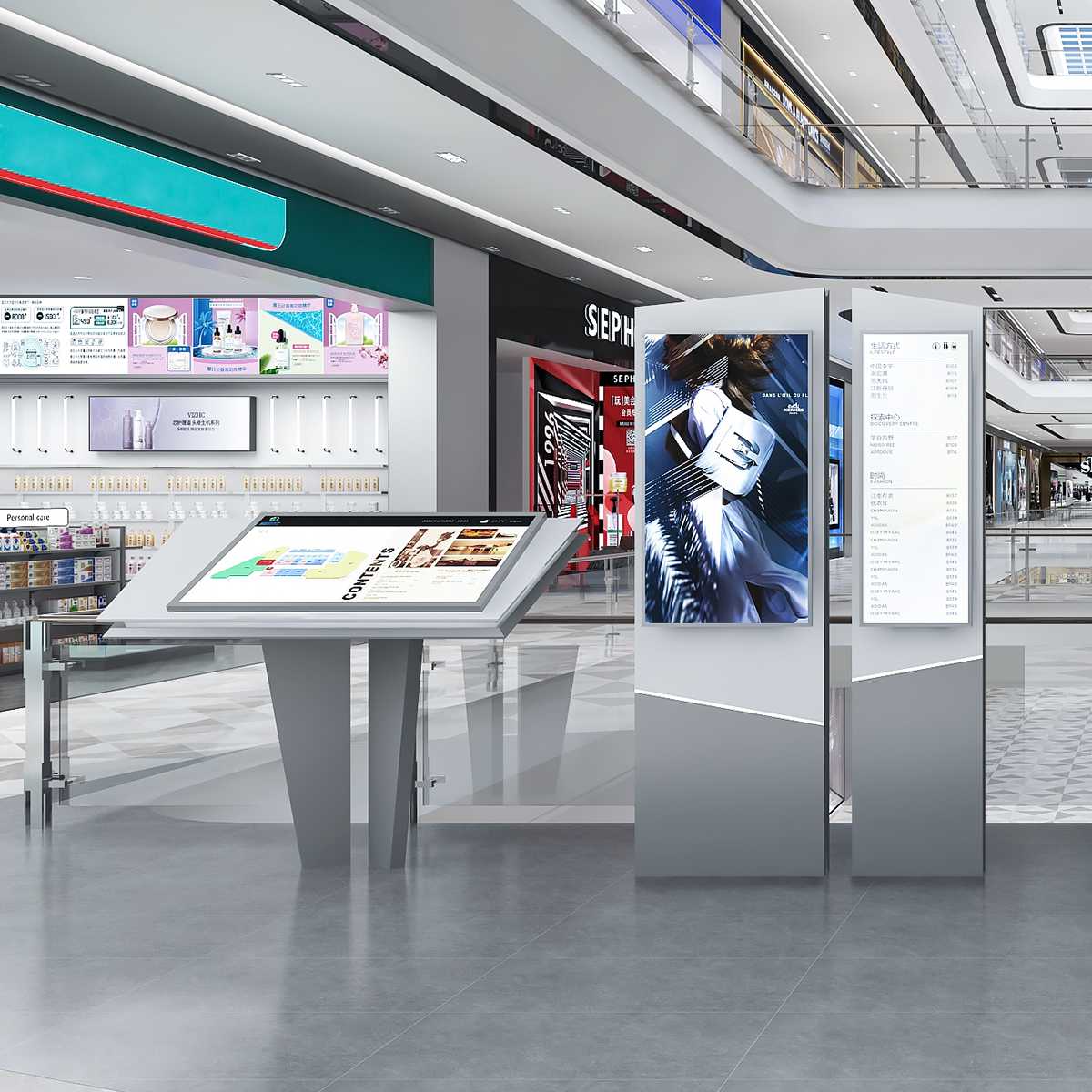
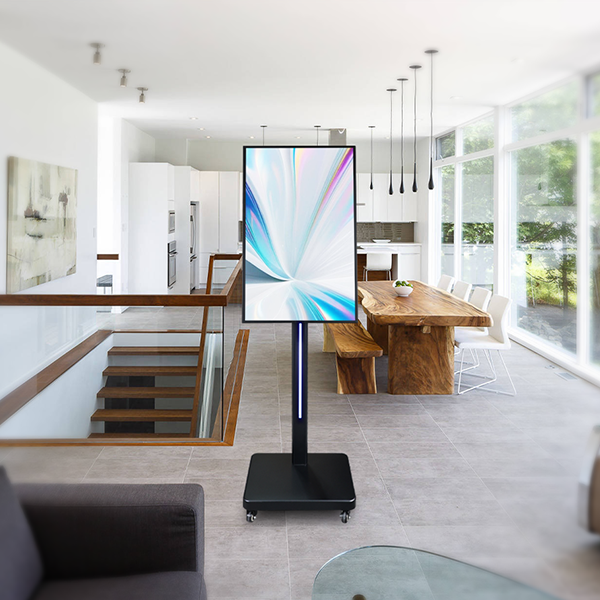
| Core Products | Digital wayfinding signage, digital totems, directional pylon sign, architectural identification signs |
| Primary Materials | 304 Stainless Steel, Copper, Hot-Dip Galvanised Steel |
| Engineering Focus | Heritage Integration, Digital Navigation, Modular Lifecycle Design |
Engineering Challenge
Unlike closed commercial buildings, Beijing 798 Art Zone is an open cultural district. It features multiple access points, connected street networks and independently run gallery spaces. There are no fixed visitor circulation routes, and visitors navigate the site freely. This layout makes on-site orientation far more complex than that of standard public buildings.
The project also required every new intervention to remain compatible with the site’s preserved industrial architecture. Navigation therefore needed to improve accessibility without competing with the visual identity of the historic environment.
The engineering objective was clear:
- Preserve the site’s architectural identity.
- Improve visitor orientation.
- Create a navigation system that supports long-term operation and future expansion.
Engineering Framework
Rather than designing signs first, COSUN SIGN developed the project around visitor behaviour and spatial understanding.
The engineering process followed five principles:
- Observe— analyse visitor movement and decision points.
- Organise— establish a progressive information hierarchy.
- Integrate— coordinate architecture, landscape and digital wayfinding signage.
- Protect— minimise intervention to historic buildings.
- Sustain— use modular components for efficient maintenance and future upgrades.
This methodology transforms wayfinding from a graphic design exercise into an integrated architectural system that improves both user experience and operational efficiency.
Engineering Decisions
Navigation was organised into four information layers that correspond to the visitor journey.
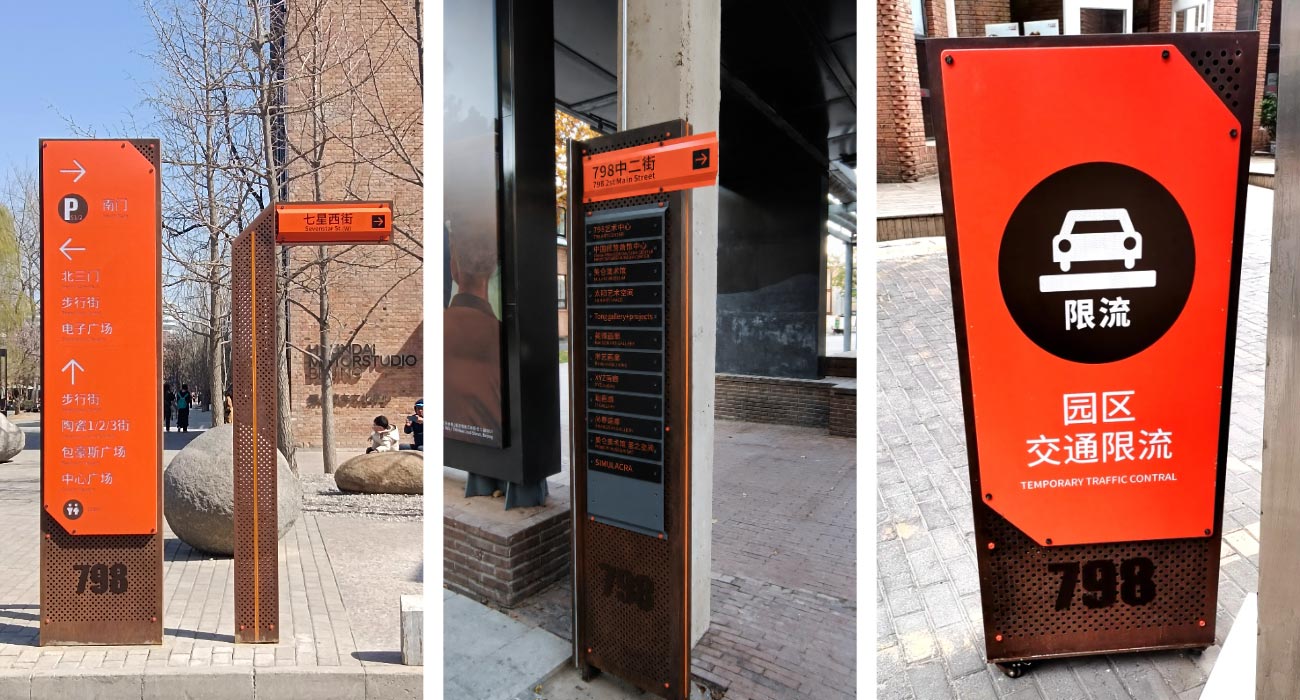
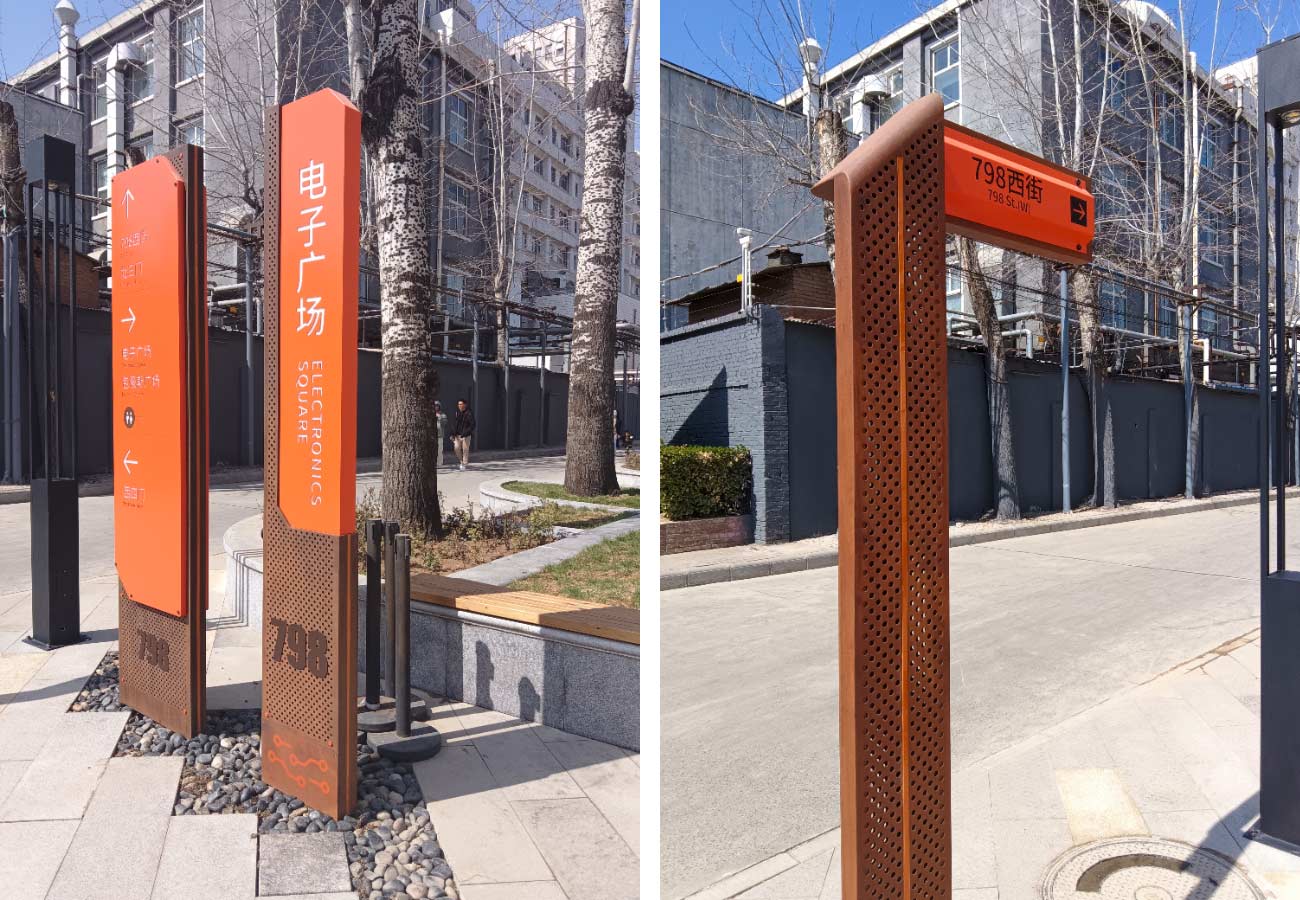
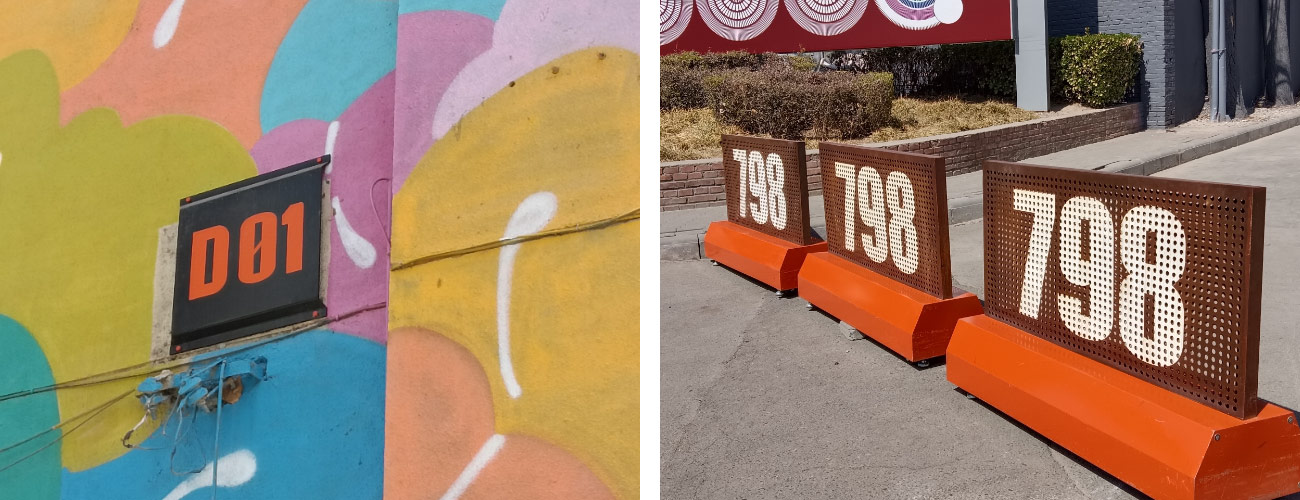
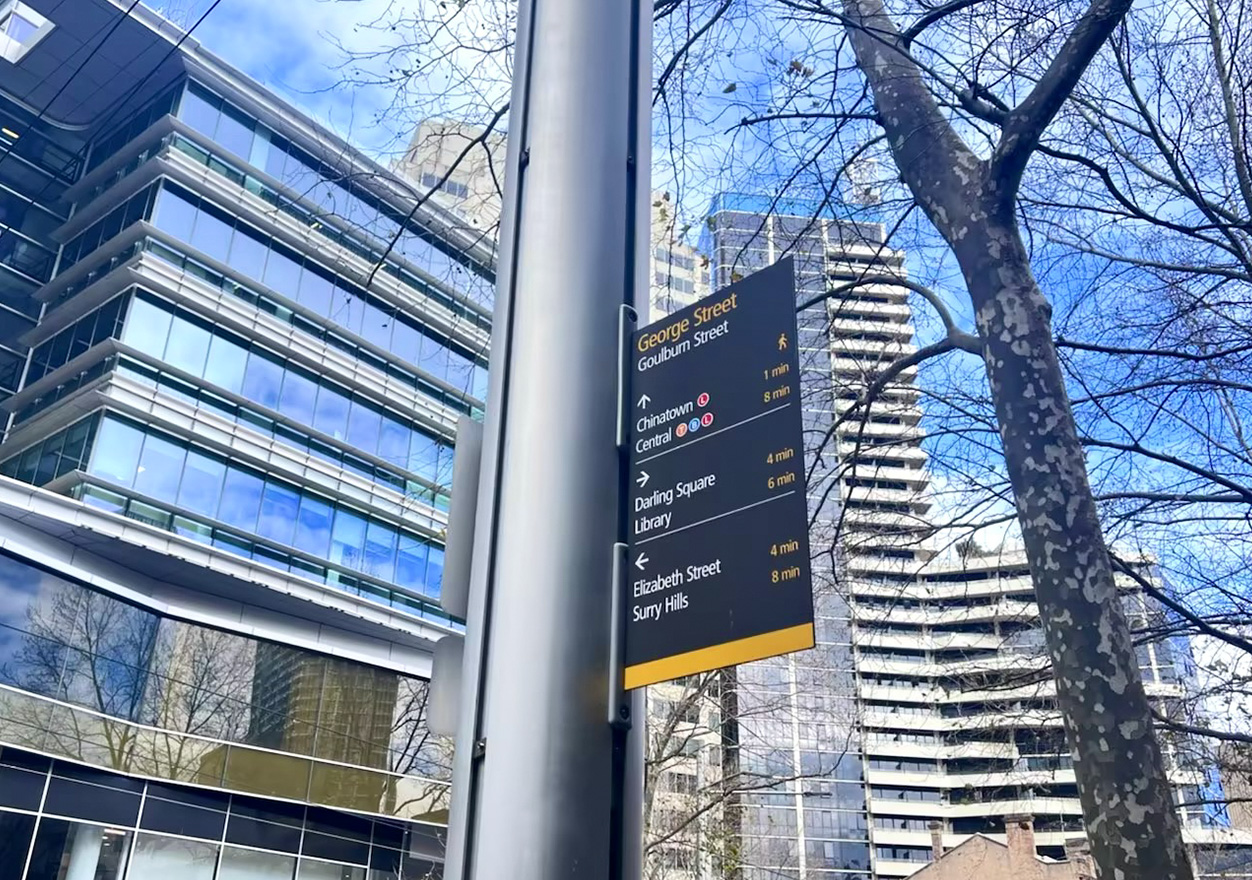
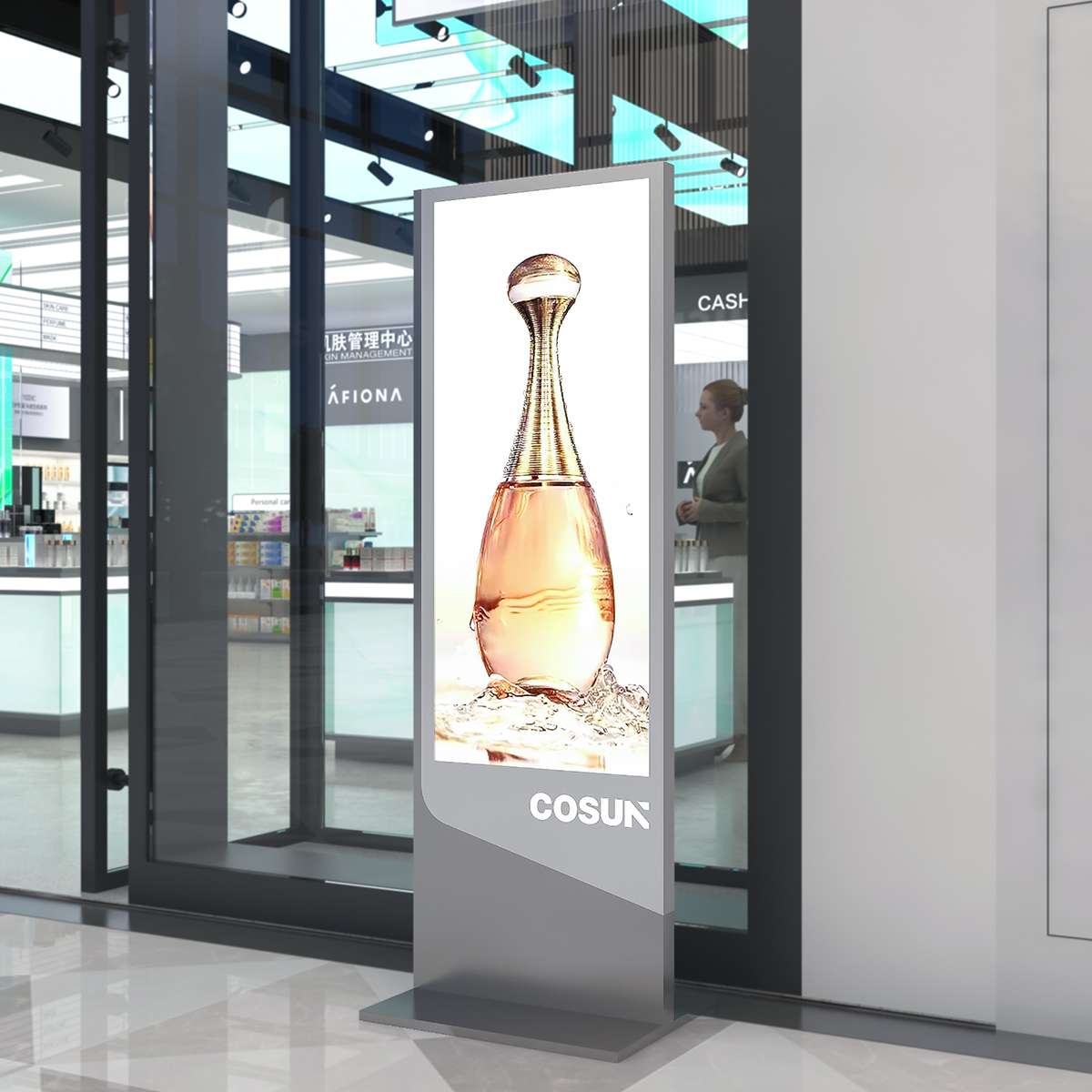
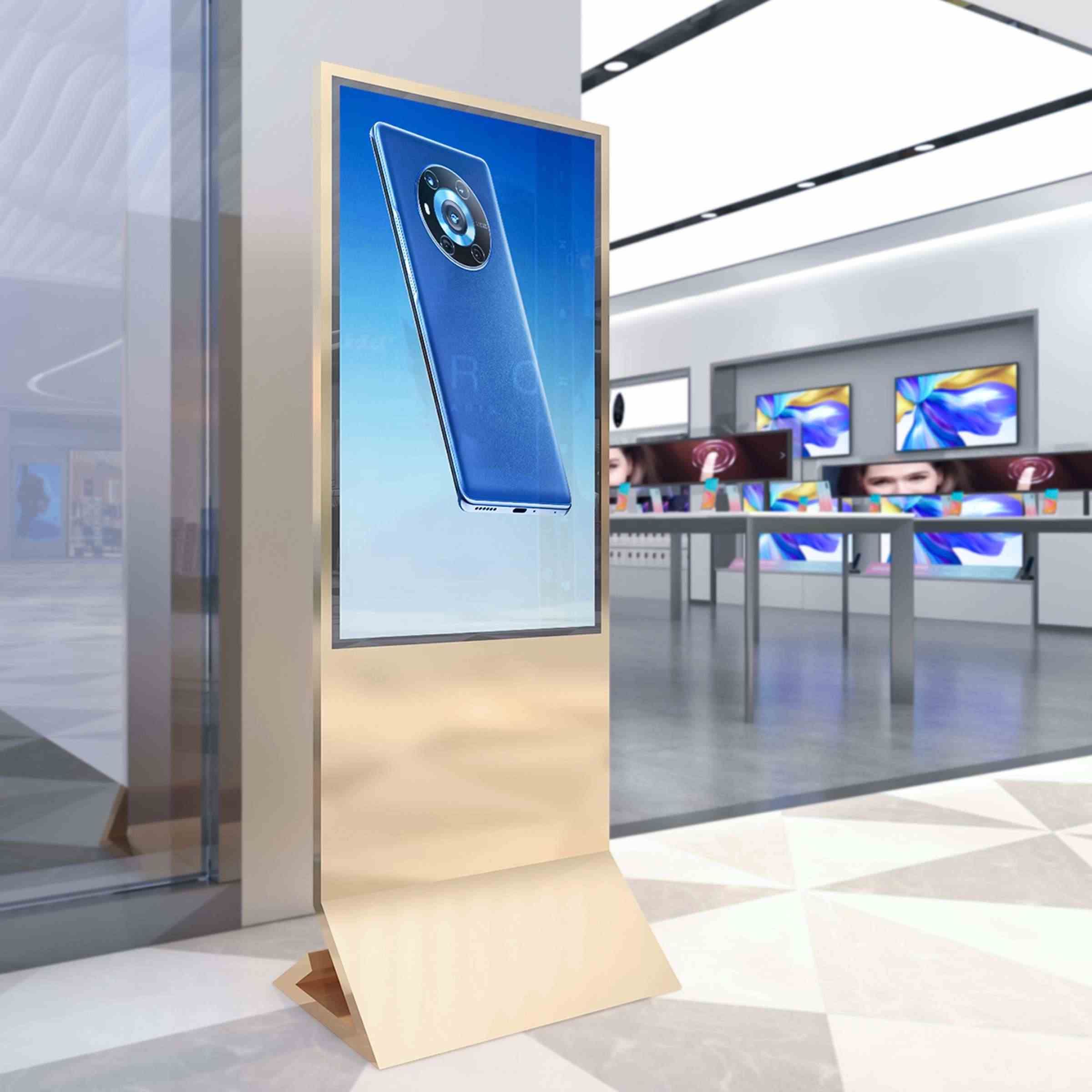
Gateway signs provide district orientation. Directional signs guide movement through primary routes. Building identification confirms destinations, while digital totems deliver searchable exhibition and tenant information only where additional interaction is required.
By presenting only the information needed at each decision point, the system reduces cognitive load and enables visitors to navigate naturally without visual overload.
This layered approach also accommodates different visitor behaviours. First-time users rely on orientation and search, while returning visitors primarily require destination confirmation and updated event information. Physical navigation remains the primary guidance system, with digital technology providing flexible information where appropriate.
Material & Construction
Material selection prioritizes long-term lifecycle performance over aesthetic appearance.
304 stainless steel was selected for its balanced structural strength, corrosion resistance and fabrication accuracy. Compared with aluminium, it provides greater impact resistance than aluminum for public-area applications and eliminates the ongoing maintenance issues of weathering steel.
Construction works were executed in staged sequences to keep public access fully operational throughout the project. Off-site modular fabrication and assembly, together with heritage-friendly fixing techniques, shortened on-site installation time and protected the existing building fabric.
Engineering Insight
Effective wayfinding does not rely on the quantity of signage. It depends on the integrated coordination of architecture, materials and information systems to streamline pedestrian movement.
Lifecycle Performance
The system is engineered for long-term operational use rather than one-off installation. Modular framing and standardized graphic units allow single information panels to be updated or replaced without dismantling the support structure. This reduces maintenance expenditure and minimizes on-site disruption to daily operations.
The modular design supports future integration of new galleries, exhibitions and public amenities into the existing wayfinding network, with maintaining a consistent visual language. For large-scale park signage and wayfinding projects, adaptability is a core lifecycle metric, ensuring the system remains functional and compatible with ongoing site upgrades.
Engineering Lessons
The Beijing 798 Art Zone project demonstrates four principles that are applicable to heritage renewal, campuses and complex public environments.
1. Architecture Leads Navigation
Buildings, streets and landmarks should provide the primary spatial reference. Signage should reinforce architectural orientation rather than compete with it.
2. Information Should Be Progressive
Navigation works best when each sign supports a single decision. A clear information hierarchy reduces cognitive load and improves wayfinding efficiency.
3. Digital Complements Physical Navigation
Physical signage provides continuous orientation, while digital wayfinding signage supplies searchable, real-time information only where interaction is required.
4. Lifecycle Planning Starts with Design
Material selection, modular construction and maintenance access should be considered from the beginning of the project to improve operational efficiency and simplify future expansion.
Engineering Takeaway
Effective wayfinding is the result of integrating architecture, movement analysis, engineering and lifecycle planning into one coordinated system—not simply adding more signs.
Project Specifications
| Category | Specification |
| Project Type | Industrial Heritage Cultural District |
| Navigation System | Integrated Physical & Digital Wayfinding Signage |
| Primary Products | Directional Pylon Sign, Building Identification, Digital Totems, Interactive Information Displays |
| Materials | 3 mm 304 Stainless Steel, Copper Lettering, Hot-Dip Galvanised Steel |
| Manufacturing | CNC Fabrication, Laser Cutting, Welding, Powder Coating, UV Printing |
| Installation | Heritage-Compatible Mounting, Phased Construction |
| Lifecycle Strategy | Modular Structures, Replaceable Graphics |
| Typical Applications | Urban Park Wayfinding, Cultural Districts, Museums, Campuses, Public Spaces |
About COSUN SIGN
COSUN SIGN is a National High-tech Enterprise specialising in integrated architectural signage, smart digital signage and engineered wayfinding systems.
As one of China’s experienced custom signage manufacturers, the company provides engineering consultancy, design, manufacturing and global project delivery for commercial developments, healthcare facilities, transportation hubs, campuses, industrial parks and cultural destinations. Its approach combines architecture, engineering and operational planning to deliver navigation systems that remain effective throughout their lifecycle.
Frequently Asked Questions
Why is architecture prioritised over signage?
People naturally orient themselves using buildings, streets and landmarks before reading signs. A successful wayfinding system strengthens these spatial cues instead of replacing them.
Why combine physical and digital navigation?
Physical signs provide consistent spatial guidance, while smart digital signage offers flexible information such as exhibitions, tenants and events. Together they improve visitor experience without increasing visual clutter.
Which projects can apply this methodology?
The same engineering principles are suitable for wayfinding for parks, cultural districts, universities, hospitals, transportation facilities, mixed-use developments and other complex public environments.
Conclusion
The Beijing 798 Art Zone project demonstrates that high-performance wayfinding requires upfront systematic planning, rather than on-site signage installation alone. This system integrates visitor behaviour, on-site architectural conditions, information hierarchy logic and lifecycle engineering principles, delivering improves visitor navigation and stable long-term operational performance.
For developers, architectural designers and facility management teams, this case proves effective wayfinding is not an independent graphic design task, but a core integral part of the overall built environment. As modern public spaces expand in scale and grow more structurally complex, integrated wayfinding strategies become critical to building intuitive, accessible and sustainably operable public venues.


 粤公网安备44030702001648号